




 buying guides
 cooling
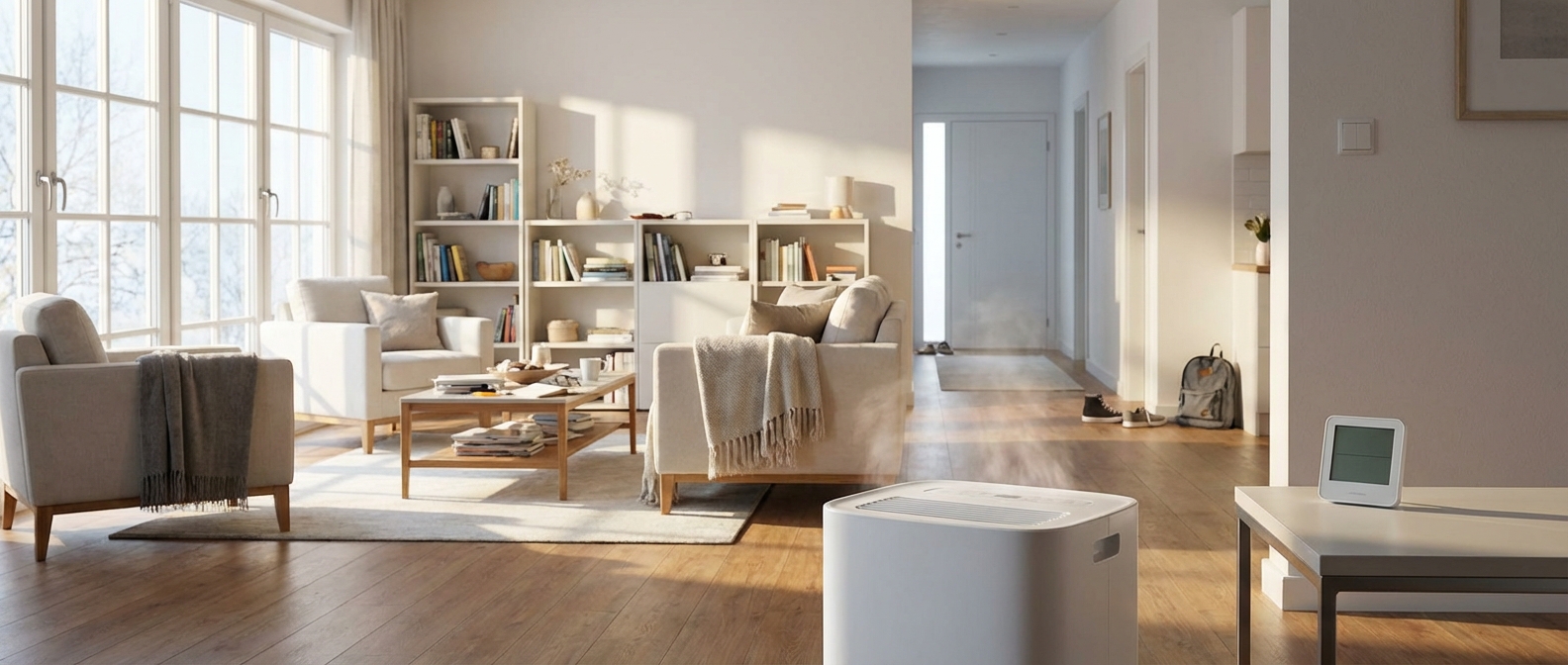
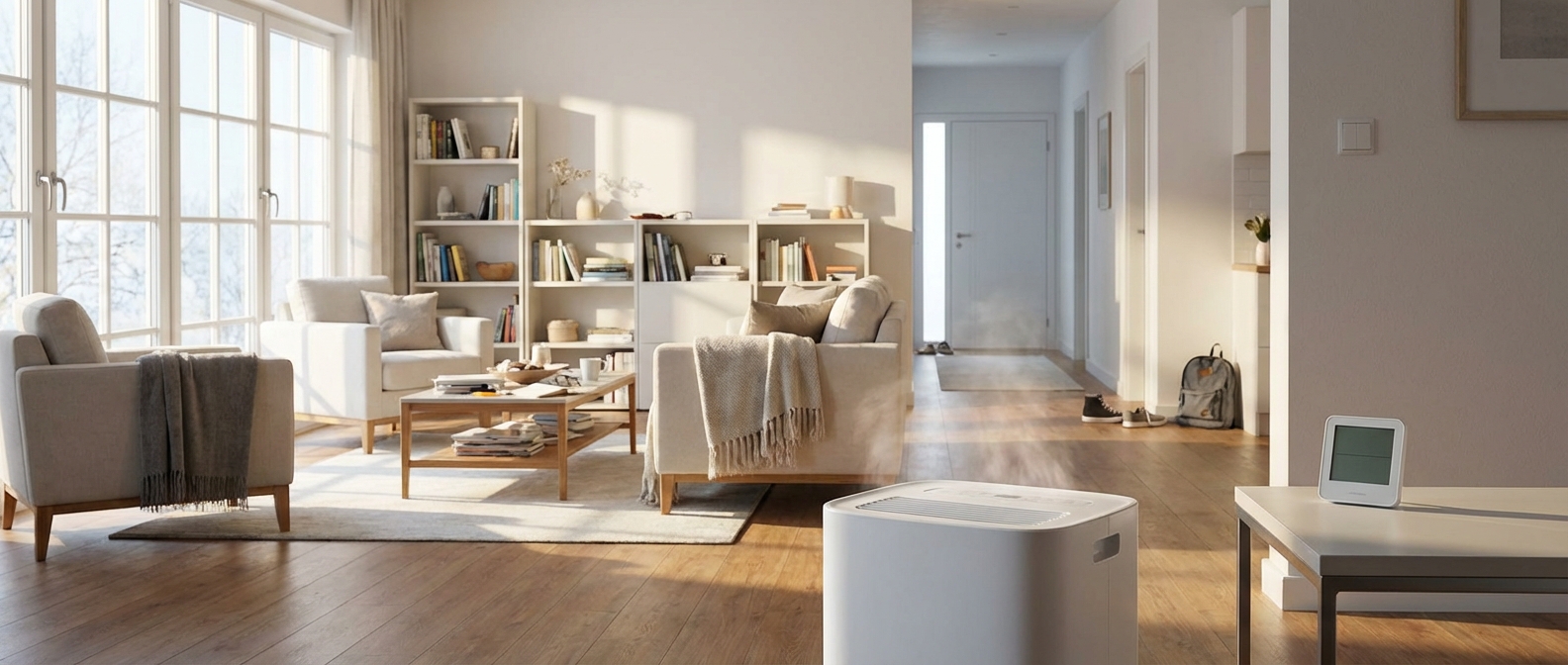
If you are shopping dehumidifiers, the "up to X sq ft" labels will give you three different answers for the same room. Or you already bought one, and it still feels damp while the bucket fills nonstop.
The decision is simple but expensive: pick a unit today without underbuying and living with sticky air, or overbuying and paying for capacity you do not need. The fix is sizing for moisture removal, not hype. A dehumidifier's capacity rating is in pints per day (PPD), meaning how many pints of water it can remove in 24 hours under standardized test conditions, so a bigger PPD number is directly tied to how aggressively it can dry the air.
Your target is relative humidity (RH), the percentage you see on a hygrometer, and the U.S. EPA recommends keeping indoor RH between 30% and 50% for comfort and mold and allergen control. Two same-size rooms can need totally different PPD because the moisture load, meaning the actual humidity level plus moisture sources like showers, cooking, and outdoor air leakage through openings, is not the same. You will leave with a realistic PPD range to shop and the inputs that change it.
Dehumidifier Capacity 101
"Coverage area" is not a measured output. It is a manufacturer's estimate derived from pint-per-day (PPD) capacity, and it only becomes meaningful when you know the rating basis and the conditions the brand assumed for that square-foot number.
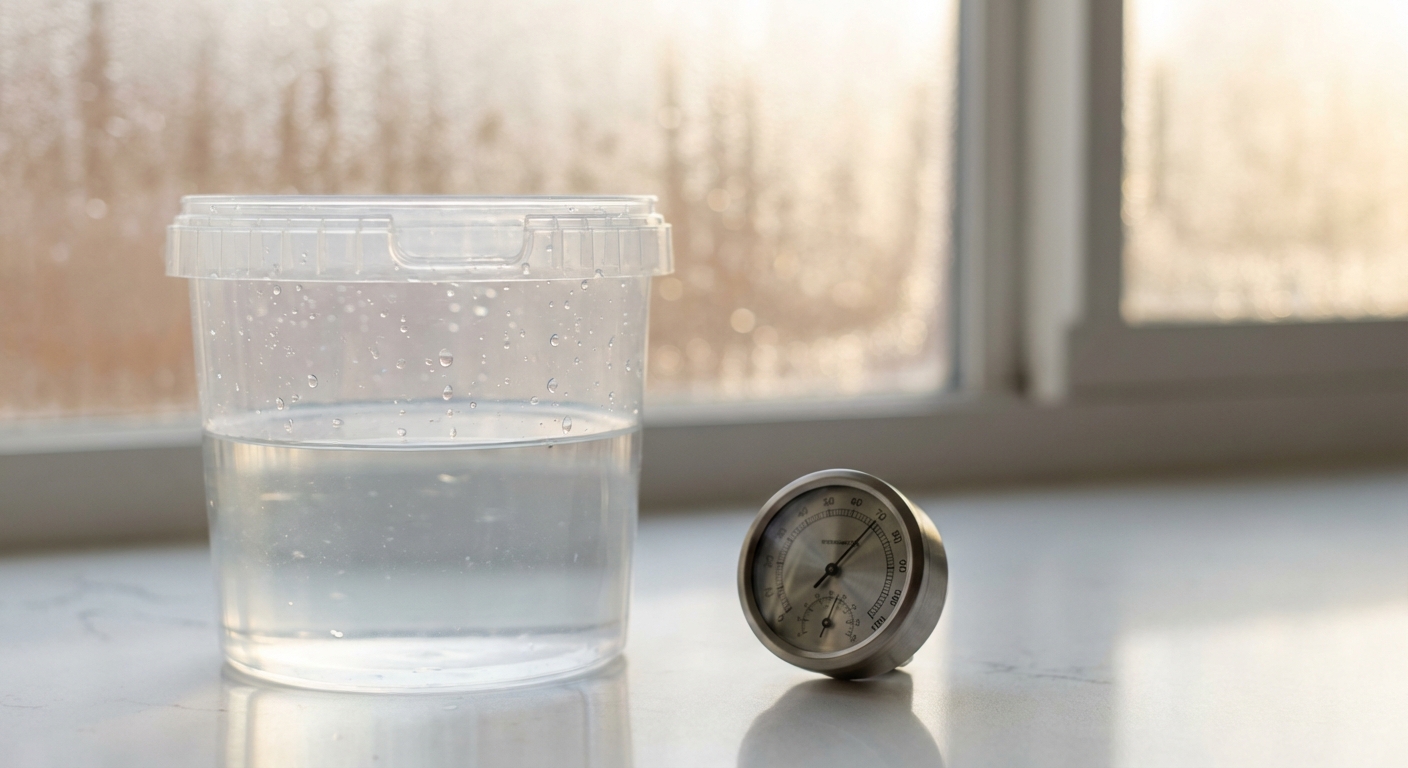
PPD itself is a 24-hour water-removal rating, so "this unit removes 50 pints per day" can be compared across products only when the underlying test conditions match. Change the assumed temperature, humidity, air leakage, or moisture load, and the same 50-PPD class can be marketed as very different "coverage" sizes.
Published PPD is anchored to DOE test conditions, meaning it is a lab rating used for reporting and comparison, not a promise for every basement. For portable dehumidifiers, DOE rates capacity at 65°F and 60% RH, which commonly yields lower PPD numbers than older rating conventions based on warmer air, and that gap is a big reason coverage claims vary from one label to the next.
Dehumidifier performance changes with ambient temperature and relative humidity. In cooler, lower-dew-point air, there is simply less water available to condense per pass, so removal drops even if the unit runs continuously. Many standard refrigerant portables are optimized around roughly 60 to 85°F, which is exactly why basements are where the "same PPD" often feels weaker.
Cool coils also invite frost buildup. When a unit has to enter defrost, it is spending run time protecting the evaporator instead of pulling water, which reduces effective daily removal in the real space.
After you are shopping within the right capacity class, stop sizing purely by the biggest PPD. ENERGY STAR efficiency is reported as Integrated Energy Factor (IEF), expressed as liters removed per kilowatt-hour (L/kWh), and within a given pint class a higher IEF means less electricity per liter removed.
The clean comparison is: anchor to PPD under the same DOE test conditions, mentally adjust downward for cool basements and high moisture load, then use IEF to pick the most efficient unit that still has enough capacity headroom. Once you understand what PPD can (and cannot) tell you, you can size based on your home's actual moisture load instead of the square-foot number on a listing (and recognize when a whole-house dehumidifier is the better fit than a portable).
How to Size a Dehumidifier for Your Home
Sizing is a repeatable process, not guesswork. You get an accurate target by combining three inputs you can collect in minutes: the area you are treating, how damp it is right now, and what moisture is actively being added. Then you shop a PPD range, not a single perfect number, because real homes drift between "normal day" and "laundry day."
- Define the space. Decide what you actually want one dehumidifier to control: a single bedroom, a finished basement, or a whole level. Be honest about doors: if you keep doors closed, treat rooms as separate zones; if they stay open, treat the connected area as one. Why it matters: capacity targets the air that mixes with the unit, not the floor plan on paper.
- Measure square footage. Length times width gives you the number you will use on every sizing chart. Consumer Reports' first sizing step is to calculate the square footage of the area you are dehumidifying, because coverage claims and capacity guidance are keyed to area. Why it matters: a "small" unit that is right for 300 sq ft is wrong for 1,000 sq ft, even at the same RH.
- Capture current RH. Take a current reading from a hygrometer or a thermostat that reports humidity (RH). Use a normal-time snapshot, not the five minutes after a steamy shower. Why it matters: the same room behaves differently at 48% RH than it does at 68% RH.
- Classify the room condition. Pick the condition label that matches what you see and smell: slightly damp (stale or musty odor), very damp (frequent window condensation, fabrics feel clammy), or wet (damp surfaces, visible moisture on walls/floors). Why it matters: "condition" is the fast way charts account for how hard the unit must work beyond just square footage.
- Identify moisture-source triggers. Count the moisture you add on purpose and by accident. Common indoor sources include bathing, cooking, hanging laundry to dry, and improperly vented clothes dryers. Wood stored indoors also adds moisture. Why it matters: these triggers push you into the next capacity tier even when the square footage looks modest.
- Convert your notes into a PPD range. Use the ENERGY STAR dehumidifier sizing chart as your baseline: match your room size and your condition category to a recommended capacity. Then adjust upward within the next capacity tier if multiple triggers apply (for example, daily showers plus indoor laundry, or a basement that stays open to a larger level for air mixing). Why it matters: the chart nails the baseline load; the trigger adjustment handles the real-world moisture you are generating.
Size up when RH stays high day after day, when you have lots of moisture sources (bathing, cooking, laundry, a problem dryer vent), when an open floor plan mixes air across a larger area than you first measured, and in damp basements or laundry areas where moisture load is consistently heavy.
Avoid unnecessary oversizing when you are already near your target RH and your goal is maintenance dehumidification, not recovery from dampness. In that case, stick to the ENERGY STAR baseline capacity instead of jumping tiers.
Your output: Before you shop, write down (1) the defined area and whether doors stay open or closed, (2) square footage, (3) current RH, (4) your condition label (slightly damp, very damp, wet), (5) moisture triggers you identified, and (6) the ENERGY STAR baseline capacity plus your adjusted shopping target as a PPD range, such as "30 to 40 PPD" or the "50 PPD class" (and, for whole-home setups, a reference point like a whole-house dehumidifier model plus a digital wired humidity control to set target RH accurately).
Sizing Examples by Room Type
The same pint-per-day class performs very differently depending on room type, temperature, and moisture load. Scenarios turn the sizing outcome into a real purchase decision because a "50 PPD class" in a warm main floor behaves nothing like a 50 PPD class in a cool, musty basement.
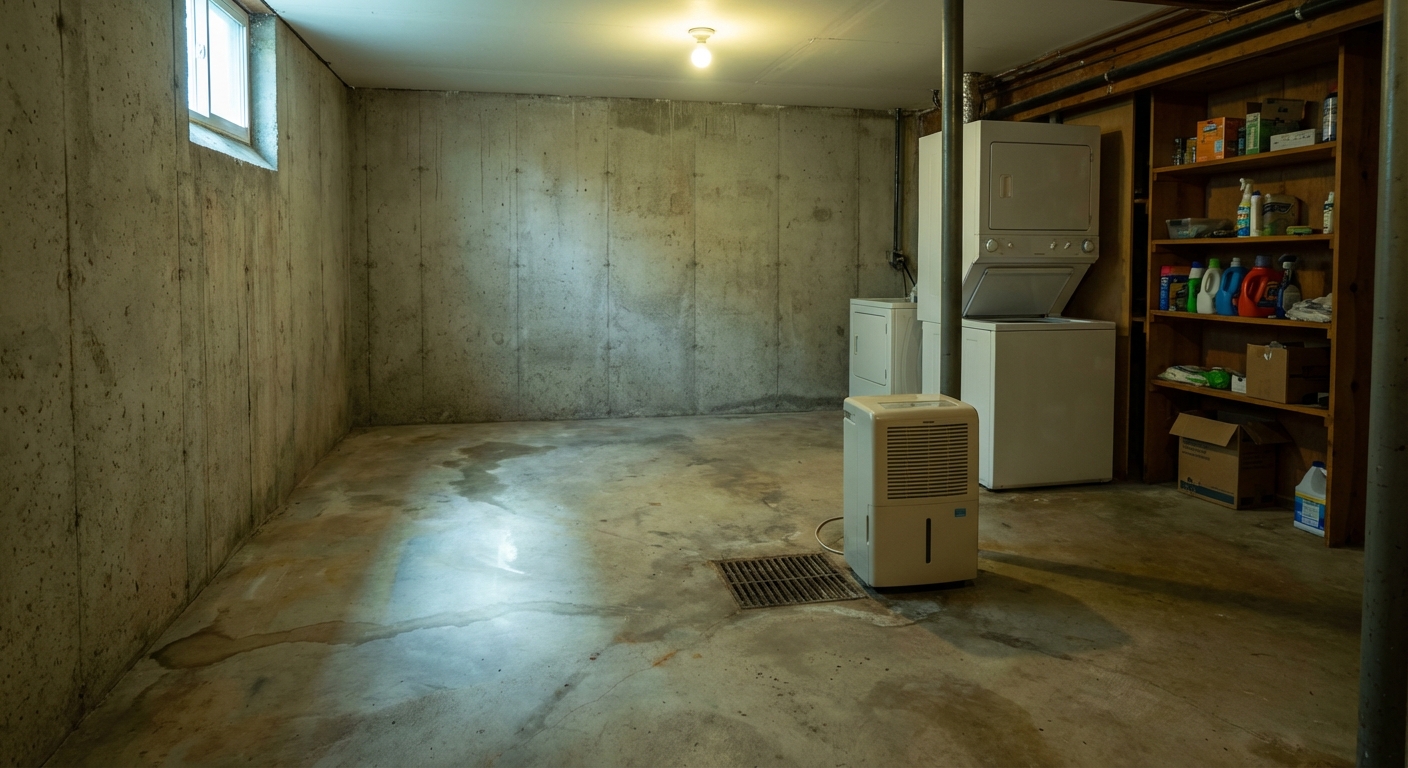
In practice, that means your notes from the sizing steps above only become useful when you apply them to the kind of space you are actually drying. The examples below use the same inputs-condition, drivers, and temperature-so you can see how the capacity tier shifts.
For basements and crawlspace-adjacent areas, many experts target about 40 to 50% RH (humidity %) year-round. You will also see common guidance ranges like 30 to 50%, 40 to 45%, and 45 to 55% without any single number being universally "the" right answer.
Condition: very damp. Moisture drivers: below-grade walls, seasonal seepage, and that "stored air" smell from limited air exchange. Capacity outcome: 50 to 70 PPD class for most finished basements, especially if you are chasing 45% RH instead of "good enough."
Basements that sit in the 50s to low 60s cut effective capacity and trigger more frost and defrost cycling, so you buy "more pints" than the square footage alone suggests. Condition: slightly damp to very damp. Driver: cool air plus porous concrete. Capacity outcome: 50 PPD class at the low end, 50 to 70 PPD class if you see condensation on pipes or musty odors return quickly.
On main floors and bedrooms, temperature is usually closer to where portable refrigerant units perform best, so the moisture sources and room condition tend to drive the decision more than coil temperature. Condition: slightly damp. Drivers: normal breathing, houseplants, and outdoor humidity leaking in when doors open. Capacity outcome: 20 to 35 PPD class for most rooms in this size, stepping to 30 to 50 PPD class if you keep doors open to a larger zone.
Bathrooms are a different workload because they spike quickly. Condition: wet during use. Driver: shower steam that saturates the air fast. An exhaust fan still matters for clearing spikes; the dehumidifier handles what lingers in towels, grout, and nearby drywall. Capacity outcome: 30 to 50 PPD class if you are drying the adjacent hall too; otherwise you are usually solving this with spot ventilation, not brute-force pints.
Laundry spaces often look modest on a floor plan but run like a high-load moisture zone. Condition: very damp. Drivers: hanging clothes indoors and a poorly vented or leaking dryer exhaust adding steady moisture. Capacity outcome: 30 to 50 PPD class for a typical laundry nook; 50 PPD class if it shares air with a basement.
Crawlspace specialists commonly aim around 45 to 55% RH, which lands in the same practical control band as the 40 to 50% targets many people use for basements.
Condition: very damp. Driver: constant ground moisture and humid outdoor air infiltration. Capacity outcome: 50 to 70 PPD class, and you size toward the top end when the space stays cool.
Ignore "coverage" as a decision shortcut. Manufacturer listings can conflict even at similar capacities: the GE 50-Pint Dehumidifier (Model APHL50LB) is advertised up to 4,500 sq ft, while the Moiswell 70-pt commercial dehumidifier (Model ME-7S) is listed for 1,000 sq ft. Conditions, not the headline, decide the real workload.
Pattern to remember: capacity needs jump when you stack high-moisture drivers (below-grade walls, showers, wet laundry, infiltration) and when the air is cooler than the dehumidifier likes. If your home matches the "very damp" or "wet" examples, choose the higher PPD tier.
When a Dehumidifier Isn't Enough
Correct sizing solves the common problem of buying off a square-foot label, but it cannot overcome a building that is continuously adding moisture. If humidity stays high after you have the dehumidifier correctly sized, the fix is cutting off the moisture source, not endlessly upsizing equipment. The giveaways are consistent: recurring dampness, wet walls or floors, a musty odor that returns quickly, RH that spikes right after rain, and a dehumidifier that runs constantly with limited improvement.
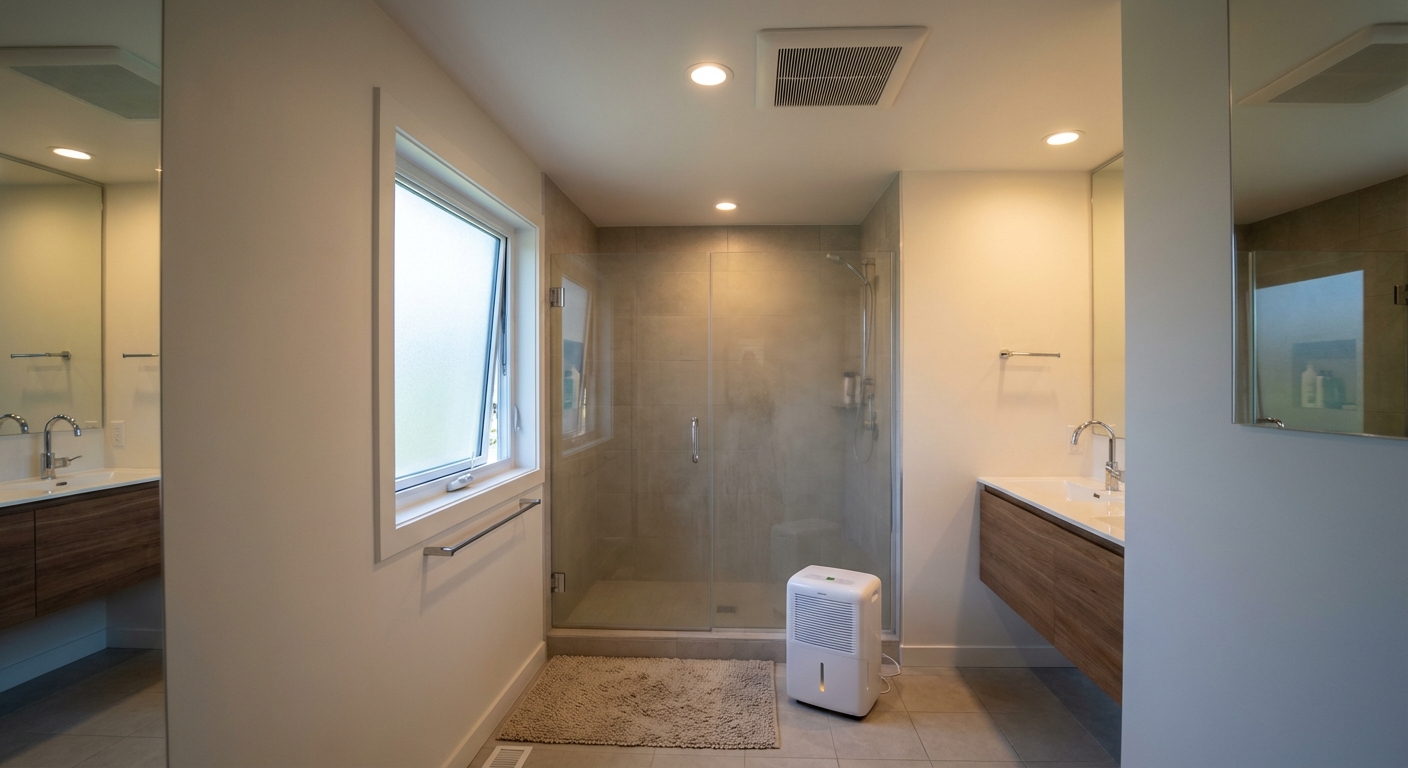
Moisture enters structures as bulk water, capillary water, and vapor, and each one points to a different repair. Bulk water shows up as leaks, poor drainage at the foundation, or wet slab edges after storms. Capillary water is wicking through below-grade concrete or masonry, leaving persistent damp bands or efflorescence even when it has not rained. Vapor is humid outdoor air slipping in through leakage and pressure effects, so the space stays sticky without obvious wet spots.
If your AC is short-cycling, meaning frequent on/off operation with only brief run times, humidity control suffers even if the thermostat temperature looks fine.
Oversized cooling short-cycles, which reduces dehumidification. Short-cycling increases compressor wear and reduces system efficiency, and it drives up total energy use through off-cycle and parasitic consumption.
Variable-speed and two-stage HVAC systems generally provide better humidity control than single-stage systems due to longer run time and improved latent removal.
Adequate ventilation is a number, not a guess. ASHRAE 62.2 and IRC-style guidance use defined airflow targets; bathroom exhaust is commonly set at 50 CFM intermittent or 20 CFM continuous.
Do this weekend
- Stop liquid water first by correcting drainage, downspout discharge, and obvious leaks.
- Air-seal the obvious leakage paths that pull in humid outdoor air.
- Verify exhaust by confirming the bath fan can actually move the required CFM and that it vents outdoors.
Call a pro for below-grade waterproofing, blower-door and pressure diagnostics, and HVAC sizing and control changes that keep run times long instead of cycling.
Quick Sizing Recap + Next Steps to Buy with Confidence
You are ready to buy because you can pick a defensible PPD range based on the room's conditions and moisture sources, then verify efficiency and installation realities before you spend a dollar. Remember: PPD is a rating basis, cooler basements remove less in practice, and basements and crawlspaces typically target about 40 to 50% RH for year-round control. Those points are what cut through the conflicting "up to X sq ft" labels and keep you shopping by capacity that matches your moisture load.
If humidity persists, fix the cause first: air and moisture often enter through joints and penetrations, and HVAC short-cycling can keep air damp even with a bigger unit.
- Confirm your square footage first, apply ENERGY STAR sizing guidance, then size up only for clear moisture-source triggers.
- Compare the EnergyGuide label (a standardized consumer label that provides energy consumption information and enables comparisons among similar models) to shop apples-to-apples.
- Prioritize ENERGY STAR-labeled dehumidifiers, which are designed to remove moisture more efficiently.
- Plan drainage: condensate drain lines must be sized per manufacturer instructions; condensate drain line service kit fittings can also simplify cleanouts and maintenance access.
- Check rebates and incentives in your area, since broader programs (for example, HOMES) may apply depending on location and project type.
If you want selection support or install-planning help, contact Budget Heating & Air Conditioning, Inc. for product guidance before you order.
Wrapping Up
Choosing the right dehumidifier is less about the "up to X sq ft" label and more about matching capacity to your real moisture load. Pint per day (PPD) tells you how aggressively a unit can remove water under DOE test conditions, but real homes vary by temperature, current relative humidity, air leakage, and moisture sources like showers, cooking, and indoor laundry. That is why the same room size can require very different capacity tiers, especially in cooler basements where performance drops and defrost cycles can cut effective removal.
The practical approach is straightforward: define the space you want to control, measure square footage, take a normal-time RH reading, classify the room as slightly damp, very damp, or wet, then use the ENERGY STAR chart to land on a realistic PPD range. Once you are in the right pint class, compare IEF to get the most efficient unit that still has enough headroom, and remember that persistent dampness may signal a moisture problem that needs sealing, drainage, ventilation, or HVAC fixes.
Gather your measurements and moisture triggers, then shop by a PPD range with confidence.
Ready to Get Started?
- Get a Custom Quote
- Talk to Our Team by phone
- Shop Ductless Mini Splits
 Heating
 Learning Center
 Money Saving Tips
 Product and Brands Insights
 State by State
 HVAC Systems