




 buying guides
 cooling
 product and brands insights
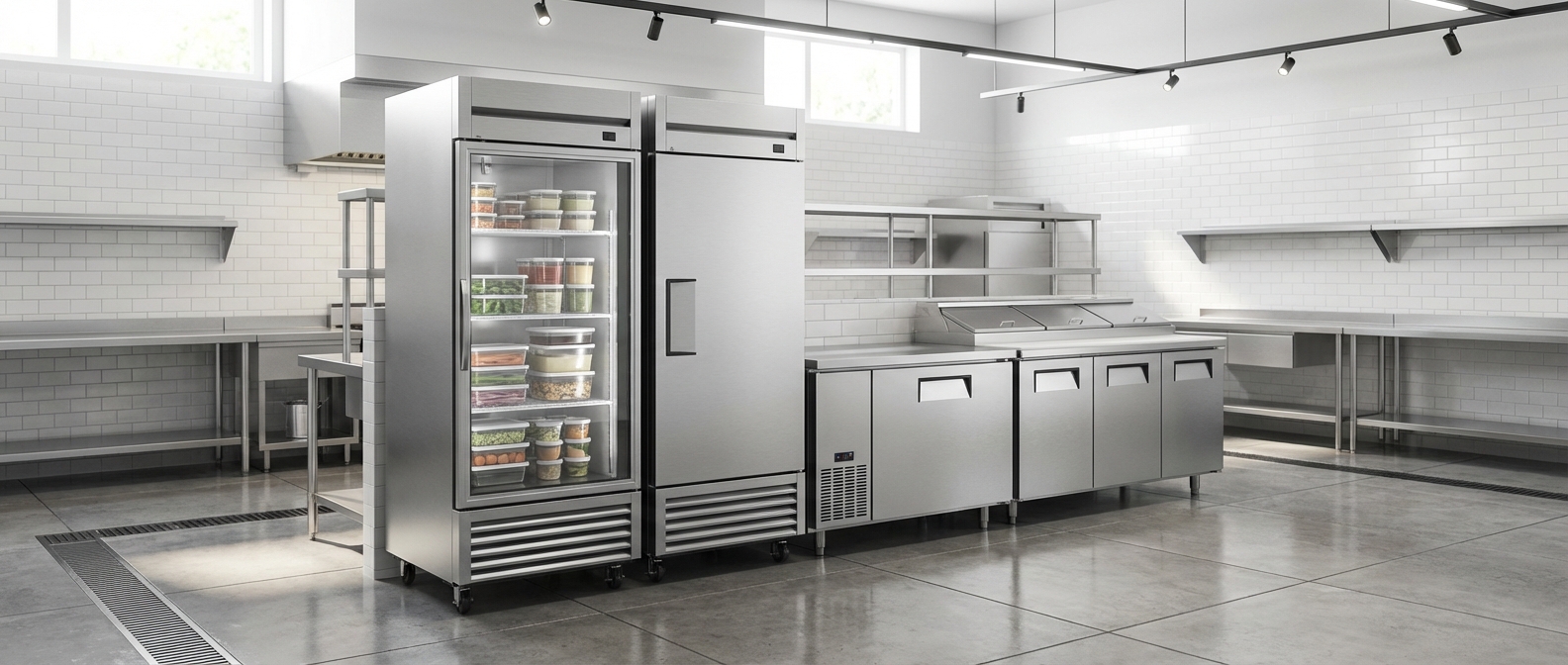
Buying commercial refrigeration in 2026 requires more attention to efficiency, refrigerant choice, and long-term serviceability than a simple like-for-like replacement. If your cooler just died, your remodel is on a deadline, or your last replacement led to surprise utility bills and repeat service calls, the key change is this: refrigerant restrictions now affect many new units, while energy use remains a major operating-cost difference between otherwise similar models.
The fast, cheapest unit is rarely the lowest-cost unit. A rushed purchase can lock you into higher energy draw, harder-to-source refrigerant, or a design that is painful to keep running, and any of those failures show up as downtime during your busiest hours. The safer play is buying for operating cost and serviceability, not just purchase price and lead time.
On efficiency, compare the current DOE-rated energy consumption for the exact equipment class and model. A 2025 federal rule that would have established new and amended standards for commercial refrigerators and freezers was withdrawn on May 20, 2025, so it does not create a new 2026 compliance deadline. For purchase decisions, model-specific kWh/day data and ENERGY STAR certification remain the most useful comparison points.
On refrigerants, 2026 planning is shaped by EPA restrictions on higher-GWP HFCs under the AIM Act. For many newly manufactured stand-alone retail food refrigeration products, the applicable restrictions began January 1, 2025, although dates and GWP limits vary by equipment category. Many current self-contained designs use R-290 propane, but buyers should verify the exact refrigerant, charge, equipment classification, and local service support before ordering. These rules generally apply to new products and systems, not a blanket prohibition on repairing existing equipment. This guide gets you to a confident pick: the right unit type, size and fit, efficiency signals, refrigerant compatibility, and durability priorities needed to reduce downtime risk and long-run cost.
Choose the Right Beverage-Air Category
Category selection is about workflow friction: every extra step and every door-open event is cost. The right category is the one that matches access patterns, storage, production, or selling, not the one with the lowest price.
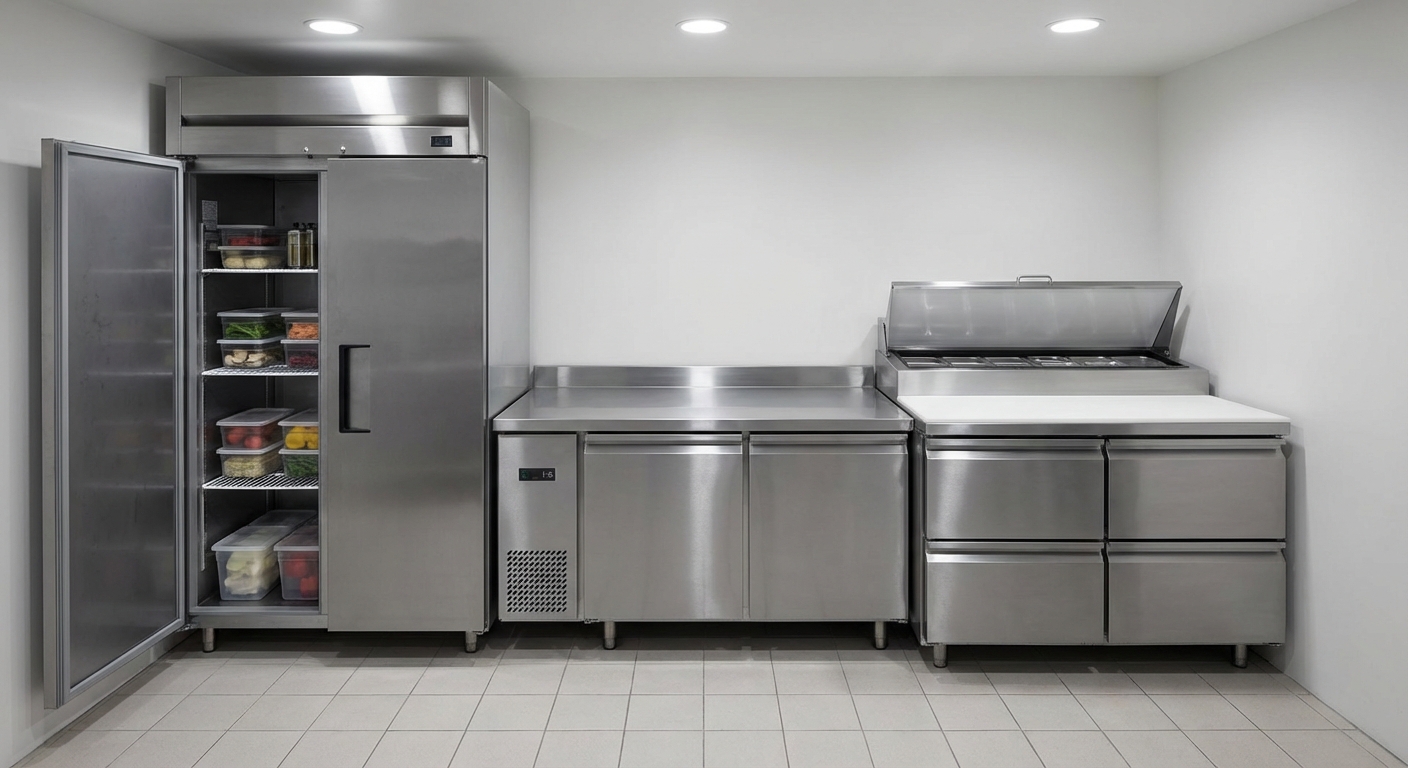
For back-of-house bulk storage, reach-ins win because they tolerate constant open-close during prep while keeping product centralized where the prep team already works. The catch is travel time: if cooks are walking off the line for every pan, you just converted cold storage into a labor tax. Use reach-ins for bulk and backups, then stage closer to hands-on work.
For kitchen line stations, undercounters and worktops eliminate steps because the product lives under the cutting surface. Capacity is the tradeoff, and it shows up fast in service. Beverage-Air's own undercounter lineup makes the point: there's a 20-inch, one-door undercounter freezer model UCF20HC, and even wider models stay modest in volume, with the UCR36AHC listed at 8.5 cu. ft. net capacity and the 48-inch, 2-door UCR48AHC listed at 11.82 cu. ft. (manufacturer specs).
For grab-and-go or customer-facing beverage walls, merchandisers earn their keep on visibility. You accept a performance trade: ENERGY STAR scoping documents indicate that swapping a glass door for a solid door would likely yield energy savings for refrigerators, so you only pay for glass when selling requires it.
Doors favor bulky cases and tall items; drawers favor high-frequency, small-portion access because you can pull one drawer without exposing the entire cabinet. If staff need access from both sides of a corridor or pass-through window, choose a pass-thru specifically to remove cross-traffic, not because it looks "premium."
Undercounters disappear during a rush because they do two jobs at once: cold storage and active staging. Validate capacity by matching it to restock cadence: if you cannot restock between peaks, stop treating an undercounter as primary storage and move backups to a reach-in.
Prep tables buy assembly speed, but only if the rail matches your mise en place. Many sandwich and salad prep tables are designed around 1/6-size pans, so the default rail supports lots of small ingredients. Narrow-rail formats shift the balance toward 1/3-size pans, and the count ranges by length, commonly 6 up to 15 pans (model-dependent).
- Label the job: bulk storage (reach-in), active production (prep table), line staging (undercounter/worktop), or selling (merchandiser)—then compare commercial refrigeration categories side by side.
- Count touches: who opens it, and how often per hour during peak.
- Pick visibility: choose glass only when customers must see product; otherwise default to solid.
- Match configuration: drawers for rapid grabs, doors for bulky loads, pass-thru only when access from both sides removes traffic; if you're unsure, use a commercial refrigeration quick selector to narrow the right type.
Sizing, Layout, and Installation Planning
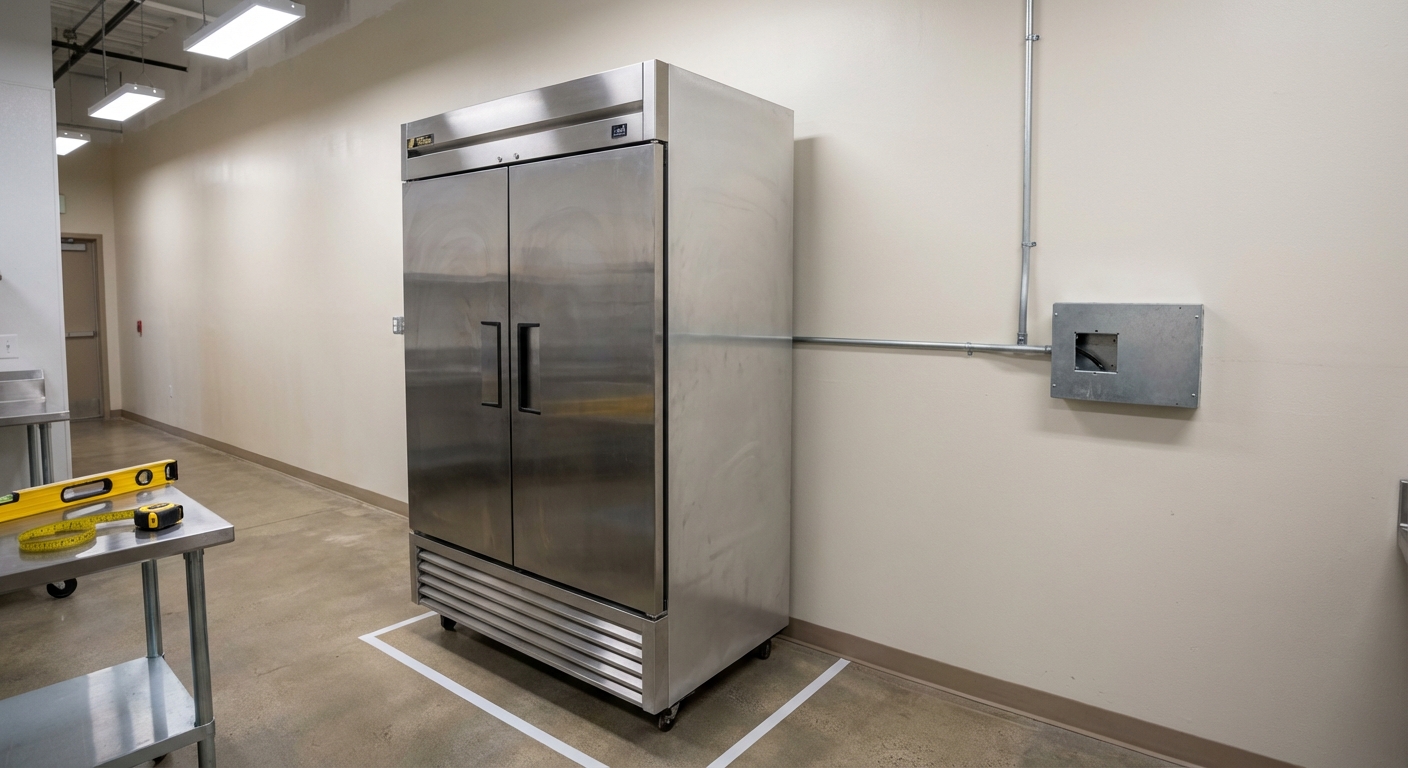
Once the category is right, the next risk is basic fit: clearances, power, airflow, and delivery geometry that determine whether the unit runs correctly on day one. Many first-year refrigeration problems can be traced to sizing, installation, electrical, ventilation, or other site-readiness issues rather than defective equipment.
Size for the busiest hour, not the average day. If you load product once per shift, the box must ride through long recovery cycles; if you restock every 30 minutes, you can run tighter. Product mix drives the hidden math: full-size hotel pans anchor around a 12 inch x 20 inch footprint, and every pan rail, rack, divider, and air channel consumes usable space you cannot sell from.
Many undercounters, prep tables, and merchandisers commonly run on 115V, single-phase, 60Hz power, but you still verify voltage, phase, and rated current per the exact model spec sheet. Treat "fits a standard outlet" as an assumption that fails on install day.
For circuit planning, use real reference points: a comparable glass-door merchandiser is specified at 5.8 amps (115V/60Hz/1ph). That is a planning number, not a Beverage-Air guarantee. Also expect exceptions: manufacturers offer special electrical configurations on request, so the plug and draw can change from what you are used to.
Term Sheet check: if the unit lists a NEMA 5-15P plug, confirm you have the matching receptacle where the cabinet will land, not where the old unit used to sit.
Airflow and service access are performance multipliers. Block the intake or exhaust with boxes, tight millwork, or a trash can, and the unit runs hotter and longer. Put the same cabinet on a hot cook line instead of air-conditioned retail and you change how hard it has to work, which changes recovery and perceived capacity—plan for ventilation and heat rejection in the actual space.
Delivery failures look like "damage" and "defects" but start as geometry: door width, tight turns, elevator depth, and threshold lips. Stage a clear landing zone, remove doors if needed, and know where the pallet and packaging will be broken down.
- Measure the intended footprint, door swing, and front working zone.
- Confirm usable interior space after pans, racks, and airflow channels.
- Verify electrical spec: voltage, phase, Hz, and nameplate amps for the exact model.
- Match receptacle to plug type (example: NEMA 5-15P) at the final location.
- Plan a dedicated circuit approach based on the unit's rated current.
- Choose a placement that keeps airflow paths unobstructed in day-to-day use.
- Avoid heat sources and hot ambient zones that force longer run times.
- Check service access for panels and condenser cleaning without moving the unit.
- Walk the delivery path: doors, turns, elevators, thresholds, and staging space (and confirm refrigeration system type and site constraints before final placement).
Energy Efficiency, Refrigerants, and 2026 Compliance
When the unit fits and can breathe, the next cost driver is what it consumes and what it can be serviced with over its life. Operating cost is designed in, and then multiplied by how you use the box.
Two reach-ins can look nearly identical on the floor, but the one that leaks air, runs hotter lights, or cycles sloppy defrost will bill you for those choices every hour it's plugged in.
Start comparisons with Daily Energy Consumption (kWh/day): when you're looking at two similar units in the same equipment class and roughly the same size, the lower kWh/day unit is the cheaper box to operate.
That number is measured using the DOE test procedure for commercial refrigeration (10 CFR Part 431, Subpart C, Appendix B), so you can use it as an apples-to-apples signal, as long as you don't cross-shop different classes like a glass-door merchandiser against a solid-door reach-in.
Validate the context on the sheet: equipment type, vertical design, and display area all materially influence energy use, even before you factor in your kitchen's heat load.
Real savings come from stopping waste: tight door sealing and intact gaskets prevent warm-air infiltration; higher-quality insulation slows heat gain; LED lighting cuts internal heat compared to older lamp types; efficient fan motors (ECM, when offered) reduce continuous electrical load. Controls and defrost logic matter because unnecessary defrost cycles and aggressive setpoints turn into nonstop compressor runtime. Your usage patterns can erase good specs fast: frequent door openings, propping doors during prep, and loading warm product drive consumption up because the system has to pull that heat back out.
Verify the refrigerant type on the nameplate and the spec sheet before you buy, and keep a reference for refrigerant supplies that match what the unit actually uses. Downtime risk is usually serviceability, not theory: choose a refrigerant your local technicians see every week, and confirm parts availability (controls, fan motors, sensors) so a simple failure doesn't become a multi-day outage.
Use ENERGY STAR certified as a qualification shortcut: ENERGY STAR certified commercial refrigerators and freezers are about 20% more energy efficient on average than standard models, and many rebate programs key off that listing.
Rebate paperwork commonly requires proof of purchase (receipt or paid invoice) and often an installation invoice; programs may also require model and serial numbers and a qualifying listing reference (ENERGY STAR, CEE, AHRI, where applicable). Save a clean photo of the nameplate on day one, plus the spec sheet PDF, so you're not hunting later.
- Compare kWh/day only within the same class and similar size.
- Confirm ENERGY STAR certified status if rebates matter.
- Match the refrigerant on the nameplate to technician readiness and parts support (including common refrigerant canisters used for service).
- Inspect sealing, insulation cues, LED lighting, efficient fans, and defrost/controls features.
- Archive paid invoice, install invoice, model/serial, spec sheet, and nameplate photo.
Durability, Features, and Serviceability
Efficiency and refrigerant choice reduce operating risk, but uptime is ultimately decided by wear items and how quickly service can happen. Downtime is usually a service-access and wear-item problem, not a cooling-capacity problem. Spec choices determine whether service is a 10-minute task or a lost day, and the deciding factors are almost always cabinet durability, wear items, and how quickly a tech can reach the condenser and controls.
Start with the surfaces that take hits and get cleaned hardest. In Beverage-Air's P Series, stainless steel construction is listed for the front and sides on some models, with interiors described as corrosion-resistant aluminum. Some P Series models also specify a stainless front, back, side, and top grille plus a stainless door liner. Stainless on high-contact faces resists dents and chemical wipe-downs, while corrosion-resistant interior metals reduce pitting and flaking that turn routine sanitation into a repair call.
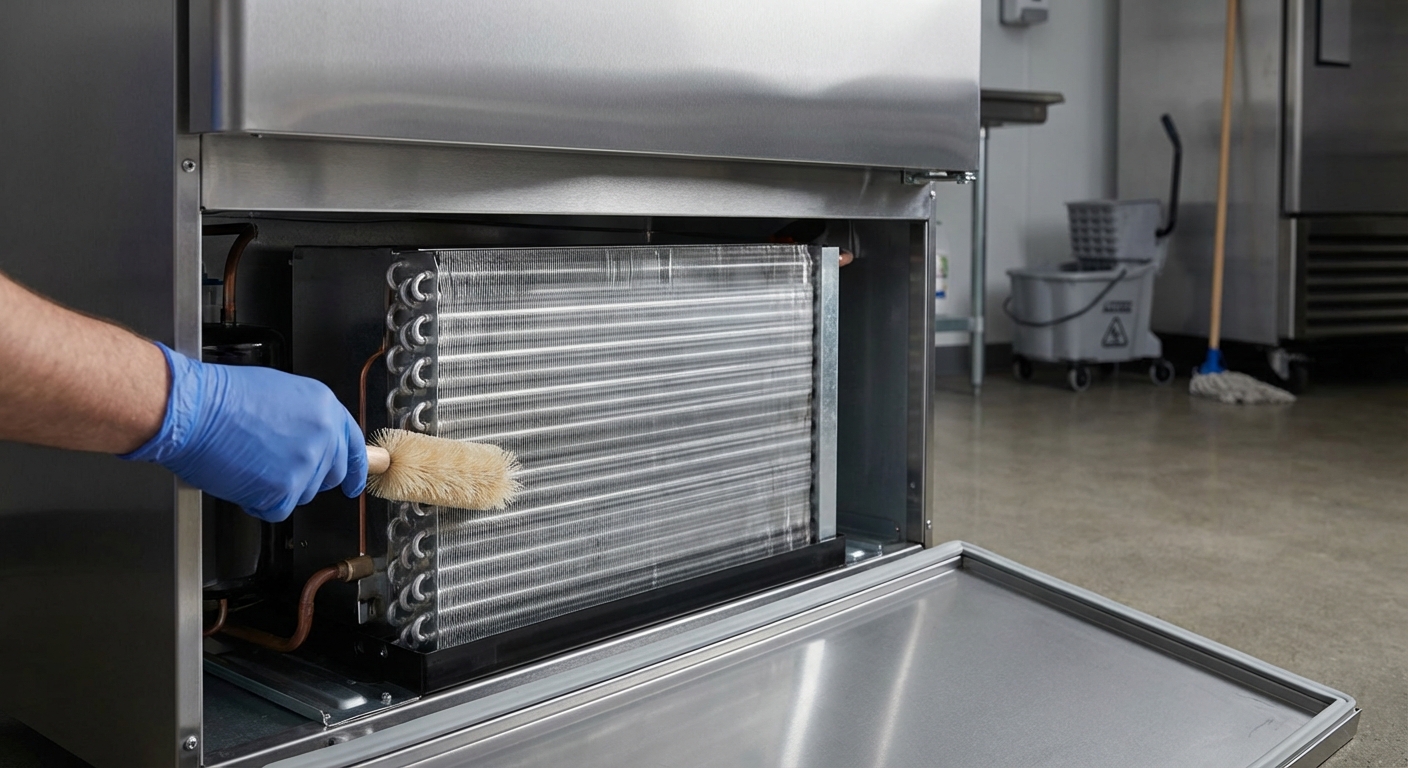
Many units pull condenser air from behind a bottom/front grille, and manuals are explicit that condenser coils must be kept clean and free of dirt and lint buildup.
That bottom/front intake is operationally convenient for access, but it also lives in the dust lane (flour, mop lint, cardboard fuzz). Look for straightforward access panels and a layout that lets a tech open the cabinet quickly, including sliding-panel designs called out in service documentation.
Plan on daily wipe-downs, weekly gasket and hinge checks, monthly grille inspection, and condenser attention at least twice a year as a baseline. If your kitchen is dusty or greasy, treat coil cleanliness as a more frequent uptime task, because temperature stability depends on airflow and drives compressor cycling.
Beverage-Air states a seven (7) year parts and labor warranty for Beverage-Air branded equipment to the original purchaser, with hermetic/semi-hermetic compressors warranted part-only for seven (7) years with limitations. Treat that as a downtime signal, then confirm what actually gets you back online: labor coverage scope, trip charges, lead times on common wear items, and whether a compressor event becomes a multi-day wait (and how quickly evaporator parts can be sourced if needed).
- Stainless on front/high-contact faces; corrosion-resistant interior metals where spills live.
- Replaceable wear items (door gaskets, hinges/handles, shelf supports) without special tools.
- Bottom/front grille access you can inspect quickly, without moving the unit.
- Clear, simple access panels for condenser and controls.
- Documented parts and warranty support channels, plus warranty terms that limit labor exposure.
Summary Checklist
A confident 2026 purchase is the one you can verify on paper before delivery day. That means the unit matches your workflow, fits your space and utilities, signals lower operating cost, and avoids preventable refrigerant and service delays.
- Lock in the category that matches your workflow (reach-in vs undercounter vs prep vs merchandiser).
- Confirm site readiness: doorway path, placement, ventilation plan, and power availability align to the unit.
- Verify operating-cost signals: Daily Energy Consumption (kWh/day) and ENERGY STAR certified status on the spec sheet.
- Match refrigerant: confirm refrigerant type and charge from the nameplate/specs before ordering.
- Check serviceability: construction details, service access, and your expectation to keep the condenser clean.
- Read the warranty for coverage and claim requirements, then plan maintenance accordingly.
- Price the delivered total, not just the unit: freight, accessories, and install costs drive TCO discipline.
- File a clean paperwork set for warranty and rebates: invoice/receipt, model/serial, and the relevant spec sheet or qualification reference; missing paperwork commonly delays or jeopardizes rebates.
- Cross-check the spec sheet: exact dimensions, net capacity, electrical (voltage/amps/plug), required clearances, operating ambient limits, and refrigerant type/charge.
If you want a second set of eyes before you commit, request a quote from Budget Heating at budgetheating.com, check available rebates before you buy, and use their support resources to validate specs, documentation, and delivery details.
Wrapping Up
Commercial refrigeration decisions in 2026 come with higher stakes, because tighter efficiency expectations and the refrigerant transition are reshaping what "same as the old one" even means. The safest purchases start by matching the Beverage-Air category to the job, then validating real-world fit: dimensions, door swing, airflow clearances, delivery path, and the exact electrical specs on the nameplate.
From there, long-run cost and uptime come down to what you can verify on paper: compare kWh per day within the same class, confirm ENERGY STAR status when it matters, and double-check the refrigerant so service and parts support will not become your next downtime problem. Finally, prioritize durability and serviceability, especially access for coil cleaning and common wear items, because those details often decide how quickly you get back online.
Before you place the order, take a few minutes to cross-check the spec sheet, nameplate details, and your site readiness so your next unit is a confident upgrade, not a rushed replacement.
 Heating
 Learning Center
 Money Saving Tips
 State by State
 HVAC Systems