





 buying guides
 heating
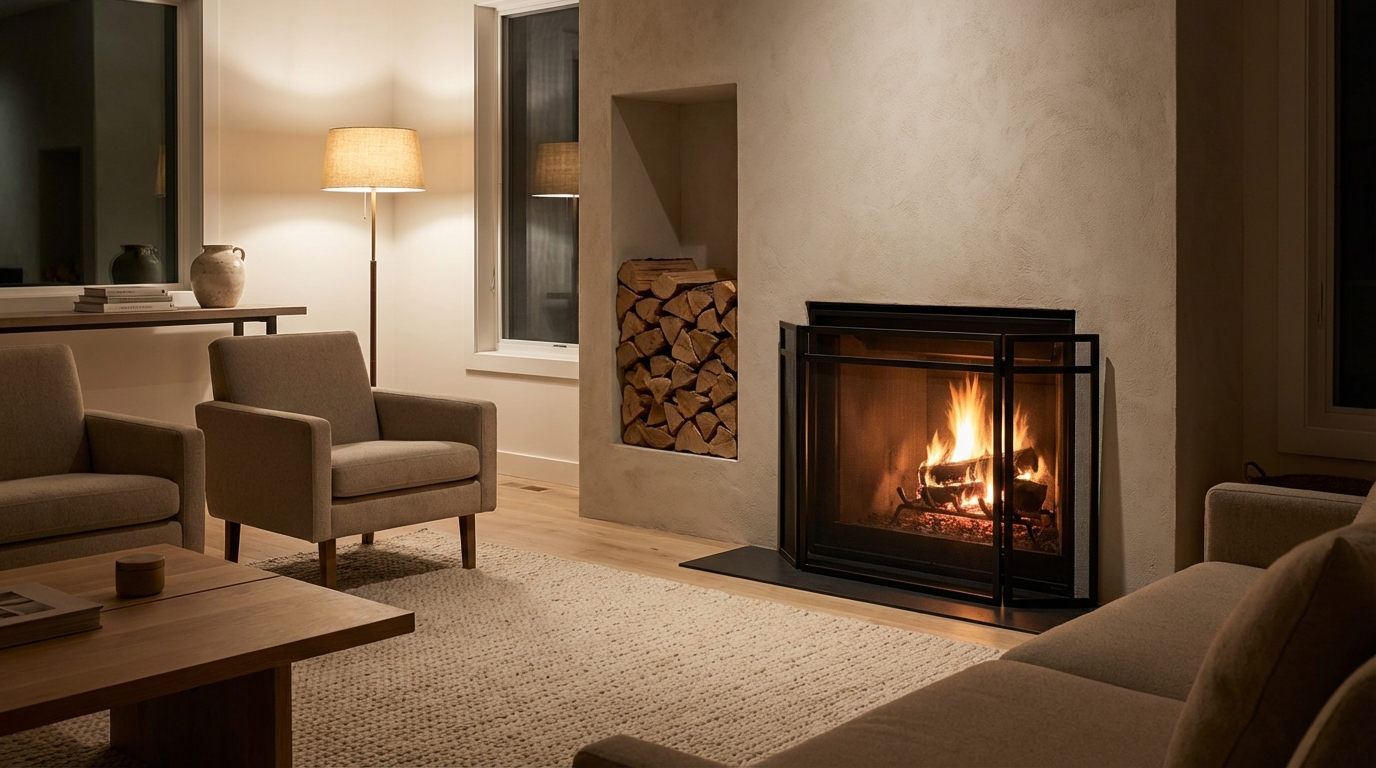
A wood-burning fireplace purchase fails or succeeds before you ever light the first fire: at the planning and compliance stage. You want real wood, not a smoke problem, a surprise clearance conflict, or a permit and insurance setback that stops the project cold.
If you choose a unit before confirming the chimney and hearth realities, you create expensive rework: liners, venting changes, inspection delays, and a fireplace you avoid using because it drafts poorly or heats unpredictably. Home insurers may impose specific requirements for fireplaces and wood stoves, and the fireplace type can affect insurance costs, so a "good deal" can turn into paperwork and premium friction.
This guide resolves the core tradeoff: the real-wood experience versus modern expectations for cleaner burn, predictable heat, install readiness, and ownership costs. In 2025 to 2026 shopping, you'll most commonly see "EPA-certified" labeling on wood stoves, wood-burning inserts, and some fireplaces, including units installed in masonry or traditional fireplaces.
If your priority is steady whole-home comfort with automation and low hands-on operation, a heat pump split system, ductless mini split, or dual fuel heat pump system is the primary comfort play, not a wood appliance. You'll also plan logistics up front, including delivery versus in-store pickup at select locations available during checkout, so the unit arrives when the site is ready.
You'll walk away able to verify fit, constraints, and required documentation before you buy.
Choose the Right Wood-Burning Fireplace Type
Fireplace type is the purchase decision that locks in your install complexity and long-term maintenance. The friction is that your existing chimney condition, your appetite for construction, and your heat-performance expectations rarely line up neatly across categories, so the "right" choice is the one that fits the structure you already have and the upkeep you will actually do.
- Retrofit vs. new build: working with an existing firebox and flue favors inserts; framing a new cavity favors factory-built units.
- Aesthetics vs. heat: open-hearth look points to masonry; meaningful heat contribution points to inserts or tighter factory-built designs.
- Chimney reality: if the flue is questionable, plan for inspection and likely upgrades before you buy the appliance.
- Maintenance tolerance: commit to regular sweeping and inspections, or choose a path that minimizes exposed masonry and draft issues.
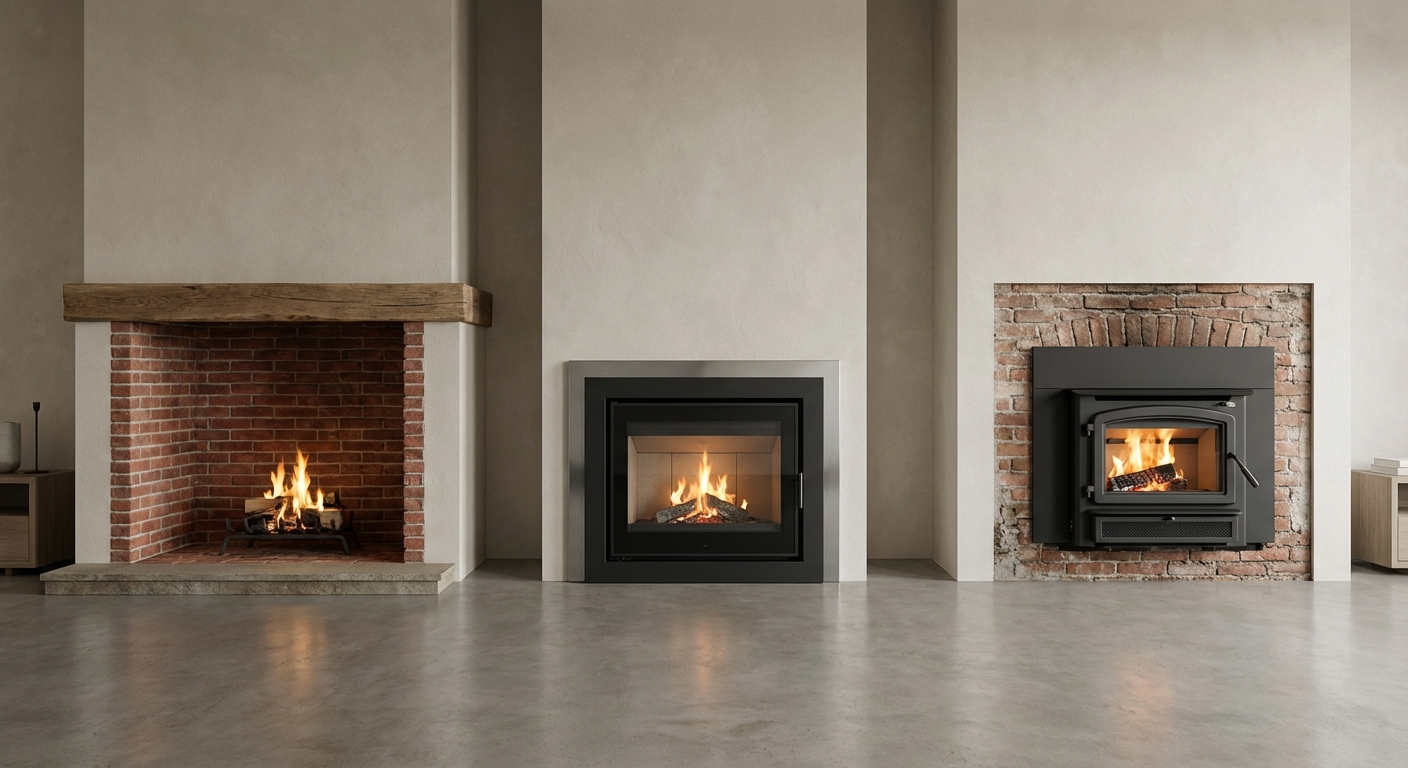
A masonry fireplace fits a new build or a major renovation where you want a classic, permanent look and can accept lower efficiency posture. The tradeoff is lifecycle: mortar and flue components age, and repairs are part of ownership. Regular chimney maintenance prolongs chimney life and safeguards the home and family.
Factory-built units win when you are framing a new fireplace or replacing one during a remodel and want a listed system designed as a package. Installation is construction-forward (framing, venting path, chase planning), but it avoids rebuilding a full masonry stack. Expect better sealing and a more efficiency-minded posture than open-hearth masonry.
Inserts are the straightest upgrade when you already have a masonry fireplace and want more usable heat without rebuilding the room. Installation complexity centers on chimney condition and venting. Metallic chimney liners (often stainless steel) are common for upgrading or repairing liner systems; inserts frequently use a stainless steel liner to improve safety and performance in existing chimneys.
Manufacturers often publish LHV efficiency, which looks higher than HHV. HHV counts more of the heat in the fuel when calculating efficiency. When shopping, compare models using the same basis (HHV-to-HHV or LHV-to-LHV) and do not over-interpret a small percentage gap across different reporting methods.
Pick the category first; then shop models within that category. Answer these before you browse: Do you have an existing fireplace to retrofit? What is the chimney's current condition? How much heat do you expect the unit to deliver, not just how it looks? Will you commit to ongoing chimney inspection and cleaning?
Once the category is set, the next filter is what you can permit, insure, and operate under local rules, documentation, and emissions performance to decide whether a model is actually viable.
Efficiency, Emissions, and 2026 Compliance
In 2026, the cleanest choice is the one you can document and justify. "Clean burn" is measurable, and it shows up as EPA-certified status (tied to an emissions-tested, regulated appliance category with paperwork to prove it), plus a published emissions number you can compare across models. Two units can look similar on the showroom floor, but the one with verifiable emissions documentation is the one that clears permitting questions, burn-ban rules, and insurance review with less friction.
Start with particulate emissions (g/hr), meaning the mass of particulate matter released per hour under the test protocol. That number is commonly displayed right on manufacturer spec sheets and often repeated by retailers in the specifications table, for example, as "3.9 grams/hr." Lower g/hr generally signals a cleaner burn under the standardized test conditions, which is exactly what compliance reviewers care about when they ask for documentation.
Ask the seller for the certification documentation tied to the exact model number, not just a brand claim. EPA-certified inserts exist in compact sizes, so "it won't fit" is rarely a reason to accept missing paperwork.
Non-catalytic units lean on secondary combustion, where preheated air re-ignites smoke gases in a secondary burn zone. The buying implication is simple: operation is straightforward, and there is no catalyst to maintain. A catalytic combustor routes smoke through a coated catalyst that burns pollutants at lower temperatures, typically reducing emissions, but it adds a consumable component that can require replacement. Hybrid designs combine a catalyst with secondary-combustion features, trading a little maintenance complexity for strong emissions performance.
Regulators focus heavily on particulate matter, and local rules often do too. EPA discussions of indoor wood heating devices commonly include freestanding wood stoves, pellet stoves, masonry heaters, and fireplace inserts, and the EPA has proposed revisions to the NSPS for residential wood stoves. Your county air district, burn-ban program, and insurer can still be stricter than the federal baseline, or restrict when you can burn.
- Confirm the unit is EPA-certified for its category and keep the certificate/model documentation.
- Locate the particulate emissions (g/hr) on the manufacturer's spec sheet and cross-check it against the EPA listing/database entry for the same model.
- Identify the combustion approach (secondary combustion, catalytic combustor, or hybrid) so you understand the operation and catalyst-maintenance obligations.
- Verify current local burn-ban and insurance requirements before you buy, not after delivery.
After the paperwork and combustion approach are clear, sizing is what determines whether the unit is comfortable to run day to day, or something you constantly fight.
Sizing & Heat Output
Correct sizing is what makes a wood fireplace easy to live with. Oversizing is a performance problem, not a luxury: if the firebox is too big for the primary room, you end up choking the fire to stay comfortable, which drives low-and-slow smoldering, more smoke, and temperature swings you feel as stuffy overheating.
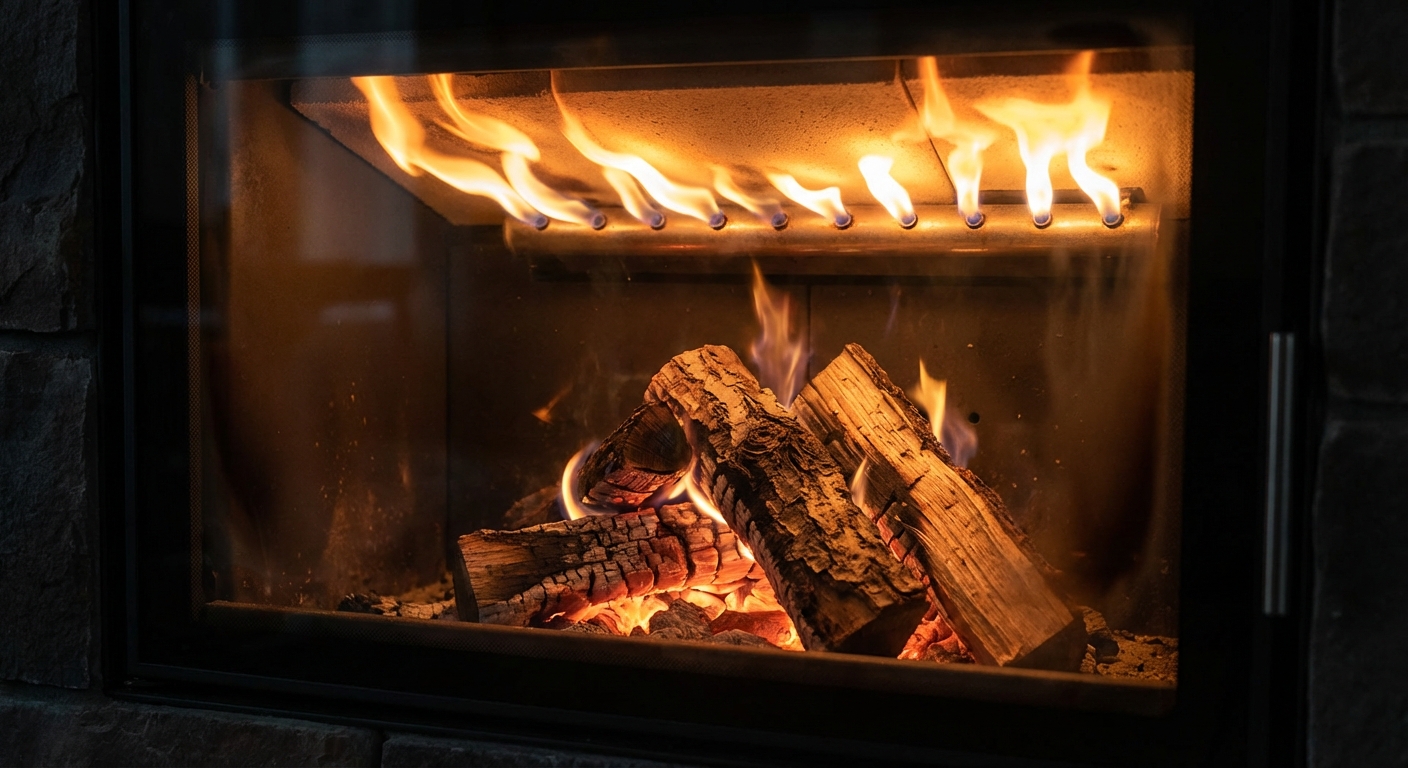
Plan for a wood-burning fireplace to heat a single room well, not to magically balance an entire house. In an open plan, heat pools where the air can circulate, but tall ceilings and open stairwells siphon warmth upward. In closed layouts, doors and short hallways throttle airflow, so "whole-home" heat turns into a warm living room and cool bedrooms. Placement matters: a unit tucked in a formal front room won't carry comfort into the main living zone without intentional airflow.
As a baseline, typical open fireplaces commonly generate about 20,000 to 40,000 BTU per hour, not a guarantee and not a whole-house promise.
That output lives and dies on burn rate and fuel quality. Wood carries roughly 6,000 to 8,000 BTU per pound, depending on species and condition, so wet or punky wood wastes energy boiling off moisture instead of making usable heat.
Makeup air is dedicated replacement air brought in so exhaust fans and the chimney are not fighting the same limited indoor air. Tight envelopes plus competing exhaust (bath fans, dryers) disrupt draft and increase smoke spillage risk. Use a concrete cue: kitchen range hoods exhausting more than about 400 cfm generally require makeup air to avoid depressurizing the home and drawing combustion gases, and tighter homes are more sensitive.
- Pick the one room you actually want heated.
- Measure ceiling height and note any vaulted areas or open stairwells.
- Record the insulation level and obvious air leaks or chronic draftiness.
- List major exhaust devices (range hood cfm, bath fans, dryer).
- Mark the fireplace placement relative to the daily living space and doorways.
- Flag chimney path constraints (offsets, exterior runs) for your installer.
Those room and airflow realities carry straight into the budget: venting scope, access constraints, and required components are easier to price accurately when sizing and placement are settled.
Total Cost of Ownership in 2026
If you don't price the system, you don't know what you're buying. The fireplace's unit price is a minority of the budget once venting, and site realities show up, and those line items are where most projects blow past the original number.
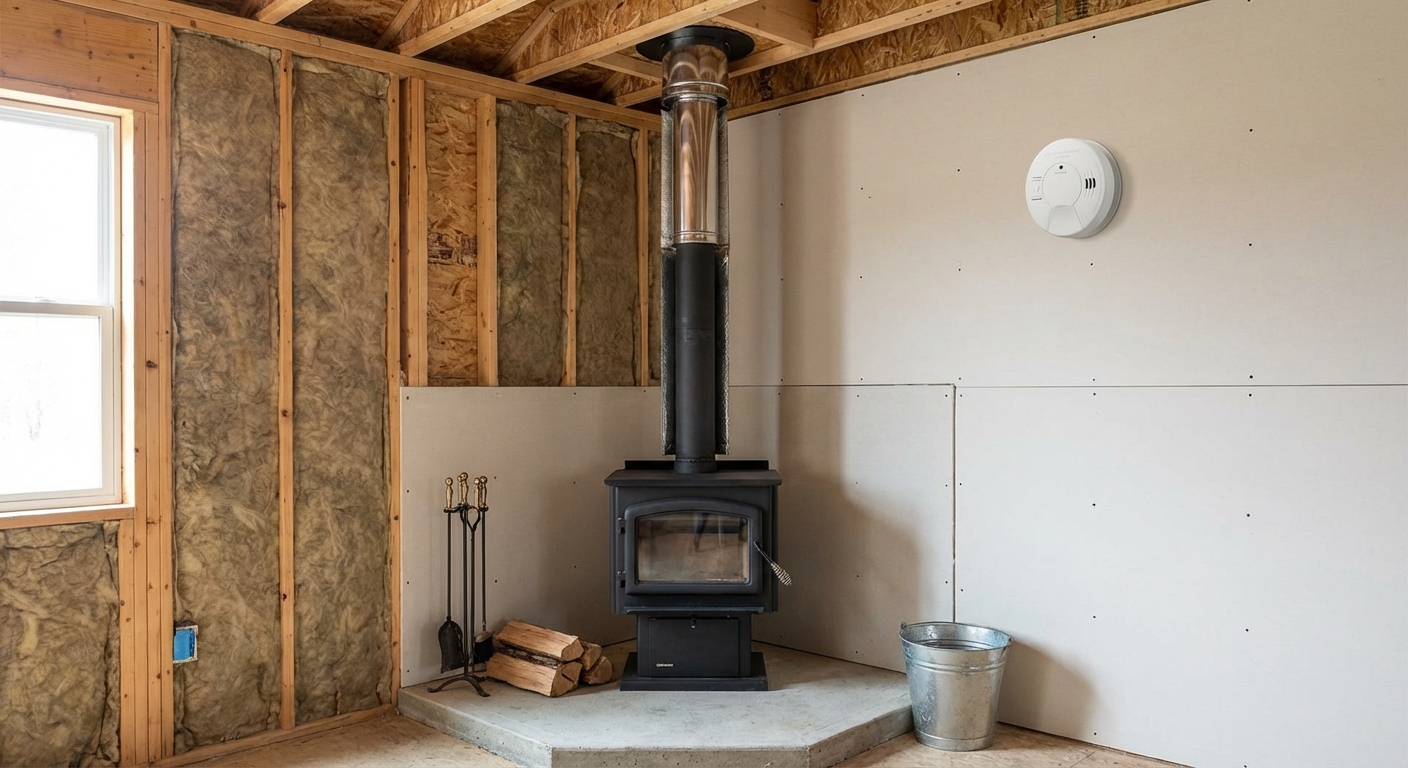
Appliance purchase is the easy quote; chimney and liner work is the swing factor. Plan around an average installed chimney liner cost of about $2,500, with many projects roughly $1,500 to $5,000, depending on height, roof access, liner length, and masonry condition.
A stainless chimney liner kit installation commonly pencils out at about $850 to $1,600 total, with average materials around $175 to $400. Use that as a starting point, then adjust for access and repairs.
Hearth and surround materials, permit and inspection, and delivery and handling (lift-gate, inside placement, disposal) are separate buckets. Type choice drives install scope, so keep these categories distinct in your estimate.
Wood supply, basic tools, cleaning, and replacement parts add up. Accessory MSRPs are real budget signals: Osburn lists a 5-inch fresh air intake kit at $200 and a rigid firescreen at $120 for 2026.
| Appliance | $_____ |
| Chimney / liner work | $_____ |
| Hearth / finish materials | $_____ |
| Permit / inspection | $_____ |
| Delivery / handling | $_____ |
| Ongoing wood + tools + cleaning + parts (annual) | $_____ |
Compare the warranty (length and exclusions), confirm emissions documentation is posted, and list required accessories and maintenance consumables before you compare prices.
- Confirm what's included in the box (blower, surround, adapters, trim).
- Identify what's required vs optional (outside air kit, screens, liners, caps).
- Verify lead times and return constraints for freight items (fees, restocking, damaged-on-arrival process).
Also, check if other home comfort upgrades, like heat pumps, have local savings programs so you can prioritize dollars where incentives exist.
A filled worksheet and clear answers to those three checkout questions let you build a realistic pre-permit budget and a clean shortlist of models that won't surprise you later.
Summary
The best wood-burning fireplace in 2026 is the one that fits your home, your rules, and your documentation trail.
Your type choice sets the install scope. Your emissions and clean-burn documentation sets what you can actually install and legally operate. Proper sizing matched to your space prevents overheating and the constant smoke frustration that comes from a mismatched setup. Installation and safety live and die by the manufacturer's instructions and the standards your inspector enforces, and your total cost is the unit, the install, and the ongoing maintenance.
The purchase is easy; the sign-off is where mistakes surface. Before ordering or requesting installation sign-off, keep the manufacturer's installation instructions, listing label information, and warranty and operation manuals, since inspections and documentation commonly require them. Your Authority Having Jurisdiction (AHJ), typically the local building or fire official, has final say on qualified inspectors and local inspection expectations for solid-fuel appliances, chimneys, and flues. Compliance workflows commonly require documentation plus field verification, so retain EPA-related labels and paperwork where applicable.
- Confirm all required measurements and venting specs for your exact unit (opening, clearances, flue, and chimney details).
- Keep a single documentation packet ready for permit, insurance, and inspection questions.
- Confirm who performs the inspection locally and what they will check before you schedule the work.
Confirm your local code path with the AHJ, finalize measurements, then order through Budget Heating at BudgetHeating.com and schedule delivery, install, and inspection dates while tracking every document.
Wrapping Up
Buying a wood-burning fireplace in 2026 is less about finding a "good deal" and more about making sure the plan will pass in the real world. Start by choosing the right type for your home, whether that means a masonry build, a factory-built system, or an insert that upgrades an existing firebox, because that decision sets your installation scope, maintenance load, and long-term performance.
From there, focus on what keeps projects moving: EPA-certified documentation tied to the exact model number, verifiable particulate emissions (g/hr), and a combustion approach you are willing to operate and maintain. Match sizing to the room you actually want to heat, account for draft and makeup air realities in tighter homes, and build a total cost estimate that includes chimney and liner work, permits, delivery, and ongoing upkeep.
With measurements confirmed and a documentation packet ready for permitting, insurance, and inspection, you can shortlist models confidently, then move forward with ordering and scheduling the installation timeline.
 Cooling
 Learning Center
 Money Saving Tips
 Product and Brands Insights
 State by State
 HVAC Systems