




Complete Split Systems for Your Home
Split systems are the workhorses of residential HVAC. One unit lives outside, one lives inside, and they work together without complaining about relationship issues. Budget Heating sells complete matched split systems where the outdoor condenser or heat pump already knows how to communicate with the indoor air handler or furnace. No compatibility guessing games. No warranty confusion when things break. Shipping costs what heavy metal boxes cost to ship, but equipment prices stay low enough that you'll still beat the "free shipping" crowd.
What Makes Split Systems Different
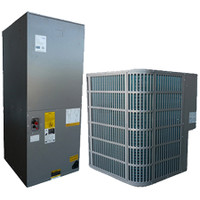
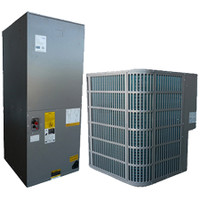
A split system divides HVAC components between indoor and outdoor locations. The outdoor unit (condenser or heat pump) sits on a concrete pad beside your house, handling the heavy lifting of heat exchange. The indoor unit (air handler or furnace) lives in your attic, basement, or closet, moving conditioned air through your ductwork. Refrigerant lines connect the two, creating a complete cooling or heating system.
This beats window units that block views and let bugs in. It beats portable AC units that exhaust hot air back into the room they're cooling. Split systems put the noisy compressor outside where it bothers the neighbors instead of you, and they cool (or heat) your entire home through existing ductwork.
Budget Heating specializes in complete split system packages where everything's matched from the factory. The outdoor unit's capacity aligns with the indoor unit's airflow. Refrigerant requirements match. Electrical specs coordinate. Control systems speak the same language. Installation happens faster when components aren't fighting each other.
Split System Configurations That Actually Exist
Split systems come in different flavors depending on whether you need cooling, heating, or both. Pick the configuration that matches your climate and existing equipment.
Heat pump split systems provide heating and cooling from one outdoor unit. The heat pump reverses refrigerant flow in winter, pulling heat from outdoor air and moving it inside. Sounds like magic, works like physics. These excel in moderate climates where winter temps stay above 25°F most days. Below that temperature, efficiency drops and backup heat kicks in.
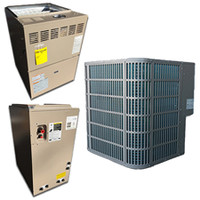
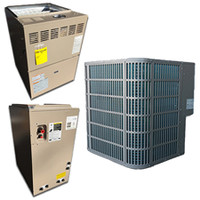
AC and furnace split systems pair a cooling-only condenser with a gas or electric furnace. The condenser cools in summer. The furnace heats in winter. You're running two separate systems that happen to share ductwork. This configuration dominates in cold climates where natural gas is cheap and winter temperatures make heat pumps work too hard.
AC and air handler split systems work when you've got a separate heating source or live somewhere that cooling matters more than heating. The AC cools. The air handler moves air. Electric heating strips in the air handler provide backup heat for the three days a year South Florida dips below 60°F.
Dual-fuel split systems combine a heat pump with a gas furnace. The heat pump handles cooling all summer and heating in mild winter weather. When outdoor temps drop below 30-35°F, the system switches to the gas furnace because it's more efficient and powerful. You get year-round comfort and lower utility bills. These systems cost more upfront but make sense in regions with cold winters and expensive electricity.
Why Matched Components Beat Mix-and-Match
Buying a complete split system means the manufacturer already verified compatibility. The 3-ton condenser works perfectly with the 3-ton air handler because they were designed together, tested together, and rated together. Airflow matches refrigerant capacity. Expansion valves align with system tonnage. Control boards communicate without throwing error codes.
Mix brands and you're gambling. That Goodman condenser might work with that Carrier coil. Or it might not. The efficiency rating on the outdoor unit becomes meaningless when paired with mismatched indoor components. You could lose 15-20% efficiency, turning a 16 SEER system into a 13 SEER system. Your electric bill notices.
Warranties stay simple with matched systems. One manufacturer covers everything. Something breaks and you know who to call. Mix brands and warranty claims become finger-pointing exercises where nobody accepts responsibility. Outdoor unit says it's the indoor coil's fault. Indoor coil blames the outdoor unit. You're stuck paying for repairs.
Sizing Your Split System Without Guessing
Split systems range from 1.5 tons to 5 tons for residential applications. Bigger doesn't mean better. An oversized system short-cycles, running in brief bursts that cool quickly but dehumidify poorly. An undersized system runs constantly, struggling to maintain temperature on hot days and wearing out faster.
1.5-2 ton systems handle 600-1,200 sq ft. Small homes, apartments, condos. These systems cost less upfront and run efficiently in compact spaces.
2.5-3 ton systems cover 1,200-1,800 sq ft. Average ranch homes, smaller two-stories, well-insulated spaces. This is the most common residential size.
3.5-4 ton systems manage 1,800-2,400 sq ft. Larger homes, open floor plans, spaces with cathedral ceilings or lots of windows.
4.5-5 ton systems tackle 2,400-3,000+ sq ft. Big homes, poorly insulated spaces, regions where summer temps regularly hit 95°F+.
Square footage is a starting point. Insulation quality matters. A 1,500 sq ft home with R-30 attic insulation and double-pane windows needs less capacity than a 1,500 sq ft home with R-13 insulation and single-pane windows. Ceiling height affects volume. Cathedral ceilings add 30% to cooling requirements. South-facing windows add heat load. Shade trees reduce it.
Get a Manual J load calculation for accuracy. It's the industry standard for sizing HVAC equipment. Contractors who skip this step are guessing, and guessing wrong costs you money. Call 813-885-7999 if you need sizing help. We won't guess.
Efficiency Ratings That Impact Your Wallet
Split system efficiency appears as SEER2 (cooling) and HSPF2 (heating for heat pumps). Higher numbers mean lower operating costs. The difference between a 14 SEER2 system and an 18 SEER2 system is $40-60 monthly in hot climates.
A 14 SEER2 split system costs around $3,800-4,500 for equipment. It's the minimum efficiency sold in most states. It works fine. Bills are okay. Payback period doesn't exist because it's the baseline.
A 16 SEER2 split system costs $4,200-5,200. It saves 12-15% on cooling costs compared to 14 SEER2. In Phoenix or Miami, this system pays for the upgrade in 4-5 years. Then you pocket savings for the next 12 years.
An 18 SEER2 split system costs $5,500-7,000. It saves 25-30% on cooling compared to 14 SEER2. The upfront cost stings. The monthly savings add up. In hot climates with expensive electricity, payback happens in 5-7 years. In moderate climates, it takes 10-12 years. Do the math for your situation.
20+ SEER2 systems exist for people who want the best efficiency available. They cost $8,000-10,000+ for equipment. Unless you run AC 6+ months annually or electricity costs $0.20+/kWh, the payback period extends beyond the equipment's lifespan. These make sense in specific situations, not most situations.
Not sure which efficiency level fits your budget and climate?
Call 813-885-7999 and we'll run the numbers with you
Brands We Stock and Why
Budget Heating carries complete split systems from manufacturers who build reliable equipment at different price points. We're not brand zealots. Each manufacturer has strengths.
Goodman builds value-focused equipment that works. They're the Toyota Camry of HVAC. Not fancy, not premium, but dependable and affordable. 10-year parts warranties. Widespread contractor support. When you need AC that cools without draining your bank account, Goodman delivers.
Amana shares manufacturing facilities with Goodman but adds longer warranties. Same reliable platform, better warranty coverage. If you plan to stay in your home for 10+ years, the lifetime compressor warranty (registered systems) provides peace of mind.
Carrier invented modern air conditioning in 1902, so they've had time to figure things out. Premium pricing brings premium features: better humidity control, quieter operation, advanced controls. You're paying for refinement and brand reputation.
Trane builds equipment with heavier components and more durable construction. The extra metal costs more upfront. It lasts longer. Contractors love installing Trane because callbacks are rare. Homeowners love it because it works for 20+ years.
Lennox pushes efficiency ratings higher than competitors. If you want an 18 SEER2 system, Lennox makes excellent options. Variable-speed components provide precise temperature control and lower operating costs. You pay more, you get more.
What You're Actually Buying
A complete split system package from Budget Heating includes the outdoor unit (condenser or heat pump) and the indoor unit (air handler or furnace). Both components are matched by the manufacturer for optimal performance. You'll also need these items for installation:
- Refrigerant line set connects indoor and outdoor units. Length depends on distance between units. Most homes need 15-25 feet. Longer runs require larger line diameters to maintain efficiency.
- Thermostat controls system operation. Basic thermostats cost $40. Smart thermostats with WiFi and scheduling run $150-250. Make sure the thermostat is compatible with your system type.
- Disconnect box provides required electrical shutoff at the outdoor unit. Code requirement in most jurisdictions. Costs $30-50.
- Condensate drain removes water created during cooling. PVC pipe and fittings run $20-40 depending on routing complexity.
- Mounting pad for the outdoor unit. Concrete or composite pads prevent settling and improve drainage. Budget $50-100.
Budget Heating sells all these components. We don't sell installation services because we'd need trucks in every city. Licensed contractors handle installation. They pull permits, make electrical connections, charge refrigerant, test operation, and fix problems when they occur.
Installation Costs More Than Equipment
Professional installation of a split system runs $2,000-4,500 depending on complexity. Straightforward replacements where ductwork exists and everything fits cost less. New installations requiring ductwork modifications, electrical upgrades, or difficult access cost more.
Licensed contractors bring insurance, experience, and accountability. They know local codes. They own equipment needed for refrigerant work. They show up when something leaks. The "handyman special" installation saves $1,000 upfront and costs $3,000 when things go wrong.
DIY installation works if you're EPA Section 608 certified for refrigerant handling, comfortable with electrical work, and own a vacuum pump, manifold gauges, and recovery equipment. You'll save $2,500-4,000 in labor. You'll also spend weekends on a ladder. Many handy homeowners handle this successfully. Many others call contractors after realizing HVAC installation involves more than YouTube videos suggest.
Pricing That Respects Your Intelligence
Budget Heating's split system prices start below retail and keep going. We buy direct from manufacturers. We stock inventory in bulk. We skip middleman markups. Savings go to customers because that's how you build repeat business.
Many systems are priced too competitively to list online. Manufacturers get nervous when we advertise prices 35-40% below their suggested retail. Call 813-885-7999 or email for actual numbers. You won't be disappointed unless you enjoy paying full price.
Financing through Affirm, Sezzle, and PayPal Credit makes larger purchases manageable. Affirm offers 6-24 month payment plans. Sezzle splits purchases into four payments over six weeks. PayPal Credit provides promotional financing periods. Most approvals happen in minutes. No credit needed options exist for folks rebuilding credit.
Shipping costs are calculated at checkout based on weight and destination. We don't hide shipping in equipment prices. The total (equipment plus shipping) still beats competitors claiming "free" shipping. They build freight costs into product prices. We prefer transparency.
Why Contractors and Homeowners Order From Us
We've shipped split systems to contractors and homeowners in all 50 states since 1992. Contractors order because our prices beat distributor costs. Homeowners order because buying equipment separately from installation saves $1,500-3,000.
Technical support answers questions without reading scripts. Need help matching an air handler to a heat pump? Figuring out if your existing furnace works with a new AC condenser? Understanding refrigerant line sizing? Call 813-885-7999 and talk to people who actually know HVAC.
Most equipment ships within 1-3 business days. We stock popular sizes and configurations. Special orders (high-efficiency units, specific colors, unusual tonnages) take 5-10 days. We'll tell you lead time before you order because surprises belong in birthday parties, not business transactions.
Returns happen when equipment arrives damaged or you ordered wrong. We cover return shipping on defective equipment. Customer error returns (wrong size, wrong configuration, changed mind) cost return shipping. Opened boxes and used equipment can't be returned because we're not monsters, but we also can't resell your experiment.
What Happens After You Order
Order a complete split system and you'll receive order confirmation within minutes. Equipment ships from our warehouse or directly from the manufacturer depending on stock location. Tracking information arrives when the shipment leaves.
Freight companies deliver to your driveway or garage (residential deliveries) or loading dock (commercial). They don't carry equipment into your attic. That's your job or your contractor's job. Inspect boxes immediately for shipping damage. Document damage with photos and contact us within 24 hours.
Manufacturer warranties begin when equipment is installed, not when shipped. Register your system online within 60 days of installation to activate extended warranty coverage. Miss registration and you'll get standard warranty (typically 5-6 years). Register and you'll get extended warranty (10 years parts, sometimes lifetime on compressors). Takes 5 minutes. Worth doing.
Questions after delivery? Call 813-885-7999. We help with installation questions, compatibility concerns, warranty registration, and technical support. We don't disappear after the sale because unhappy customers don't reorder when their system needs replacing in 15 years.
Frequently Asked Questions
-
What is the difference between cool-only with electric heat strip, heat pump, and dual-fuel split systems?
Cool-only systems provide AC with an electric resistance backup heater; heat pumps both heat and cool with a strip for very cold snaps; dual fuel pairs a heat pump with a gas furnace for optimal efficiency and comfort in wider climates.
-
Which SEER2 rating (14.3-16) is appropriate for my climate and budget?
SEER2 14.3-15 suits moderate climates and tighter budgets; 15.2-16 can cut summer energy use further, ideal for hotter regions or longer cooling seasons.
-
Can I use R-32 or R-454B systems to replace an existing R-410A setup?
Yes, but you must replace matched components and follow manufacturer guidelines; line set and accessories may need changes. Always have a licensed contractor verify compatibility.
-
How do I choose the correct tonnage (1.5-5 tons) for my home size?
Have a Manual J load calculation performed. As a rough guide, typical homes fall between 1.5 and 5 tons, but insulation, windows, and climate drive the final size.
-
When should I select an 80% vs 96% AFUE gas furnace in a split system?
Choose 96% for colder climates or lower gas bills; 80% can be appropriate where winters are mild or when venting constraints favor non-condensing furnaces.
-
What airflow orientation (upflow/horizontal) and cabinet width do I need to match my ductwork?
Match the new unit’s orientation to your supply/return layout and select cabinet widths that align with existing plenums, typically between 14 and 22 inches.
-
Are these complete split systems suitable for light commercial applications?
Yes, many packages fit small offices or retail suites. Verify capacity, electrical service, ventilation, and code requirements for commercial use.
-
Do these systems require professional installation and permitting?
Yes. A licensed HVAC contractor should install and commission the system, and local permits and inspections are commonly required.
-
What’s included in a complete split system package?
Typically the outdoor unit, matched indoor air handler or gas furnace with cased coil, and key components needed for a proper, warrantied installation.
-
Can I add or change backup heat later (heat strip or gas) in a split system?
Often yes. Many air handlers accept add-on heat strips, and dual-fuel setups can be configured by pros. Confirm compatibility before purchasing.