




 heating
 learning center

You want "stove heat", the kind that makes the room feel lived-in, but the decision splits fast: wood promises romance and real resilience when the power goes out, while gas gives you push-button comfort that behaves like an appliance. The part nobody wants to discover mid-project is how quickly "just add a stove" turns into permits, contractors, and ongoing upkeep you either tolerate or you don't.
Wood and gas both deliver that close-in, body-warming feel because stoves are primarily radiant heaters; add a blower and you shift more of the output into convection, which changes how evenly the heat spreads through the house. The tradeoff is ownership, not just temperature: wood rewards you with fuel independence if you can source and handle it, but it also demands storage, loading, and ash management; gas rewards you with predictability and quick control, but ties you to a utility or tank and whatever price swings come with it. In both cases, real-world viability gets decided by installation constraints and code realities, not wishful thinking.
Modern wood shopping is also boxed in by emissions rules. The EPA's residential wood-heater NSPS was updated under a final rule published in 2015; new wood and pellet stoves sold in the U.S. must carry a permanent label showing they are EPA-certified to meet emission limits, and EPA-related summaries commonly cite a 4.5 g/hr particulate limit (Step 1) as the target certified units are built around. That regulatory baseline affects what you can buy and, in turn, whether you treat the stove as a primary heater or a supplemental comfort source based on local fuel access and your tolerance for daily maintenance.
From there, the comparison gets more practical: gas decisions hinge on fuel supply and venting, while wood decisions hinge on chimney realities and ongoing handling.
How Gas Stoves Work
Gas stoves win on controllability because the burner responds immediately to a valve change, and day-to-day use stays clean and repeatable. The decision gets real once you pick a fuel path. Natural gas delivers about 1,030 BTU per cubic foot. Propane delivers about 2,490 to 2,516 BTU per cubic foot, roughly 2.5x more energy per unit volume. Practically, that means propane storage is a volume-management problem (tank size, refill cadence), while natural gas is a utility-availability problem (having a live service line where the appliance sits) and sometimes involves converting from LP to propane.
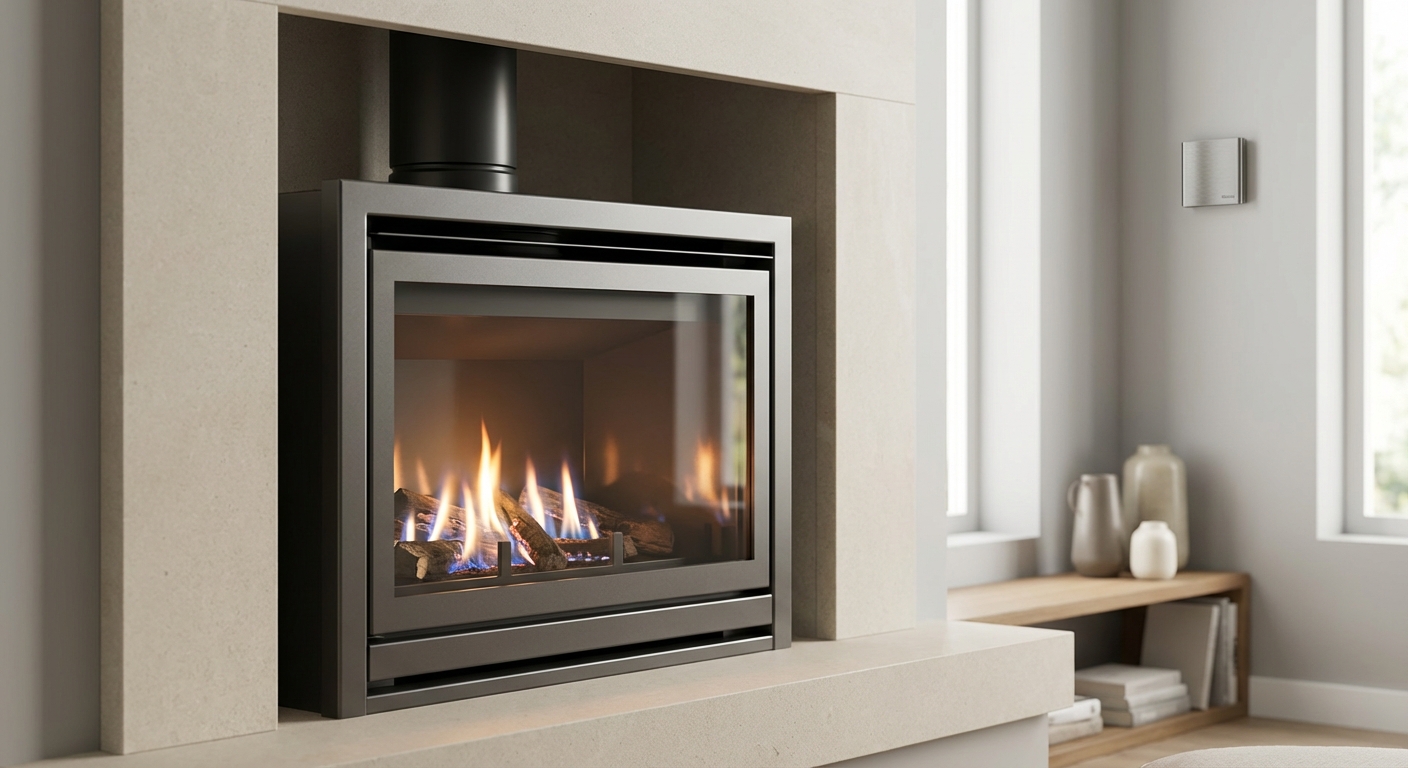
Most "this will fit" questions are vent questions. B-vent appliances use a vertical venting approach that typically pushes you toward a roof route. Direct-vent models use a sealed combustion system that draws air from outdoors and vents exhaust outdoors through an approved pipe system, which is why sealed combustion is the cleanest indoor-air and safety approach in typical planning discussions. Vent-free units avoid an exterior vent entirely, which shifts the planning burden toward indoor air considerations and local acceptance.
If outages matter, the control system is the deciding engineering detail. A millivolt system uses a standing pilot that generates a small electrical output, so the stove can operate without household electricity. By contrast, IPI (intermittent pilot ignition) uses electronic ignition and typically loses some functions without power, such as blowers and certain controls or remotes (and it helps to know how to relight the pilot light if your unit uses one).
Plan on annual professional inspection and service. Routine ownership is straightforward: keep the glass clean, confirm the venting remains intact, and verify burner flame, pilot or ignition, and control response stay consistent.
In other words, the gas path is mostly a sequence of constraints: pick a fuel source (NG line vs. propane tank), confirm a feasible venting route, and choose ignition and controls based on how you expect the stove to behave when the lights go out, not just on flame aesthetics.
Upfront Cost, Operating Cost, and Real-World Comfort
Once you know what you can physically vent and fuel, the next question is what that workable setup costs to install and run-and whether it will feel right in daily use.
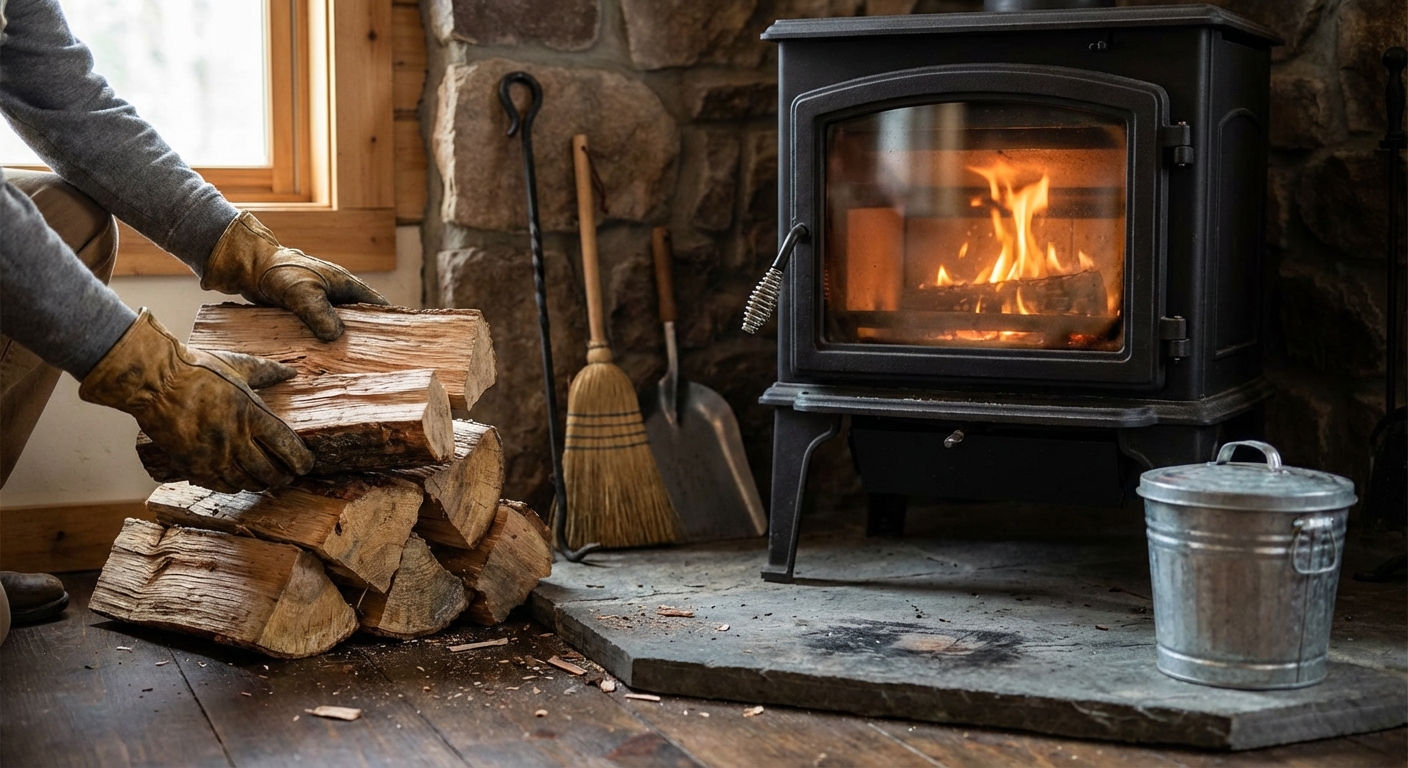
The better deal usually has nothing to do with "wood vs. gas" as a category. It comes down to installed scope in your house, your local fuel economics, and whether you prefer radiant intensity or thermostat-like steadiness.
Real-world installed pricing clusters around $4,000 to $7,000 for wood stoves and $3,500 to $6,000 for gas stoves, with wide variation driven by the venting and utility work, not the appliance label.
That spread is normal because the big-ticket line items are project-specific: a chimney liner or new Class A run, roof and attic penetrations, gas line extensions and shutoff work, hearth and floor protection upgrades, and sometimes electrical for blowers or ignition. The practical takeaway is simple: compare bids as complete installed systems, not as "stove price."
Fuel is where the economics swing fast. Natural gas can be stable in some regions and volatile in others; propane swings hard with delivery timing; cordwood pricing depends on local supply and how it's sold (and stored). To compare fairly, convert each fuel to dollars per million BTU, then adjust for appliance efficiency.
Formula (EIA-style): (price per unit ÷ heat content per unit) × 1,000,000 = $/MMBTU. Then: divide by the appliance's efficiency to estimate delivered $/MMBTU.
Example setup: if propane is $X/gal and heat content is ~91,500 BTU/gal, compute $/MMBTU, then divide by your stove's rated efficiency (as a decimal).
Do not compare efficiency numbers unless you know the basis. HHV (Higher Heating Value) counts all heat in the fuel, including heat associated with water-vapor condensation, and mixing HHV-based and non-HHV figures distorts "which is more efficient" conclusions.
The EPA's certified wood heater list helps because it shows "overall efficiency" by manufacturer and model, giving you a more consistent field for side-by-side comparisons.
Wood heat tends to feel intense near the stove, with a clear hot-spot and faster perceived warming in line-of-sight areas. Gas heat typically delivers smoother, set-and-hold control, but comfort still depends on where the unit sits and how well the heat moves beyond that room.
Room-to-room distribution is the friction point: systems that can push air (blowers, ducted approaches) move heat more evenly than a single radiant source in a closed-off layout.
Even a great price-per-BTU calculation can get overruled by a simple reality: if the unit can't be installed safely in your specific room and configuration, the "best deal" doesn't matter.
Price the installed job, compare fuels on $/MMBTU adjusted for efficiency, then choose the comfort profile you actually want in your space—or compare heat pumps vs. furnaces by climate if you're weighing other heating approaches: radiant punch or push-button steadiness.
Installation, Venting, and Safety
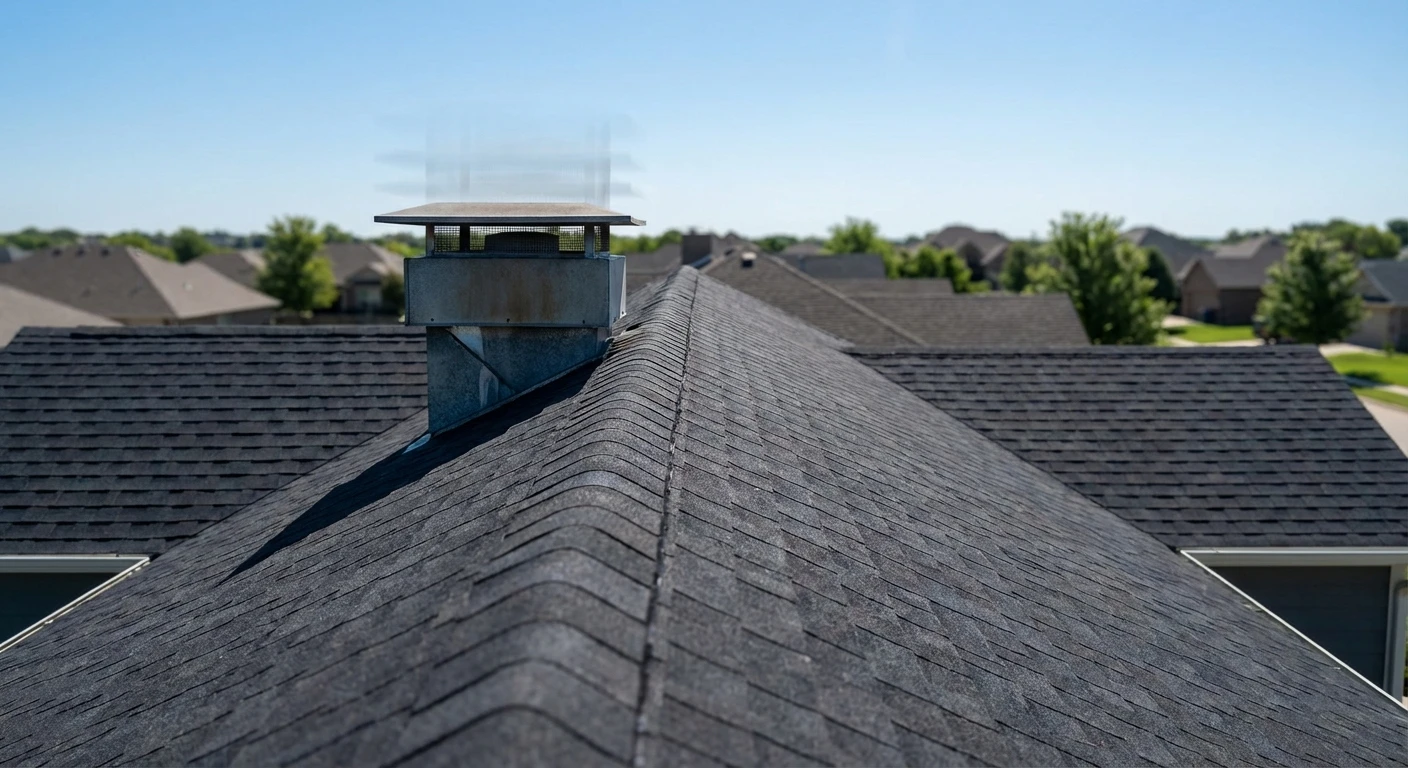
Installation constraints, not marketing features, determine what you can safely put in your home. The first planning decision is whether you have a viable, code-acceptable route for the flue or vent system and a sound chimney or termination location, because combustion appliances only work safely when exhaust is routed and contained exactly as designed.
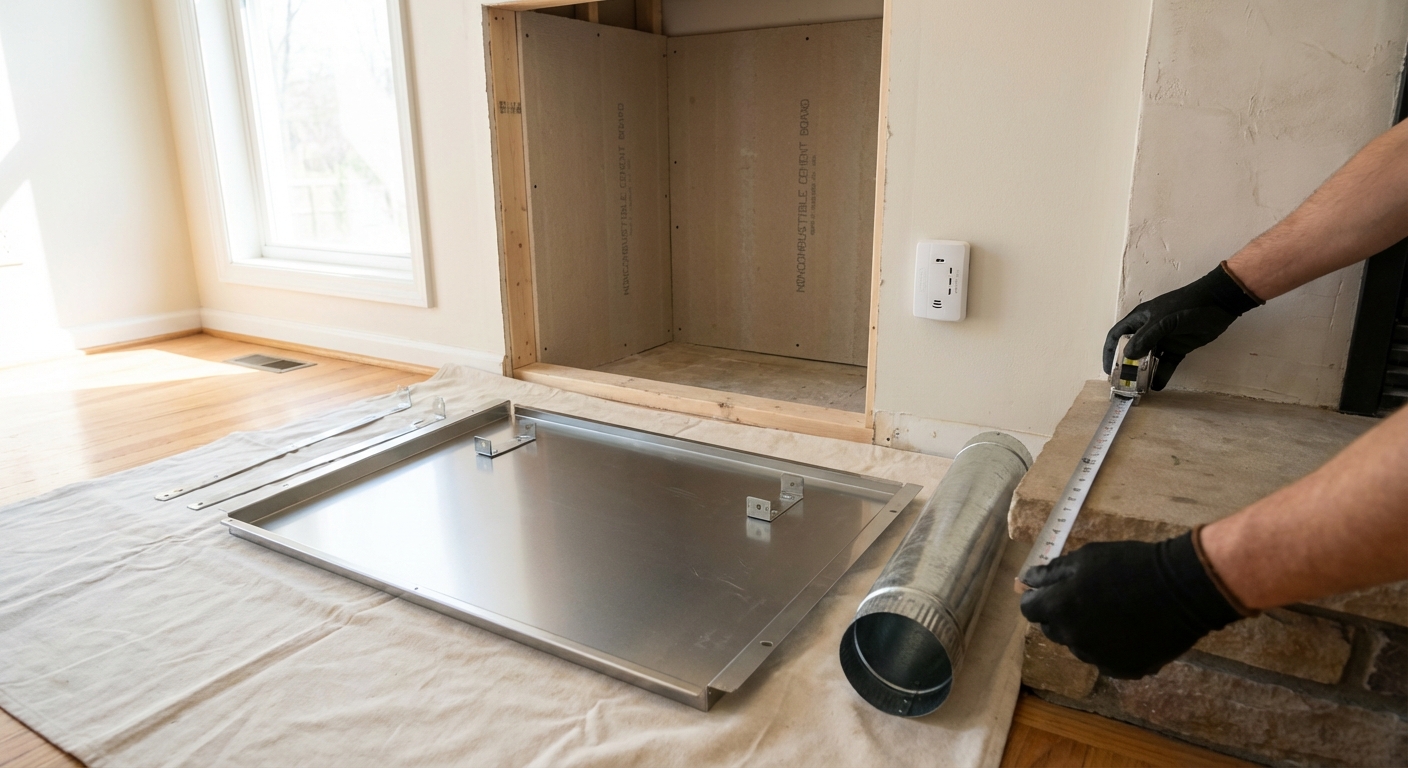
Credible installers and inspectors lean on NFPA 211 because it is the safety standard for chimneys, fireplaces, vents, and solid-fuel-burning appliances, written to guide safe installation and reduce fire hazards. In practice, NFPA 211 is intended to reduce fire hazards by ensuring safe removal of flue gases and proper installation of solid-fuel appliances, and it includes a method to calculate reduced clearances when approved protection systems are used.
Clearances are not "rule of thumb" distances; they are engineered limits driven by the appliance's listing and the installation standard. The friction is that a stove that fits your room visually can still be disqualified by nearby combustibles or an inadequate floor protection assembly. The clean way to plan is to treat clearances and protection systems as fixed design inputs, not adjustable preferences.
Manufacturer installation manuals and listing labels include explicit hazard warnings, and inspectors commonly verify them along with core safety elements like the venting or chimney components and the floor protection arrangement. If the manual calls for specific venting parts, configurations, or service intervals, that is the install.
CO alarm requirements vary by jurisdiction and they evolve. Ontario's Fire Code updates taking effect Jan 1, 2026, for example, require a working CO alarm on every level of residences that have gas-burning appliances, illustrating why you confirm current local rules before purchase and installation.
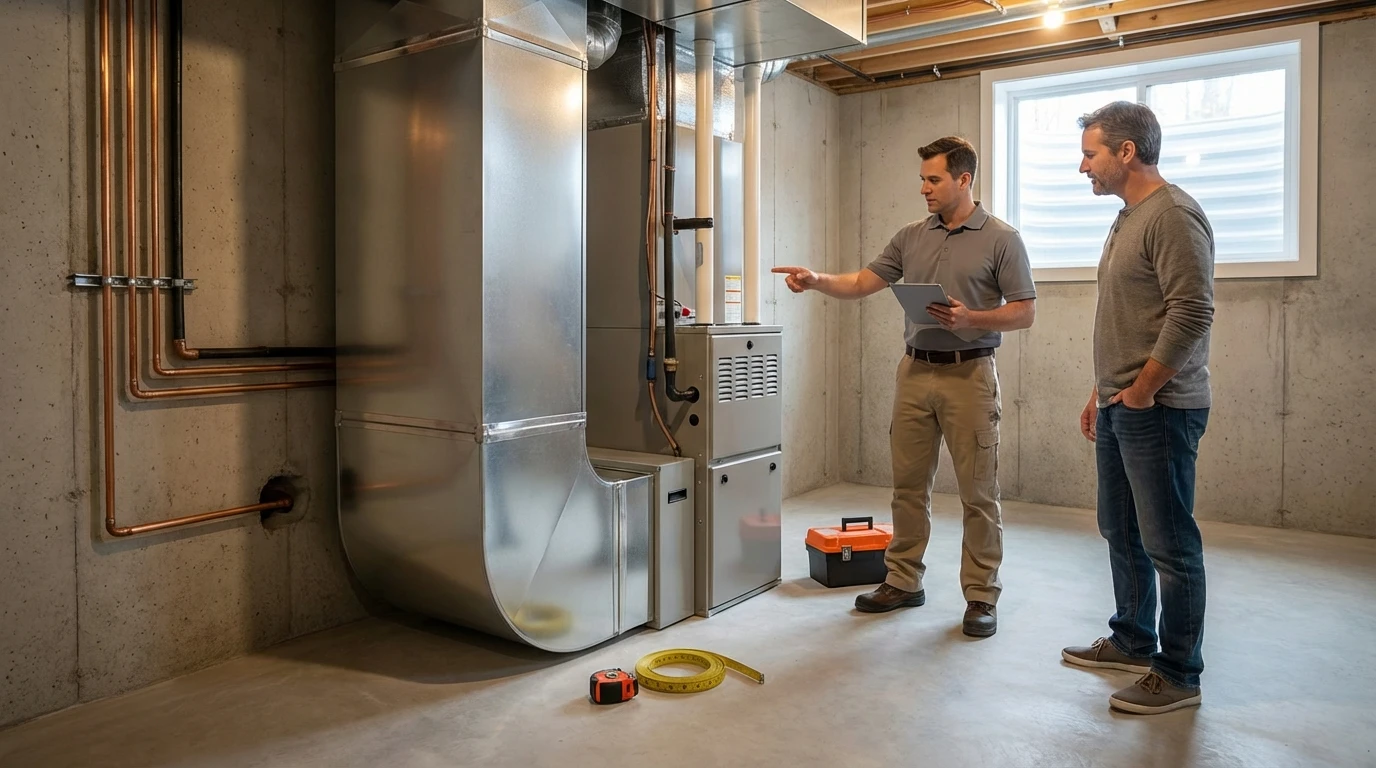
Permits and inspection are normal risk management for a combustion device. Plan for them early: confirm a viable venting or chimney route, read the listing and manual requirements, and align the project with inspection and current alarm rules (including carbon monoxide safety and detector placement) so you avoid rework and unsafe compromises.
When a Stove Isn't Enough
Even when the install checks out, a stove is still a room appliance. If you expect even temperatures across closed doors and distant rooms, distribution becomes the limiting factor rather than raw heat output.
Consistent, whole-home comfort comes down to distribution and steady control, and that's where a stove hits a hard limit: heat pools in the stove room and fades across bedrooms and closed doors. The practical fix is treating the stove as targeted comfort or backup, while a whole-home system carries the baseline load so every room stays in range without constant babysitting.
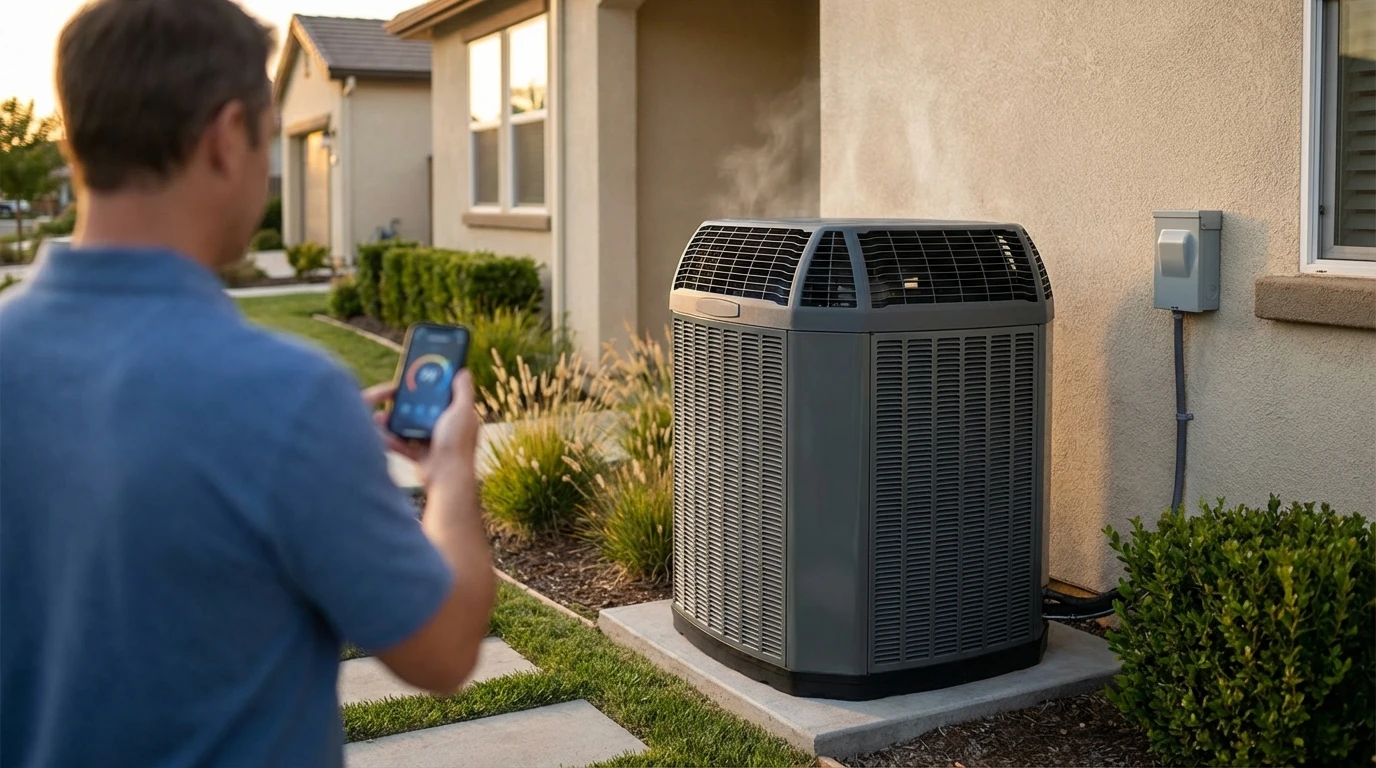
Heat-pump split systems with an air handler solve the "one thermostat, many rooms" problem by moving conditioned air through ducts; ductless mini splits solve the "different rooms, different needs" problem by zoning with individual indoor heads. Whole-home heat-pump systems are commonly cited as reducing annual HVAC energy use by about 30% to 60%, which is why homeowners cross-shop beyond stoves. BudgetHeating carries heat pumps, mini splits, and the accessories that go with them.
Capacity shorthand is simple: 1 ton = 12,000 BTU/hr; 2 ton = 24,000; 3 ton = 36,000; 4 ton = 48,000, letting you sanity-check quote language fast. A concrete DIY-style example: the MRCOOL DIY 2-zone 18,000 BTU bundle includes one 18k condenser, two 9k air handlers, and 16' + 25' pre-charged line sets. For spec sheets, SEER2 / HSPF2 are the updated seasonal efficiency ratings used to compare typical performance over a season, not a single peak number.
If you want even temperatures room-to-room, treat the stove as supplemental and compare heat pump or mini split quotes by tonnage plus SEER2 / HSPF2 before you sign.
Final Verdict
The same themes that drive the choice at the start-resilience and hands-on fuel independence for wood, push-button predictability for gas-end up being constrained by the unglamorous parts: venting routes, clearances, and the maintenance you're actually willing to do.
Choose wood if you want high-intensity radiant heat, you have reliable access to properly dry firewood, and you will stay on top of chimney care and routine cleanup. Choose gas if you want instant control, predictable day-to-day operation, and simpler fuel handling, and you can route the required venting while selecting controls that match how you want the unit to behave during an outage; in both cases, installation scope drives the final installed cost, so confirm local code and inspection expectations early.
- Confirm steady fuel access (dry wood supply or gas availability).
- Validate venting or chimney feasibility before you buy.
- Decide your maintenance tolerance (wood is hands-on, gas is lighter-touch).
- Schedule annual professional inspections and service.
Use BudgetHeating's Rebate Center to find rebates and prep claim paperwork, then submit the BudgetHeating Request-a-Quote form. If the form fails, call 813-885-7999 or email admin@Budgetheating.com.
Wrapping Up
Wood stoves and gas stoves can both deliver that classic, close-in stove warmth, but they reward different priorities. Wood leans into resilience and fuel independence, with higher day-to-day involvement like sourcing dry firewood, managing ash, and staying on top of chimney care, plus the added constraint of EPA certification and emissions rules. Gas behaves more like an appliance, offering quick control and cleaner routine use, but it depends on a natural gas line or propane tank, and the right venting and ignition setup, especially if outages matter.
The biggest takeaway is that the "best" choice is usually decided by real-world constraints: venting or chimney feasibility, clearances, permits, and the total installed scope often matter more than the stove label. Once the installation is viable, comparing operating costs in $/MMBTU adjusted for efficiency helps you judge fuel economics honestly, and it also clarifies whether a stove should be your primary heat source or a supplemental comfort and backup solution.
Next, confirm your fuel access, validate venting and clearance requirements, and get quotes that reflect the complete installed system so you can choose with confidence.
Ready to Get Started?
- Get a Custom Quote
- Talk to Our Team by phone
- Shop Ductless Mini Splits
 Cooling
 Money Saving Tips
 Product and Brands Insights
 Buying Guides
 State by State
 HVAC Systems