




 heating
 hvac systems
 learning center
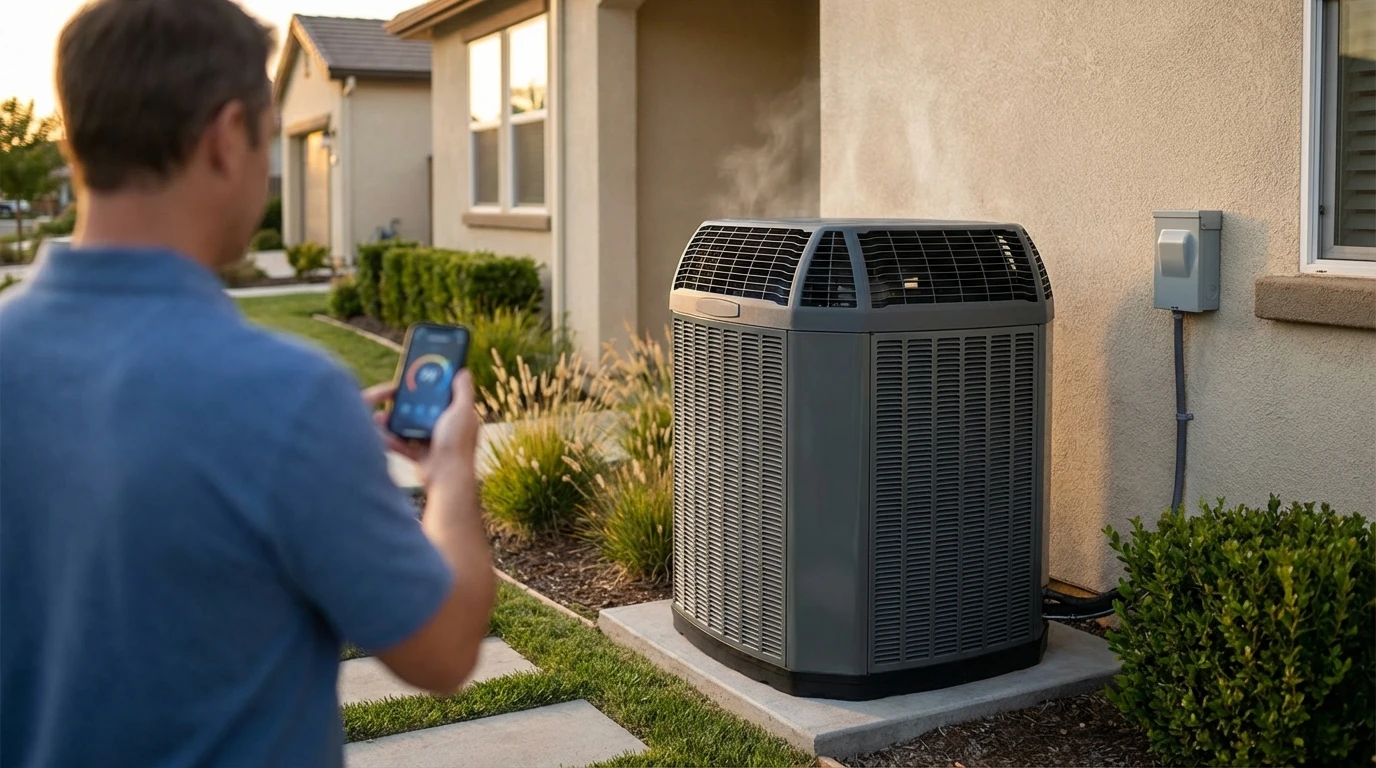
You want heat-pump efficiency, but you also want the house to stay warm when the temperature drops into the teens. You are trying to control winter bills without accepting cold rooms, long recovery times, or a backup heater that spikes the meter.
That tension is real because the "right" heating choice is not universal: equipment options are technical, utility prices move, and your home's heat loss is specific to its size, insulation level, and air leakage. As outdoor temperature drops, the building's heating load rises while a heat pump's available heating capacity falls, which is why a setup that feels perfect at 40°F can feel stressed at 15°F.
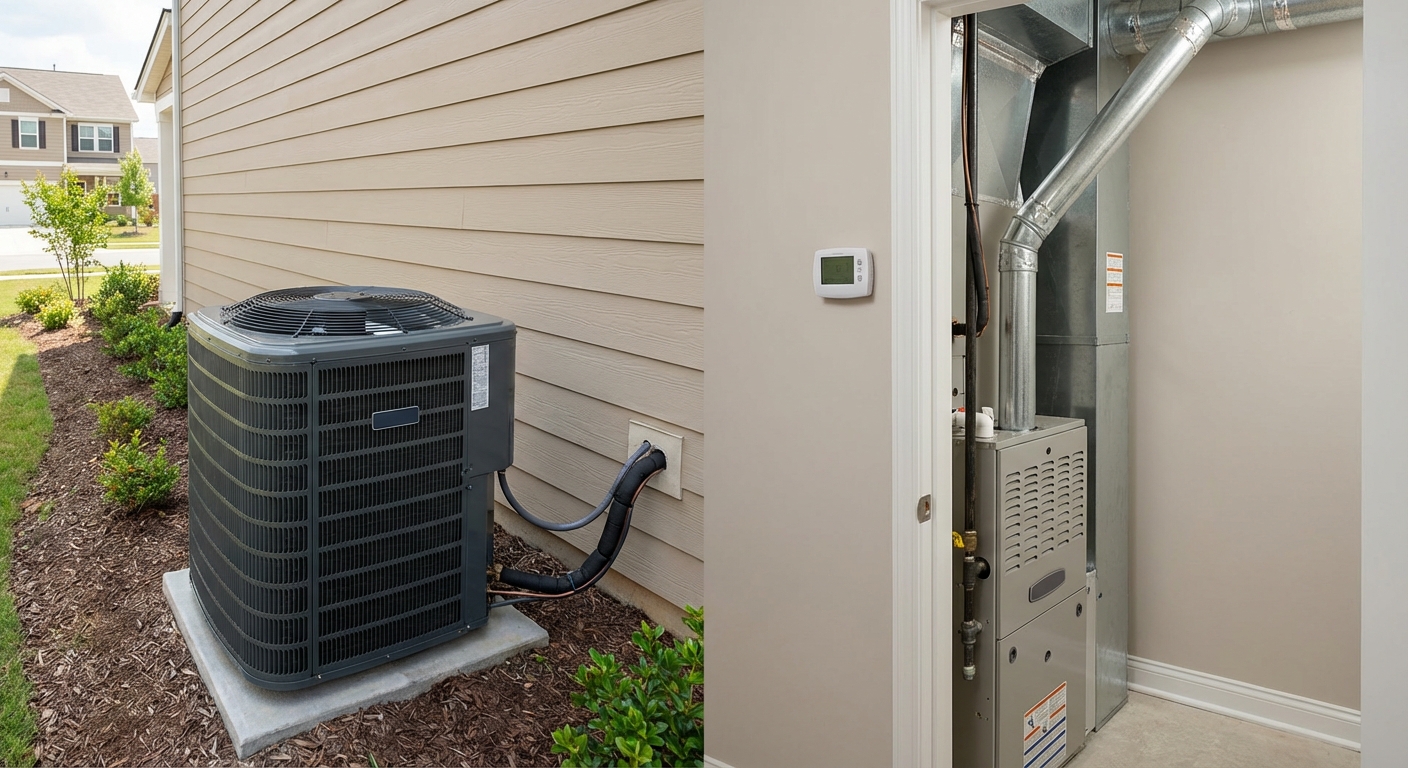
A dual fuel heat pump system, meaning an electric heat pump paired with a gas furnace that switches between fuels based on controls and outdoor conditions, is built to solve that exact drop-off. The California Energy Commission's 2025 Building Energy Efficiency Standards explicitly reference a "dual-fuel heat pump system," including a "dual-fuel heat pump system with constant volume fan," and list "Dual-fuel Heat Pump System" under Chapter 4 HVAC prescriptive requirements, including prescriptive use in certain areas such as Climate Zones 1 and 16. In practice, the key concept is the balance point, the outdoor temperature where the heat pump's heating capacity equals the home's heating load and, below that line, backup heat must run for comfort; dual fuel adds the economic balance point on top of that, the temperature where it becomes cheaper to switch from the heat pump to gas instead of paying for more electric heat.
Dual fuel also differs from a standard heat pump with electric strip heat in one decisive way: the backup isn't electric resistance, it's a combustion furnace, so your feasibility starts with fuel availability (natural gas or propane) and proper venting. Once that's true, the decision becomes math and setup, not marketing: your local $/kWh, $/therm, the heat pump's cold-weather COP, and the furnace's AFUE determine where you set changeover so you get heat-pump efficiency when it's efficient and gas heat when it's the better tool.
To evaluate a dual fuel proposal clearly, it helps to separate three things: how the system switches between heat sources, how to read the efficiency and equipment labels, and how sizing and ductwork determine whether the system will actually deliver comfort.
How a Dual Fuel Heat Pump System Works
Most of the season, the system feels "all-electric" because the heat pump carries the heating load and the furnace stays off.

- Call for heat and the thermostat starts the heat pump, delivering steady, moderate-temperature air through the ducts.
- Maintain setpoint with longer, gentler run times, which keeps room temperatures stable without the sharper on-off swings people associate with gas heat.
As outdoor temperature drops, the home needs more heat at the same time the heat pump has less capacity to give. Below a certain point, the heat pump cannot keep up without backup heat.
That tipping point is the thermal balance point (often just called the balance point): the outdoor temperature at which a heat pump can deliver heat at the same rate the home loses heat. Below it, comfort is protected by switching to the furnace instead of letting the indoor temperature drift.
Some setups switch based on that capacity-and-load balance. Others switch based on operating cost, using an "economic" strategy that moves the switchover temperature up or down depending on electricity and gas pricing.
A single 2-heat 1-cool thermostat can control both the heat pump and the furnace and decide which energy source is allowed to operate, often using an outdoor temperature sensor.
Installers program a changeover temperature, the set outdoor threshold where controls lock out one heat source and enable the other, so below X°F the heat pump is disabled and the gas furnace becomes the primary heat (or vice versa).
A defrost cycle is the heat pump's automatic ice-removal mode: frost on the outdoor coil cuts heat transfer, so the system briefly reverses refrigerant flow to melt that ice.
Indoors, that reversal can briefly feel like cooler air at the registers. Well-configured dual-fuel systems cover that comfort dip by bringing on backup heat during defrost so the house stays steady. Ask your installer what changeover temperature strategy they're using (comfort-first vs cost-first) and exactly how defrost is handled so you do not feel temperature swings.
That control logic is the "brain" of the system, but the results still depend on the equipment you pair it with and how accurately the system is rated and configured, including dual fuel heat pump systems with gas backup.
Key Components, Efficiency Ratings, and Refrigerants to Know
Most dual-fuel purchase mistakes come from misreading online listings, not from the heat-pump-plus-furnace concept. A model name won't tell you comfort, sound, or operating cost. The specs below will.
Listings that show SEER2 / HSPF2 are giving you the current U.S. seasonal efficiency ratings for comparing heat pump performance across brands, with higher numbers meaning better seasonal efficiency, cooling for SEER2 and heating for HSPF2. Use them to shortlist equipment, then sanity-check comfort features, because a high rating alone doesn't guarantee low noise or tight temperature control.
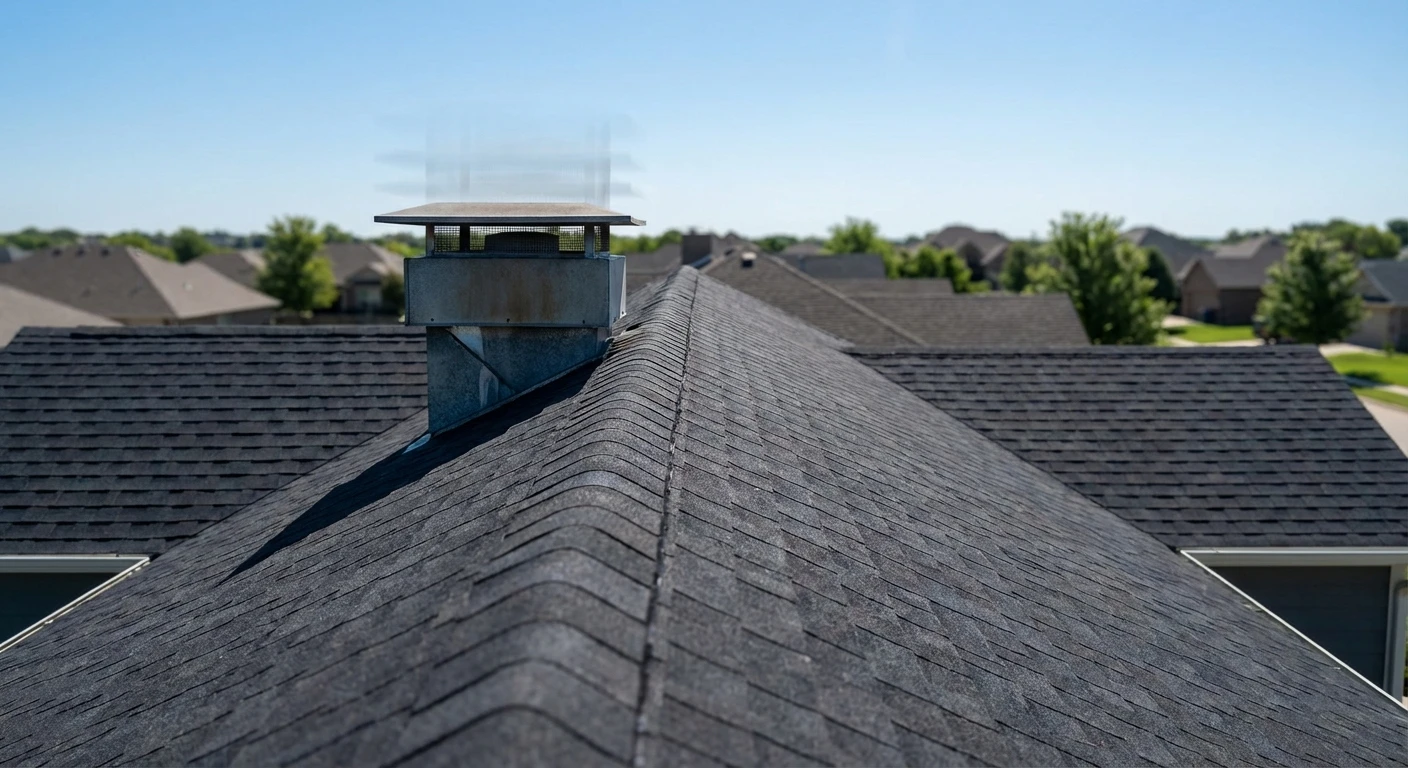
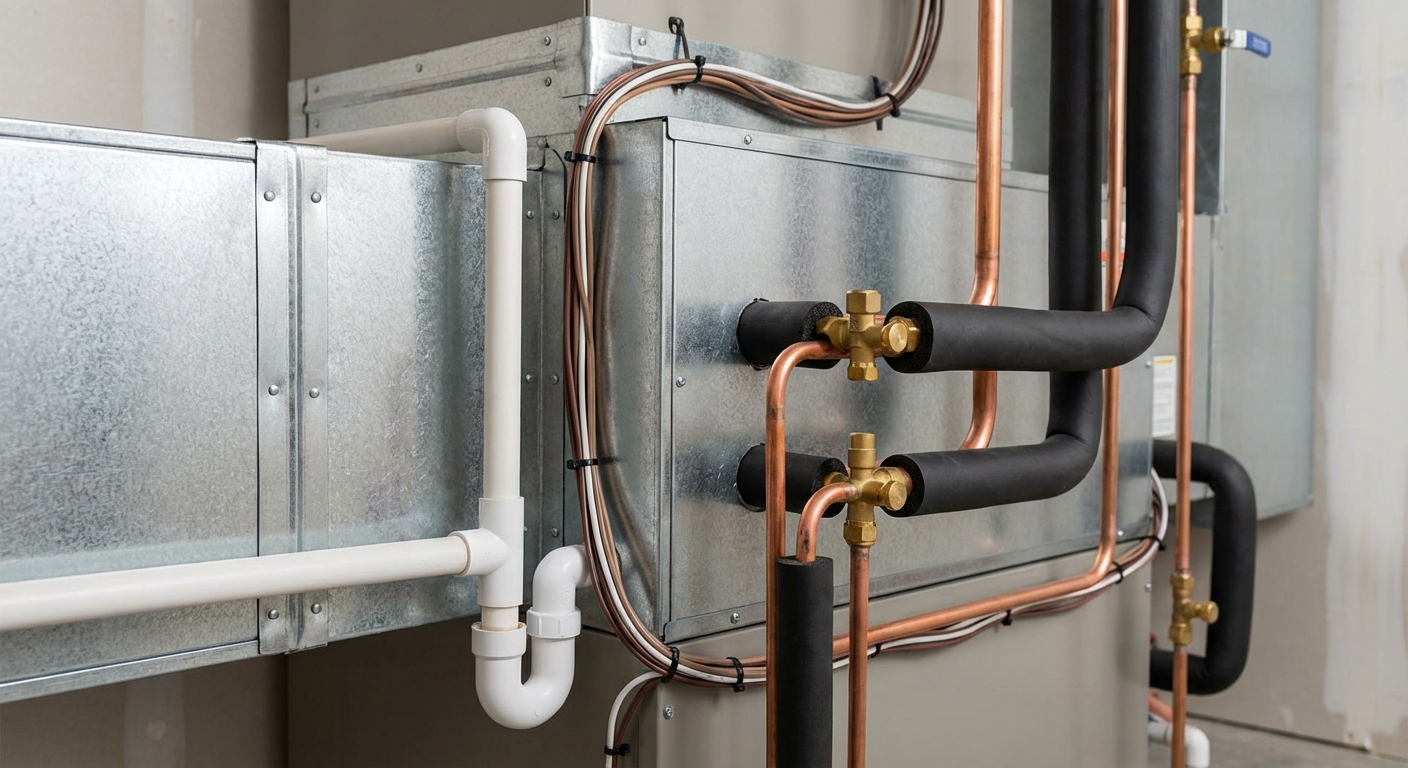
AFUE is the percentage of fuel that becomes usable, delivered heat over a year, and it is how gas furnaces are typically described in listings. A 96 AFUE gas furnace is a high-efficiency Category IV condensing furnace, which uses cooler, forced-draft exhaust and typically requires special venting plus a condensate drain, because water is a normal byproduct of condensing operation.
Single-stage equipment runs all-in or off, which produces bigger temperature swings and more noticeable start-stop sound. Two-stage runs low most of the time, then steps up during extremes. Variable-capacity modulates output in small increments, which tightens temperature control and usually improves humidity control in cooling. Many high-efficiency furnaces pair multi-stage heat with variable-speed fans for the same reason: smoother comfort.
"PSC" blowers are basic fixed-speed motors. "ECM" or "variable-speed" usually means the blower can ramp and hold airflow more precisely, which reduces noise, improves air mixing, and helps the system hit its rated efficiency in real ductwork.
R-32 indicates a single-component refrigerant classified as mildly flammable (ASHRAE A2L). R-410A is a non-flammable blend, 50/50 R-32 and R-125. Confirm your installer is equipped for the stated refrigerant, follows local code requirements for A2L where applicable, and matches the outdoor unit, coil, and line-set requirements before you commit.
Shortlist by SEER2/HSPF2 and AFUE targets first, then confirm the staging, blower wording, and refrigerant platform with your installer in writing.
Even the best-rated equipment will disappoint if it is not sized to the home and supported by ductwork that can move the required airflow.
Sizing a Dual Fuel Setup
Safety and efficiency specs matter, but sizing errors create comfort problems no thermostat setting can fix. "Tonnage" is the heat pump's capacity, where 1 ton equals 12,000 BTU per hour. The real lever you feel is runtime: correctly sized equipment runs longer, steadier cycles that control indoor humidity and keep operating cost predictable, instead of blasting on and off all day.
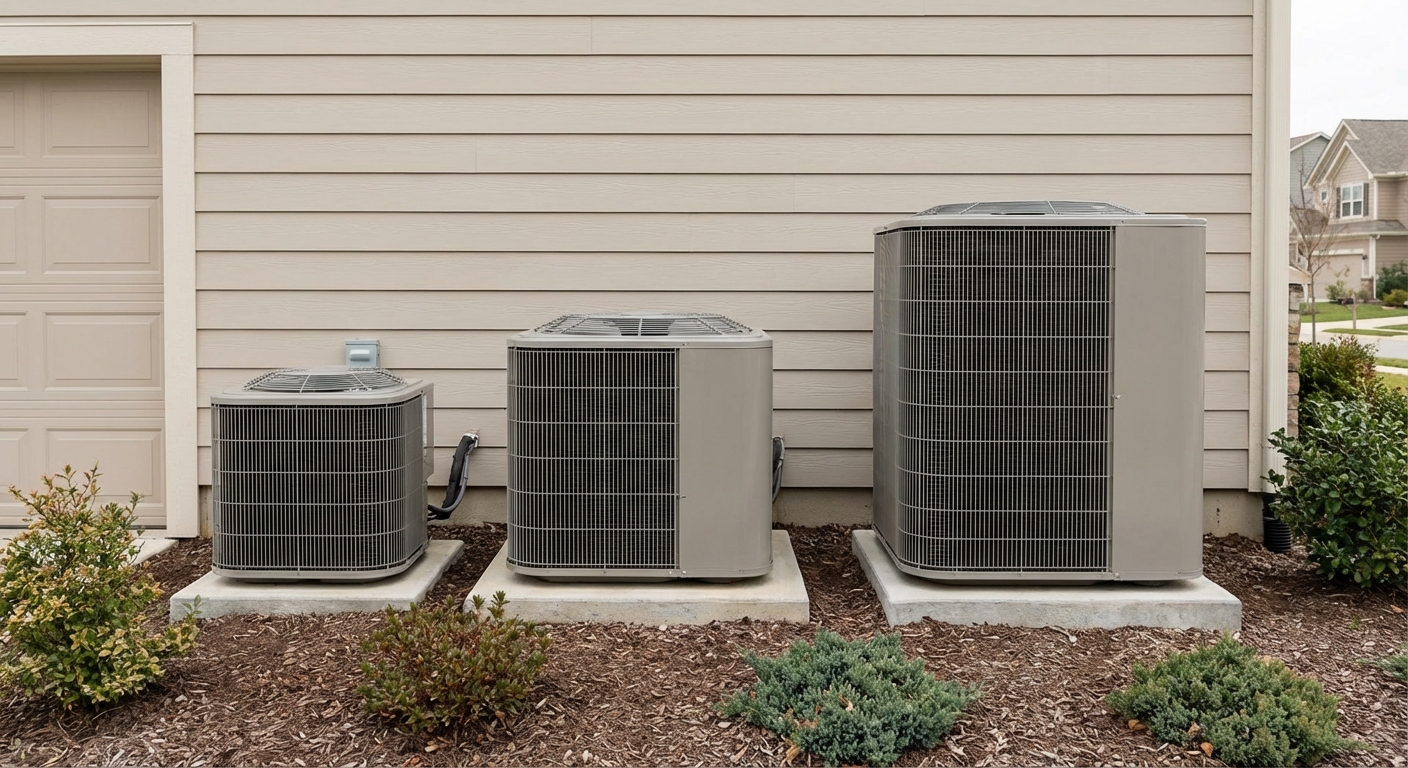
Bigger is not safer. Oversizing increases cycling, and frequent on-off cycles deliver worse humidity control and less even comfort even if the thermostat setpoint is reached. The reason "2 vs 3 vs 4 ton" is not a square-foot shortcut is simple: insulation, air leakage, window load, orientation, and duct losses can swing the load enough that the same floor plan lands in different tonnage buckets.
Furnace labels are almost always input BTU, not what reaches the house. Use the math: furnace heat output ≈ input BTU × AFUE (as a decimal). An 80,000 BTU input furnace at 96 AFUE delivers about 76,800 BTU of heat output.
| Heat pump size | Furnace label (input) | AFUE used for math | Approx. furnace output |
|---|---|---|---|
| 2 ton | 60,000 BTU | 0.95 | 57,000 BTU/hr |
| 3 ton | 80,000 BTU | 0.96 | 76,800 BTU/hr |
| 4 ton | 100,000 BTU | 0.80 | 80,000 BTU/hr |
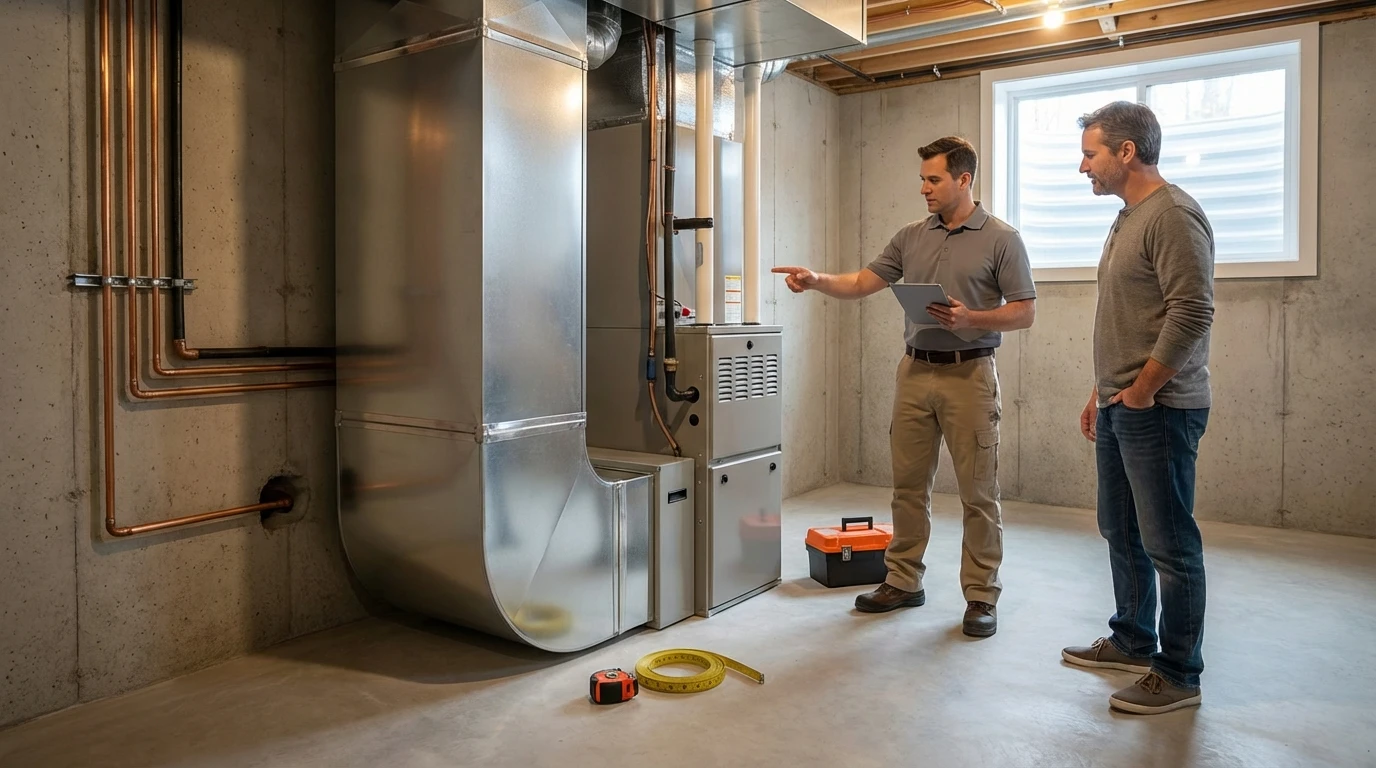
Proper sizing is a process, not a guess: ACCA Manual J calculates the home's heating and cooling load; Manual S selects equipment to match that load; Manual D covers duct design and the static pressure limits that decide delivered airflow and comfort.
This is where 4-ton setups get unforgiving: they demand more airflow, and ducts that are fine on a smaller system can choke on higher airflow, driving high static pressure. Rule-of-thumb airflow targets are often stated in CFM per 10,000 BTU of furnace input, and even an 80,000 BTU furnace needs the right airflow to actually move the heat it produces. When ducts cannot deliver, the symptoms are obvious: rooms that never balance, noisy returns, and weak airflow at the far registers. Insist on a Manual J-based load calculation and ask the contractor to justify the chosen tonnage, required airflow, and whether your existing ducts can support it.
Once sizing and airflow are handled, the remaining question is whether dual fuel fits your climate, your utility rates, and your tolerance for added complexity (for example, common package options like a 3-ton dual fuel heat pump and gas furnace package or a 4-ton dual fuel heat pump and gas furnace package).
Pros, Cons, and Who Should Choose Dual Fuel
Dual fuel is a cost and comfort optimization tool, not a default upgrade. It only wins when your heat pump covers most hours efficiently, your furnace carries the ugly cold, and your local $/kWh versus $/therm makes that split cheaper than committing to one fuel.
Choose dual fuel when your winter has long shoulder seasons plus short, brutal cold snaps. Heat pump efficiency falls as outdoor temperature drops because there is less usable heat outdoors and the system has to run a higher temperature lift, with cold and wet weather adding defrost losses. COP can drop to about 2.3 around -8.3°C, while some modern cold-climate units still hold roughly COP 2.5 at 20°F. That decline is exactly why a gas furnace delivers steadier comfort in freezing weather, even if the heat pump is excellent most of the year.
It is also a clear win when you need redundancy. If either heat source is down, the other can keep the house safe and livable while you wait on service.
You are buying extra equipment and a more complex install, plus ongoing service on two heat sources. Dual fuel systems require biannual maintenance and typically mean two separate service visits each year.
Plan for gas service and venting, and expect more controls to commission correctly. If the installer does not set it up and verify operation, the efficiency advantage you paid for evaporates.
Get four inputs before you sign: your electricity price, your gas price, the furnace AFUE, and realistic heat pump COP at your typical winter temperatures. Under many scenarios, a higher-COP heat pump (around 3.5) beats gas on cost per delivered heat, but only if your $/kWh supports it.
Then treat incentives as a tiebreaker: ENERGY STAR certified gas furnaces with AFUE 97% or higher can qualify for federal tax credits, and if both a qualified heat pump and furnace are installed, you may be able to combine credits up to $2,600, subject to current rules.
Even when the numbers favor dual fuel, installation context matters, and the biggest fork in the road is often whether a heat pump or gas furnace is right for your home.
Dual Fuel vs. Mini Splits
The decision that drives results is usually ducted vs. ductless, not heat pump vs. gas. Retrofitting ducts can erase efficiency gains and add cost fast, while ductless zoning fixes comfort problems a central system cannot target.
Ductless mini splits dominate when ducts do not exist or would be disruptive to add: older homes with boiler or baseboard heat, finished attics and bonus rooms, garage conversions, and additions that never tied into the trunk lines. The real advantage is zone control, because each head targets the space that actually needs conditioning instead of forcing whole-home airflow to solve a single hot room. For a sizing sanity check, a 12,000 BTU mini-split typically covers roughly 400 to 600 sq ft, and some guidance stretches that to about 650 sq ft depending on insulation, ceilings, sun exposure, and climate (see this mini split sizing BTU calculator).
Ductless also tends to deliver closer-to-labeled efficiency because it avoids ductwork losses, so more of what the unit produces reaches the room.
Dual fuel is strongest when you already have solid ductwork and want uniform whole-home comfort from a single system. The tradeoff is less granular room-by-room control, but you gain a central platform for integrated filtration and humidity strategies that are harder to execute consistently with scattered indoor heads.
MRCOOL DIY systems use pre-charged Quick Connect line sets designed to simplify refrigerant connections, but that does not bypass electrical, mounting, condensate, and local code requirements, and warranty terms still apply.
Decision heuristic: Existing ducts plus whole-home uniformity points to dual fuel; no ducts or high-priority zoning points to ductless (especially multi-zone mini split systems).
Conclusion
If your goal is the same one in the opening scenario-heat-pump efficiency most days, dependable comfort when temperatures drop into the teens-dual fuel can do it, but only when the system is matched, configured, and verified rather than guessed. The details that decide whether it works are the same ones that show up throughout this guide: a sensible changeover strategy, defrost handled without comfort dips, ratings that match the actual combination (SEER2/HSPF2, AFUE, refrigerant), and sizing and airflow that are proven rather than assumed.
- Verify an AHRI matched system, meaning AHRI lists your exact outdoor unit plus indoor coil/air handler and furnace combination as one rated package for performance and rebates, not standalone components.
- Confirm thermostat and controls compatibility; modern dual-fuel thermostats often need an outdoor (or supply-air) temperature measurement, and not all heat-pump thermostats support dual-fuel lockout/changeover.
- Demand the load calculation basis in writing and have ducts and airflow constraints called out, not assumed.
- Plan installation feasibility: 90%+ condensing furnaces require condensate drainage and proper venting; follow manufacturer venting rules, including no common venting with other appliances.
- Check refrigerant platform readiness; A2L (R-32) equipment has handling and code considerations, so verify installer qualifications and local requirements.
- Request a written proposal listing exact model numbers, AHRI reference details, lockout settings, and full scope (electrical, venting, condensate, thermostat, startup).
For a matched-system quote and equipment support, shop dual fuel equipment or request a custom bid at BudgetHeating.com.
Wrapping Up
A dual fuel system pairs an electric heat pump with a gas furnace, using smart controls to switch fuels as outdoor conditions change. Done right, it delivers efficient, steady heat through most of the season, then leans on the furnace when temperatures drop past the thermal balance point or when gas becomes the cheaper option at your economic balance point.
The big takeaway is that dual fuel only performs as promised when the details are handled: confirmed efficiency ratings and matched components, a clear changeover and defrost strategy, and proper sizing and airflow based on Manual J, Manual S, and duct realities. It can be an excellent fit for homes with existing ductwork and mixed winter weather, while ductless mini splits often win where zoning or missing ducts are the real issue.
To move forward confidently, gather your local electric and gas rates, confirm equipment model numbers and compatibility, and review a proposal that spells out sizing, controls, and installation scope before you commit.
 Cooling
 Money Saving Tips
 Product and Brands Insights
 Buying Guides
 State by State