




 buying guides
 hvac systems
 learning center
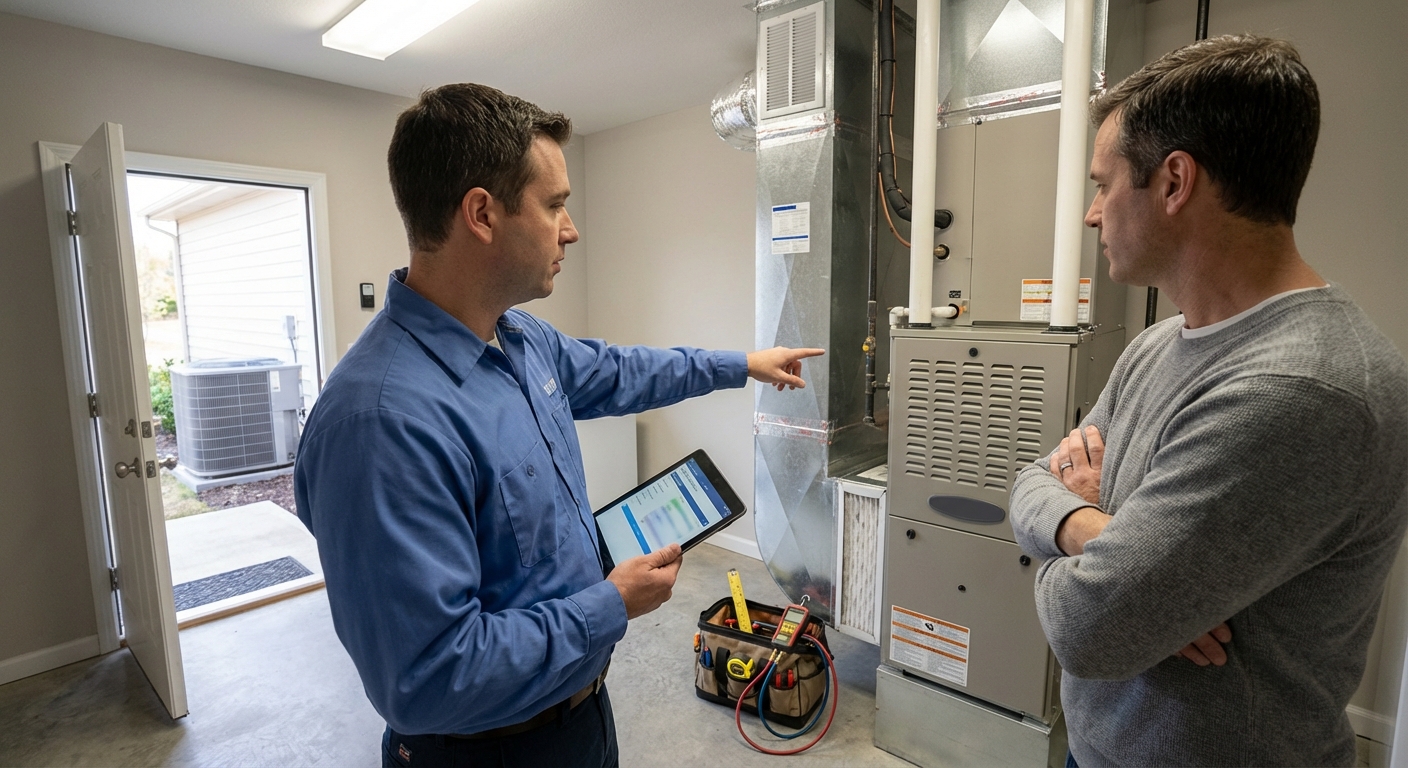
You ask what size air conditioner and furnace you need, and you get the same simplistic answers: "match the old size" or "go by square footage." That's how homeowners end up paying for new equipment and still living with hot rooms, cold rooms, or a sticky house in summer.
Pressure makes it worse: you're deciding whether to replace or upgrade, contractor quotes don't agree, and the real complaint is comfort, especially humidity and uneven temperatures.
The tradeoff is not "bigger" versus "smaller." It's bigger versus right sized for the load your house actually sees. Oversizing feels safer, but it backfires with short cycling, weaker humidity (latent) removal, higher energy use, and faster wear and tear.
The professional path is the ACCA process: a Manual J load calculation, the ANSI standard for residential load calculations and commonly required by code and permitting, uses design temperatures, insulation levels, window specs, infiltration, and internal gains, not just home size. Manual S then selects equipment that matches those loads, and Manual D ensures the ducts can actually deliver the airflow that equipment needs.
Use rules of thumb only to sanity-check a quote, then treat any sizing recommendation as incomplete until it includes a Manual J and a duct reality check. The sections below walk through the sizing terms you'll see in quotes, a practical way to bracket capacity, and how sizing changes for heat pumps and ductless systems.
HVAC Sizing Basics
Capacity is the sizing decision; efficiency is the operating-cost decision. Pick the wrong capacity and a high SEER2 or high AFUE label will not make the house comfortable, quiet, or cheap to run.
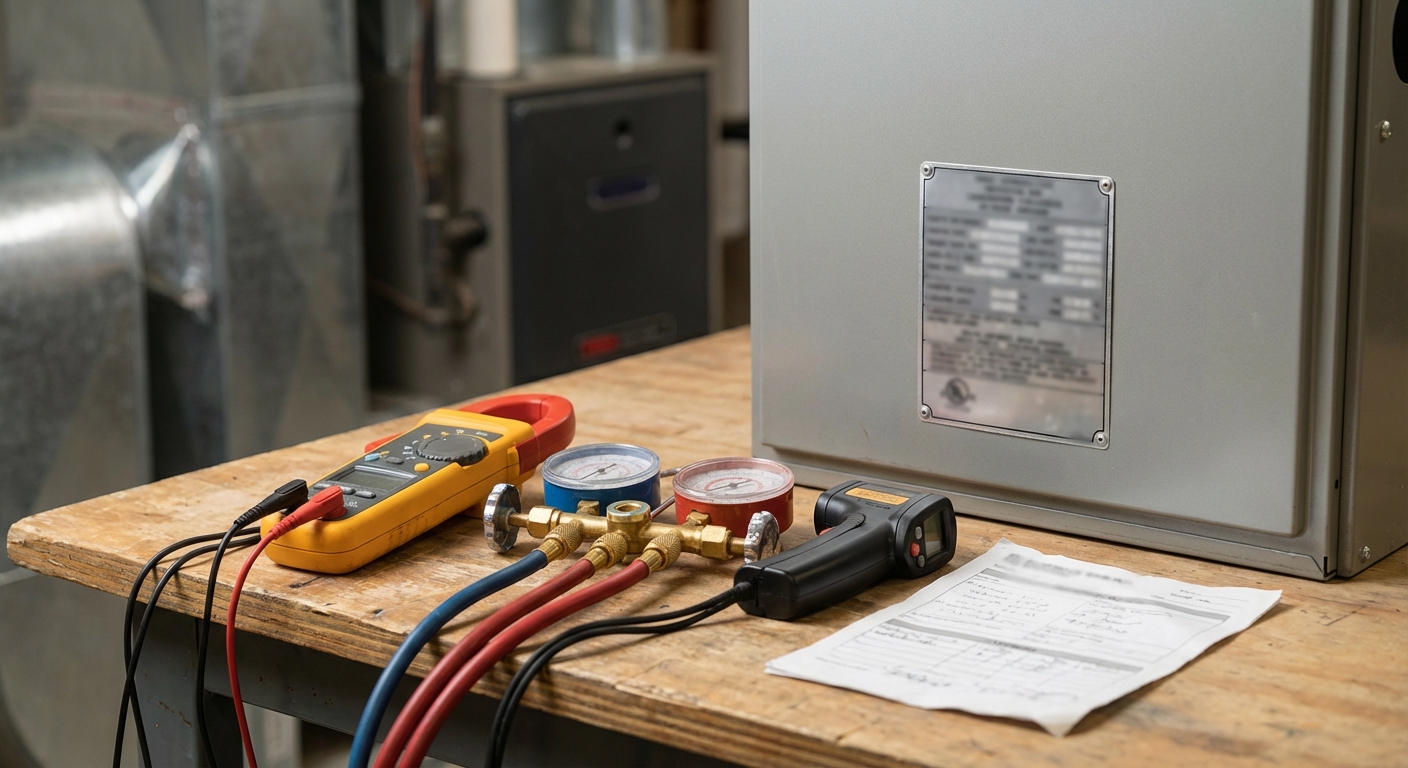
An air conditioner's size label maps to cooling capacity, measured as a ton of cooling where 1 ton equals 12,000 BTU/hr. Converting is straightforward: tons × 12,000 = BTU/hr (or BTU/hr ÷ 12,000 = tons). Typical residential central AC capacity commonly lands around 1.5 to 5 tons, roughly 18,000 to 60,000 BTU/hr, which is why you see equipment marketed as 2-ton, 3-ton, or "24k/36k" class units.
SEER2 is a cooling efficiency rating under the 2023 U.S. Department of Energy test procedure, and the updated method typically produces SEER2 values about 4 to 5% lower than the older SEER number for similar equipment. The same kind of downward shift applies to EER2 and HSPF2, which is why you only compare SEER2-to-SEER2 (or convert carefully) when shopping.
AFUE (annual fuel-to-heat conversion) ties a furnace's input BTU/hr to delivered heat: output ≈ input × AFUE. An 80,000 BTU/hr input furnace at 96% AFUE delivers about 76,800 BTU/hr of heat (80,000 × 0.96 = 76,800).
Oversized fixed-capacity systems short-cycle, wasting energy and increasing temperature variability. In the field, wrong capacity also shows up as blower and register noise, rooms that never match the thermostat, weak humidity control in cooling mode, and higher bills even with "high-efficiency" equipment.
Ask any contractor or seller for two numbers in writing: capacity (tons and BTU/hr) and efficiency (SEER2 for cooling; AFUE for gas furnaces). High efficiency cannot fix wrong capacity.
How to Estimate the Right AC and Furnace Size
The basics above tell you what "size" means on paper; the next step is anchoring that capacity to your actual climate and home details. You can get a defensible equipment size estimate before running Manual J by anchoring your numbers to your location.
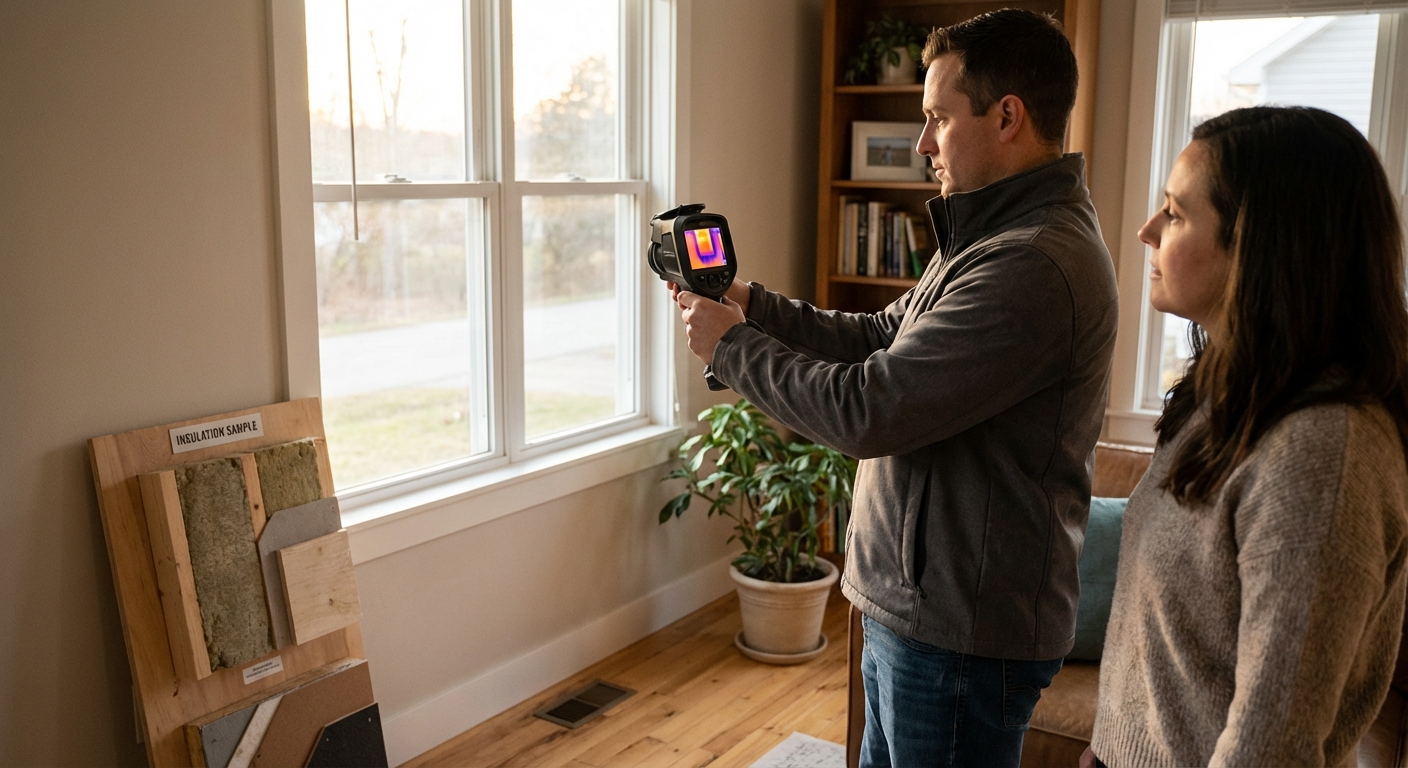
The IECC climate zone map splits the U.S. into 8 temperature-oriented zones, and those zones are further labeled by moisture regime A, B, or C (for example, hot-humid vs hot-dry vs marine).
Go one level deeper than the state map: DOE Building America publishes county-level climate zone designations, which is the right resolution for picking realistic outdoor design conditions. Residential sizing conventions use the 1% cooling outdoor design temperature for cooling loads and the 99% heating outdoor design temperature for heating loads, which keeps you from sizing to extreme outliers that only happen a few hours per year.
Placeholders marked must be replaced with approved evidence IDs before publication.
- Measure conditioned square footage only (the air you actually heat and cool), then use a quick bracket of 1 ton per 400 to 600 sq ft to get a realistic range. That 400 to 600 sq ft per ton rule is a common distributor and contractor rule-of-thumb, with 1 ton per 400 sq ft often cited as the old standard.
- Convert the tonnage bracket into BTU/hr so it matches how equipment is rated. Use 1 ton = 12,000 BTU/hr (divide BTU by 12,000 to get tons).
- Check whether your bracket aligns with the typical residential sizing range discussed earlier before you chase edge cases.
Example: a 2,000 sq ft conditioned home brackets to roughly 3.3 to 5.0 tons using the 600 to 400 sq ft per ton range, which is about 40,000 to 60,000 BTU/hr using the 12,000 BTU/hr per ton conversion.
| Manual J input (what gets entered) | What to verify on-site | How it shifts your estimate |
|---|---|---|
| Insulation R-values (walls, attic/ceiling, floors) | Attic depth, cavity insulation, and any missing coverage | Higher R reduces conductive heat flow, lowering BTU needs |
| Window U-factor and SHGC | NFRC label, window type, and how much west-facing glass you have | Higher U increases heat transfer; higher SHGC increases cooling load from solar gain |
| Infiltration (ACH assumptions) | Drafts, fireplace, recessed lights, attic bypasses, and blower-door data if you have it | More leakage raises both heating and cooling loads (sensible and latent) |
| Ceiling height / conditioned volume | Vaults, open-to-below areas, and tall great rooms | More volume and surface area pushes loads up versus an 8 ft baseline |
This is where people get burned by rounding up: Manual J is the professional method used to size and verify loads. ORNL specifically flags oversizing single-speed heat pumps as a cycling problem, so treat the high end of your bracket as a red flag unless your envelope facts justify it (see this HVAC buying guide for broader context).
Heat Pump Sizing in 2026
The same load still governs the "right size," but equipment behavior changes what oversizing looks like in practice. Manual J and Manual S still set the target, but modern variable-capacity heat pumps change the sizing risk profile. Unlike single-stage equipment that short-cycles when oversized, variable-capacity systems commonly modulate down into roughly the 30% to 70% range of maximum output, so a slightly larger unit can still run long, steady cycles instead of banging on and off.
Modulation does not create heat that is not there. Cold-climate sizing has to be anchored to manufacturer performance data: delivered heating capacity (capacity retention) and COP at outdoor points like 47°F, 17°F, and 5°F. Use those tables to compare the unit's output at your local design temperature to the home's heating load (for example, an 18,000 BTU cold-climate heat pump), then decide upfront whether you need electric resistance strips, a furnace, or another defined backup heat strategy.
R-32 is ASHRAE A2L (low toxicity, mildly flammable); R-410A is ASHRAE A1 (ASHRAE Standard 34). Treat that as a practical filter: confirm the contractor is trained on A2L handling, your jurisdiction permits the equipment, and the service company has the tools and procedures to support it long-term.
- Request the manufacturer performance table showing capacity and COP at 47°F, 17°F, and 5°F.
- Verify performance at your local heating design temperature, not just nameplate tonnage.
- Demand a written backup-heat plan (type, staging, and lockout temps).
- Confirm A2L code compliance and service readiness if the quote uses R-32 (including support for an 18,000 BTU low-temperature heat pump option).
When a Ductless Mini Split Is the Right Size Solution
Not every comfort problem is best solved by changing a central system's tonnage. When ducts are the bottleneck-or when only a few rooms are the problem-ductless sizing works differently.
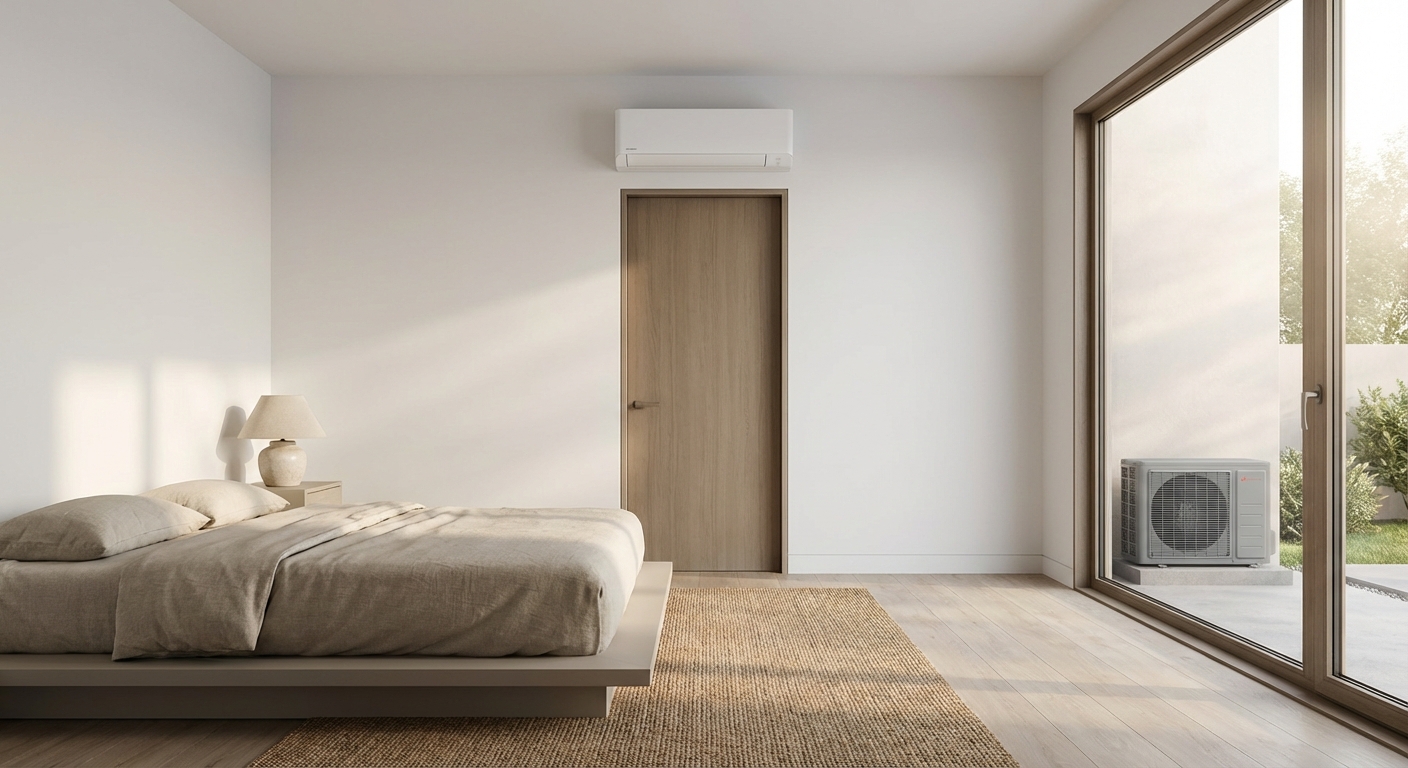
Ductless is right-sized by room, not by house averages. The target is the load in each space, then equipment that can actually match it, not a central-system shortcut based on whole-home airflow assumptions.
Mini-splits win when the problem is localized. Additions that never tied into the original ductwork, upstairs bedrooms that run hot, basements that stay cold, and homes with undersized or leaky ducts all benefit from true zoning. The tradeoff is planning: each room you expect to control needs a defined "zone" and a sensible indoor unit location.
Apply the same load logic at room scale. Measure room dimensions, then flag insulation clues (uninsulated knee walls, drafty attic access), window area and specs, and exposure (west glass, over-garage floors). Add internal gains: kitchens and offices carry real heat from cooking and electronics. From there, you typically select indoor heads in 9k, 12k, and 18k BTU increments based on the room load and where the head can throw air.
Multi-zone outdoor units commonly support 2 to 8 indoor heads. Nameplate head totals often exceed the outdoor unit rating because not every room peaks at the same time, but the outdoor unit still limits simultaneous maximum output.
DIY-oriented systems are only "DIY" within strict limits: pre-charged line sets cap allowable run length, electrical still has to meet code, and permits and warranty terms can hinge on licensed work and EPA handling rules. DIY savings are commonly cited around 15 to 25%, but the electrical scope is not optional.
- Sketch a floor plan and circle rooms that need conditioning.
- Group rooms into zones that realistically need comfort at the same time.
- Choose single-zone vs multi-zone based on simultaneous demand, then hand that zone list to a contractor for room-by-room load confirmation.
Summary + Next Steps
The goal is the same one raised at the start: eliminate hot rooms, cold rooms, and summer stickiness by matching equipment to the load instead of guessing. You can get close on size with smart estimating, but you only buy with confidence after confirmation: an ACCA Manual J load calc, equipment selection, and the reality of your ducts.
Keep your buying logic straight: capacity is tons and BTU, efficiency is SEER2 and AFUE, and they are separate decisions. Your climate zone plus envelope breakers like insulation levels, window type, and air leakage swing the load enough to punish a guess. Before you sign, demand proof the outdoor unit and coil are an AHRI-rated match and that your duct system can actually deliver required airflow. If you're looking at a heat pump, require performance-at-temperature data and a written backup-heat plan. If ductless is on the table, size it room by room so zoning matches the spaces you live in.
Homeowner intake checklist: address and climate zone, conditioned square footage, ceiling heights, insulation notes, window count and type, orientation/shade, leakage clues or blower-door result, last 12 months of utility bills, existing equipment model numbers and fuel, duct size/condition and known comfort issues, photos of indoor and outdoor install locations.
Incentives can change the math: the federal 25C heat pump tax credit is 30% of total cost up to $2,000 per year for qualifying heat pumps, and it is reported to expire on December 31, 2025; "up to $2,600" is commonly cited for certain dual-fuel setups. Verify eligibility in official IRS and ENERGY STAR guidance and confirm local utility rebates before you purchase.
Use the BudgetHeating.com Rebate Center to check programs (https://www.budgetheating.com/rebate-center/ and https://www.budgetheating.com/Rebate-Center-s/2172.htm), then request a load-based quote at https://www.budgetheating.com/request-a-quote/ or call 813-885-7999. After you’ve confirmed sizing, use HVAC buying guides to compare system types and narrow your options.
Conclusion
Choosing the right air conditioner and furnace size is less about copying your old equipment or guessing by square footage, and more about matching capacity to the real heating and cooling load your home sees. When systems are oversized, comfort often gets worse, with short cycling, uneven temperatures, weaker humidity control, more noise, and higher operating costs, even with high SEER2 or AFUE ratings.
The reliable path is the ACCA sizing process: Manual J to calculate loads based on your climate and home details, Manual S to select equipment that fits those loads, and Manual D to confirm your ductwork can actually deliver the needed airflow. The same load-first thinking applies when comparing heat pumps, where performance at your local design temperature and a defined backup-heat plan matter, and when considering ductless mini splits, where room-by-room sizing and zoning solve specific trouble areas.
Gather your home details, then ask for a load-based, duct-verified sizing recommendation before you commit to any equipment.
Ready to Get Started?
- Get a Custom Quote
- Talk to Our Team by phone
- Shop Ductless Mini Splits
 Cooling
 Heating
 Money Saving Tips
 Product and Brands Insights
 State by State