




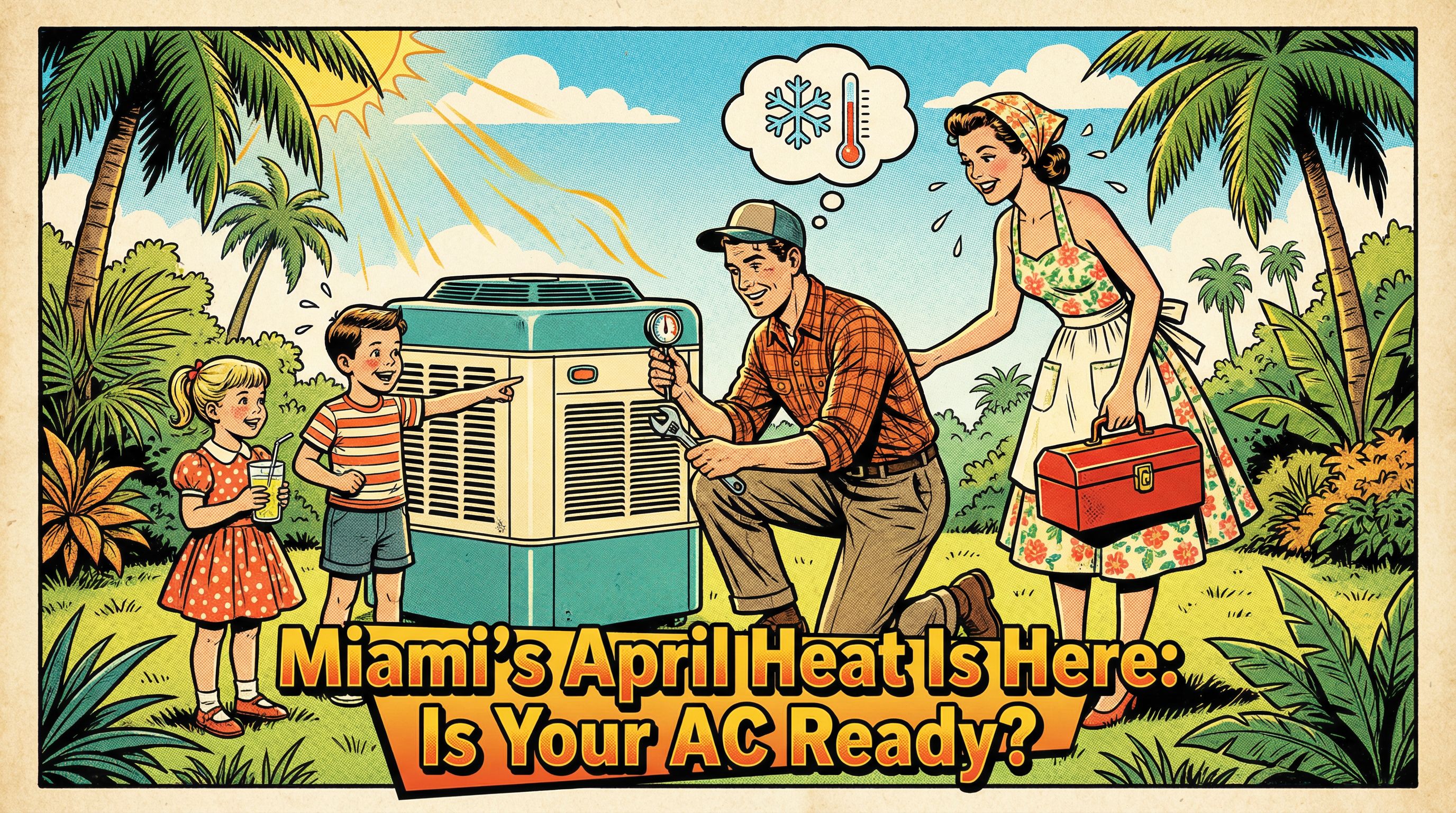
Miami's April Heat Is Here: Why Now Is the Right Time to Check Your AC
By April, Miami afternoons already sit in the 80s, and humidity often tops 70 percent. For cooling equipment, that is not spring, that is game time. We treat April as the start of peak cooling season in South Florida, because loads rise fast, run times stretch long, and any weakness in an older or neglected system shows up quickly.
What typically pops first: sluggish cooling, longer cycles, warm rooms at the far end of the ductwork, and higher energy bills. Coils and filters that were fine in February can be restrictive once the air turns wet and heavy. Refrigerant charge that was merely borderline in winter can become a hot-day no cool situation.
Looking now helps you stay ahead of summer, when heat, storms, and demand push schedules tight and parts move slower. A quick check for clean airflow, correct charge, sound drains, and healthy capacitors can prevent a small tune-up from turning into a midsummer failure. We have seen well maintained systems breeze through April, while neglected units struggle by the first true humid week. Treat April as your early warning and fix what it reveals.
Why Early AC Maintenance Matters in Miami: How April Heat Stresses Your System
April in Miami is the AC's first stress test. Heat plus humidity means longer run times and heavy moisture removal, like a marathon with a backpack. We commonly see reduced efficiency, higher bills, and uneven cooling when weak parts start to show. Finding issues now is safer than waiting for summer.
Pre-season checklist: replace or clean filters; clear debris and wash the outdoor condenser; check ducts for leaks and insulation; verify thermostat and airflow; run the system early; schedule a professional tune-up to check refrigerant charge, coils, electrical components, condensate drain, and airflow.
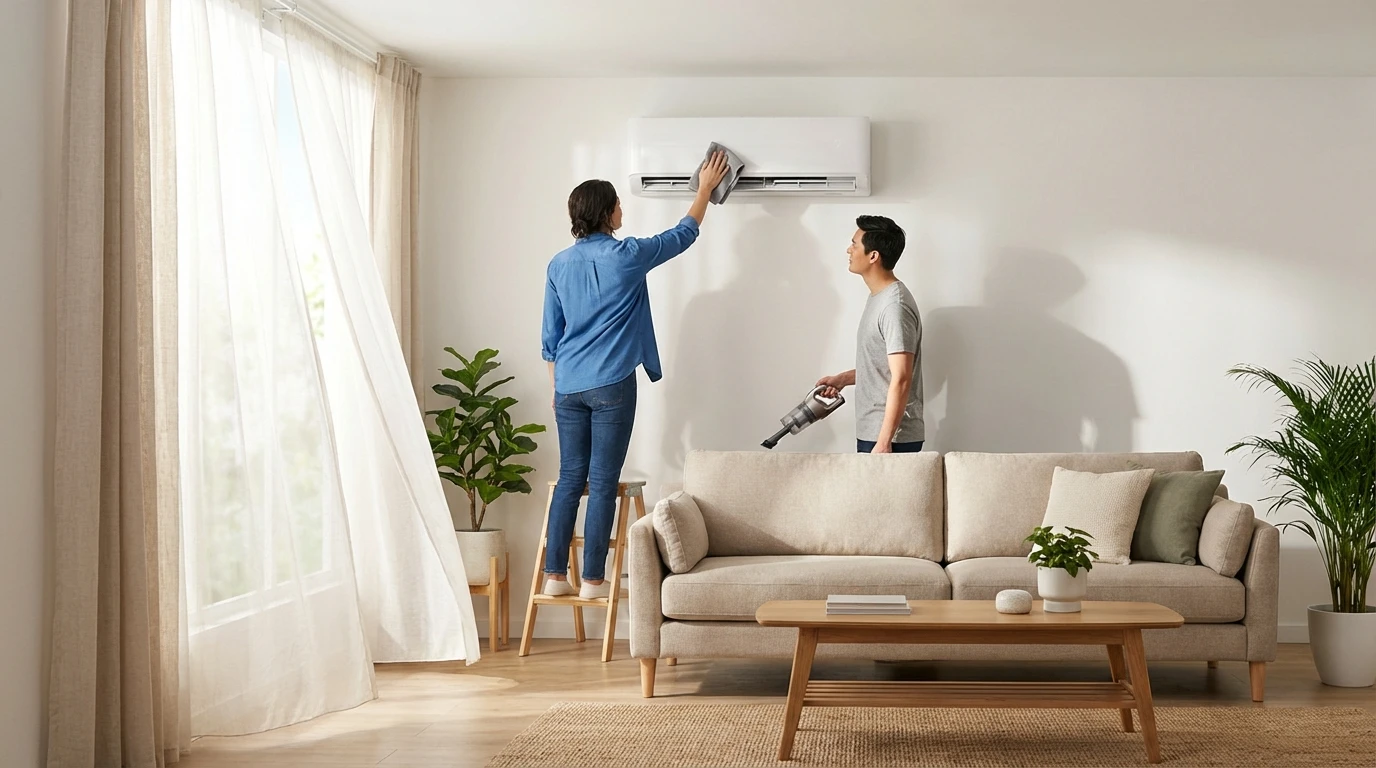
Quick 10 Minute DIY AC Checks You Can Do Today
Build a simple DIY readiness routine you can do in ten minutes before Miami's long hot stretch. In our experience at Budget Heating (BudgetHeating.com), these basics catch small issues early and keep comfort steady.
- Filter: slide out the return air filter, replace or clean it. Confirm the correct size and that the airflow arrow points toward the blower.
- Outdoor space: clear 2 to 3 feet around the condenser. Remove leaves and vegetation so the unit can breathe freely.
- Airflow indoors: open all supply vents and the main return grille. Make sure furniture or curtains are not blocking them, then verify strong airflow at the registers.
- Thermostat test: switch to Cool and run a cycle in early April so there is time to address any issues before peak heat.
These quick checks reduce strain, improve airflow, and give you a head start if service is needed.
When an AC Tune Up Isn't Enough: Honest Tradeoffs and When to Choose Alternatives
A tune-up is smart preventive care, but sometimes it only buys time. From what we see in the field, choose an alternative in these cases:
- The unit runs but bills rise and rooms feel clammy. Older systems often lose efficiency and humidity control. Replacement, right sizing, or a dedicated dehumidifier can beat another service visit.
- Comfort is poor despite a high SEER label. Nameplate efficiency does not guarantee real-world comfort. Duct fixes, airflow balancing, or two stage or variable-speed gear target the root cause.
- Upgrading without checking regional rules. Ignoring regional efficiency requirements is costly. Select by SEER2, not SEER alone, since SEER and SEER2 are not equivalent.
Another myth: waiting until summer to service in Miami is a mistake. Preseason checks cut surprises when heat and humidity spike.
Cost Considerations: Tune Up vs Repair vs Replacement
When exact local pricing is unknown, treat the choice like maintaining a car: tune-up for small efficiency and reliability needs, repair for a clear failed part, replacement when ongoing fixes and energy use outweigh the upfront. We compare total ownership cost, upfront plus power bills over your time horizon. Higher SEER2 often lowers energy use enough to tip the math. Reduce first cost with federal tax credits, local rebates, and manufacturer promotions.
- List your options and their energy implications.
- Estimate how long you will keep the system.
- Apply incentives to see the true net cost.
Safety First: Professional Tune Up Tasks and Maintenance to Avoid Emergencies
Miami heat, humidity, and sudden storms stress every part of an AC system. A licensed technician focuses on safety checks that prevent mid season failures and hazards. In our experience at Budget Heating (BudgetHeating.com), coils and drains take the biggest beating in this climate, so we prioritize those first.
- Replace or clean air filters to keep airflow steady and prevent iced coils and compressor strain.
- Maintain 2-3 feet of clearance around the outdoor condenser, remove debris, and verify unrestricted airflow.
- Test the thermostat and run a full cooling cycle to catch short cycling, weak cooling, and odd noises early.
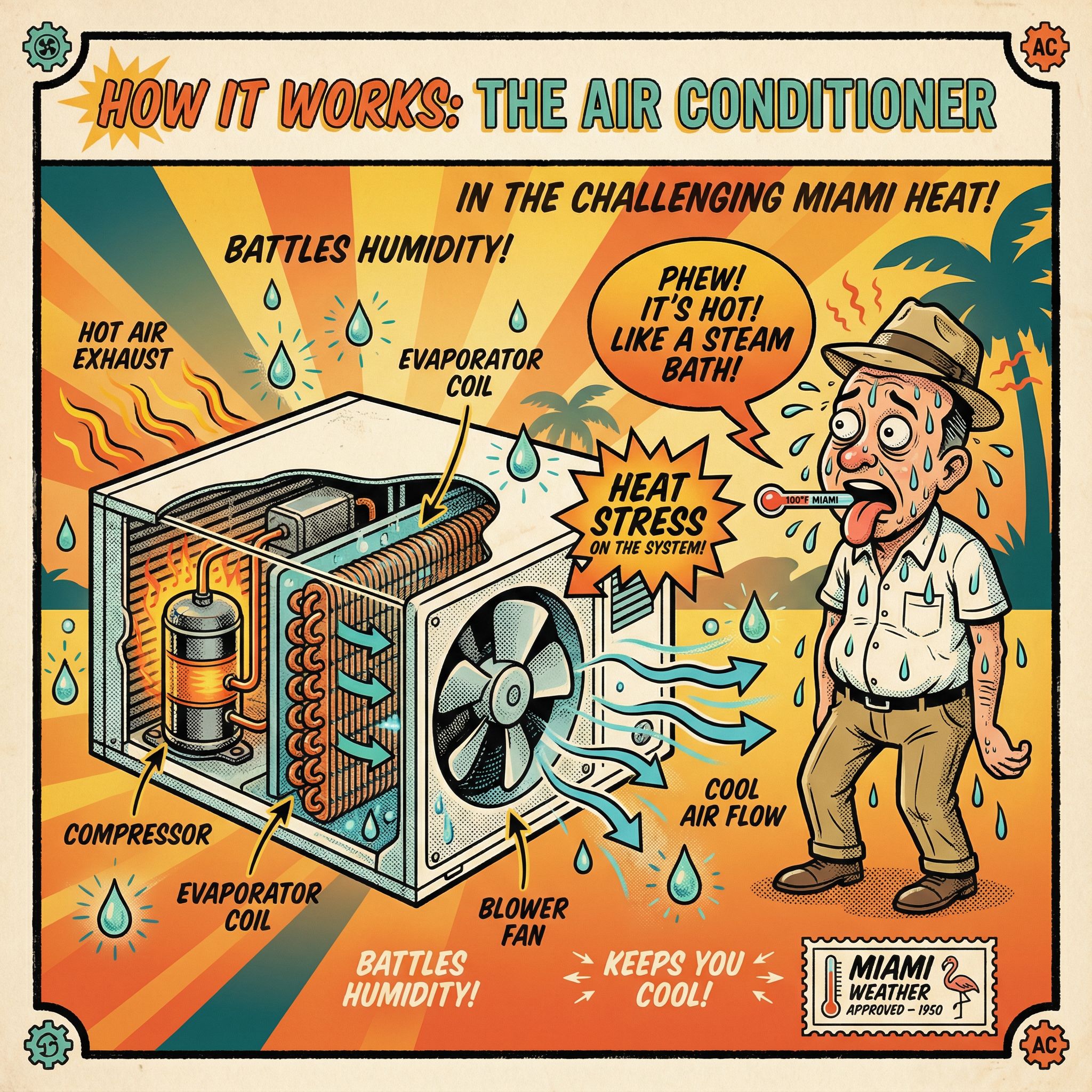
- Clean evaporator and condenser coils so heat transfer stays efficient and operating pressures remain safe.
- Check refrigerant charge and insulation on line sets to prevent sweating, efficiency loss, and premature wear.
- Clear the condensate drain and confirm float or overflow protection to avoid leaks and mold in high humidity.
- Inspect and tighten electrical connections, evaluate contactor and capacitors, and add surge protection for lightning spikes.
- Secure and level the outdoor unit with proper anchors, then seal and insulate ducts to stop condensation and mold.
Think of this like a preflight check that keeps you out of surprise breakdowns and water damage during peak Miami heat.
Why SEER2 (and EER2) Matter for Miami: Pick the Right Efficiency
SEER2 is the seasonal efficiency score under the DOE M1 test, which builds in real duct and static pressure effects. That is why SEER2 values read lower than old SEER for the same true performance. EER2 is a steady state snapshot at fixed conditions, useful for judging how a system holds up during the hottest part of the day. In our Florida field work, SEER2 tends to track actual bills better than legacy SEER.
Florida requires at least 14.3 SEER2 for split systems under 45,000 Btu/h, 13.8 for larger splits, and heat pumps must meet 14.3 SEER2 and 7.5 HSPF2. Miami equipment spans code minimum 14.3-16 up to 20+ SEER2. Upgrading from about 14.3 to 16 SEER2 can cut cooling consumption 10-12%. Moving to around 18 SEER2 may save 20-22%. Results depend on sizing, duct quality, and installation. EER2 offers extra insight for our long, humid afternoons when loads spike.
Regional Rules & Practical Choices for Miami: Sizing, Humidity Control and Coastal Durability
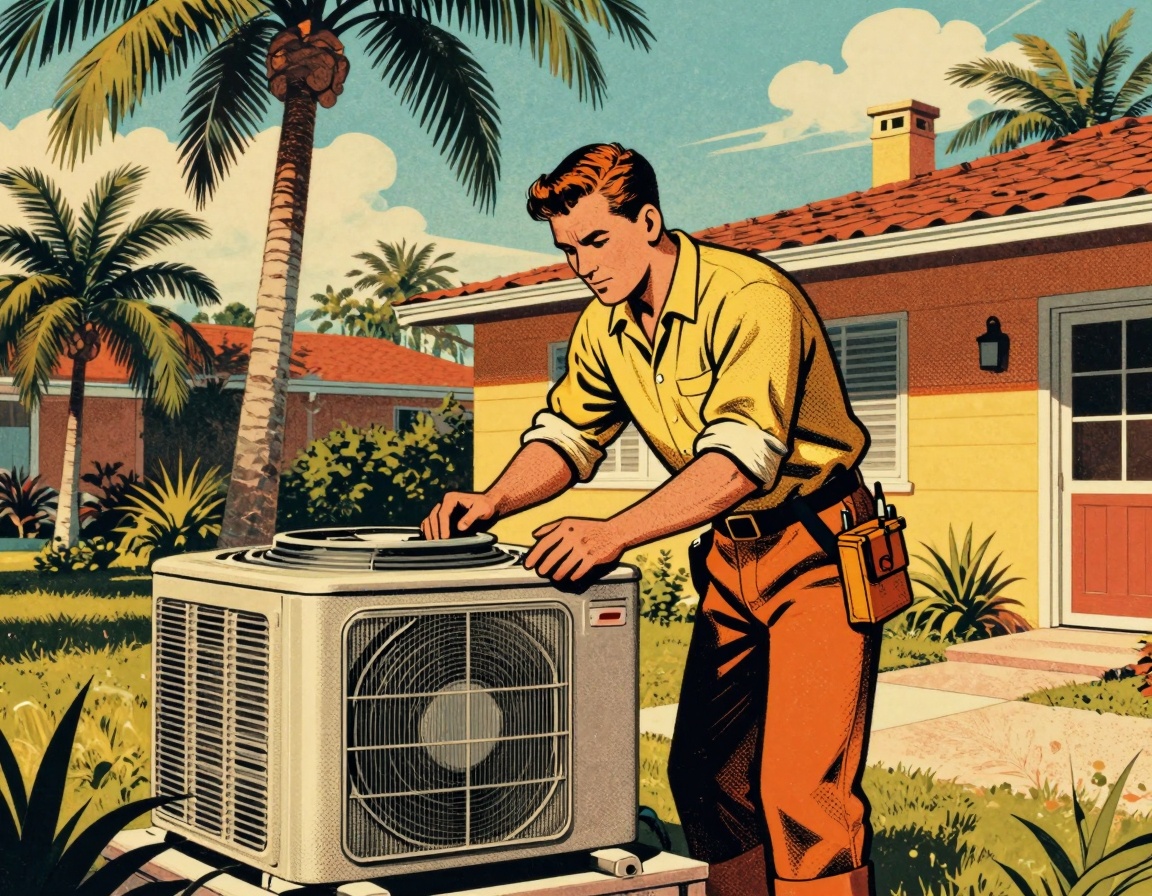
Miami sits in a hot, humid, storm exposed zone. As of Jan 1, 2023, Florida and the Southeast require SEER2 compliant equipment. For split systems under 45,000 Btu/h, the minimum is 14.3 SEER2, and replacements must meet these thresholds to pass permitting and inspection.
From years of sizing systems in South Florida, we see two common mistakes: oversizing that short cycles, and ignoring salt air. A proper Manual J load keeps capacity right sized, like shoes that fit. Then select equipment that manages moisture well.
- Humidity control: variable speed or two stage systems run longer at low output, wringing out moisture and improving comfort.
- Coastal durability: coated coils, stainless or composite fasteners, sealed electricals, and coastal rated condenser cabinets resist corrosion.
- Storm readiness: elevated pads, hurricane rated tie downs, rigid line sets, and correctly pitched drains limit wind and flood damage.
- Value: higher SEER2 models cost more upfront, but local rebates and federal tax credits can offset a meaningful share.
Preparing Vacation Homes, Condos and Rentals for Miami's Early Heat
For vacation homes, condos, and rentals in Miami, early heat can turn idle equipment into a stress test. Beyond your normal prep, we recommend scheduling service 2 to 3 weeks before check in, confirming HOA and gate access, clearing balcony condensers, flushing and treating condensate lines, stocking spare filters, and testing smart thermostats. Log supply temps at turnover. These steps cut emergency calls and reduce liability. Miami area homeowners, renters, condo owners and property managers can use these checks to ready permanent and seasonal homes and avoid tenant discomfort.
Next Steps: Schedule a Tune Up, Create a Maintenance Plan, and Beat the Miami Heat
April starts Miami's peak. Do a quick routine now: replace or clean filters, clear and inspect the outdoor unit, confirm thermostat and airflow, and clean or check the condensate drain. If service is overdue, or the system is 10 to 15 years old, schedule a pro tune up.
If you see chronic issues or weak efficiency, plan a properly sized high SEER2 replacement to improve comfort and costs. Use ceiling fans, shade windows, seal leaks, and set a programmable or smart thermostat. Acting in April avoids summer delays.
Not sure whether to repair or replace? Our U.S.-based team has 30 plus years in HVAC and over 200,000 orders fulfilled, and we can help you lock in in-stock equipment at wholesale pricing with full warranties.
- Get a Custom Quote
- Talk to Our Team by phone or chat
- Shop Air Conditioners and Heat Pumps with free shipping and financing with Affirm
 Cooling
 Heating
 Learning Center
 Money Saving Tips
 Product and Brands Insights
 Buying Guides
 State by State
 HVAC Systems