




 heating
 hvac systems
 learning center
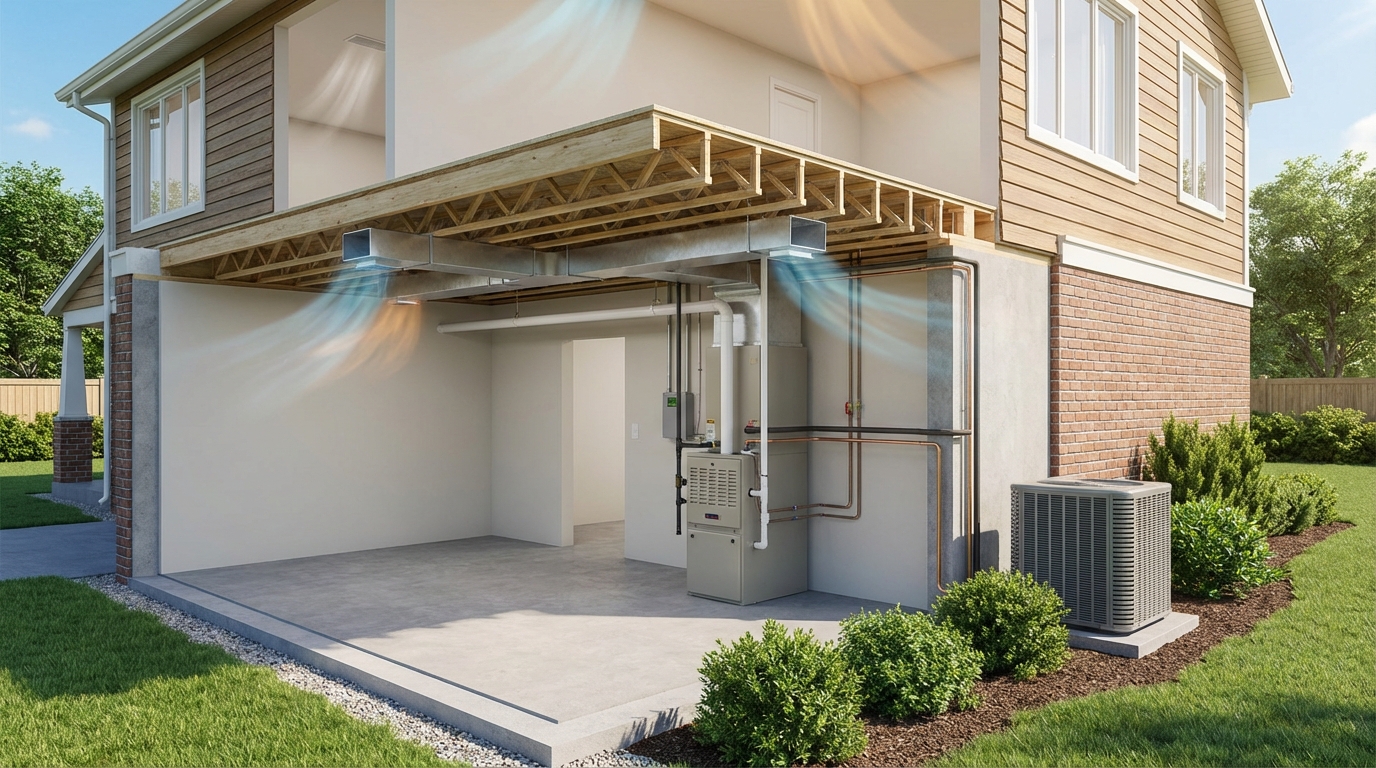
Many homeowners want to cut heating bills without gambling on comfort when it's freezing outside, yet the conversation often gets framed as "heat pump vs. furnace" as if it's an either-or choice. In practice, you don't always have to choose between heat-pump efficiency and furnace reliability.
Climate doesn't stay consistent week to week, and neither do electricity and gas prices, which makes the "best" heat source a moving target. The confusion grows because "dual fuel" gets tossed around without explaining how it actually runs in a typical ducted home. A dual-fuel (hybrid) HVAC system is a practical middle path for many ducted homes because it pairs an electric heat pump with a fuel-fired furnace (commonly natural gas) and switches between them as outdoor temperature changes, using the heat pump most of the time and firing the furnace when it's colder or more expensive to run the heat pump; off-the-shelf systems run either the heat pump or the gas furnace at a given time, not both simultaneously.
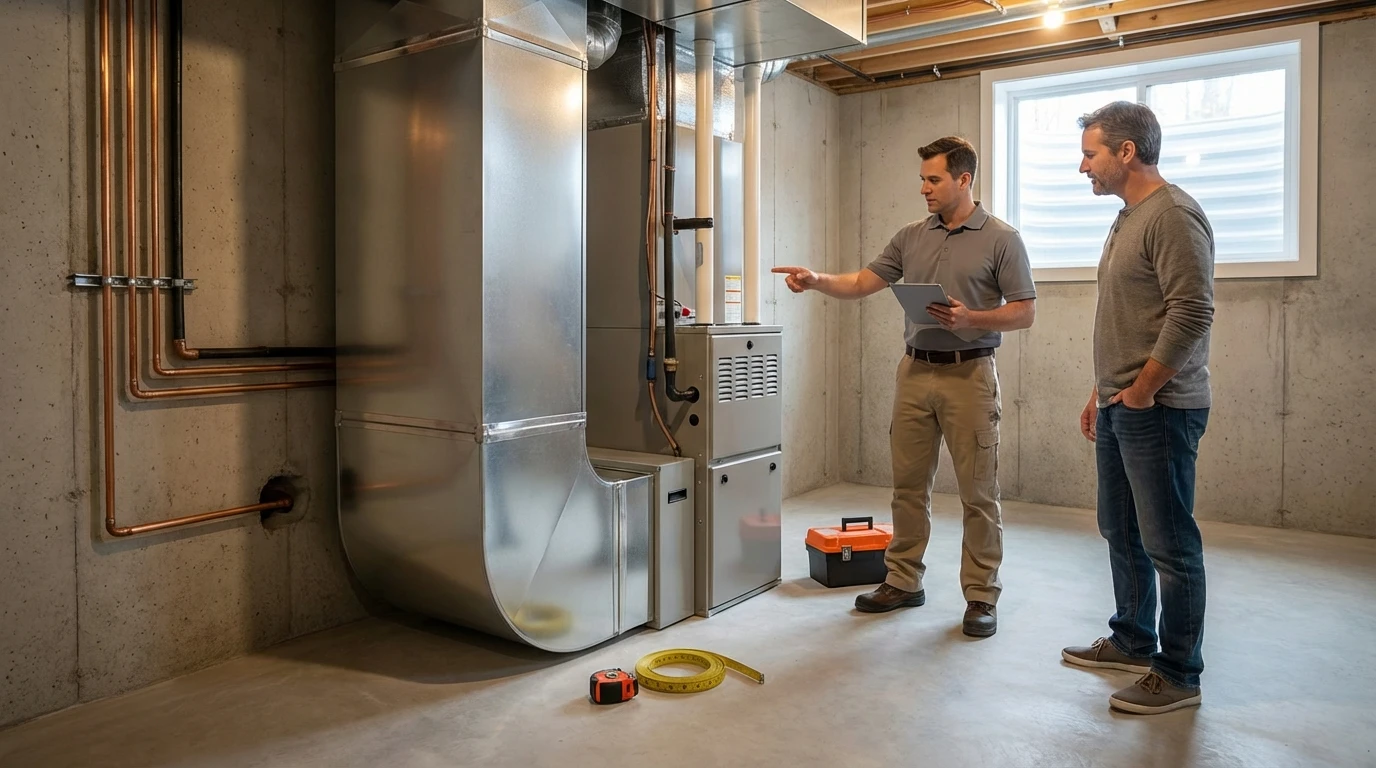
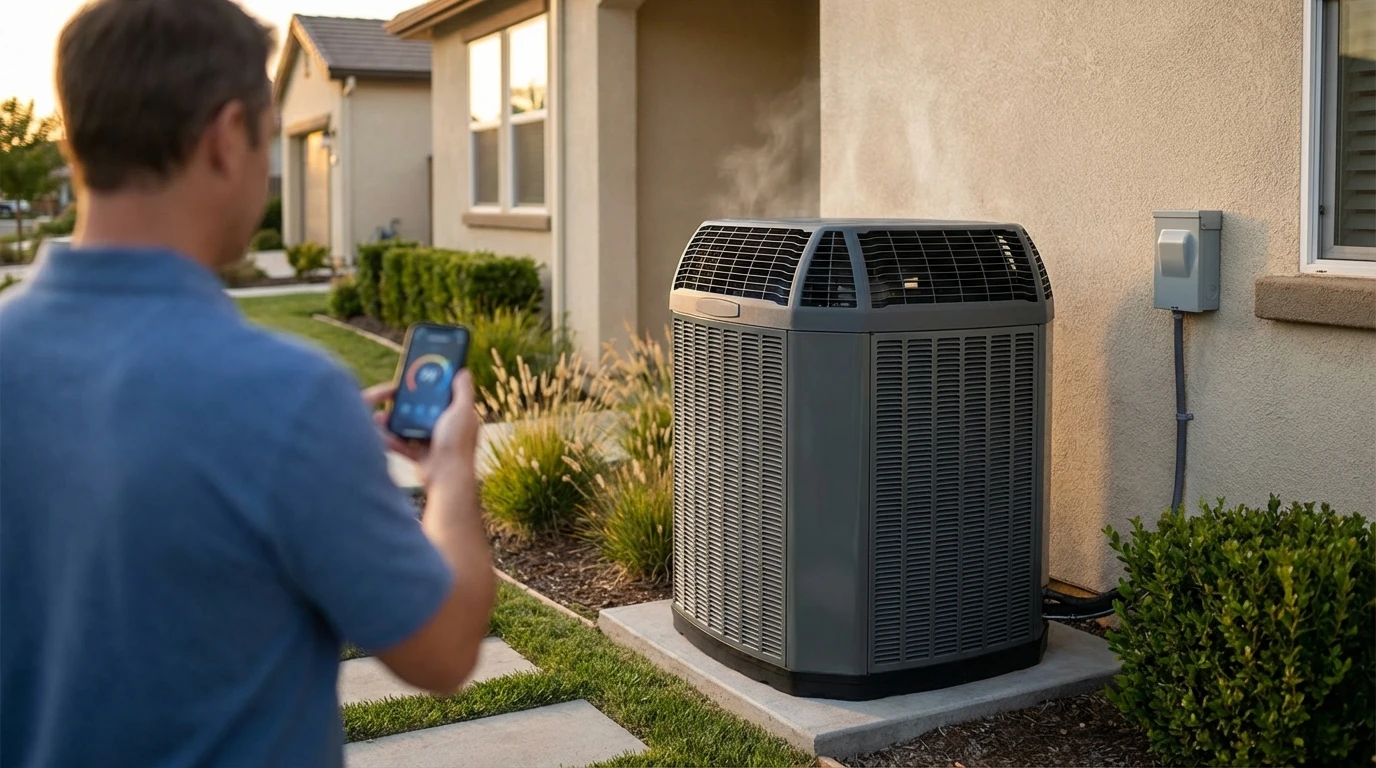
In a standard residential split setup, it looks like an outdoor heat pump matched to an indoor cased coil sitting on a gas furnace, all managed by a thermostat and controls. Unlike an all-electric heat pump that relies on auxiliary electric heat strips, dual fuel uses a non-electric backup heat source, typically a gas furnace. This article breaks down how it's built, how it operates, and how to judge fit, sizing, and buying considerations.
How Dual Fuel Works
Dual fuel is a control strategy, not two heaters fighting each other. It works because the heat pump is the default for everyday heating and cooling, and the furnace only takes over when outdoor conditions justify the handoff.
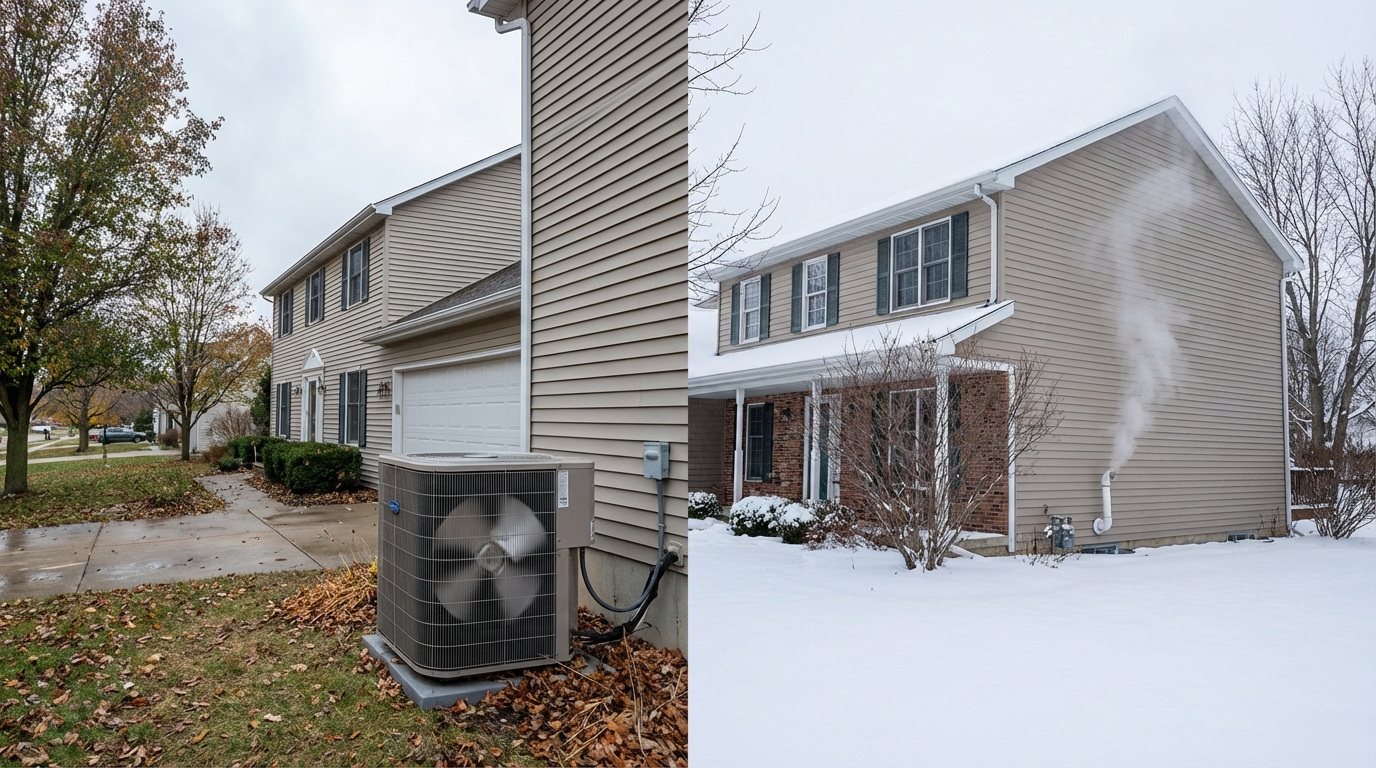
In cooling mode, the heat pump runs exactly like a standard central AC. In heating mode during mild-to-moderate outdoor temperatures, the heat pump operates as first-stage heat. As it gets colder outside, the furnace becomes second-stage or backup heat to carry the load and recover temperature faster.
The "balance point" is where the switch decision becomes practical, and it has two versions. The thermal balance point is the outdoor temperature where the heat pump's capacity equals your home's heat loss (capacity equals load), so the heat pump can no longer keep up by itself below that temperature.
The economic balance point is the outdoor temperature where operating cost is equal between running the heat pump and running the furnace, and it depends on the heat pump's COP as outdoor temperature drops and your utility rates (electric and gas prices). Those two balance points are often different. Example: if electricity is pricey and gas is cheap, it can cost less to switch to the furnace at 35 F even if the heat pump still has enough capacity until 28 F.
Changeover lives in the controls, which is why the thermostat must be explicitly hybrid or dual-fuel compatible. Some setups use an outdoor temperature sensor to trigger a fixed changeover temperature. Others use a smarter approach: the thermostat can use an internal algorithm with outdoor temperature and energy-cost inputs, or dynamic feedback that adapts to real performance (a smart thermostat and connected HVAC controls are one example). In most configurations, staging is straightforward: heat pump as first-stage heat, furnace as second-stage heat.
In freezing weather, the heat pump runs a defrost cycle to melt ice off the outdoor coil. During that window, heat output to the house can change, and the unit can temporarily stop providing heat indoors. Dual-fuel setups commonly bring on the furnace during defrost so rooms do not feel drafty or cool, which is exactly where bad changeover settings show up as comfort complaints.
Setup matters: the wrong changeover temperature or lockouts waste money, short-cycle equipment, and leave you chasing uneven temperatures.
- Confirm thermostat compatibility (hybrid or dual-fuel mode, not just "heat pump").
- Confirm the changeover logic and control strategy (outdoor sensor threshold vs smart algorithm and rate inputs).
- Confirm staging behavior (heat pump first stage, furnace second stage) and the lockout temperatures for each.
- Confirm defrost handling (whether the furnace is allowed to cover defrost for comfort).
- Confirm utility assumptions (the electric and gas rates used to set the economic balance point).
Pros, Cons, and Who Should Choose Dual Fuel
Those balance-point and control details determine whether dual fuel behaves like a money-saving strategy or an expensive compromise. Once you understand how the handoff works, you can evaluate whether the tradeoffs make sense for your climate, rates, and home.
Dual fuel is a cost-and-comfort strategy, not a gadget upgrade. It is most compelling when it lowers your total heating cost while keeping comfort stable during the coldest snaps, when a heat pump is working hardest and your house needs the most heat.
The non-obvious win is that a heat pump's operating cost is not fixed. Heat pumps are extremely efficient at mild outdoor temperatures (about 50°F and above). As outdoor temperatures drop, heat pump efficiency declines, which raises the electricity cost per unit of delivered heat. Dual fuel lets you run the heat pump when it is efficient, then avoid expensive electric heating when efficiency and capacity drop.
That shifting economics is easy to see in $/MMBtu terms. In one example, a COP 2.0 heat pump works out to $17.57/MMBtu, while a 95% gas furnace is $10.21/MMBtu, with a gas break-even around $1.70/therm for that set of inputs. Change the COP (driven by temperature) or your local gas and electric rates, and the "cheapest heat" answer flips, which is exactly why dual fuel performs well across shoulder seasons and true winter lows.
Comfort and resilience are the other payoffs. Furnace heat output is predictable when temperatures plunge, and having two independent heat sources reduces single-point-of-failure risk. In a typical ducted home, dual fuel also stays practical because it uses your existing distribution for whole-home conditioning rather than pushing you into a room-by-room approach (mini-splits are a separate decision).
Dual fuel costs more upfront than single-fuel options because you are buying and installing two heat-producing appliances, not one—and what drives HVAC pricing differences becomes more obvious with added equipment and labor. You also take on more control complexity: changeover settings, lockouts, and commissioning details need to be correct or you will lose the cost advantage you paid for.
You are also committing to combustion-appliance realities: a gas line, code-compliant venting, and ongoing maintenance. Many 90%+ furnaces are Category IV condensing units, which operate with positive vent pressure and lower vent-gas temperatures, so vent materials and drainage details matter and must be installed correctly.
- Climate fit: You have long swing seasons plus real winter lows where heat pump COP drops.
- Rate math: Your gas price vs electric price spread is meaningful, or you expect volatility and want a hedge.
- Home layout: You already have ductwork and want whole-home heating and cooling through the same system.
- Risk tolerance: You value redundancy enough to accept added equipment and service points.
Rebates can shift the payback. Under the federal 25C Home Energy Efficiency Improvement Tax Credit, qualified heat pump installations can receive up to $2,000 annually, and dual-fuel systems are often cited as eligible up to $2,600. Verify current rules, qualifying efficiency thresholds, and any pairing restrictions before you assume those dollars in your budget.
Sizing and Common Configurations
The performance and savings described above depend on the system being sized and commissioned correctly. Dual fuel adds flexibility, but it also adds another way to lose comfort and efficiency if the equipment and ducts are treated as separate decisions.
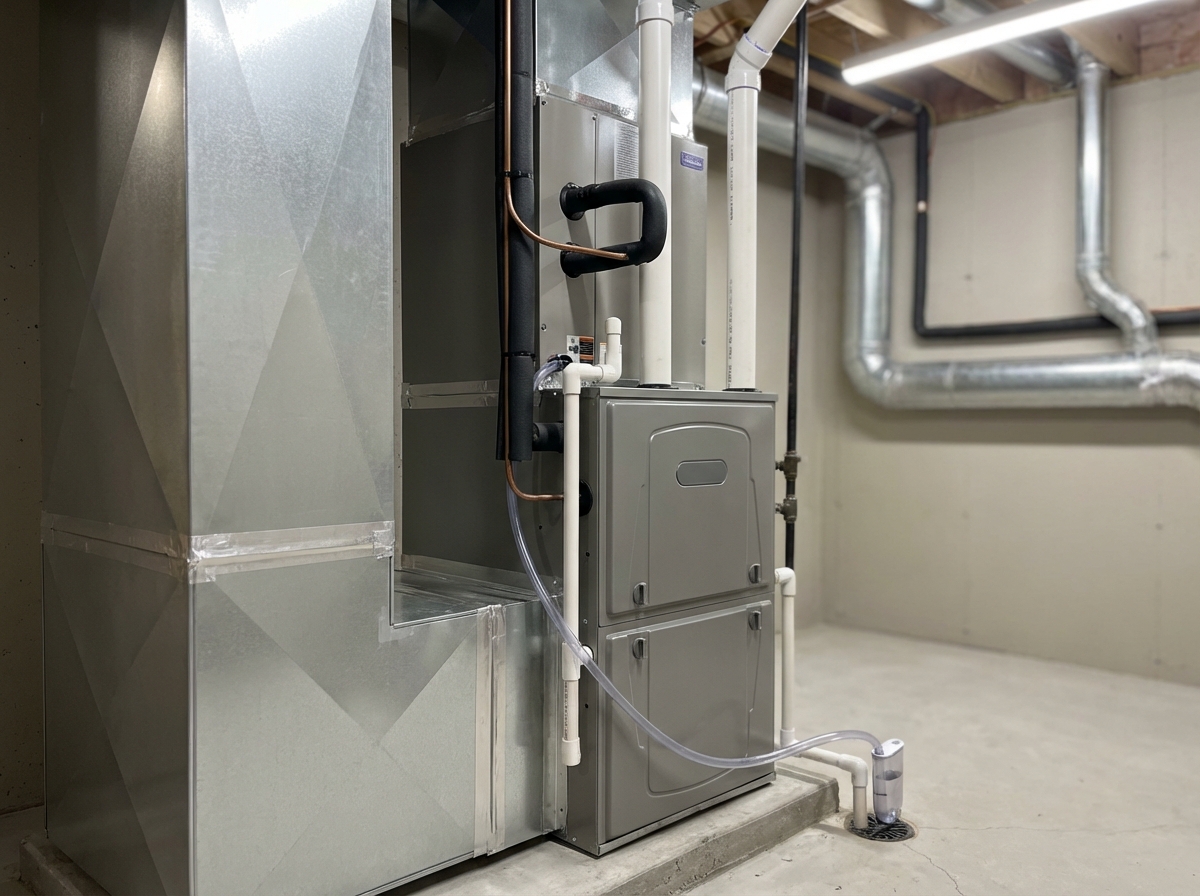
Correct sizing beats "bigger is better" every time. In a dual fuel system, sizing is the make-or-break factor for comfort and operating cost, and you get one more place to get it wrong if the heat pump, furnace, and the home's duct system are not treated as one matched package.
A Manual J load calculation is the residential standard for determining how much heating and cooling your home actually needs, and Manual J-based sizing is what keeps you from paying for capacity you cannot use. It belongs in writing on the proposal, not implied by "we sized it like the old unit."
The non-obvious part is airflow. Duct leakage, restrictive returns, and high static pressure cap delivered capacity, drive noise, and weaken humidity control because the equipment cannot move the air it was selected for. Static pressure is a required input for fan selection, and it should be tested before equipment replacement. Rule-of-thumb airflow targets (like a blanket CFM per ton) are not reliable enough to protect comfort.
Oversizing is where comfort gets punished: short cycles reduce moisture removal, temperature swings increase, and the system gets louder because it is repeatedly ramping up and down instead of running steadily.
Most dual fuel quotes cluster around familiar equipment size ranges rather than one-size-fits-all rules: 2 to 4 ton heat pumps paired with 80,000 to 100,000 BTU gas furnace inputs. Those numbers only make sense after the load and duct constraints are measured.
Physical fit matters too. An upflow gas furnace is a common configuration, but closets, crawlspaces, and attic platforms can force downflow or horizontal orientations, which changes cabinet dimensions, venting layout, and duct connections.
"Variable speed" changes day-to-day behavior because the blower can be adjusted and modulated. In practice that means steadier airflow, quieter operation at low demand, and better comfort consistency when the system is not running at full output.
Furnaces are often advertised by input BTUs, but your house cares about output BTUs. AFUE is the percentage of fuel energy converted into heat delivered to the home over a season, so output BTU ≈ input × AFUE. Example: a 100,000 BTU input furnace at 80% AFUE delivers about 80,000 BTU of usable heat.
- Efficiency tier: A 15 SEER2 heat pump and a 96 AFUE gas furnace cost more than entry-level equipment, and they often require stricter matched-system selection.
- Staging and blower type: Single-stage vs two-stage, plus a variable-speed blower, shifts both equipment price and commissioning time.
- Refrigerant: R-32 availability and contractor handling practices can move procurement and installation cost.
- Duct work: Repairs, sealing, resizing, or adding returns to hit target airflow is one of the biggest quote spreaders.
- Utilities and code: Electrical circuit capacity, disconnects, gas line sizing, venting, and utility requirements for gas service can add scope.
- Matched-system discipline: Requiring a matched system (AHRI Certified Reference) adds verification effort, but it prevents mismatched capacity and efficiency claims.
Action: demand a Manual J-based recommendation, confirm furnace output (not just input), and require an AHRI-verified match before approving equipment.
Dual Fuel vs. Ductless Mini Splits
Sizing and duct performance are central because dual fuel assumes a ducted distribution system. If you don't have usable ductwork-or if your goal is room-by-room control-ductless equipment can be the better match even if you like the idea of a second fuel source.

Mini-splits beat dual fuel when zoning and duct avoidance matter more than having two fuel sources. If you want room-by-room control or you do not have usable ductwork, ductless is the faster path to comfort and predictable performance because it delivers air directly to the space and skips duct losses entirely.
- Your ductwork is missing or failing: Good ducts favor ducted equipment; bad, leaky, or nonexistent ducts favor ductless so you are not paying to condition crawlspaces and attics.
- You need true zoning: Mini-splits are built around room-by-room setpoints, not a single thermostat trying to average the whole house.
- Your climate is heating-dominated: Compare HSPF2 first; higher HSPF2 generally means lower heating-season electricity use, while SEER2 mainly predicts summer electricity use.
DIY can pencil out, but the install has failure points that are not optional to "figure out later." EPA Section 608 certification is required for refrigerant-handling activities that could release refrigerant, and no U.S. state exempts homeowners from that requirement.
- Do the water management: Condensate routing and drains have to work on day one, not after the first overflow.
- Do the electrical correctly: Disconnects, circuit sizing, and terminations are real electrical work, not "plug and play."
- Plan commissioning and warranty: Startup checks and documentation often drive whether a warranty claim survives.
If you are comparing DIY mini split installation options, a 12000 BTU mini split for a single room, a multi zone mini split for several rooms, or a ceiling cassette mini split for cleaner aesthetics, the same duct and zoning logic applies.
Common searches include MRCOOL DIY mini split, Mitsubishi mini split, and LG mini split system.
Choose a mini-split when ducts are bad or zoning is the goal. Choose ducted dual fuel when you want whole-home delivery through good ducts and a non-electric cold-weather backstop as part of the plan (and budget for ductless mini split copper line sets if you go ductless).
Summary + Next Steps
Dual fuel delivers the practical combination described at the start: heat-pump-first efficiency in mild weather and a gas-furnace backstop when conditions turn colder or the economics shift. It works when the plan is verified, not assumed, and the winning outcome comes from matching, setup, and sizing, not the marketing name. Most failures show up after purchase as a mismatched coil and outdoor unit, a wrong thermostat changeover setting based on the balance point (thermal vs economic), or missing home data that forces guesswork instead of Manual J sizing, oversizing avoidance, and understanding furnace input vs output. If zoning or "no ducts" is the real driver, a ductless mini-split is often the better tool.
- Manual J results (heating and cooling loads)
- Duct assessment (Manual D considerations, supply and return capability)
- Gas type and gas pressure availability
- Electrical service capacity (breaker space and amperage)
- Thermostat dual-fuel compatibility (controls and staging)
- AHRI Certified Reference match for the exact outdoor unit + coil + furnace to confirm compatibility and the represented SEER2/HSPF2/EER2
- Airflow targets hit and documented (CFM per ton)
- Refrigerant charge verified using subcooling and superheat per the OEM procedure
- Thermostat changeover and lockout settings verified against the chosen balance point
Use Budget Heating's rebate center first, then request a quote with your Manual J and duct notes, and lean on Budget Heating support to verify the AHRI certificate for the exact combination before you order.
Wrapping Up
A dual fuel, or hybrid, HVAC system bridges the gap between heat pump efficiency and furnace reliability by pairing an electric heat pump with a gas-fired furnace and switching between them based on outdoor conditions and operating cost. The heat pump covers most heating and all cooling, while the furnace steps in when temperatures drop, defrost cycles hit, or the economic balance point makes gas the smarter choice.
The biggest takeaway is that dual fuel success comes down to the details, not the label: a dual fuel capable thermostat, correct changeover and lockout settings, and verified sizing and airflow. With Manual J load calculations, duct assessment, and an AHRI-matched equipment combination, dual fuel can deliver steady comfort, lower heating costs, and added resilience in mixed climates.
As a next step, gather your home and utility details, then use them to confirm the right balance point, equipment match, and commissioning plan before you commit to a system.
 Cooling
 Money Saving Tips
 Product and Brands Insights
 Buying Guides
 State by State