




 hvac systems
 learning center
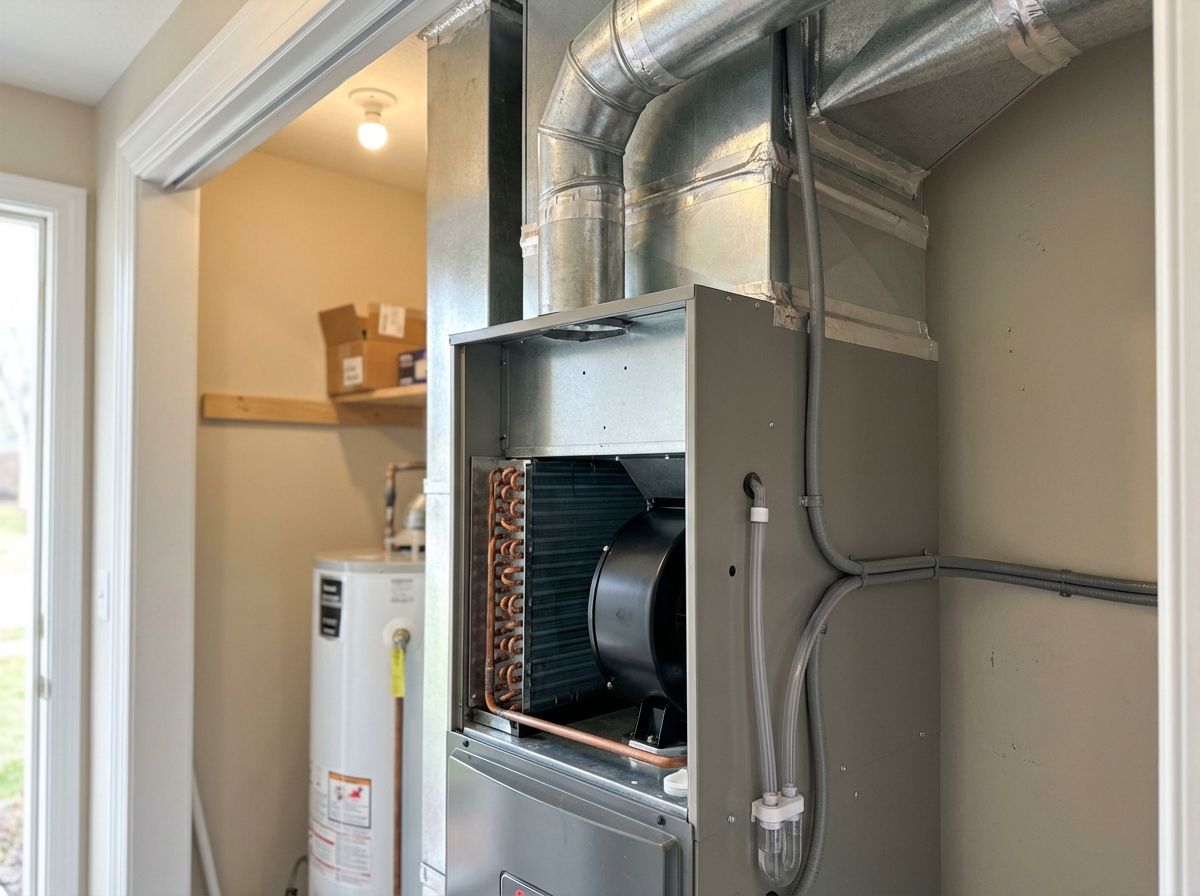
You get an HVAC quote with an "air handler" line item, and all you can think is: why is the indoor box the problem when the outdoor unit is what you see? Then the symptoms hit: weak airflow, a rattling indoor unit, or water where it should not be. Those are air-handler problems, and they are expensive when the indoor unit is mismatched or boxed in where nobody can service it.
The air handler is the indoor workhorse that largely determines airflow, comfort, and serviceability. If the wrong indoor unit gets paired to the rest of the system, you live with noisy operation, uneven rooms, and recurring service calls.
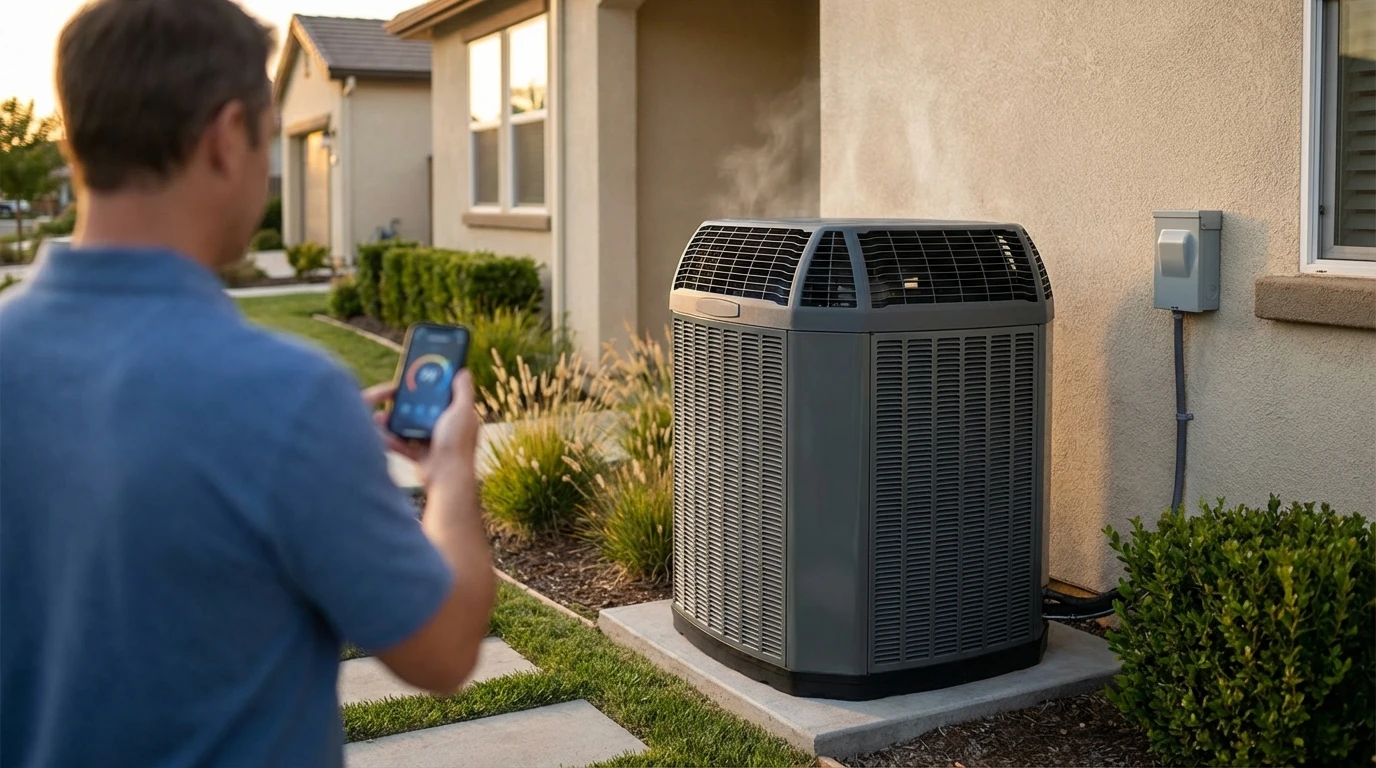
In ASHRAE's framing, an air-handling unit is "an assembly of sections containing a fan (or fans) and other equipment" that performs air-handling functions like air circulation. In a split system, the equipment is literally split: the outdoor condenser and compressor sit outside, while the indoor air handler and evaporator coil sit inside, connected by refrigerant lines and controls.
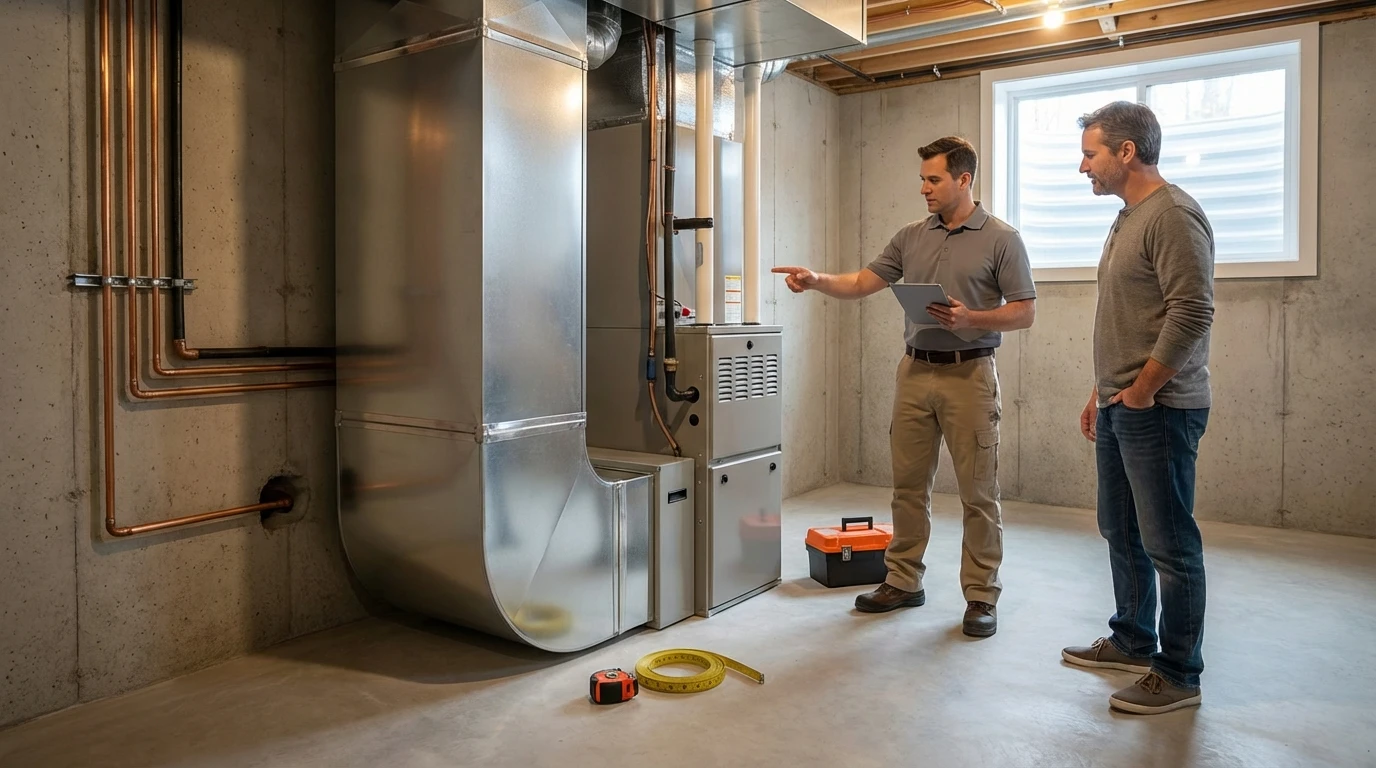
The catch is placement. Residential air handlers usually live in an attic, closet, basement, or garage, and service access and clearance are not optional if you expect reliable maintenance.
Before you approve a system, confirm you have a split system and get the installer to state exactly where the indoor air handler will be installed and how it will be accessed for service.
That same clarity helps you avoid a more basic mistake: comparing an air handler to equipment that solves a different problem, like a combustion furnace or a ductless system built around room-by-room indoor units.
Air Handler vs. Furnace vs. Mini Split
These aren't interchangeable choices. When you swap "air handler," "furnace," and "mini split" like they're the same thing, you end up comparing the wrong outcomes: what actually makes the heat, whether the home uses ducts, how the air feels at the registers, and even which efficiency labels you should be looking at (AFUE vs SEER2/HSPF2).
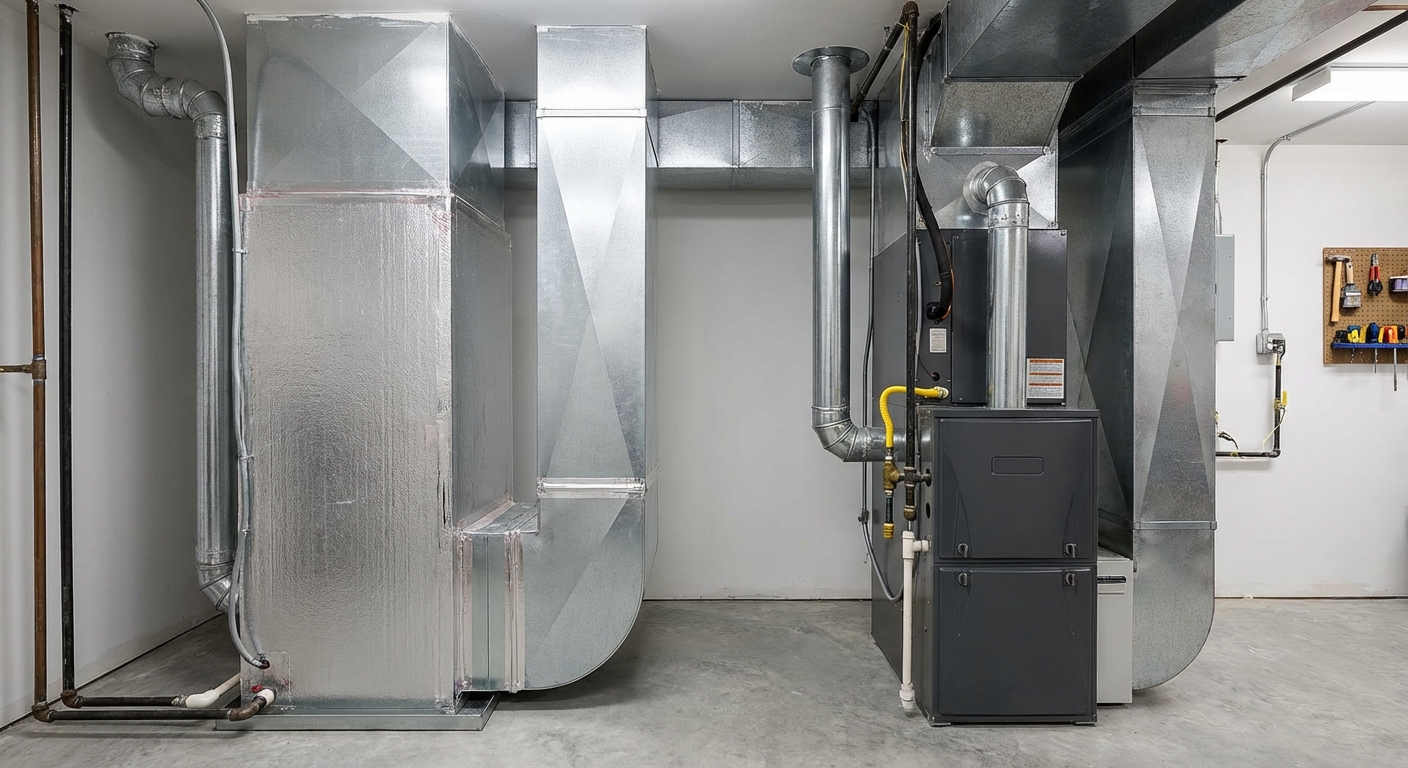
The practical fork in the road is simple: central ducted delivery versus zone-by-zone delivery, and combustion heat versus all-electric heat. Existing ductwork often decides the category before you ever get to brand or model, especially in retrofits and additions where opening walls is the real cost driver.
An air handler is the indoor "air mover" in a ducted system, it circulates air through the ductwork and does not create heat by burning fuel. Heating comes from a heat pump coil (paired to an outdoor heat pump) or from electric heat strips inside the air stream. This setup makes sense when you already have usable ducts and you want electric heating and cooling under one central system—as part of complete HVAC system configurations.
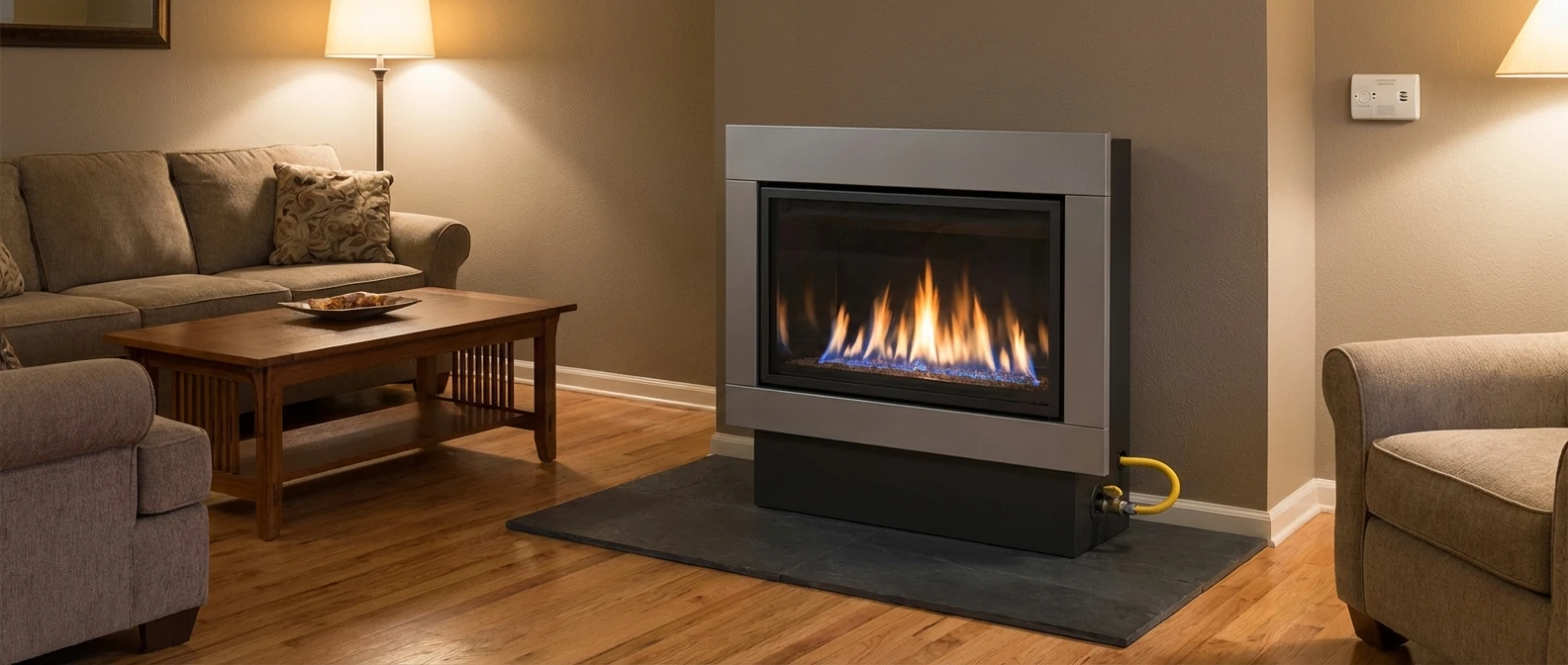
A furnace generates heat by burning fuel (typically gas) using burners and a heat exchanger, and that shows up in comfort. Heat pumps typically deliver supply air around 95°F, while gas furnaces commonly deliver supply air above 120°F, so furnace heat feels hotter at the vent even if both systems can hold the thermostat setpoint. Furnace shopping is also where AFUE is the efficiency rating you'll see.
Ductless mini-split systems skip ductwork entirely and deliver air directly from indoor units mounted in the space. That's the cleanest fit for homes without ducts, room additions, garages, finished attics, or any layout where you want true zone-by-zone control without balancing a whole duct system. Like other heat pumps, mini-splits are typically rated with SEER2/HSPF2, and they typically use mini-split ductless copper line sets.
Decision takeaway: Do you want to use existing ducts, or avoid ducts entirely and heat and cool by zones? And do you need combustion heat, or are you staying all-electric with a heat pump (plus optional electric strips)?
When the answer is a ducted system with an air handler, the real differences start showing up inside the cabinet: airflow capability, dehumidification stability, noise, and how well the unit manages water.
What's Inside an Air Handler
Most comfort complaints blamed on "the AC" actually trace back to what's inside the air handler: airflow control, moisture removal, noise, and water management.
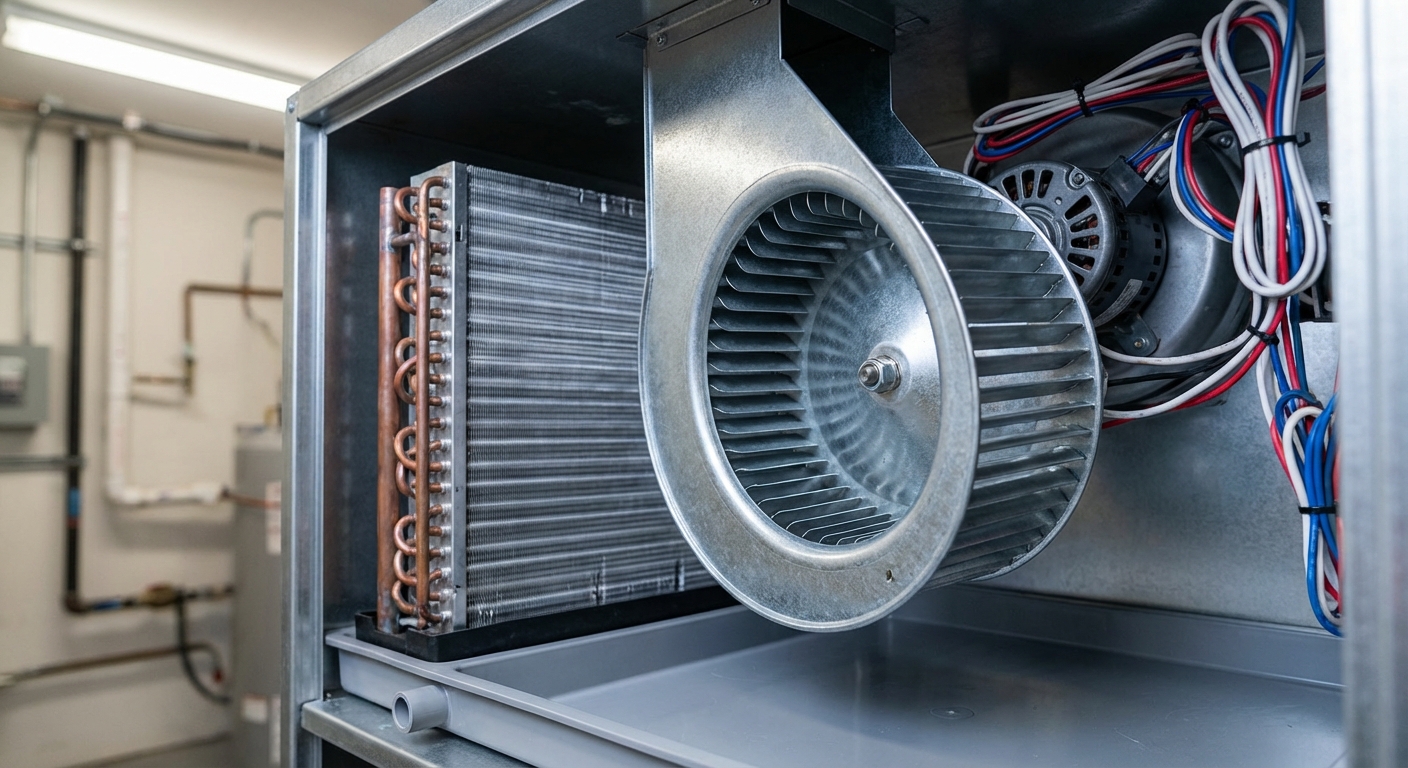
The blower is the comfort bottleneck because every room depends on how much air the air handler can actually move against your duct system's static pressure. PSC motors are commonly used as fractional-horsepower motors in residential air handlers, and they typically run at a set speed tap, so they get louder and less forgiving as restriction rises.
ECM (electronically commutated motor) is substantially more efficient than PSC, commonly cited at roughly 80% motor efficiency vs roughly 60%, and the real homeowner win is variable-speed behavior. Variable-speed control keeps airflow steadier across real-world static pressure, which reduces "hot room, cold room" swings and cuts the rushing, whistle-type noise people often associate with "bad ducts."
The evaporator coil is where humidity gets removed, and it only works well when refrigerant flow is controlled predictably. A TXV holds superheat steadier than a fixed-orifice piston, which stabilizes coil temperature and improves dehumidification; pistons are simpler and cheaper, but they are less adaptive when conditions change.
When that stability breaks down, homeowners usually notice inconsistent temperatures and rising energy bills, not "a refrigerant problem" they can see.
The filter rack sets the rules for airflow. A restrictive filter, a poor fit that bypasses, or a clogged filter increases static pressure, which reduces delivered air and can push the coil toward icing.
Homeowners experience this as weak airflow, whistling sounds, and in more severe cases a frozen coil tied to airflow restriction from a clogged filter.
The drain system fails in predictable ways: slope issues, algae and sludge buildup, or an undersized line that plugs easily. IMC 307.2.2 requires the condensate drain inside diameter to be at least 3/4 inch and not smaller than the drain pan outlet, which is why 3/4 inch PVC traps and drain components are common.
When it clogs, the symptom is rarely subtle: water leaks around the air handler, sometimes paired with airflow complaints from secondary icing or shutdowns.
If your air handler has electric heat strips, they deliver fast heat but they draw real electrical capacity, for example a 10 kW heat strip can call for a 60 A breaker in a field report, and electric heat is treated as a continuous load for circuit sizing. If strips are misbehaving, homeowners usually notice breaker trips, a burning-dust odor at first use, or heat that feels either too aggressive or absent.
Controls tie it together: thermostat calls, fan commands, and safety limits. When controls or safeties get flaky, the experience is cycling, surprise shutoffs, or a blower that runs when it shouldn't.
- Confirm the blower motor type (PSC vs ECM) and whether the unit is truly variable-speed.
- Ask what metering device is installed on the coil (TXV vs fixed-orifice piston).
- Verify the condensate drain meets IMC 307.2.2 for minimum inside diameter and pan-outlet compatibility, with clean access to service it.
- Check that the filter is easy to access and fits the rack without gaps or excessive restriction.
Those parts are easier to evaluate on paper than they are to diagnose mid-season. Understanding the airflow path and the coil's role during heating and cooling puts the symptoms-noise, weak airflow, and water-into a clear cause-and-effect chain.
How an Air Handler Works
An air handler doesn't "make cold" or "make heat." It moves indoor air across the indoor coil, and that controlled airflow path is the backbone of both air-conditioning and heat-pump heating. Once you understand where the air goes and what the coil is doing, the rest of the system's behavior makes sense.
In normal operation, the air handler follows the same route every time: return air is pulled in, pushed through the filter, moved across the indoor coil, and delivered back through the supply ducts. The refrigerant side can switch roles, but the air side stays consistent, which is why basic airflow problems show up as comfort problems in both summer and winter.
Cooling runs in a simple sequence: the thermostat calls for cooling, the indoor blower runs, and warm return air passes through the filter and across the indoor coil. That coil removes sensible heat (temperature) and latent heat (moisture). When latent heat is removed, water condenses on the coil, becomes condensate, and drains away. The blower then supplies conditioned air back through the ducts until the thermostat is satisfied.
In a split heat pump, the air handler still moves air across the same indoor coil, but the refrigeration cycle flips. A heat pump uses a reversing valve to switch between heating and cooling, turning the indoor coil into the heating coil in winter. That's also why quotes list capacity in BTU/hr and tons of cooling: 1 ton equals 12,000 BTU per hour, and BTU/hr is the output language you'll see on proposals. Efficiency comparisons should use SEER2 ratings, since they reflect updated test procedures for cooling performance.
During defrost, most air-to-air heat pumps reverse temporarily and typically engage auxiliary heat so you don't feel a blast of cold air at the registers. The most common supplement is electric heat strips inside the indoor unit; some homes use dual-fuel instead, pairing the heat pump with a furnace for backup heat.
What to listen and ask for: expect occasional defrost behavior in cold weather, but treat weak airflow, loud blower noises, sweating metal, or a frozen coil as problem signals. On every quote, confirm the system's capacity in BTU/hr (or tons) and whether auxiliary heat strips are included in the design.
Because the air side is the constant, equipment selection comes down to whether the indoor unit can actually deliver the required airflow through your ducts and whether the indoor and outdoor components are certified to perform together.
Sizing, Compatibility, and Cost
The "right" air handler is the one that matches the outdoor unit and the duct system, not the one with the longest feature list. Mismatches show up fast as weak airflow, loud registers, higher bills, and efficiency or warranty headaches when the indoor and outdoor pieces are not rated together.
Cooling performance is tied to delivered airflow, not just tonnage. Use ~400 CFM per ton as a working baseline, with a practical target range of roughly 350 to 450 CFM per ton depending on humidity goals and duct design.
Here's the friction: high duct static pressure can prevent the system from ever reaching the target CFM, even when the "tonnage" matches. The fix is selection based on required airflow at the job's real static pressure, not marketing specs.
Indoor coils and air handlers must be rated for the refrigerant and physically compatible with the outdoor unit, and that includes refrigerant class differences like R-32 vs R-410A. Many R-32 systems are sold as matched pairs because mixing components is where leaks, controls issues, and denied claims start.
Ask for an AHRI matched system, meaning the exact indoor and outdoor model numbers are certified together for published performance, and those certified ratings often anchor efficiency and warranty claims.
Electric heat strips are commonly served from 240V circuits, and electric heat is treated as a continuous load sized at 125%. Selection is nameplate-driven: conductors must be sized at least MCA, and the breaker cannot exceed MOCP.
Quotes swing because installation is the variable: duct modifications to manage static pressure, electrical upgrades for heat strips, refrigerant line compatibility, and access difficulty in attics or tight closets. When you request pricing, demand the same scope and the same matched model numbers so bids stay comparable (see real-world factors that drive HVAC pricing).
Before you buy, bring these to the contractor:
- Outdoor unit model number and refrigerant (R-32 or R-410A)
- Proposed air handler and coil model numbers, plus confirmation they are an AHRI match
- Duct constraints: measured external static pressure target and any known bottlenecks
- Heat strip kW requirement and the air handler nameplate (MCA/MOCP) for an electrical spec-check
Even perfectly matched equipment can underperform if it's installed where it can't drain properly, can't move air freely, or can't be serviced-exactly the kinds of constraints that show up in attics and tight closets, and why some homes do better with a multi-zone system instead of a single-zone setup.
Installation, Maintenance, and Common Air Handler Problems
Most air-handler failures that homeowners notice are preventable airflow or water-management issues, but the line between homeowner maintenance and licensed HVAC work is strict.
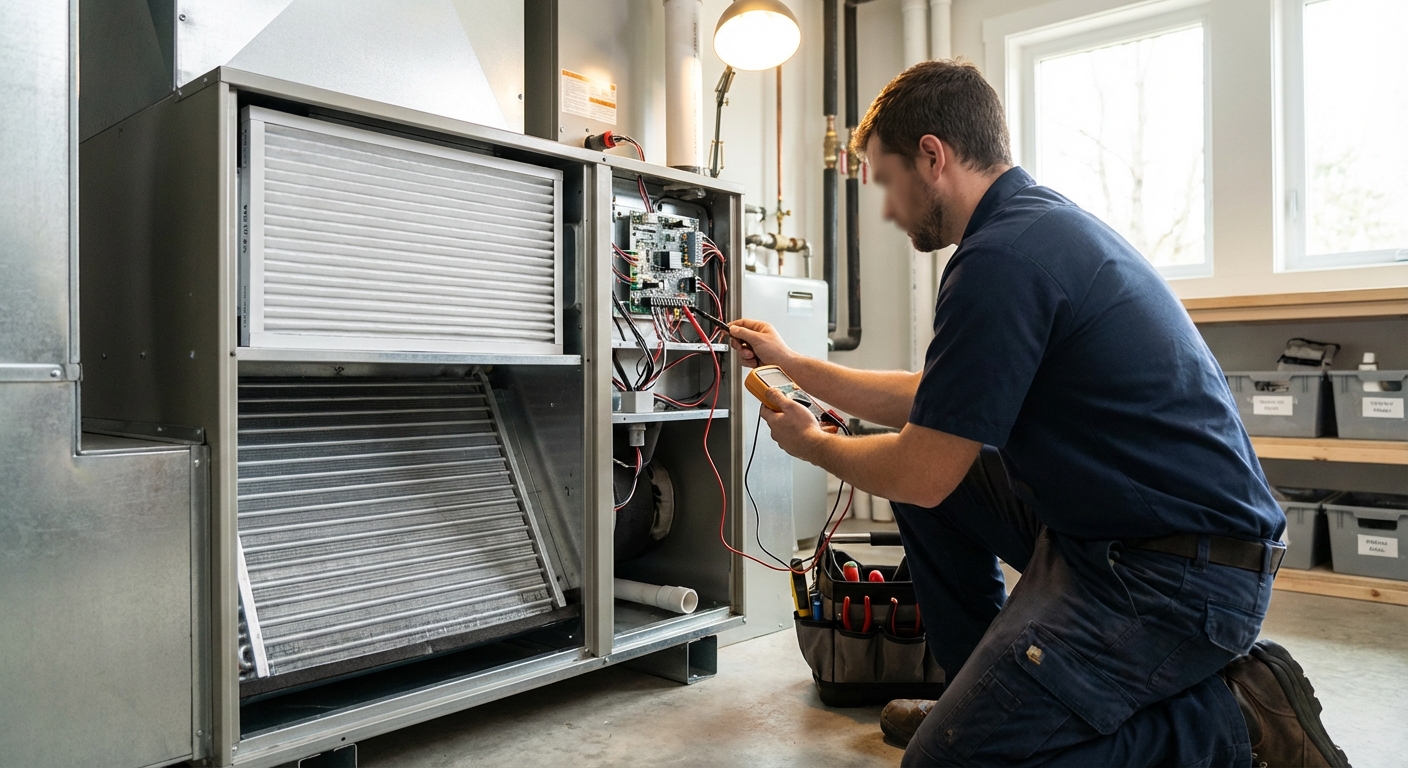
A professional install typically includes setting and securing the cabinet in an appropriate indoor location, connecting and sealing ductwork, and building a condensate plan that meets code and protects the home. That includes minimum drain sizing and compatibility with the pan outlet, plus required protections like a secondary drain pan where an overflow could damage building components, often paired with a float switch in the secondary pan to shut the system down before water spills.
Pros also handle electrical connections (line and low-voltage), verify airflow, and commission the system so temperatures, controls, and safeties operate as designed, including any required duct smoke detection in ducted systems. Do not DIY refrigerant work or open the refrigerant circuit. Federal law under the Clean Air Act requires EPA Section 608 certification for refrigerant handling. DIY mini-split installs exist, but the same legal and safety boundaries apply.
Replace or clean filters on a real schedule, not a calendar myth: manufacturer guidance ranges from 30 days to 1 year, but most homeowners land at every 30 to 90 days based on pets, allergies, and filter type. Disposable fiberglass filters commonly need replacement every 1 to 2 months. Keep the condensate drain and pan in your awareness; water problems start there.
| Weak airflow | Dirty filter, blocked return or supply, blower or control issue, or a restricted coil. |
| Water leaks | Clogged drain, damaged pan, missing or incorrect trap, or failed overflow safety. |
| Frozen coil | Low airflow first (filter, duct restriction, blower), then refrigerant-side faults that require a licensed HVAC pro. |
| Noisy motor/blower | Loose mounting, wheel imbalance, worn bearings, or airflow restriction causing turbulence. |
Stop and call for service when you see water around the unit, repeated icing, breaker trips, or any burning smell. Share the model and serial number, thermostat settings, filter type and last change date, where the water is appearing, and any fault lights or error codes you can safely read.
Summary
An air handler only pays off when it's matched to the outdoor unit, your ducts, and the install constraints, then maintained so airflow and drainage stay stable. In a split system it's the indoor half that moves air across the coil, and that blower choice matters: PSC motors are basic, ECM motors deliver tighter airflow control, and both punish sloppy condensate management. Comfort expectations also matter because heat pumps blow cooler-feeling air than a furnace, and real heating mode includes defrost events plus auxiliary heat when needed. Your best outcome comes from hitting CFM-per-ton targets, pairing by refrigerant rating, insisting on an AHRI matched system, and respecting nameplate MCA/MOCP limits.
Before you buy or request quotes, verify required tonnage, your target airflow (CFM range), cabinet orientation (upflow/downflow/horizontal), physical dimensions and service clearances, and the filter size plus rack type. Photograph every existing equipment nameplate; those tags list brand/model/serial along with MCA/MOCP and heat strip kW ratings, and clean photos prevent quote delays and electrical surprises. For rebates and tax credits, keep model numbers, proof of purchase, and any required AHRI certificate, then claim federal energy credits using IRS guidance (Form 5695). If you want matched-system support, request a quote through Budget Heating & Air Conditioning, Inc. at budgetheating.com.
Wrapping Up
An air handler is the indoor half of a split HVAC system that quietly does most of the heavy lifting: it pulls return air through a properly fitted filter, moves it across the indoor coil for heating or cooling, and pushes it back through your ducts. The details inside the cabinet matter, from blower type (PSC vs ECM) and coil metering (TXV vs piston) to condensate drainage that prevents leaks, icing, and nuisance shutdowns.
The main takeaway is that comfort and reliability depend less on what you can see outside, and more on whether the air handler is correctly sized, matched, and installed for your duct static pressure, refrigerant, and service access. When you compare options, remember you are not choosing between interchangeable boxes: an air handler, a furnace, and a mini-split solve different problems, with different efficiency ratings and comfort expectations.
Before you approve any proposal, confirm airflow targets, placement and clearance, auxiliary heat needs, and an AHRI-matched indoor and outdoor pairing, then use those specifics to make your next quote comparison count.
 Cooling
 Heating
 Money Saving Tips
 Product and Brands Insights
 Buying Guides
 State by State