




 learning center
Introduction: Why HVAC Warranties Matter for Homeowners
Your HVAC system is a major home investment. Understanding what warranties cover, what you must do as the homeowner, and how to keep coverage valid protects your budget and your comfort. Warranty knowledge helps prevent surprise repair bills, reduces downtime when something breaks, and supports a longer service life for the equipment.
Think of the warranty as the rulebook that keeps your safety net in place. When you know the terms, you can make smart choices about service, parts, and documentation, so approved repairs move quickly and avoid out-of-pocket costs that could have been covered. Knowing your responsibilities, such as meeting any service requirements and keeping records, keeps coverage intact instead of voided by simple oversights.
This guide sets clear expectations: what typical coverage includes, what it does not, where homeowner responsibilities begin, and how to stay compliant so the warranty can do its job. A little clarity up front often means fewer headaches later and a system that stays ready when you need it most.
Types of HVAC Warranties: Manufacturer, Installer, and Extended Plans
Think of HVAC protection as layers. Manufacturer warranties typically cover parts that fail from defects in materials or workmanship, usually parts-only. Installer or contractor warranties cover workmanship and often labor for a shorter window. Extended or service-contract plans add time on parts, labor, or both, and can be administered by the manufacturer or a third party. In our experience, extended plans can cut the risk of big out-of-pocket bills, but value hinges on terms, caps, and the administrator. Eligibility is helped by licensed, authorized installation with documented startup, load calculations, and permits.
Typical Warranty Terms: Parts, Labor, and Prorated vs. Full Coverage
From what we see in the field, parts warranties often start with about 5 years of full coverage, and certain components or timely registration can extend parts protection to about 10 years. Labor is different: coverage is commonly about one year unless a contractor or an extended plan adds more.
Confirm labor details upfront: does it include diagnostic time, travel, after-hours rates, refrigerant handling, and shipping for parts? Many of these fees are excluded.
Full coverage means the part cost is paid in full. Prorated means the manufacturer pays only a portion as time passes, like a store credit that shrinks over time. Also confirm the warranty start date. It may be the installation date, the manufacture date, or a closing date, so you know how long each warranty applies.
What Warranties Usually Don't Cover: Honest Limitations and Common Misconceptions
Factory warranties cover defects in materials and workmanship only. In practice, we see denials for:
- Environmental events: weather, flooding, lightning, or corrosive coastal air.
- Improper installation or sizing, and code violations, which are typically an installer workmanship issue.
- Neglect: dirty filters, clogged coils, blocked airflow, or running the system after alarms, icing, or obvious faults.
- External electrical problems and cosmetic damage.
- Refrigerant recovery or recharge, often limited or excluded.
- Routine maintenance and consumables like filters, belts, and fuses.
- Unauthorized repairs, DIY work, or non approved parts or refrigerants.
Common misconceptions: coverage rarely includes labor or maintenance, full terms often require timely registration, and unapproved service or skipped maintenance triggers denials.
Not the best fit in every case: storm or flood losses are an insurance matter, installation mistakes belong with the installer's workmanship warranty, and panel or wiring faults require a licensed electrician. Those alternatives address risks a manufacturer warranty does not cover.
How to Register Your Warranty, Map Coverage Dates, and Handle Transfers
Register promptly: 60 to 90 days is common for full or extended coverage. Gather serial and model numbers, installation date, installer info, permit number, and startup sheet. Submit the manufacturer online form, then save the confirmation or certificate. In our experience, missing the window often defaults to base coverage that starts at the manufacture date.
Map your start date. Verify whether coverage begins on the installation date, the manufacture date, or the property closing date. File permits and commissioning paperwork so the start date can be validated if questioned.
If selling, check transfer rules early. Many warranties require a transfer form, a fee, and deadlines after closing, often 30 to 60 days. Keep proof of sale and prior registration. Terms may change or become base only, and proration may apply.
Common Components Covered: Compressors, Coils, Motors, Controls and More
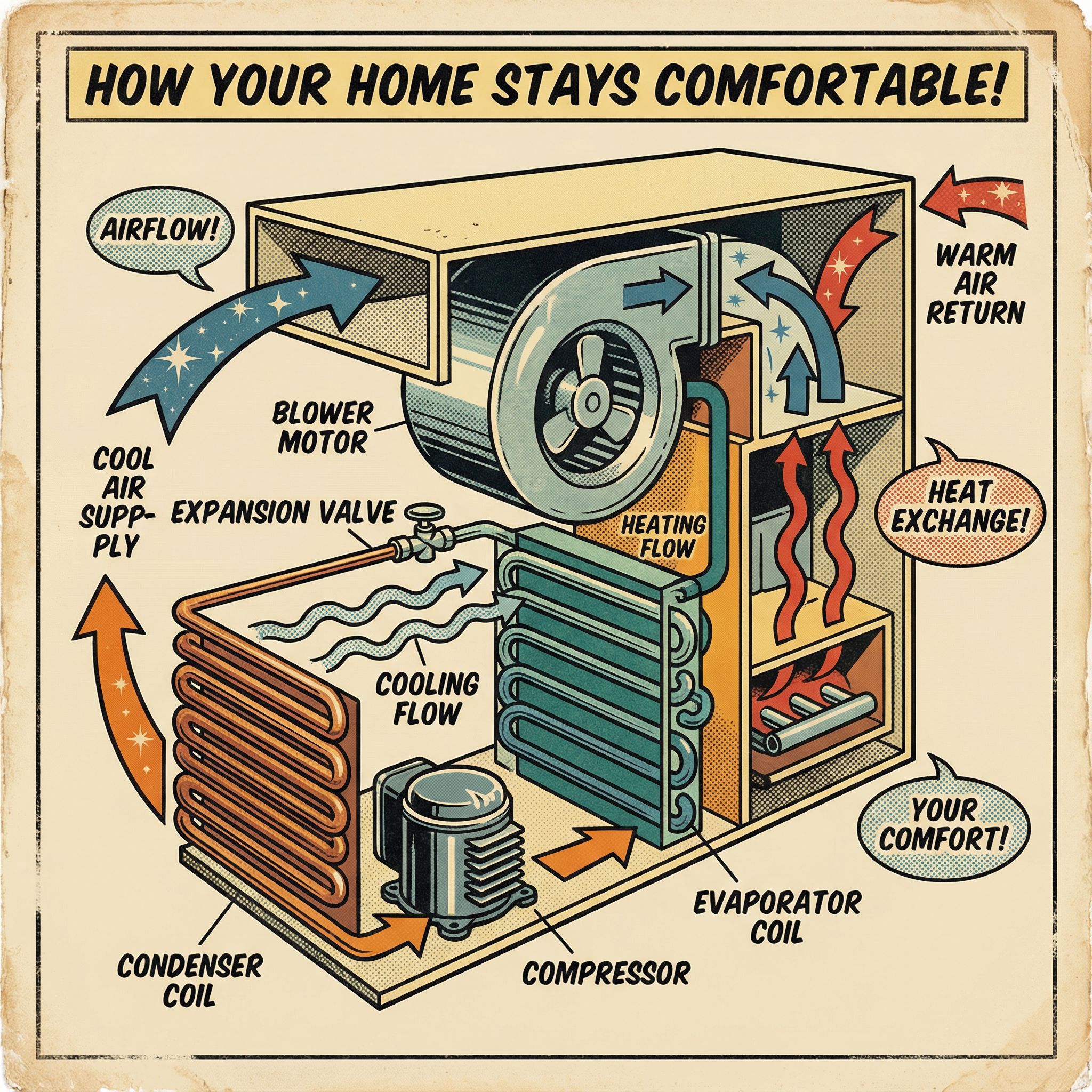
Manufacturer warranties typically cover the parts that keep the system running day to day, and they spotlight a few big-ticket items. Compressors and heat exchangers often receive longer or separate terms because they are high-cost, critical components that determine whether the system can operate at all. In our experience at Budget Heating (BudgetHeating.com), these are the parts most manufacturers call out with dedicated coverage.
- Compressor
- Heat exchanger (furnaces)
- Condenser and evaporator coils
- Blower and fan motors
- Electronic control boards
- Thermostats and controls in some cases
Coverage can vary by brand and model, and some items may have their own registration requirements or time limits, with terms that may be full or prorated.
How Maintenance Affects Your Warranty: Required Service, Records, and Safety
Warranty coverage hinges on maintenance and proof. Many policies require documented professional service at set intervals, often an annual tune up, plus on time filter changes. Organize your paperwork and choose qualified help to keep coverage intact.
- Dedicated warranty file: include purchase invoices, certificates, registration confirmations, model and serial numbers, permits, and maintenance receipts.
- Keep detailed service logs, receipts, and technician notes. We often see claims denied when these records are missing.
- For safety and coverage, avoid DIY on high voltage, refrigerant circuits, or gas and combustion sections. Use licensed or manufacturer authorized providers for maintenance and repairs.
Examples: When a Leak or Fault Is Covered, And When It Isn't
In our experience: coils that leak from a manufacturing defect are usually covered; leaks from neglect, chemical corrosion, or physical damage are not. A blower motor or capacitor may be covered if the part fails on its own; failures from poor airflow, dust buildup, or electrical issues outside the system are excluded. A drain pan can be covered if it cracks from a defect, not if it overflows from a clog. Report noises, error codes, or poor performance early to avoid claim denials from prolonged operation.
How to File a Claim: Steps, Documentation, and Likely Out-of-Pocket Costs
Check the warranty to see who to contact first, installer or manufacturer, and follow it to avoid delays. An authorized HVAC contractor inspects and diagnoses to confirm coverage. If approved, the manufacturer supplies or credits the replacement part. Labor and refrigerant recovery or recharge are usually yours unless labor coverage applies. Keep proof of purchase and installation, registration, maintenance records, and the unit's model and serial numbers ready. Expect costs like diagnostic fees, refrigerant, travel or shipping, permits, crane or roof access, and minor building repairs around the unit.
Conclusion: Key Takeaways and Next Steps to Protect Your HVAC Warranty
Protecting your warranty is straightforward: understand the layers you have, manufacturer parts, key components like the compressor or heat exchanger, and your installer's labor coverage, then keep the required maintenance on schedule. The biggest savings come from timely registration, using authorized service, and choosing extended labor coverage only when it fits your risk. If you feel unsure, we do this every day. With 30+ years in HVAC and 200,000 plus orders fulfilled, our team can verify your coverage and set simple reminders. Revisit terms annually, and confirm transfer rules if you plan to sell.
- Register your equipment and confirm who covers labor
- Schedule required professional tune ups and keep a warranty file
- Verify active coverage before authorizing major repairs
- Get a Custom Quote
- Talk to Our Team by phone for U.S. based technical support
- Shop HVAC Systems at wholesale pricing
- Request a quick warranty check before repairs
 Cooling
 Heating
 Money Saving Tips
 Product and Brands Insights
 Buying Guides
 State by State
 HVAC Systems