




 learning center
What to Know About Installing HVAC in Mobile Homes
Installing HVAC in a mobile or manufactured home is not the same as working in a site-built house. Construction is lighter, walls are thinner, ducts often run in the belly under the floor, and equipment closets are tighter. There are also manufactured housing safety and code requirements that govern what equipment can be used and how it must be installed. Because of this, the choices you make and the quality of the install have an outsized impact on comfort, utility bills, indoor air quality, and system life.
Expect a different playbook: equipment must be listed for manufactured housing, whether that is a mobile home rated furnace, a heat pump, a packaged unit, or a carefully selected ductless system for room-by-room needs. Sizing is more sensitive, so a proper load calculation matters to avoid short cycling and cold corners. Ductwork needs special attention, including sealing belly ducts, sizing the crossover, and ensuring reliable return air paths. Codes and clearances are specific, and many jurisdictions require a licensed installer to meet HUD and local standards. Think of it like tailoring, not off the rack, to get quiet operation, even temperatures, and dependable performance.
Why Mobile Homes Require Special HVAC Considerations
In our field experience, compact chases and limited clearances put a premium on equipment and duct design. Use mobile or manufactured home rated systems approved and listed to meet HUD and local codes. These units are built for tight spaces and higher static pressure, with matched coils and downflow options, so airflow and safety stay within spec. Non rated gear risks code violations and uneven comfort. Home performance matters too: insulation levels, duct tightness and insulation, skirting, and under home ventilation drive comfort and sizing. Improve those first and the system can often be smaller and cheaper to run. Seal and insulate the crossover, keep runs short, and verify external static pressure. Airflow through restrictive ducts is like trying to breathe through a straw.
Common HVAC Options for Mobile Homes: Ductless Mini Splits, Packaged Units, and Heat Pumps
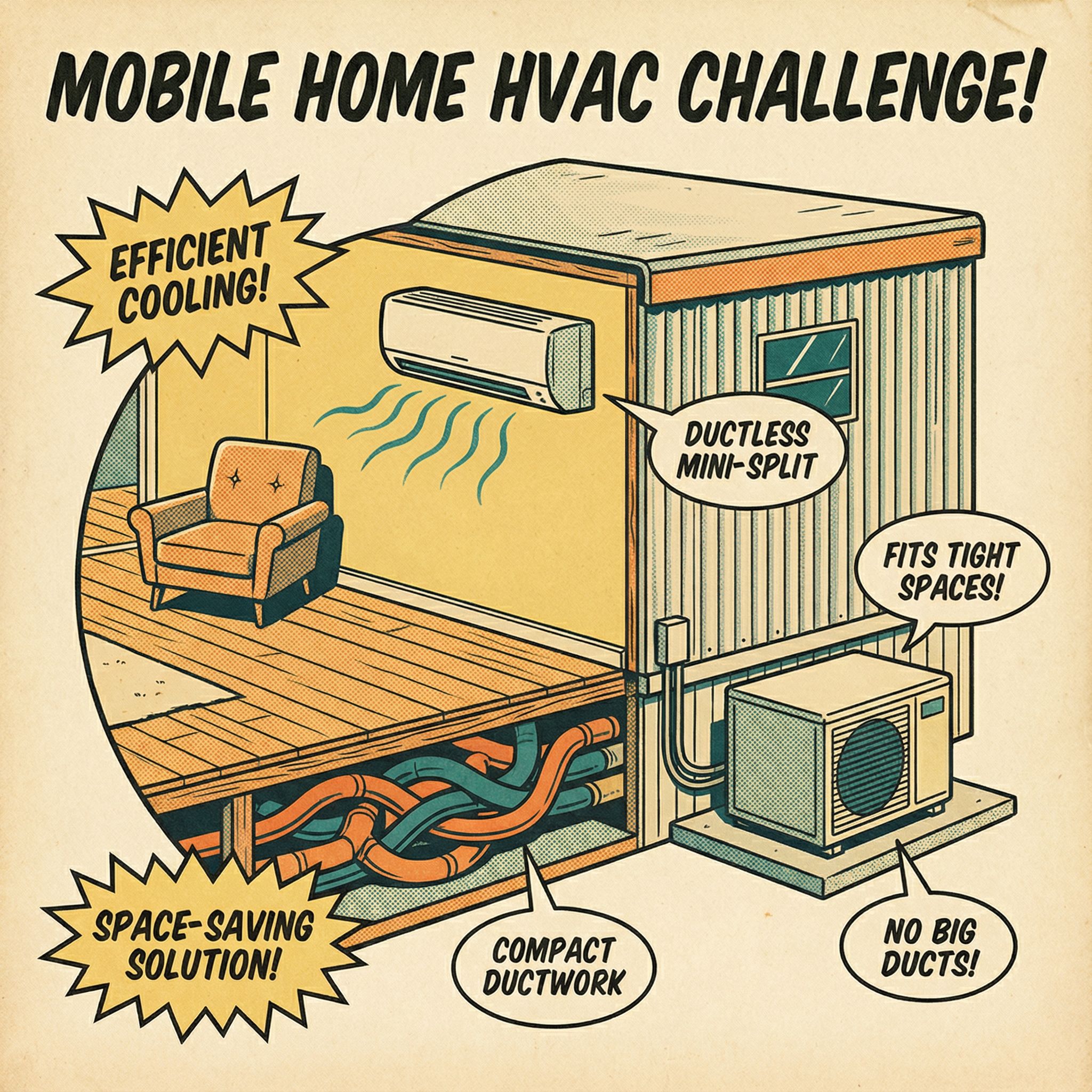
In our field work, the practical picks are ductless mini-split heat pumps, packaged units, and properly sized central splits. A mini-split heat pump uses an outdoor unit and one or more indoor heads to move heat, much like a refrigerator working in reverse. It delivers efficient cooling and heating where ducts are absent or in poor shape.
Packaged units place all components in one cabinet outdoors and tie into existing ducts. They fit when ductwork already serves the home and is in fair condition, after structural and clearance checks. Central split systems pair an outdoor condenser with an indoor air handler or a furnace and coil, using the current duct network. Always use properly matched indoor and outdoor components for rated performance.
- Not ideal: one mini-split head serving many closed-off rooms. Better: multiple heads zoned to the layout or a central split.
- Not ideal: a heat pump alone in severe cold without a cold-climate model or backup. Better: add electric or gas backup heat.
- Not ideal: a packaged unit where roof structure is questionable. Better: ground-mount, a central split, or zoned ductless.
Avoid pitfalls: assuming any standard unit will work, treating installation like a site-built home, oversizing, skipping duct sealing, DIY installs by unqualified persons, or mixing unmatched components. Fit the system type to your layout and climate for comfort, safety, and efficiency.
How to Size an HVAC System for a Mobile Home (Tonnage & BTUs)
Square footage rules of thumb, like X tons per 500 sq ft, miss the mark in mobile homes. Size it the way a good fitter sizes boots, by precise measurements, not guesses. Require a professional room by room load calculation. Manual J determines both sensible and latent loads in BTUs, then translates that into the right tonnage. Manual D designs the ducts to deliver the required CFM to each room with acceptable static pressure.
A proper Manual J accounts for orientation, insulation levels, window size and shading, air leakage, occupancy and internal gains. That load profile is essential for humidity control. Oversized equipment short cycles, removes less moisture, creates temperature swings, and wears out faster. Undersized systems may run nonstop yet still miss the thermostat on the hottest or coldest days.
- Insist on Manual J or an equivalent software load, not square foot multipliers.
- Pair it with Manual D so ducts match the airflow and external static limits of the selected unit.
- In humid climates, ask the contractor to verify the sensible heat ratio, SHR, so the system can dehumidify effectively, not just cool air temperature.
Get the BTUs and airflow right the first time and the result is steady comfort, drier indoor air, and equipment that runs as intended.

Ductwork, Space Constraints, and Typical Installation Challenges
In mobile homes, under floor or belly ducts take a beating. We routinely find sections that are leaky, crushed, or thinly insulated, which lets conditioned air spill outdoors and robs rooms of airflow. Think of a garden hose with pinholes, the pressure never reaches the far end. The fix is straightforward and high value: seal and insulate. We use mastic or UL 181 tape on joints and boots, strap and straighten runs, then wrap belly and crossover ducts so more air and heat make it to the registers and room to room comfort evens out.
Tight spaces add more decisions. Air handlers often need compact platforms and clear service access, plus a dedicated return path that is not a door undercut. Condensate must drain reliably, and where gravity falls short, routing or a pump solves it. Outdoor or rooftop mountings call for proper structural support, vibration isolation, and secure tie downs so the unit stays quiet, stable, and accessible for maintenance.
Permits, Local Codes, and Manufactured Home HVAC Requirements
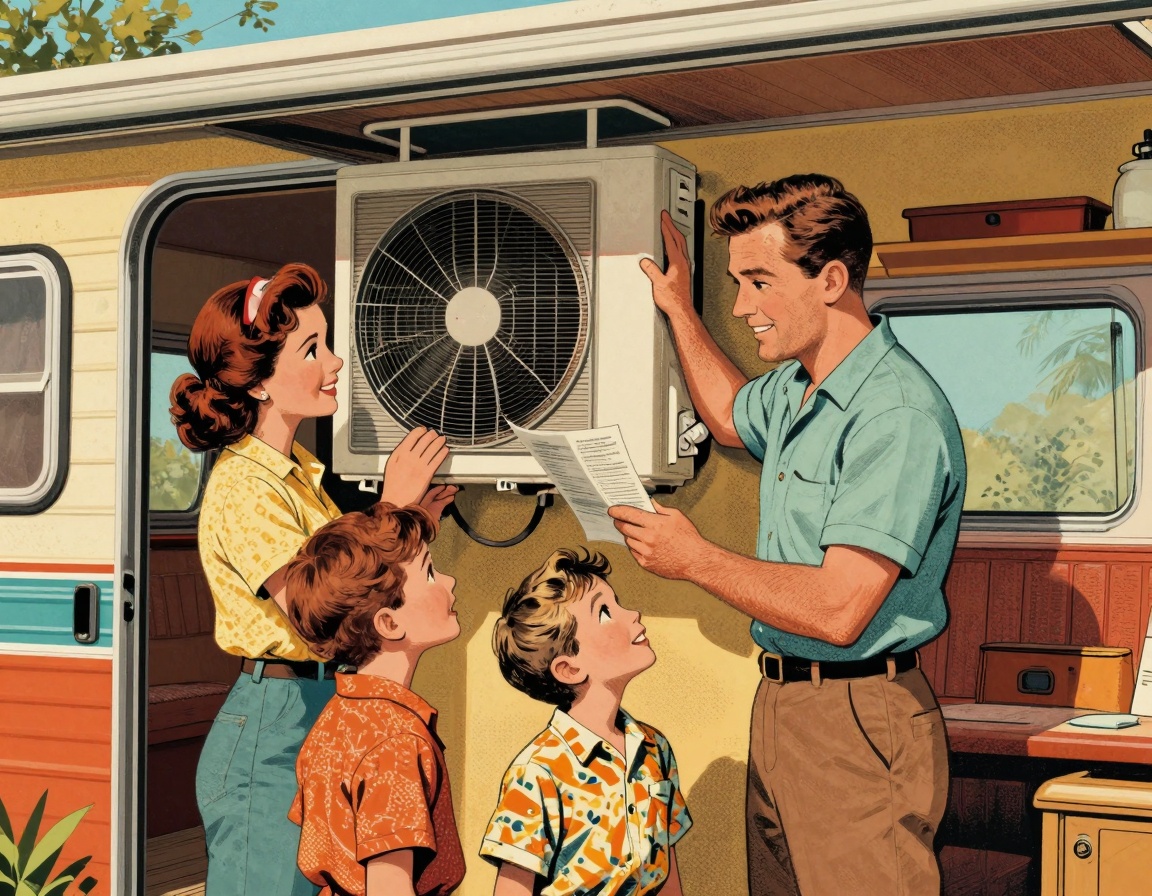
In our experience, manufactured homes must meet HUD and local codes that are tighter than many site built installs. Equipment must be listed for manufactured or mobile home use and set per the home's approved design. Permits are typical, and many jurisdictions and manufacturers require a licensed contractor for inspection and warranty validity.
Since 2023 the DOE uses SEER2, EER2, and HSPF2 with regional minimums. New split systems and heat pumps must satisfy the thresholds for your DOE region. Regulations are also moving to lower GWP A2L refrigerants, such as R 454B and R 32, which carry specific handling and safety steps. Installers must follow the updated A2L guidance.
Estimated Costs, Efficiency Payback, and Financing Basics
Total installed price is highly project specific. Public price tables rarely apply because labor rates, site conditions, system type, accessibility, and any duct or envelope upgrades drive cost. We are not listing universal equipment plus installation ranges here.
Efficiency drives operating cost. SEER measures seasonal cooling efficiency, and since 2023 the SEER2 test reflects real installations. For a quick savings check, use old_SEER ÷ new_SEER. Example: going from SEER 10 to SEER 16 cuts cooling energy about 37 to 38 percent. Modern central systems run around 14 to 16 SEER, and many mini-splits top 20.
In our experience at Budget Heating (BudgetHeating.com), payback depends on climate and run hours. Compare any financing payment to expected utility savings, and verify warranty terms, since many manufacturers require licensed, properly documented installation.
Maintenance, Seasonal Checks, and When to Replace Your System
Homeowners can and should handle routine upkeep. Do these regularly:
- Replace or clean filters on schedule.
- Keep supply and return registers clear.
- Maintain clearance and remove debris around outdoor units.
- Program the thermostat correctly.
- Visually check for sagging or crushed ducts and any moisture.
We recommend leaving system tuning to a professional at least once per year. A proper visit covers filter checks, coil cleaning, condensate management, airflow measurement, and refrigerant charge verification. This sustains efficiency, supports safety, and keeps warranties valid. It also documents care manufacturers expect. That same visit is a good time to review performance trends and decide if planning for replacement makes sense, instead of risking a peak season failure.
How to Choose a Qualified HVAC Contractor for Mobile Homes
Treat this like choosing a surgeon: you want a licensed HVAC contractor with real mobile and manufactured home experience. Ask for proof of license and insurance, and for references specifically from mobile home jobs. Confirm they will handle permits and inspections, and that any refrigerant work is done by an EPA 608 certified tech. In our experience at Budget Heating (BudgetHeating.com), being strict about these basics prevents safety issues and protects warranties. Homeowners should not open refrigeration circuits, attempt high voltage electrical work, or alter gas piping or venting.
- Full system installation or replacement
- Duct layout, modification, and sealing
- Electrical circuits and 240 V work
- Refrigerant brazing and charging (EPA 608 required)
- Gas or combustion connections and venting
- Pulling permits and arranging inspections
Next Steps: Checklist Before You Install HVAC in a Mobile Home
Before you install, align system choice, sizing, and installation with your home. Use mobile-home-rated, properly matched equipment, get a professional load calculation and duct plan, seal and insulate ducts, verify electrical and combustion needs, improve the envelope where it makes sense, and hire an experienced, licensed contractor for safe, efficient, code-compliant results.
- Document the home and climate: square footage, ceiling heights, layout, insulation condition, windows.
- Confirm the indoor unit location will meet service clearances and fit the chosen cabinet or air handler.
- Have existing ducts inspected for size, leakage, and condition, plan upgrades if needed.
- Get post-install docs: model and serial numbers, permit numbers, load calculation summary, warranty terms.
- Plan maintenance: change filters regularly and schedule annual professional tune-ups.
If you want help selecting a matched, mobile-home-approved system, our U.S.-based team pairs real field experience with full manufacturer-backed warranties.
- Get a Custom Quote, including sizing guidance, matched equipment options, and shipping timelines.
- Talk to Our Team by phone for real technical support before you buy and during install.
- Shop Mobile Home HVAC, furnaces, heat pumps, package units, and ductless mini splits at wholesale pricing.
- Ask about free shipping on select items and financing with Affirm on qualifying orders.
 Cooling
 Heating
 Money Saving Tips
 Product and Brands Insights
 Buying Guides
 State by State
 HVAC Systems