




 learning center
California's IRA for Homeowners: A quick guide to what's changing and why it matters
Upgrading your home's HVAC in California has never been more attractive. The federal Inflation Reduction Act, combined with California-administered rebates, can help lower monthly energy bills, boost comfort, improve indoor air quality, and reduce upfront costs.
In this guide, we set clear expectations. We explain how IRA-funded programs work in California, including income-based HEEHRA rebates and the federal Energy Efficient Home Improvement tax credit. We cover who qualifies, which upgrades are eligible, how much you can save, how state and federal incentives can be stacked, and practical next steps so you can plan your project with confidence.
What the Inflation Reduction Act (IRA) actually does for California homeowners
The IRA expands and extends clean energy incentives that help pay for rooftop solar, battery storage, high efficiency HVAC including heat pumps, plus weatherization and electrification upgrades. In practice, you will encounter two kinds of help.
- Federal tax credits: claimed when you file taxes, like a coupon you redeem at tax time. The Energy Efficient Home Improvement credit, known as 25C, covers 30% of qualified project costs with annual caps, up to $2,000 for eligible heat pump projects and up to $600 for certain central AC or furnace work. The solar Investment Tax Credit, the ITC, gives a 30% credit for qualifying rooftop solar and paired batteries for systems installed through 2032.
- State or local rebates and point of sale programs: these reduce the price on the invoice or send a rebate after proof of purchase. Timing and amounts vary by program.
We plan projects around the credit caps and any available rebates so your incentives stack cleanly without surprises at tax time.
California's HEEHRA and CA TREC rebates: how they work (and whom they target)
California is rolling out IRA-funded rebates through CA TREC, administered by the California Energy Commission, to cut the upfront cost of electrification and retrofits. These rebates are aimed at income-qualified households, often tied to area median income, and funds are limited.
- What you can get: up to $8,000 for a qualifying heat pump HVAC installation on a single-family home. For income-qualified multifamily projects, rebates can reach up to $14,000 per dwelling unit and can cover heat pumps, heat pump water heaters, certain appliances, and electrical upgrades.
- How they operate: rebates are typically point-of-sale or post-installation, income-targeted, and first-come until funding is exhausted.
- Reservation rule: for income-qualified HEEHRA projects, you must secure a rebate reservation before installation. Funds are often released in phases as milestones are met. Think of it like holding a coupon at checkout, you need approval in hand before you buy.
- Contractor requirement: many projects must use TECH-certified, HEEHRA-trained contractors to remain eligible.
In our experience at Budget Heating (BudgetHeating.com), the most common snag is starting work before the reservation is approved.
Major incentives and high impact upgrades: solar, batteries, heat pumps and weatherization
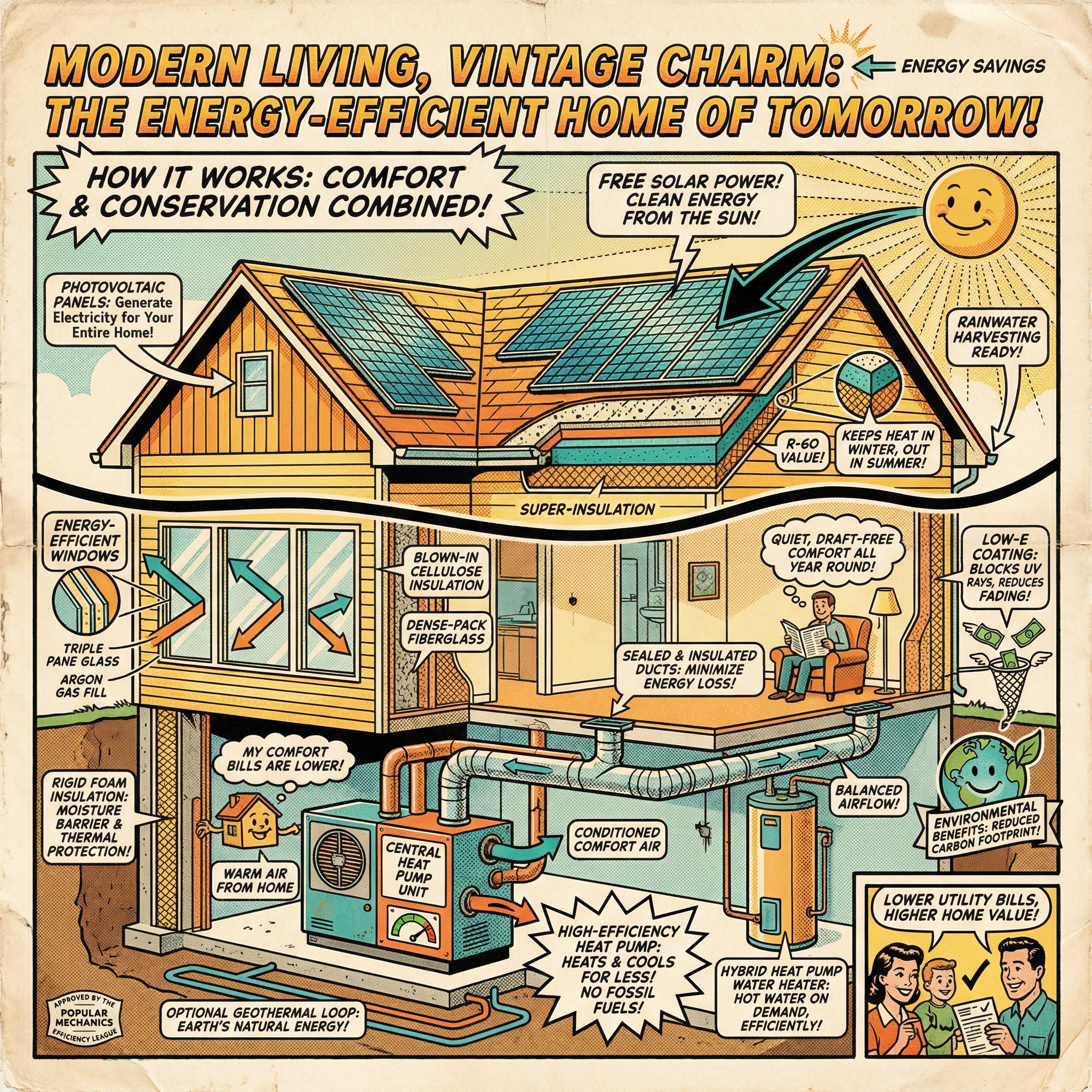
IRA and California programs prioritize high impact electrification and efficiency upgrades.
- Heat pump HVAC: Moves heat, like a refrigerator in reverse, delivering roughly 2x to 3x the efficiency of older electric or oil systems.
- Heat pump water heaters: Pull heat from room air into the tank, often cutting water heating use 50% and gently dehumidifying the space.
- Rooftop solar plus battery: Solar covers daytime loads; a battery shifts power to evenings and outages. When installed with solar, paired batteries can qualify for the 30% federal credit, improving resilience and bill savings.
- Weatherization: Air sealing and insulation reduce drafts and peak demand, often trimming heating and cooling loads 15% to 25%.
- Supporting electrical and appliances: Panel upgrades, wiring, and efficient electric appliances enable electrification and are often eligible alongside the major measures.
In our experience at Budget Heating (BudgetHeating.com), homeowners can often stack federal credits with state or utility rebates and occasional manufacturer promotions, subject to each program's rules.
How much can California homeowners save? Typical costs, rebates and payback examples
The California Energy Commission is implementing IRA-funded residential rebates through the CA TREC program with regional administration. The U.S. Department of Energy awarded California $290 million in June 2026 for HEEHRA rebates and program administration. CA TREC named three regional administrators: Association for Energy Affordability in the North, Center for Sustainable Energy in the Central region, and County of Los Angeles in the South. Retrofit rebates are scheduled to begin in summer 2026, with details and reservation processes still being finalized.
By stacking HEEHRA rebates, federal credits and utility offers, many buyers can recoup roughly 30-50 percent of installation costs in the first year. Typical simple paybacks for high efficiency HVAC upgrades run about 3-5 years, depending on climate and usage. Title 24 code updates adopted for 2026, expected effective January 1, 2026, mean permitting and inspection enforcement will affect compliance and incentive eligibility.
- SEER2 basics: compare within SEER2, and look at HSPF2 and EER2 for heating and high temperature performance. Common tiers: entry 14.3-16, mid 17-18, premium 19-22, with Southwest minimums that include EER2 thresholds.
- Savings example: upgrading from about 14.3 SEER2 to 17 SEER2 can cut cooling use ~15-20 percent. A home using 1,200 kWh per year for cooling might save 180-240 kWh, about $50-$70 at $0.30 per kWh.
Who qualifies for federal credits vs. California rebates: income, ownership and equipment rules
Federal tax credits, such as 25C or the solar ITC, do not have income caps, but you must have enough federal tax liability to use them. California IRA rebates are income targeted and use Area Median Income tiers, which can change eligibility and rebate amounts. In all cases the installed equipment must meet the program's efficiency specs, typically SEER2, EER2, HSPF2 and, when referenced, ENERGY STAR. Ownership and occupancy have to align with each program's documentation rules. In our experience, stacking works when you meet each program independently. Think of it like two locks that need separate keys, and confirm stacking rules before any work begins.
- Federal: no income limit, tax liability required.
- California IRA rebates: AMI based eligibility and amounts.
- Equipment: must meet SEER2, EER2, HSPF2 and sometimes ENERGY STAR.
- Stacking: often possible with proper documentation for each program.
When these upgrades aren't the best choice: honest tradeoffs and better alternatives
Even with IRA incentives, high efficiency electrification is not ideal in every home. From decades of field work, here are cases where pressing pause is the wiser move, plus better fits.
- Very cold microclimates with frequent deep freezes: Cold climate heat pumps can still need substantial backup heat, which adds cost and complexity. Better fit: a high efficiency gas furnace, or a hybrid system that pairs a heat pump with a furnace.
- Severely constrained electrical service: If panel or service upgrades blow the budget, consider incremental weatherization, right sizing or staging equipment, and postponing full electrification until wiring is economical.
- Funding or tax constraints: If rebate buckets are exhausted or you have limited tax liability, the payback changes. Start with envelope improvements and other low cost measures, or replace only the furnace with a high efficiency model while keeping existing AC.
Common myths to avoid: tax credits and rebates are not the same, not all Californians receive the same rebates, not every new AC or heat pump qualifies, SEER is not the only metric that matters, and rebate funds can run out.
Homeowner checklist: planning, assessments and electrical readiness before you buy
- Tighten the house: air seal, insulate, and seal ducts to reduce load and avoid oversizing.
- Schedule an energy assessment: blower-door, duct tests, combustion safety.
- Verify electrical: note main amps, open spaces, dedicated circuits; consider 120V HPWH or load management to avoid panel upsizes.
- Map incentives: federal credits vs California point-of-sale rebates; subscribe to CA-TREC or CEC updates for timing.
How to claim IRA tax credits and California rebates: step-by-step and paperwork checklist
Use this sequence to keep projects eligible and audit ready.
- Before work: reserve rebates as required, hire licensed contractors. For income-qualified HEEHRA, use TECH-certified, HEEHRA-trained contractors. Pull required permits.
- Documentation: itemized proposals, AHRI certificates, ENERGY STAR documentation, model and serial numbers, Manual J/S/D, permits, installation photos.
- Quality installation: proper sizing, correct refrigerant charge, sealed ducts, and a commissioning report.
- After install: pass inspections, optimize controls, compare pre and post energy use, and keep all records.
- Federal credits: retain invoices and product docs, claim on IRS Form 5695 for 25C or applicable ITC. Credits reduce tax owed, sufficient liability is required.
- Safety: do not DIY refrigerant, major electrical, or combustion work.
Next steps: how to maximize IRA benefits in California and where to get help
IRA credits and California rebates can lower upfront costs and bills. Funding is limited and the solar ITC 30% rate holds through 2032. To capture value, set priorities, verify incentives and reservation rules, get multiple bids from licensed program-savvy contractors, confirm equipment eligibility, reserve before work, and consult a tax pro. Phase projects across tax years to use annual caps. Use IRS Form 5695, CEC or CA-TREC portals, and TECH-certified contractors.
Budget Heating will map incentives to qualifying equipment and timing, backed by 30+ years and live phone support.
- Get a Custom Quote
- Talk to Our Team
- Shop Heat Pumps & Mini Splits
 Cooling
 Heating
 Money Saving Tips
 Product and Brands Insights
 Buying Guides
 State by State
 HVAC Systems