




 cooling
 learning center

Buying an air conditioner in 2026 is different from even a year ago. New efficiency regulations kicked in, refrigerant rules changed everything, and federal tax credits are winding down. If you're replacing an old unit or installing your first central air conditioner, this guide covers what actually matters for making a smart purchase.
The HVAC industry just went through its biggest transition since the R-22 phase-out. Starting January 2026, all new air conditioner installations must use low-GWP refrigerants like R-32 or R-454B. Combined with stricter SEER2 efficiency requirements, these changes affect pricing, availability, and long-term operating costs for every type of air conditioning system on the market.
Understanding SEER2: The New Efficiency Standard for Air Conditioners
SEER2 replaced the old SEER rating system in 2023, and the requirements got tougher for 2025 and beyond. The "2" indicates updated testing procedures that better reflect real-world performance. Where the old tests used 0.1 inches of water gauge static pressure, SEER2 tests use 0.5 inches, simulating actual ductwork conditions in typical homes.
Here's what the numbers mean for your air conditioner purchase. A unit rated 14 SEER under the old system might only achieve 12 or 13 SEER2 under the new testing. Don't panic if the numbers look lower. Same equipment, stricter measurement. The minimum standards by region for central air conditioners are:
Northern States: Minimum 13.4 SEER2 for all residential air conditioning systems.
Southeast and Southwest Regions: Minimum 14.3 SEER2 for systems under 45,000 BTU, and 13.8 SEER2 for larger units.
For tax credit eligibility in 2025, your air conditioner needs at least 17 SEER2 and 12 EER2 for split systems. That's a significant jump from the baseline minimum, so factor this into your budget if you want to claim the credit.
The R-32 Refrigerant Transition: What Changed in 2025-2026
R-410A dominated residential air conditioning for two decades. That era ended. Starting January 1, 2025, manufacturers can no longer produce new air conditioner systems using R-410A. By January 1, 2026, all new installations must use approved low-GWP alternatives.
The replacement refrigerants are R-32 and R-454B. R-32 has a Global Warming Potential of 675, compared to R-410A's 2,088. That's roughly 70% less environmental impact if your system ever leaks. R-32 also requires about 20% less refrigerant charge than R-410A systems, which improves efficiency and reduces long-term service costs.
Both new refrigerants are classified as A2L, meaning mildly flammable. Before you worry, understand that "mildly flammable" requires specific conditions to ignite. Modern air conditioner systems using these refrigerants are sealed, pressure-tested, and equipped with safety sensors. Technicians receive specialized training under UL 60335 and ASHRAE 15 standards.
If you currently own an R-410A air conditioner, it will continue working fine. Service and refrigerant remain available. But expect R-410A prices to climb as production winds down, similar to what happened with R-22 after its phase-out. Planning a replacement in the next few years? Buying now locks in R-32 technology before potential price increases and installation backlogs hit.
Types of Air Conditioners: Choosing the Right System
Central Air Conditioning Systems
A central air conditioner remains the most common choice for whole-home cooling. These split systems use an outdoor compressor connected to an indoor air handler, distributing cooled air through ductwork. Modern units feature two-stage or variable-speed compressors that adjust output based on demand rather than cycling on and off constantly.
Central systems work best for homes with existing ductwork in good condition. Duct losses can account for up to 30% of energy consumption, so sealing and insulating ducts should happen before or during air conditioner installation. Typical costs range from $3,500 to $7,500 for equipment and installation, though high-efficiency units push higher.
Ductless Mini-Split Air Conditioners
Mini-splits have gained serious ground in the North American market. These ductless air conditioner systems connect an outdoor compressor to one or more indoor wall-mounted units through a small conduit. No ductwork means no duct losses, and zone control lets you cool only occupied spaces.
SEER ratings on quality mini-split air conditioners often exceed 20, with some premium units reaching 30 or higher. Brands like Mitsubishi, Daikin, Fujitsu, and MRCOOL lead the market. DIY-friendly options from MRCOOL use pre-charged line sets that homeowners can install themselves, though check local codes first as some jurisdictions require licensed HVAC technicians for any refrigerant work.
Mini-splits cost more upfront than window units, typically $1,500 to $4,000 for single-zone systems including installation. Multi-zone systems serving 3-4 rooms run $4,000 to $10,000. The energy savings often offset the higher initial investment within a few years, especially in homes without existing ductwork where adding ducts would cost $1,500 to $7,000.
Heat Pump Air Conditioners
A heat pump is essentially an air conditioner that works in reverse during winter. The same refrigerant cycle that removes heat from indoor air can extract heat from outdoor air and bring it inside. Cold climate heat pumps now maintain 76% capacity at 0°F, making them viable even in northern states.
Heat pumps qualify for higher federal tax credits than straight air conditioners since they provide both heating and cooling from one efficient system. The 2025 credit allows up to $2,000 for qualifying heat pumps versus $600 maximum for central air conditioners. If you're replacing both heating and cooling equipment, heat pumps often deliver the best value.
Window and Portable Air Conditioners
Window units remain the budget entry point for air conditioning. Prices start around $150 for 5,000 BTU models suitable for small bedrooms. Installation is straightforward, and you can remove them off-season. The tradeoff is noise, blocked windows, and lower efficiency compared to split systems.
Portable air conditioners offer flexibility but come with a catch. The cooling capacity listed on older models used different measurement standards. A unit labeled 14,000 BTU under the old ASHRAE rating might only deliver about 7,700 BTU under the current DOE standard. The exhaust hose also releases some heat into the room it's trying to cool, reducing real-world effectiveness.
Air Conditioner Sizing: Getting the BTU Calculation Right
Oversized air conditioners cause more problems than undersized ones. A unit too large for your space cycles on and off rapidly, never running long enough to properly dehumidify. The result is a clammy environment and wasted energy. Undersized units run constantly without reaching comfortable temperatures.
The basic formula uses 20 BTU per square foot of living space. A 1,500 square foot home needs approximately 30,000 BTU, which equals 2.5 tons of cooling capacity in HVAC terms (12,000 BTU = 1 ton). But square footage alone doesn't tell the whole story.
Factors that increase BTU requirements:
Ceiling heights above 8 feet add roughly 1,000 BTU per foot of additional height. Rooms with heavy sun exposure, especially south and west-facing windows, need 10-20% more capacity. Kitchens generate extra heat from appliances and typically require 4,000 additional BTU. Each person beyond two occupants adds about 600 BTU.
Factors that decrease BTU requirements:
Well-insulated homes with modern windows retain cool air better. Shaded rooms need less cooling. Second-floor rooms benefit from the floor below acting as insulation. If your home checks multiple boxes in either direction, adjust your calculation accordingly.
For central air conditioner installations, professional HVAC contractors perform Manual J load calculations that account for all variables. This detailed assessment examines your home's orientation, insulation levels, window types, and local climate data. Skip this step and you risk paying for equipment that doesn't match your actual needs.
Federal Tax Credits and Rebates for Air Conditioners in 2025
The Inflation Reduction Act tax credits for HVAC equipment expire December 31, 2025. If you've been waiting to replace your air conditioner, the window is closing.
Central Air Conditioner Tax Credit: Up to $600 (30% of cost, capped). Requires SEER2 ≥17.0 and EER2 ≥12.0 for split systems, or SEER2 ≥16.0 and EER2 ≥11.5 for packaged units. Must be ENERGY STAR certified.
Heat Pump Tax Credit: Up to $2,000 (30% of cost, capped). Heat pumps meeting ENERGY STAR Most Efficient criteria qualify. Ducted systems need SEER2 ≥15.2, HSPF2 ≥8.1, and EER2 ≥10.
Geothermal Heat Pump Tax Credit: 30% of total project cost with no cap. Includes equipment, labor, and ground-loop installation. ENERGY STAR certification required.
To claim these credits, file IRS Form 5695 with your tax return. Starting in 2025, you must include the manufacturer's Qualified Manufacturer Identification Number (QMID) or QM code. Keep all receipts and product documentation.
Many utility companies offer additional rebates on high-efficiency air conditioner installations. These vary by location and change frequently, so check with your local provider before purchasing. Some utilities also offer demand-response programs that pay you small credits when your air conditioning system reduces output during peak grid strain.
Smart Features Worth Considering
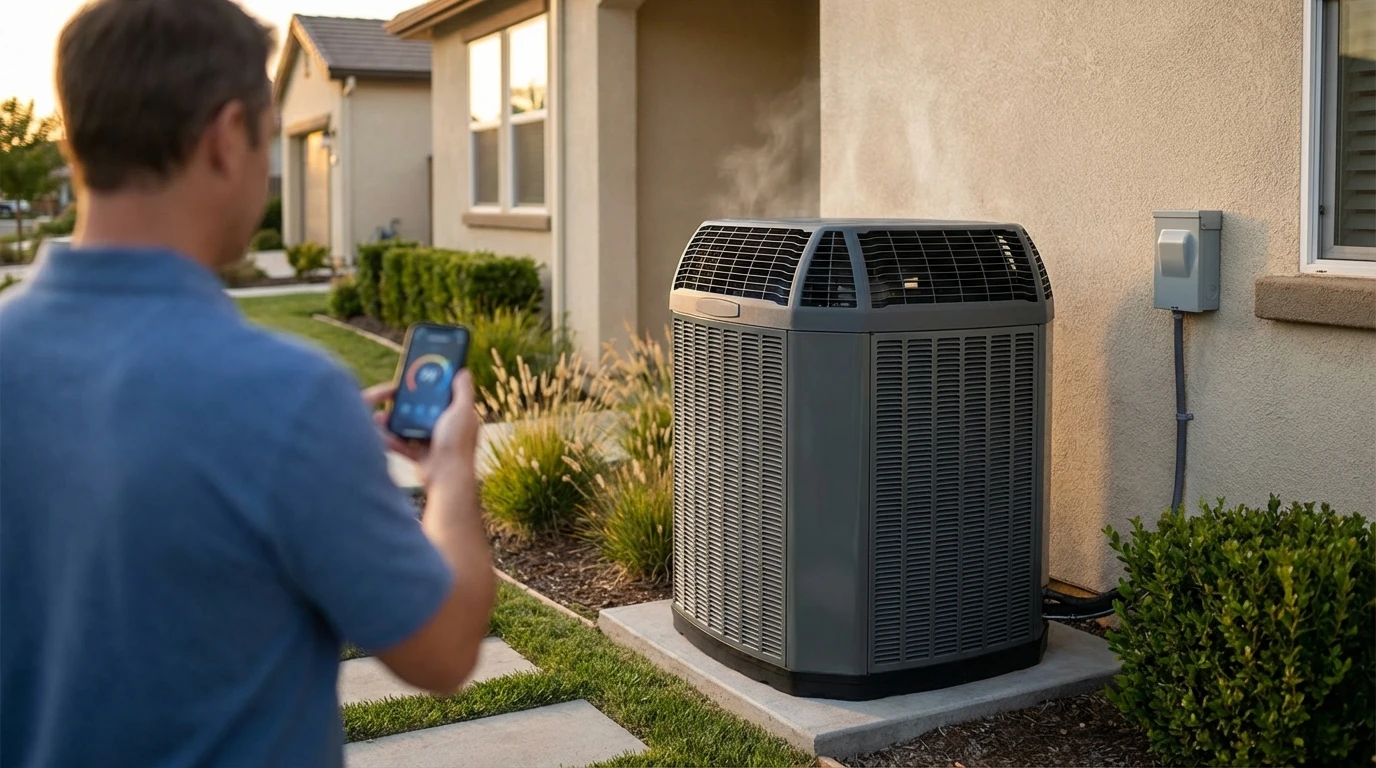
Wi-Fi connectivity has become standard on mid-range and premium air conditioners. App control lets you adjust temperature remotely, monitor energy usage, and receive maintenance alerts. Integration with Alexa, Google Home, and Apple HomeKit adds voice control convenience.
Variable-speed compressors represent a genuine efficiency improvement, not just a marketing feature. Instead of running at full blast or shutting off, these systems modulate output continuously. The result is more consistent temperatures, lower humidity, quieter operation, and reduced energy consumption compared to single-speed units.
Occupancy sensors automatically ramp cooling up or down based on detected presence. Some premium mini-split air conditioners even track occupant location to avoid blowing cold air directly at someone working at a desk. These features add cost but deliver real comfort improvements.
Demand-response capability lets your air conditioner communicate with your utility during grid emergencies. When electricity demand spikes, your system briefly reduces output. You barely notice the difference, but the grid stays stable and you may earn bill credits.
Installation Considerations and Costs
Air conditioner installation costs vary dramatically based on system type, complexity, and local labor rates. Expect these approximate ranges for 2026:
Central Air Conditioner (with existing ductwork): $3,500 to $7,500 total installed cost for mid-efficiency units. High-efficiency systems reaching 20+ SEER2 can push $8,000 to $12,000.
Ductless Mini-Split (single zone): $2,000 to $5,000 installed. Multi-zone systems add $1,500 to $2,500 per additional indoor unit.
Heat Pump System: $4,500 to $10,000 for standard efficiency. Cold climate models with enhanced heating capacity cost more but eliminate the need for backup heating in many regions.
The refrigerant transition may cause temporary price increases and longer wait times as contractors adapt to new equipment. Scheduling installation during spring or fall avoids the summer rush when HVAC companies are busiest and prices often peak.
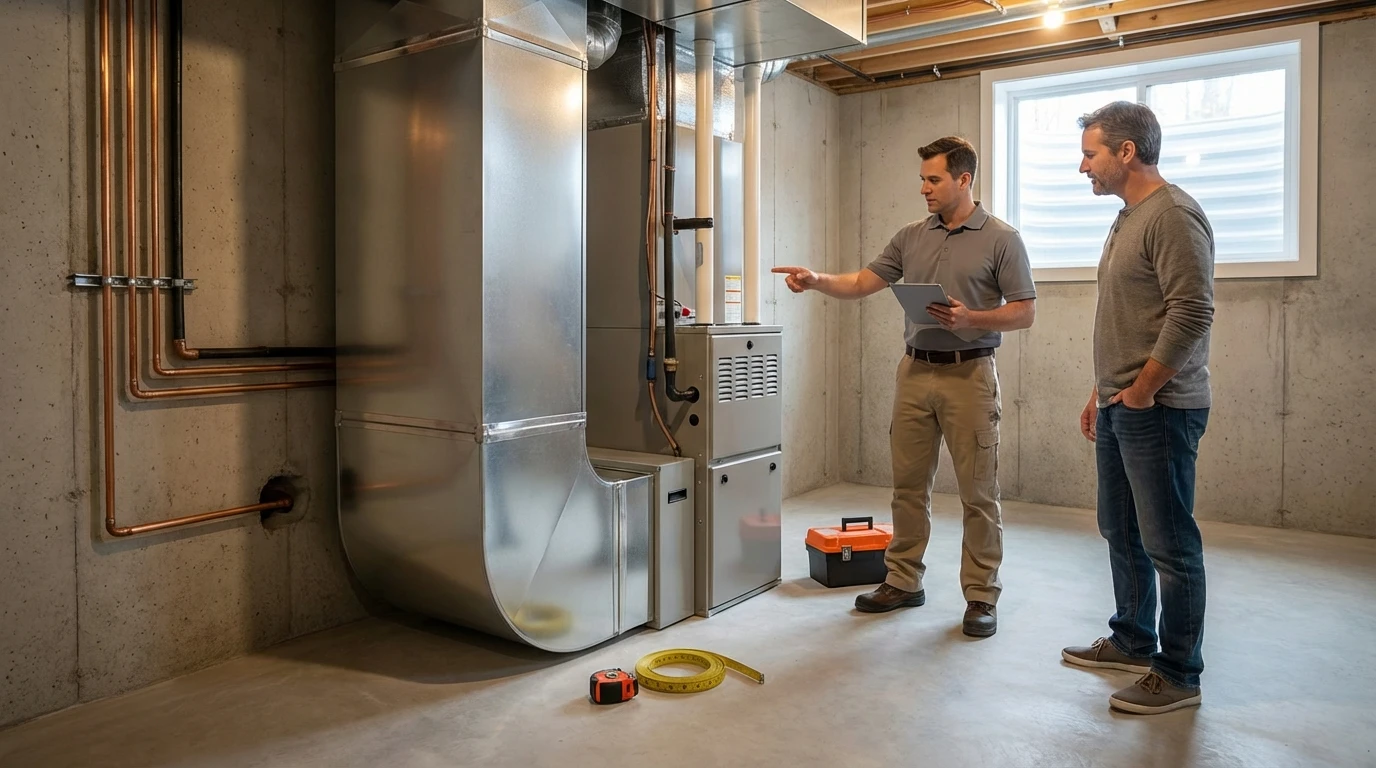
Choose contractors carefully. Look for EPA Section 608 certification, A2L refrigerant training (for the new refrigerants), and manufacturer certifications from brands they install. Get multiple quotes, but don't automatically pick the cheapest option. Quality installation affects system lifespan and efficiency more than equipment choice in many cases.
Maintenance Tips for Long Air Conditioner Life
A well-maintained air conditioner lasts 15 to 20 years. Neglected systems fail faster and lose 10% or more of their efficiency. Basic maintenance tasks make a significant difference:
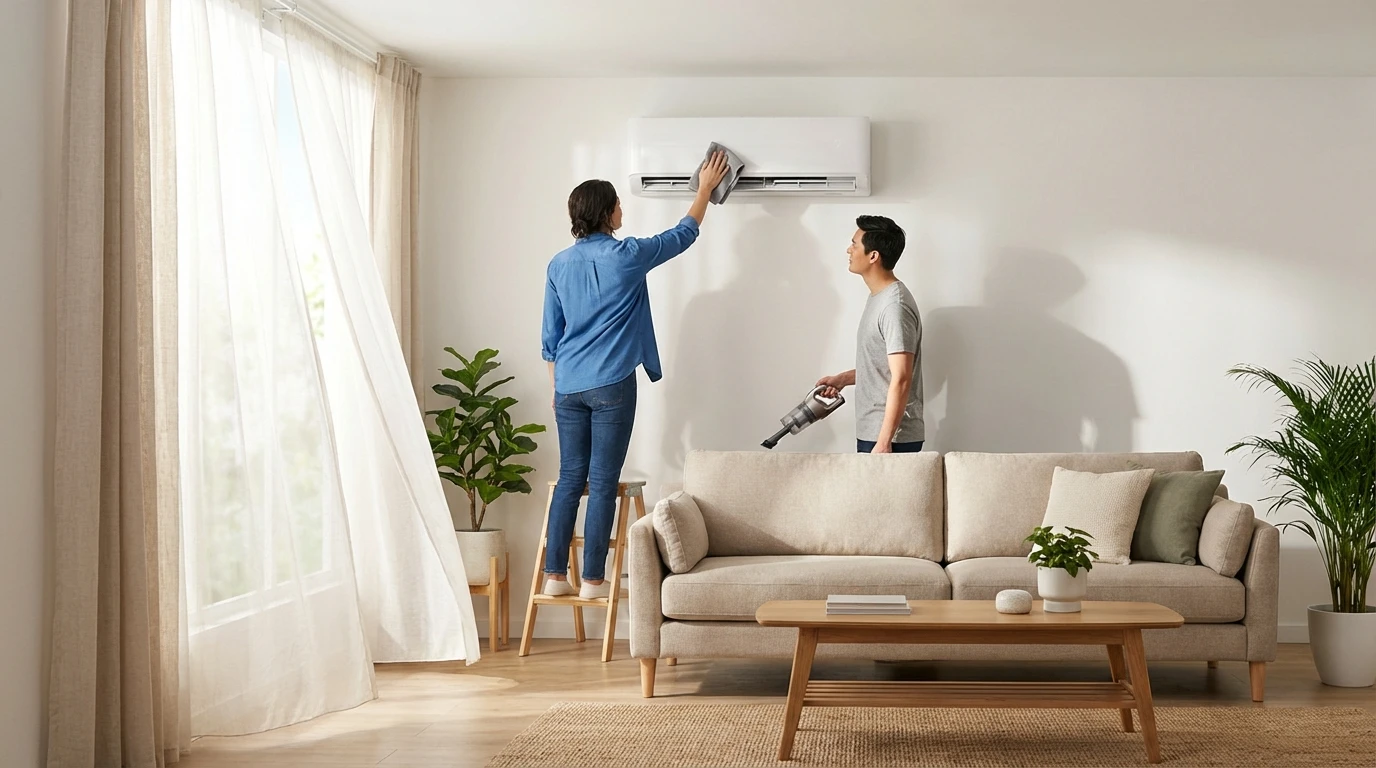
Change or clean filters monthly during cooling season. Clogged filters restrict airflow, forcing your system to work harder. Filters cost a few dollars; repairs cost hundreds.
Keep the outdoor condenser clear of debris, vegetation, and obstructions. Maintain at least 2 feet of clearance on all sides. Hose off accumulated dirt and leaves gently in spring before the cooling season starts.
Schedule professional maintenance annually. Technicians check refrigerant levels, inspect electrical connections, clean coils, and catch small problems before they become expensive repairs. Most warranties require documented annual maintenance.
Address unusual noises, reduced cooling, or higher-than-normal energy bills promptly. Early intervention often means minor repairs instead of major component replacement.
Final Thoughts on Buying an Air Conditioner in 2026
The air conditioner market has stabilized after the refrigerant transition. R-32 and R-454B systems are now standard, SEER2 ratings provide more realistic efficiency expectations, and both technology and installation practices have matured around the new requirements.
Focus your decision on proper sizing, efficiency ratings that match your climate and usage patterns, and installation quality from a reputable contractor. The best air conditioner is one sized correctly for your space, installed properly, and maintained regularly. Brand matters less than these fundamentals.
If federal tax credits factor into your budget, act before December 31, 2025. After that date, the financial incentives disappear, and the full cost falls on you. Whether you choose a central air conditioner, mini-split, or heat pump, the investment in modern, efficient cooling equipment pays dividends in comfort and energy savings for years to come.
 Heating
 Money Saving Tips
 Product and Brands Insights
 Buying Guides
 State by State
 HVAC Systems