




 HVAC maintenance
Downflow vs Upflow Furnaces: What the Terms Mean and Why They Matter
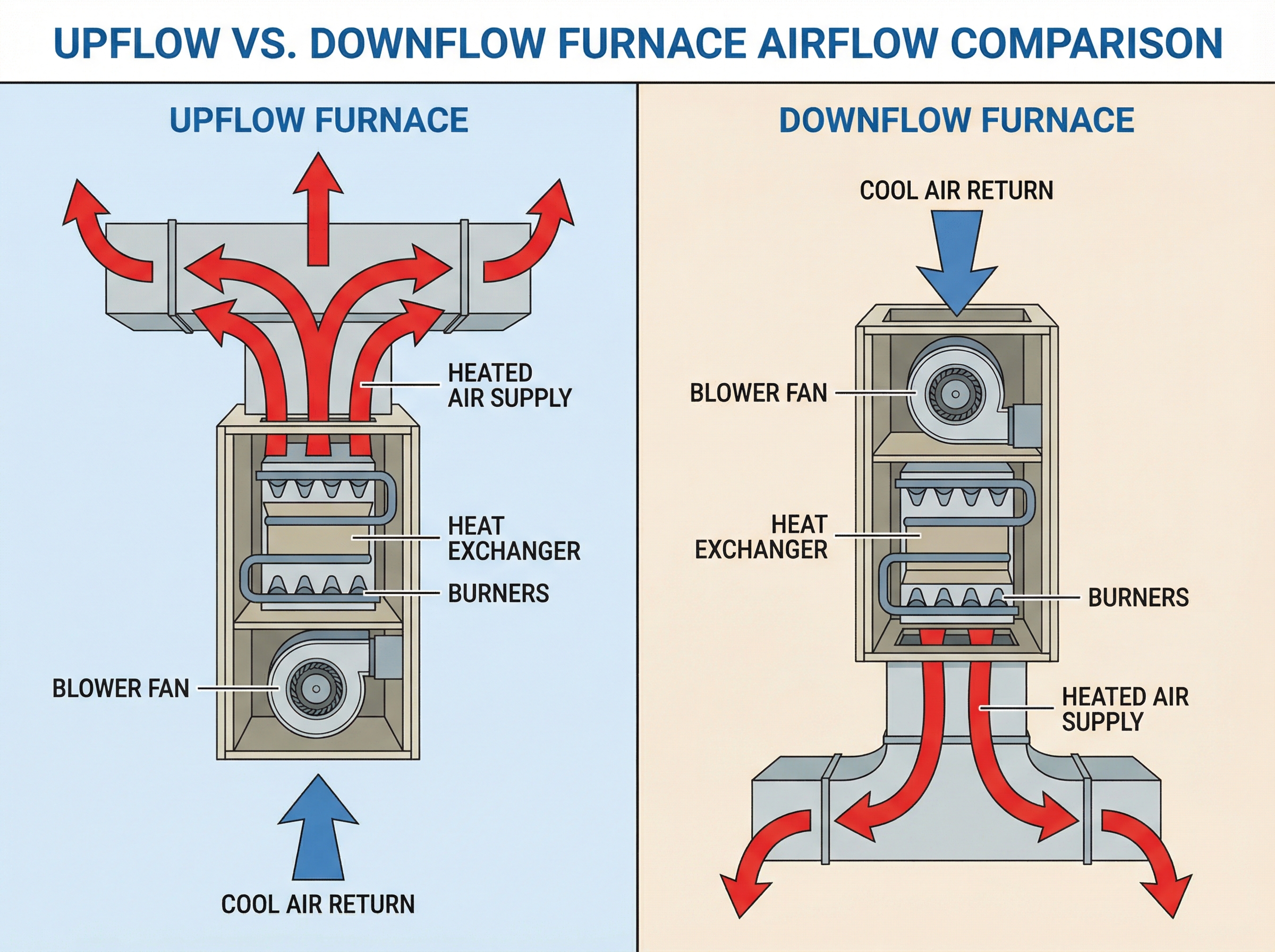
Upflow and downflow describe the direction air moves through a furnace. An upflow unit pulls cool return air in at the bottom, heats it, then sends the warm air out the top. A downflow unit draws return air from the top and pushes heated air downward into ducts below.
That airflow path is not just a label, it determines how the cabinet connects to your duct system. Think of it like choosing whether pipes hook into the top or bottom of a tank, the connection points decide where the tank can sit. Upflow furnaces typically fit basements or lower levels where supply ducts leave from the top. Downflow models suit attics or slab-on-grade homes where ducts are below and warm air needs to move downward into the living space.
Picking the right orientation helps the furnace fit the space, keeps duct runs sensible, and supports even comfort. It also influences service access and the practical steps an installer must take.
Quick answer: What's the difference between downflow and upflow furnaces?
Upflow furnaces send heated air up into overhead ducts, while downflow units push it down into ducts below. For replacements, match the furnace orientation to your existing ductwork to avoid plenum rework and keep retrofit costs in check. Orientation alone does not make one better. With similar AFUE and a proper design, both deliver comparable comfort and efficiency. The right choice hinges on your home's duct layout, climate, available space, and service access. In our field experience, letting the duct system and physical constraints lead the decision produces the cleanest install and the fewest surprises.
What is an upflow furnace? How it fits basements and multi-story homes
An upflow furnace draws return air into the bottom of the cabinet, heats it in the heat exchanger, then delivers warm air out the top into supply trunks or vertical risers. It behaves a bit like a chimney for warm air, only the blower is doing the lifting.
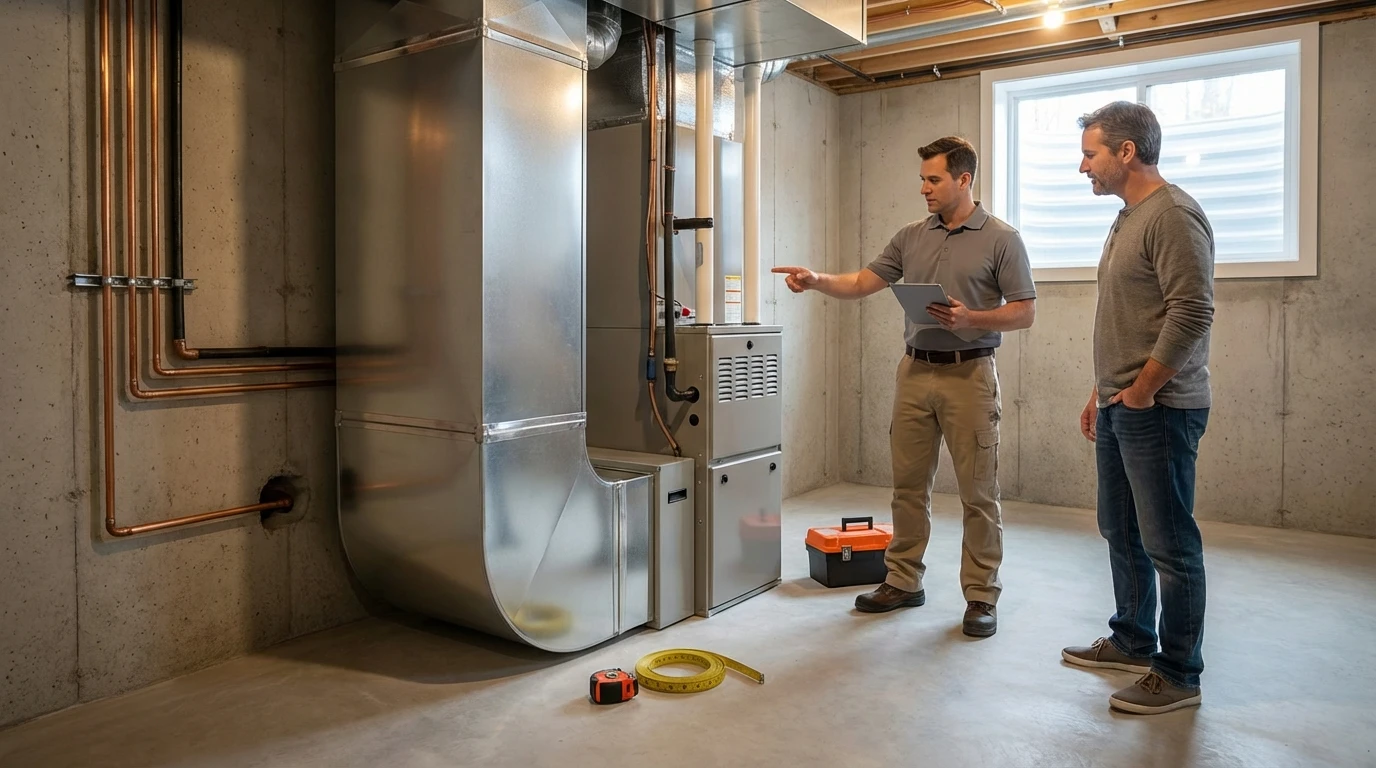
We typically place upflow units in basements, crawlspaces, or lower-level utility rooms where ductwork runs overhead and heat can rise naturally to upper floors. That orientation fits multi-story homes especially well.
- Pros: Well suited to cold climates and two or more stories, since upward airflow aligns with natural warm-air rise. Basement placement usually gives technicians easier access and leaves space for accessories like air cleaners or humidifiers.
- Cons: Requires sufficient vertical clearance. If supply ducts travel through unconditioned areas without proper sealing and insulation, efficiency and comfort can suffer.
When one orientation isn't the best choice: honest tradeoffs and common mistakes
In our experience, orientation affects fit and serviceability more than efficiency. Think of it as the steering wheel, not the engine.
- Very cold climates: Downflow in attics can suffer high duct losses and condensate freeze. Prefer a basement upflow or ground-level high-AFUE condensing furnace.
- Slab-on-grade or single-story with attic ducts: Upflow has no lower space. Go downflow or horizontal, or use a packaged rooftop or a heat pump.
- Tight attics: Poor access or no safe platform makes service risky. Relocate to conditioned space, or consider ductless mini splits or a packaged unit.
Myths to skip: orientation does not make a furnace inherently more efficient. You cannot change positions unless the unit is listed for it. Energy bills are driven mainly by AFUE or SEER, duct quality, and runtime, not cabinet orientation.
Which orientation is right for your home: a homeowner's checklist
- Layout and ducts: Basement or crawl usually favors upflow, attic or slab downflow. Note if supply and return trunks are above or below and match orientation.
- Access: Ensure service space, attic platform or walkway, lighting, and power for safe routine work.
- Design and comfort: Require ACCA Manual J, D, and S. For multistory homes, plan balancing or zoning and verify airflow by static pressure and CFM.
- IAQ and filters: Choose an easy filter location, select a MERV that avoids over restriction, consider media cabinets.
- Costs and incentives: Get itemized bids for equipment vs duct, platform, pan, venting. Check local rebates or manufacturer promos on high AFUE.
- Maintenance and safety: You clear combustibles, change filters every 1 to 3 months, test CO and smoke alarms monthly, check condensate pans and drains. Pros perform an annual preheating safety and performance check. Emergencies: gas smell, evacuate, call the utility. CO alarm, shut system, ventilate if safe, evacuate, then call emergency services and an HVAC technician.
What is a downflow furnace? Attic and slab installations explained
A downflow furnace pulls return air in at the top of the cabinet, heats it, then pushes supply air downward into ducts beneath the unit. That airflow path fits homes without basements, slab-on-grade houses, and upper-floor closets, and it is common in attics where top-down duct layouts are used. In warm climates it often shares attic ductwork with the cooling system for even summer distribution. Tradeoffs: the blower must overcome rising hot air, like a pump pushing water uphill, so correct sizing and duct design are important. Attic installs also require safe access, service platforms, secondary drain pans, and careful condensate routing to prevent leaks.
Other furnace orientations: lowboy, horizontal, and multi position limits
Lowboy furnaces are short upflow cabinets that duck under low beams, ideal in basements with limited headroom. Horizontal furnaces lie on their side to feed ducts that run across the space, common in crawlspaces or tight attics.
Some models are truly multi position, rated for upflow, downflow, or horizontal. Many others are listed for only one orientation. Installing a single position furnace the wrong way violates the nameplate, code, and often the warranty, and can cause condensate or safety problems. In our experience at Budget Heating (BudgetHeating.com), the right pick follows the label and your duct path, not just the space. If placing a downflow on combustible flooring, use the manufacturer's listed sub base or platform. Do not set units on carpet, and never rest a furnace directly on ceiling joists or other combustible finishes.
Key differences: airflow, ducting, energy impacts, and installation costs
AFUE tells you how efficiently a furnace turns gas into heat. Modern condensing models typically run about 95 to 98 percent AFUE. SEER and SEER2 measure cooling efficiency for an AC or heat pump. Orientation does not change any of these ratings, so it does not change the nameplate efficiency or your utility rate assumptions.
Energy behavior can shift slightly with orientation. Upflow units cooperate with buoyant warm air in heating, so the blower may do a touch less work, like walking with the wind. Downflow arrangements often live in cooling dominant homes, where the cooling system's SEER or SEER2 and the quality of attic ducts drive summer costs. There is no documented, large energy gap caused by orientation itself. Correct sizing, sealed and insulated ducts, and high AFUE or SEER2 matter far more.
Installation cost differences usually come from the space and the duct layout, not the box orientation. Choose the configuration that matches your existing supply and return trunks above or below. That minimizes plenum rebuilds, preserves design airflow, and trims labor.
- Location drives labor: attic versus basement or closet.
- Platforms or subbases, condensate handling, and vent routing add time and materials.
- Duct modifications are the biggest swing item.
In our experience at Budget Heating (BudgetHeating.com), orientation is a fit decision first. Efficiency choices are shaped more by current standards, including DOE furnace fan rules, the shift toward 95 percent minimum AFUE in 2028, and the SEER2 test update in 2023.
Venting and condensing furnaces: materials, Category IV venting, and condensate handling
Condensing furnaces use plastic venting, typically PVC, CPVC, or polypropylene, for both exhaust and intake because flue gas is cooler and forms acidic condensate. Category IV positive pressure units terminate through a sidewall or roof with plastic pipe, installed to code and per manufacturer limits for length, slope, and clearances. In attics or downflow installs, treat condensate like a gutter: slope and insulate the drain, add a secondary pan with a float switch, route to an approved drain to protect ceilings. Cold attics raise freeze and energy loss risks.
Conclusion: How to choose the correct furnace orientation for your home
Choose the orientation that fits your duct layout and space: upflow for lower-level mechanical rooms and multi-story heating dominant homes, downflow for attic, slab, or top-down ducts. When AFUE is comparable, orientation alone rarely changes operating cost. We know changing orientation can feel risky, because venting, condensate, and code must be handled correctly. Match to existing ductwork when possible, and have a qualified pro plan any change. With 30+ years in HVAC and 200,000+ orders fulfilled, our team can help you size and spec it right.
- Get a Custom Quote
- Talk to Our Team by phone for U.S.-based technical support
- Shop Furnaces
- Ask about wholesale pricing, free shipping on many items, and Affirm financing
 Cooling
 Heating
 Learning Center
 Money Saving Tips
 Product and Brands Insights
 Buying Guides
 State by State
 HVAC Systems