




 heating
 hvac systems
 product and brands insights
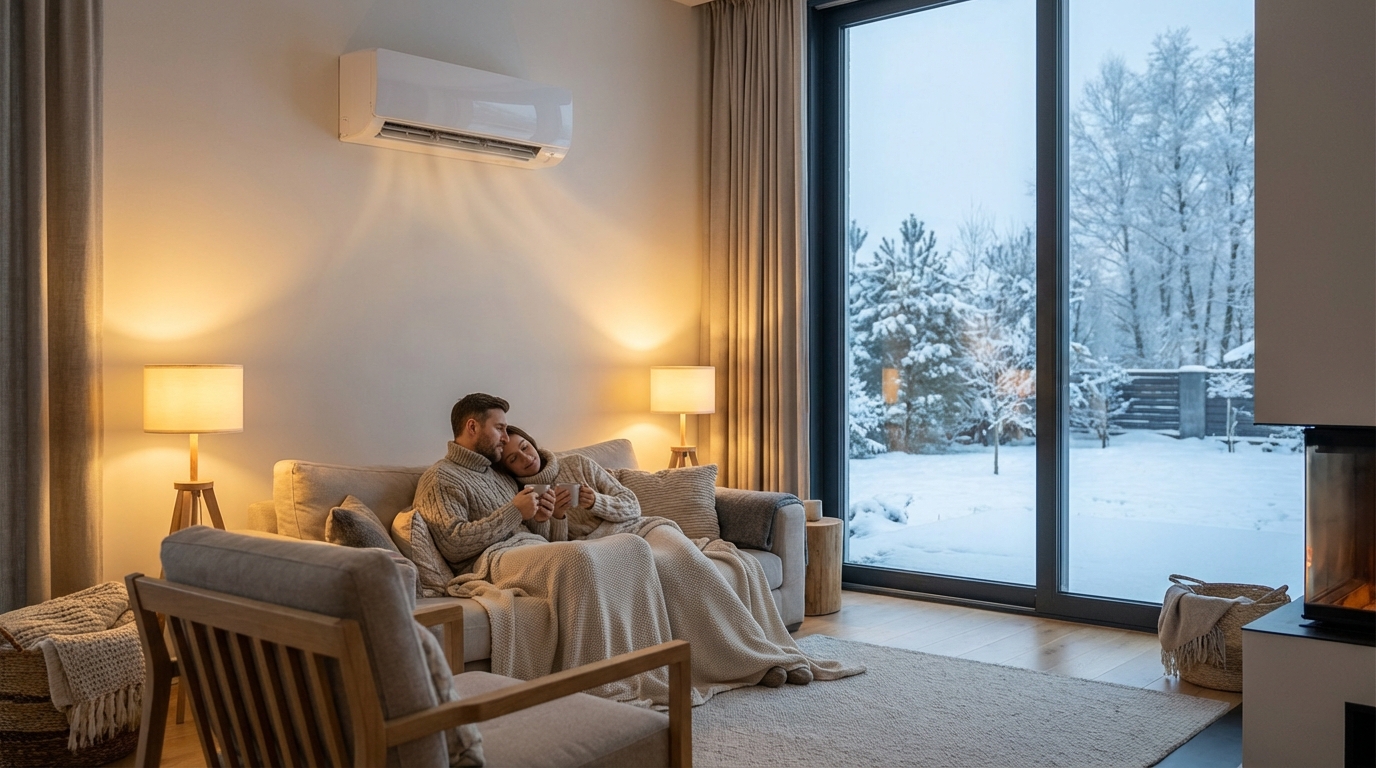
It's 2:00 a.m., the forecast is in the single digits, and you're staring at a MRCOOL mini split thinking: will this actually keep the house comfortable when it's cold, or is "heat pump heat" just weak? The misconception is simple: people judge heat by blast temperature, but comfort is decided by what the system can sustain when outdoor conditions get ugly.
MRCOOL can heat effectively in real winter conditions, but real-world results still depend on variables outside the box: your climate, how well the system is sized to the load, and install quality. That's why the same brand can feel rock-solid in one home and underwhelming in another.
In this buying decision, "heats well" means: it runs in low ambient temperatures without quitting; it holds setpoint without big swings and recovers fast after setbacks; it delivers practical efficiency you actually feel on electric bills; and it stays covered because you did the warranty actions that determine support.
Use these guardrails: "MRCOOL 5th Generation units list heating operation down to -13°F (some variants rated to -22°F)." "MRCOOL DIY 4th Gen systems are published with HSPF2 ratings up to 9.8." "Registration within 60 days is required to qualify for the limited lifetime compressor warranty; DIY systems can be processed without an installation invoice."
A ductless mini split skips ductwork, which makes targeted room comfort realistic, but only if you verify the exact model's low-ambient spec, plan for correct sizing, and commit to installation quality plus warranty registration. The rest of this guide breaks those pieces down into what to check on paper and what to watch for once the unit is actually running.
How a MRCOOL Mini Split Produces Heat
A MRCOOL mini split heat pump delivers heat in cold weather because it moves heat through a reversible refrigeration cycle instead of creating heat with electric resistance. The other piece that matters for comfort is the inverter-driven compressor: it ramps output up or down to match the load, so indoor temperatures stay steadier than a fixed-speed system that blasts on, shuts off, and overshoots.
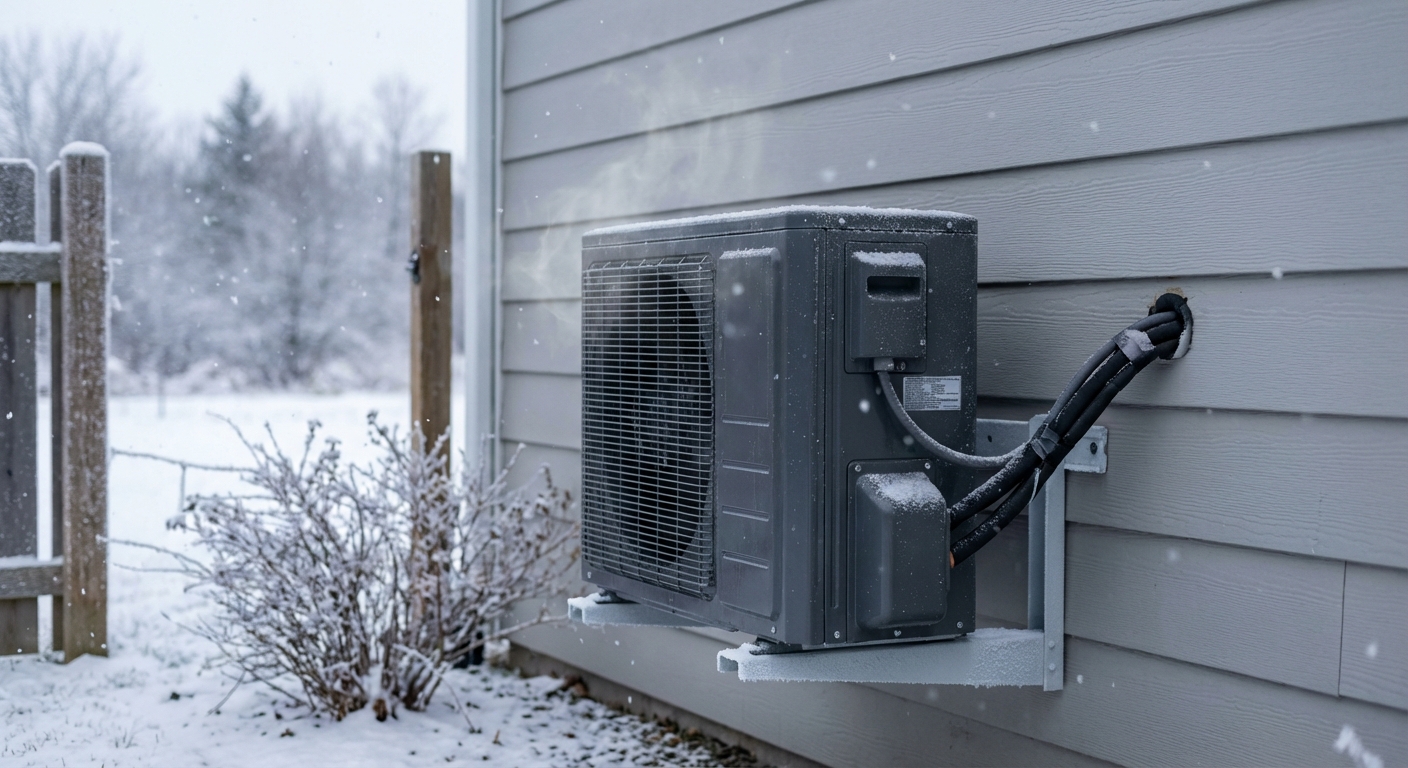
As outdoor temperature falls, three spec-sheet realities show up fast: heating capacity declines, efficiency (often expressed as COP) changes, and defrost interruptions become part of normal operation. MRCOOL notes most residential heat pumps run roughly in the COP 2 to 5 range, and industry explanations commonly flag that performance shifts meaningfully as conditions move away from mild weather.
For apples-to-apples comparisons, look for AHRI 210/240 heating test points commonly referenced include 47°F and 17°F. Those two numbers are the context behind the BTU/hr heating outputs you see on submittals, not a guarantee at every temperature your climate throws at the unit.
"Max" heating output is a peak, not sustained performance. Use heating capacity (rated vs max) as a decision tool: prioritize the rated heating number at published test conditions (especially 17°F), then treat max as short-duration headroom for recovery, not your baseline.
A defrost cycle is unavoidable in freezing, damp conditions. Defrost cycles reverse refrigerant flow; during defrost the system briefly prioritizes melting outdoor coil frost, temporarily reducing delivered indoor heat. Indoors, that feels like a short dip, followed by a normal ramp back up as the inverter-driven compressor resumes heating.
MRCOOL offers both DIY and pro-installed options (4th Gen, 5th Gen, EZPRO) and configurations like multi zone and the OuttaSight ceiling cassette. That lineup matters because the "right" model is usually the one with clearly published heating outputs at 47°F and 17°F for your specific configuration, not the one with the loudest marketing number.
- Find the heating capacity at AHRI-style conditions (47°F and 17°F) before you look at anything labeled "maximum."
- Anchor your expectation to the rated heating output at those conditions, not the max figure.
- Expect periodic defrost-cycle heat dips in freezing weather, then normal recovery.
Those lab-style ratings and behaviors explain what the equipment is capable of. Comfort complaints usually show up when the same unit is paired with a home load, layout, and zoning plan that it can't realistically serve (including understanding how mini splits heat and cool in real-world conditions).
Real-World Heating Performance
Whether MRCOOL "heats well" gets decided by match-to-home: the actual heat load, the floor plan, and how air moves room to room. Two homes can install the same condenser and the same wall head and get completely different results, because ductless comfort is distribution-limited. The logo on the front panel doesn't fix an undersized zone, a closed-off hallway, or a head that's pointed at the wrong part of the space.
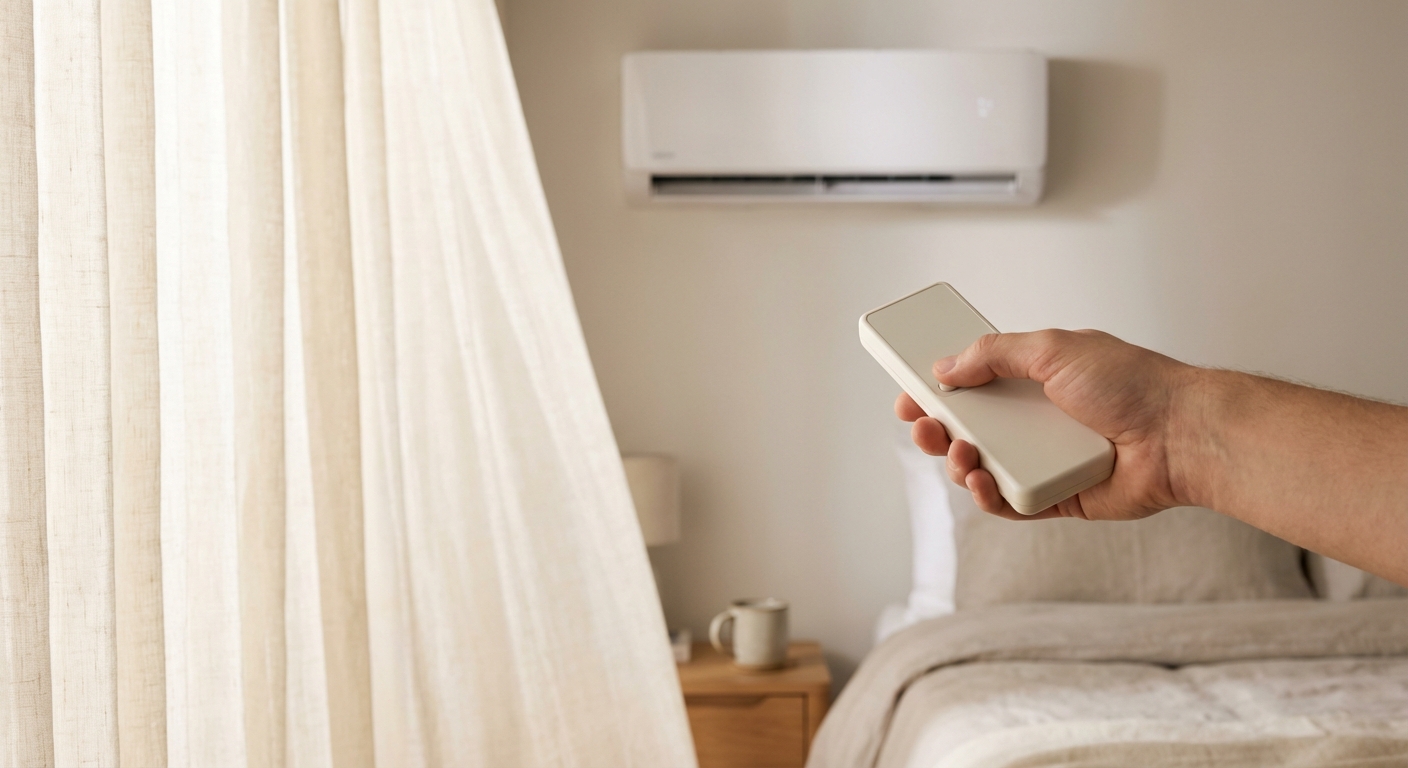
Undersizing is simple: when outdoor temperatures drop and the load spikes, the unit runs hard and still can't hold your setpoint. Oversizing is sneakier: the space warms quickly, the unit cycles on and off, and comfort gets less stable because you're not getting long, even heat delivery. Picture a cold snap where the living room setpoint is 70°F and the system runs nonstop but the room stalls at 66°F, then a mild 45°F day where the same system blasts hot air for five minutes, shuts off, and repeats all evening. That's sizing, not "bad heat."
MRCOOL 4th Gen DIY nominal heating capacities include 12,000; 18,000; 25,000; and 36,000 BTU/h. Treat those as practical tiers for thinking through zones, not a prescriptive match to square footage. The right tier depends on your home's load and whether the heat can actually reach the cold rooms that matter—start with a mini split sizing BTU calculator.
Insulation and air sealing set the baseline demand, and layout decides whether ductless heat can get where it's needed. Open-concept plans let a single wall head influence a large area; closed-room plans don't. A ductless head doesn't push heat around corners and down hallways the way a ducted system can, so bedrooms behind doors often lag unless there's a clear air path.
The indoor unit has to throw air across the load area, not into a dead-end. Avoid "short-circuiting," where supply air immediately loops back to the return and the unit thinks the job is done while the far side of the room stays cool. If the head can't "see" the cold surfaces and the main sitting area, the room will feel uneven even when the thermostat says it's on target.
MRCOOL 4th Gen DIY multi-zone condenser is a 48,000 BTU, 20.5 SEER unit supporting up to 5 indoor zones; simultaneous demand can reduce per-room output. In plain terms, five rooms calling for heat at once means each room gets a smaller slice of the outdoor unit's available capacity, so the coldest room can fall behind unless the zoning plan and loads are realistic.
MRCOOL EZPRO commonly includes a 16 ft pre-charged line set; MRCOOL E-Star commonly includes a 25 ft pre-charged line set. Those lengths act like boundaries: they can limit where the outdoor unit can sit and where an indoor head can land. If the "best comfort" wall is out of reach, the system can end up installed where it fits, not where it performs.
Lock down three things before picking a BTU size or single-zone vs multi-zone: a realistic load estimate, a room-to-room air path that actually moves heat to the cold spaces, and a zoning strategy that matches how the home is lived in. Get those right and MRCOOL heating feels strong; get them wrong and you'll chase comfort—especially if you're dealing with why rooms stay cold in winter issues.
Efficiency, SEER2/HSPF2, and Operating Costs
Once the system can actually hold temperature, efficiency determines how expensive it is to do it. MRCOOL can heat economically on electric power, but the dollar outcome is dominated by climate severity, your electricity price, and how hard the system has to work over long cold stretches, not by chasing a single headline rating number.
As a concrete anchor, the MRCOOL example submittal for HHP15030FA lists SEER2 roughly 14.30 to 16.00 and HSPF2 roughly 7.50 to 7.80. Treat that as a "15 SEER2-class" reference range: you are buying a mainstream efficiency tier where the big cost swings still come from runtime and kWh price more than small rating differences.
Published HSPF2 (seasonal heating efficiency) varies by matched system configuration. MRCOOL's published and typical ranges show that clearly, with examples around 6.80 to 8.20 on some certificates and 7.50 to 7.80 on others, depending on the specific indoor and outdoor pairing.
- Pick a stable setpoint to avoid long, high-power recovery runs after deep setbacks.
- Plan for cold snaps, because hours below freezing drive runtime, and runtime is what converts efficiency into a bill.
- Use zoning deliberately by conditioning the rooms you live in, instead of forcing the whole home to recover at once.
If you're shopping listings labeled "R-32 heat pump system," don't assume that applies to MRCOOL. MRCOOL states it is not using R-32, and it is transitioning from R-410A toward R-454B for compliance, so model-year and documentation matter for what refrigerant is actually in the box.
Compare matched-system documents, not brand-level marketing. Use SEER2 as a quick cooling-context efficiency signal, then let HSPF2 do the decision work for heating costs in your climate (and the broader efficiency advantages of heat pump mini splits), because that is where winter kWh accumulate.
DIY vs. Pro Install
All the right specs on paper still depend on execution in the field. If MRCOOL doesn't heat well, installation is a prime suspect, especially in winter. Airflow around the outdoor unit, solid electrical provisioning, and leak-free connections matter as much as the equipment because cold-weather operation has less margin for mistakes.
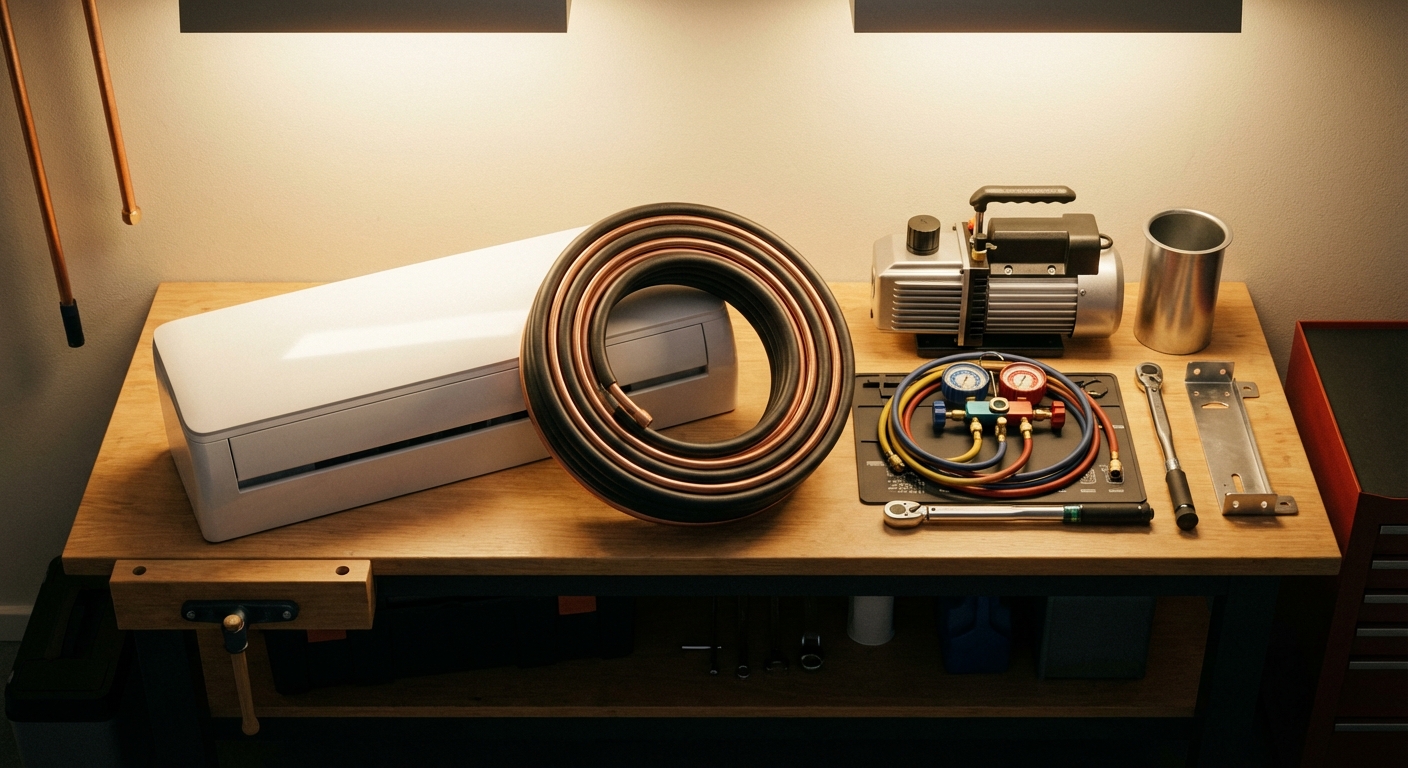
DIY can deliver full heating performance when the run is straightforward: short, protected line-set routing, easy outdoor placement with reliable drainage, and a panel that already supports a correctly sized dedicated circuit. The risk is not comfort on day one, it is the first freeze, first thaw, and first heavy snow when small setup shortcuts turn into airflow blockages or nuisance trips.
A licensed pro earns their keep when routing is long or exposed, when the condenser must be elevated or shielded from drifting snow, or when the electrical service needs upgrades. Cold-climate placement is not cosmetic, it determines whether defrost cycles can shed ice and whether meltwater can leave the unit instead of refreezing where it hurts performance.
Outdoor unit winter readiness: ensure adequate clearance and protection in snow/ice conditions to prevent blockage and defrost/meltwater issues. Set the unit where snowfall, roof runoff, and plowed banks cannot choke the coil, and where meltwater has a clear path away from the base.
Kinked tubing, crushed insulation, or dirty, under-tightened connections quietly tax heating output by forcing the system to work harder. Protect the insulation end to end, keep bends smooth, and treat connection cleanliness and tightness as performance requirements, not finishing touches.
Most MRCOOL mini-split systems require a dedicated breaker and correctly sized wire based on the unit's MCA (Minimum Circuit Ampacity) and MOP (Maximum Overcurrent Protection). Your buyer check is simple: match the plan to the nameplate so winter start-ups do not trip breakers or create unsafe conditions.
MRCOOL publishes DIY install guidance; manuals list wrench sizes for tightening No-Vac® Quick Connect; example pre-charged line set is a 50-ft 3/8" x 3/4" model pre-charged with R-410A to 19.44 oz. Quick Connect reduces specialized refrigerant-side work, but it does not replace careful placement, protected routing, basic commissioning checks (correct modes, stable operation, unobstructed airflow), or correct electrical.
- Confirm winter clearance for snow, ice, and meltwater drainage at the outdoor unit.
- Verify the electrical plan against the unit's MCA/MOP for a dedicated circuit.
- Decide the boundary between DIY and pro help before anything feels out of scope.
MRCOOL vs. Other Heating Options
Once you're confident the unit can be placed, powered, and protected correctly, the remaining question is fit: is a ductless zone system the right tool for your house? MRCOOL is a strong fit when you need targeted, ductless heating in specific zones, like an addition, a finished attic, or a room that never stays comfortable. The catch is whole-home comfort is a distribution problem as much as a heat-output problem, and some layouts and climates punish room-by-room solutions.
Premium ductless lines like Mitsubishi and LG set the benchmark when you need predictable output as temperatures drop and you want a deeper contractor and parts ecosystem behind the equipment. "Mitsubishi Hyper-Heat is commonly reported to heat to -13°F with ~90% capacity and to -5°F at 100% capacity." That level of maintained capacity is what you buy when the goal is fewer comfort cliffs in extreme cold.
For homes with an existing duct system or a layout with many closed rooms, a ducted heat pump solves the distribution problem in one shot. "ducted heat pump alternative reference point is rated up to ~14.3 SEER2 and ~7.5 HSPF2; matched-system listings can vary by pairing."
That GSZB4 baseline is a reminder to evaluate the entire matched system, not just the outdoor unit, when you want consistent airflow, filtration, and temperature blending across the house.
Dual-fuel is the clean decision when electricity is pricey, winters are long, or capacity at the bottom end is non-negotiable. "heat pump vs. furnace decision framework: the economic balance point (cost-based switchover) differs from the thermal balance point (capacity-based)." Set the switchover around cost when you are optimizing bills, and around capacity when you are protecting indoor temperature.
Single room or addition: ductless zoning (MRCOOL included) is hard to beat. Many closed rooms or you want whole-home filtration and mixing: go ducted (including ducted heat pump systems with electric backup heat strips). Very cold climate with high electric rates or frequent subzero snaps: prioritize premium cold-climate ductless benchmarks or dual-fuel using balance-point logic.
Bottom Line
MRCOOL heats well when the model is cold-climate appropriate, sized right, and installed for winter.
Cold-weather capability is model-dependent: many 5th Generation listings publish heating operation down to -13°F, and some variants are rated to -22°F.
Sizing and distribution across rooms and zones decide comfort; winter-clear outdoor placement, MCA/MOP-ready power, and matched SEER2/HSPF2 ratings decide whether it performs and what it costs.
If you're worried about that single-digit night, your decision comes down to whether your design temps stay within the unit's low-ambient rating and whether the heads can actually cover the rooms you care about. Plan another path if you need uniform closed-door heat or your climate regularly falls below that rating.
Check state, utility, and local rebate eligibility, since MRCOOL indicates many DIY ductless mini-split systems meet CEE Tier II criteria, a benchmark several state and utility programs still use. The federal 25C credit that offered up to $2,000 ended for property placed in service after December 31, 2025, so budget without it. Then then use warranty and support resources and complete warranty registration on time, because timing and compliance steps affect coverage.
Wrapping Up
MRCOOL mini splits can heat effectively in real winter weather, but "heats well" is less about how hot the air feels and more about sustained performance when temperatures drop. The most reliable way to judge that is by checking low-ambient ratings, focusing on rated heating capacity at common test points like 47°F and 17°F, and understanding normal winter behavior like brief defrost-cycle dips.
In the real world, comfort depends on the match between the system and your home: correct sizing, smart zoning and airflow between rooms, and an installation that is truly winter-ready with proper outdoor clearance, drainage, and electrical provisioning. Efficiency ratings like HSPF2 help forecast operating costs, but they only pay off when the system is selected and installed to meet your climate and layout.
Before you buy, confirm your design temperatures fit the model's specs, plan your zones around how your house actually moves air, and complete the warranty and eligibility steps so your coverage matches your investment.
 Cooling
 Learning Center
 Money Saving Tips
 Buying Guides
 State by State