




 heating
Why Humidity Control Matters for Year Round Comfort
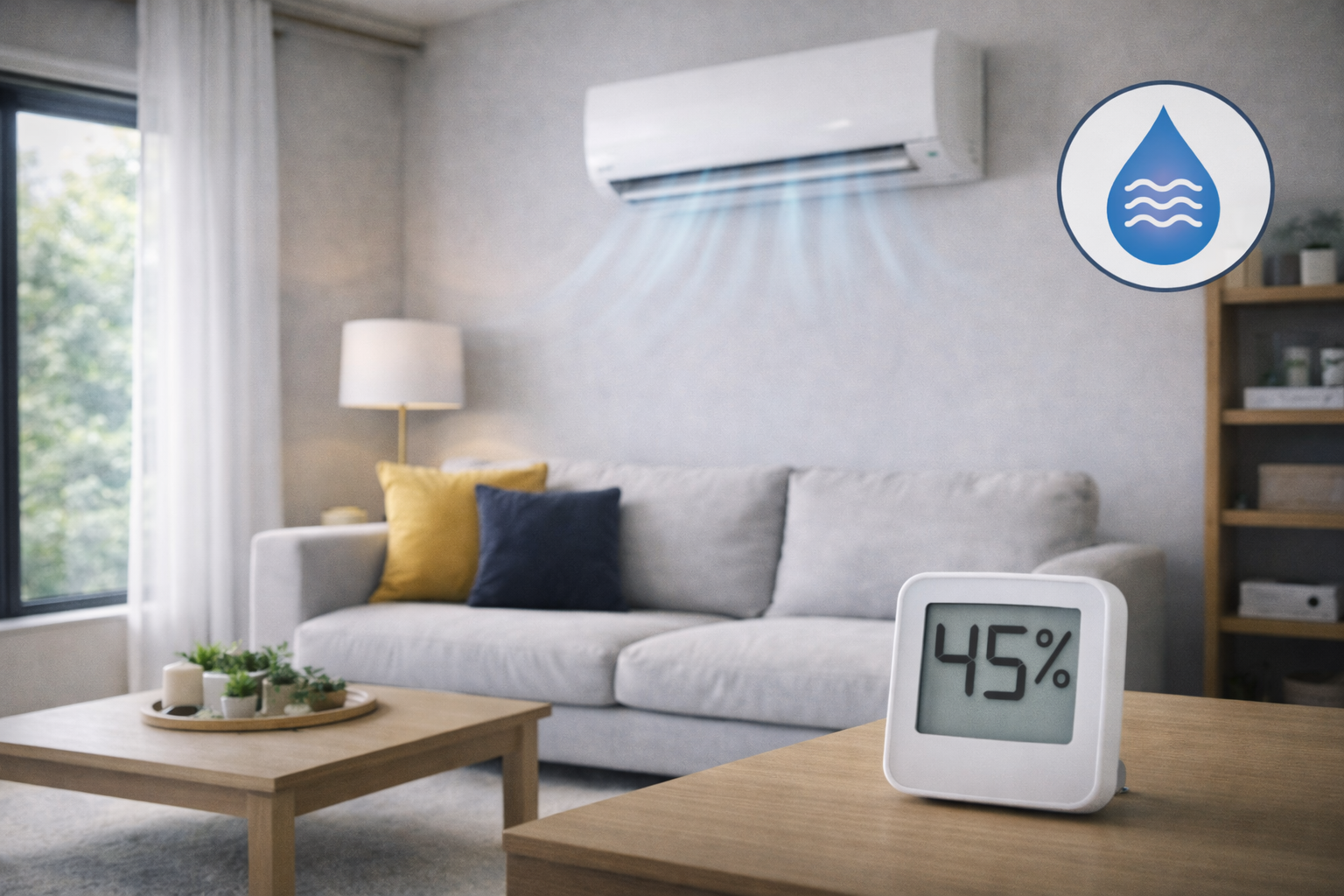
Taming indoor moisture is as important as managing temperature; mini splits with dedicated humidity control pull excess moisture from the air, improving comfort and indoor air quality year round. Think of humidity as the second setting on your comfort dial. When the air is too damp, sweat does not evaporate as easily and rooms feel warmer and stuffier than the thermostat suggests. When it is too dry, skin, sinuses, and wood surfaces suffer.
A practical target is keeping indoor relative humidity near 40 to 60 percent. Staying in this range helps inhibit mold and mildew, supports healthy breathing, and keeps rooms feeling comfortable without constantly chasing the thermostat. It also protects the home itself. Excess moisture swells wood floors and trim, dulls finishes, and can damage instruments and other moisture sensitive furnishings.
Mini split systems can manage humidity effectively across seasons when paired with proper equipment, configuration, and maintenance. Set up correctly, they remove moisture during muggy periods and avoid over drying in cooler weather, keeping the space in that 40 to 60 percent sweet spot while maintaining steady, even temperatures.
How Mini Split Systems Influence Indoor Humidity (Basics)
Mini split indoor coils pull moisture out of the air whenever they are cold enough. Think of the coil like a chilled glass: water beads up and drains away. The key is long, gentle run cycles that keep the coil cold and condense steadily without big temperature swings. Inverter, variable speed compressors and variable speed indoor fans support this especially well in cooling and shoulder seasons, since they throttle down and run at low power while still wringing water from the air.
Oversizing is the common enemy of dehumidification. Too much capacity short cycles, the system hits the thermostat quickly, shuts off, and never keeps the coil cold long enough to drain much water. Right sizing and choosing equipment with strong turndown helps maintain those long, low power runs.
Fan operation matters too. Letting the indoor fan run continuously when the compressor is off can blow across a wet coil and re-evaporate moisture back into the room. Use automatic fan settings so airflow stops when cooling stops.
Built in Dehumidification Modes: What Your Mini Split Can Actually Do
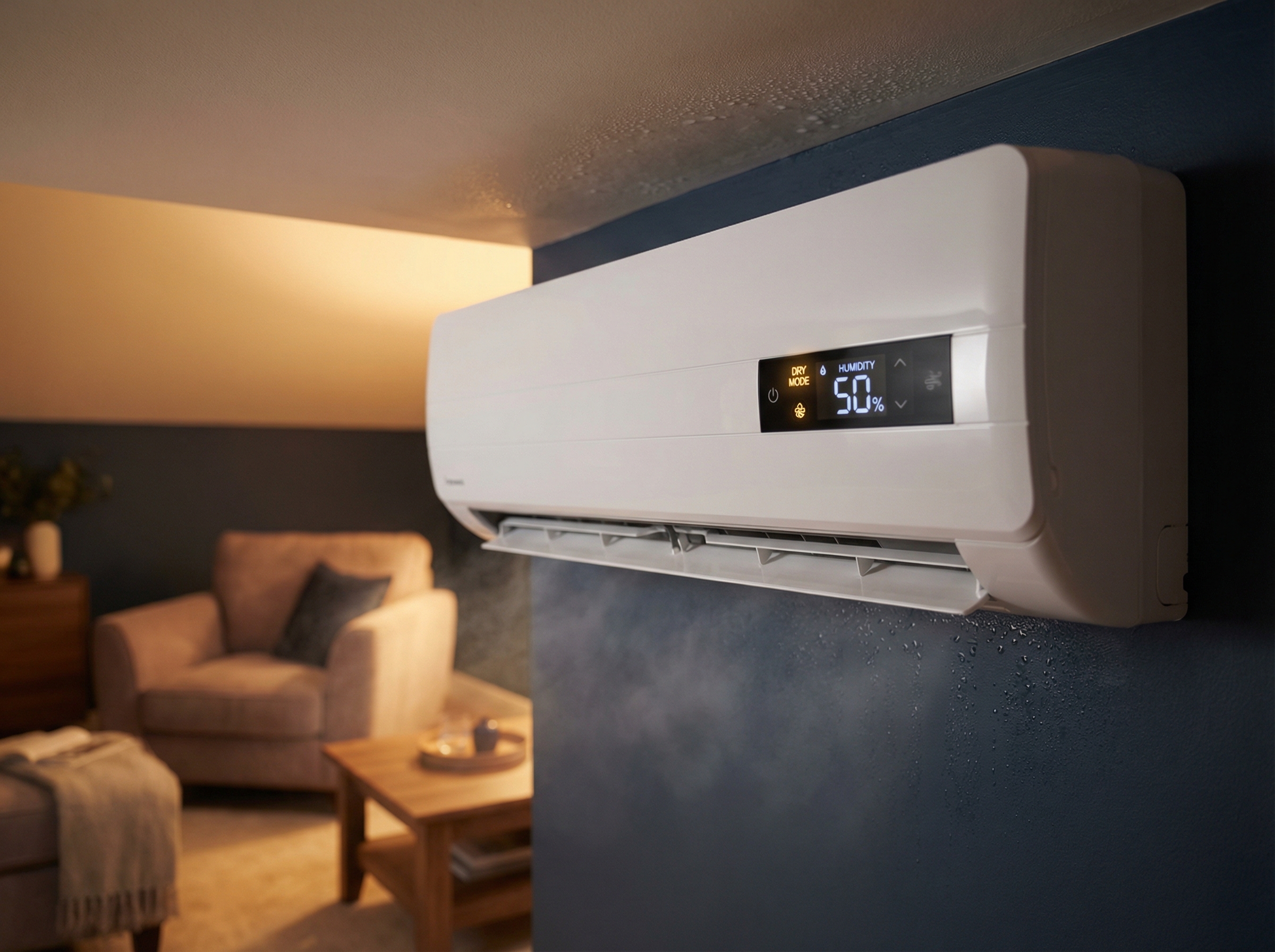
Most mini splits include a Dry mode that targets moisture removal with less temperature change than full cooling. How it works: the system slows the indoor fan, keeps the coil cool, and cycles the compressor to wring out moisture while trying to limit extra chill. Some premium models add hot gas reheat, which recycles a bit of compressor heat to stabilize room temperature while still pulling water. High SEER inverter systems tend to run longer at low speed, which steadies humidity and reduces the need to overcool. In our experience at Budget Heating (BudgetHeating.com), Dry modes vary widely between brands, so we always verify the engineering data.
Check the dehumidification performance in pints per hour and whether the remote or app offers a humidity setpoint that can operate at least partly independent of the cooling setpoint.
- Ask the installer for the unit's dehumidification rate at standard conditions.
- Confirm whether it can dehumidify without noticeable overcooling or if Dry is temperature driven only.
- Review the condensate drain plan, gravity vs pump.
- Clarify winter behavior, including defrost cycles and snow protection for the outdoor unit.
Once installed, test it: run Dry mode for a couple hours with a hygrometer, watch for steady condensate, and make sure room temperature stays comfortable.
Seasonal Settings & Strategies: Summer Dehumidification and Winter Humidity Management
In our field experience, Auto mode often bounces between heating and cooling, causing temperature and humidity swings. Avoid Auto in all seasons. In summer and shoulder seasons, select Cool or Dry. Both remove moisture without overcooling when set sensibly; use your existing RH setpoint on the humidistat if available. If a room feels clammy, the usual culprits are an oversized system that short cycles, the wrong mode, or fan behavior, not a defective unit.
When outdoor air turns cold, switch to Heat. Raising temperature does not add moisture, it only makes dry air warmer. Mini split heat pumps do not humidify, so pair winter operation with a dedicated humidifier or consider ERV or HRV ventilation to maintain comfortable indoor RH.
Maintenance Checklist to Keep Humidity in Check Year Round
- Clean or replace filters every 4 to 6 weeks in peak use, since restricted airflow cuts dehumidification.
- Use Dry mode during muggy weather, keep supply and return paths open, and track indoor RH with a hygrometer.
- Keep the condensate drain clear: ensure a dedicated, code compliant slope to a drain or use a reliable pump with an accessible cleanout, then test and flush each season.
- Keep the outdoor unit free of vegetation and debris, maintain clearances, and elevate or shelter it from snow in cold climates without blocking airflow.
- At installation, plan indoor head placement for even airflow and make sure condensate routing stays accessible.
- Schedule annual professional service to verify refrigerant charge and leaks, tighten electrical connections, deep clean coils, and confirm humidity modes function properly.
- Do not perform refrigerant or high voltage electrical work; EPA certified and licensed pros are required. Seek service for loss of cooling or drying, breaker trips, unusual noises or odors, coil icing, or suspected leaks.
Thermostats, Humidistats & Smart Controls: Automating Humidity for Stable Comfort
Temp-only thermostats ignore the other half of comfort, humidity. A humidistat or any control with RH setpoints lets you pick a target, usually 40 to 60 percent, and the system modulates to hit it by cycling equipment, trimming fan speed, or using Dry mode. With smart apps you can view RH, set alerts, and nudge settings from anywhere. In our experience at Budget Heating (BudgetHeating.com), this keeps spaces feeling crisp without overcooling.
- Commissioning checklist: verify Dry mode performance after installation, confirm steady condensate flow, ensure the controller or app reports and responds to humidity setpoints, then track RH for several days to tune modes, fan speeds, and setpoints.
- Daily use tips: use Dry mode on damp days or in shoulder seasons, keep doors and windows closed during dehumidification, run kitchen and bath exhaust fans, and monitor RH with a hygrometer to stay near 40 to 60 percent.
When to Add Supplemental Dehumidification or Ventilation
Mini splits handle temperature, but most do not supply outdoor air and their moisture control varies. Add support in these cases:
- Hot humid climates: prioritize latent removal. Choose strong Dry modes with good pints per hour. If RH stays above 55 to 60 percent, add a dehumidifier.
- Hot dry regions: dehumidification is minor. Favor high-temperature EER2 and sensible capacity. Spot ventilation usually covers baths and kitchens.
- Cold or mixed climates: winter air is dry. Plan humidification and balanced ERV or HRV, and confirm the outdoor unit is low-ambient rated.
- Tight homes, basements, windowless baths, or workshops: use mechanical ventilation and vent kitchen hoods outside.
When Mini Splits Aren't Enough: Tradeoffs, Limits and Better Alternatives
Mini-splits excel at efficient heating and cooling, but they are not a cure-all. Very humid basements, poorly insulated or unsealed spaces, and extreme climates can overwhelm a system's moisture removal. In those cases, plan for supplemental gear rather than forcing the mini-split to do a job it was not built for.
- Very humid areas: add a whole-house dehumidifier or a high-capacity portable unit to control latent load.
- Stuffy or tight homes: use an ERV or HRV to bring in fresh air while balancing humidity and energy.
- Very dry winters: add point or whole-house humidifiers to maintain comfort and protect finishes.
Sizing also shifts by climate. In very hot and humid or very cold regions, installers may recommend upsizing by roughly 10 to 20 percent, or stepping up capacity for exposed, high-load rooms. Balance that choice against efficiency and comfort, not just nameplate tonnage.
Energy & Capacity Considerations: SEER2, Sizing and the Cost of Comfort
SEER and SEER2 rate seasonal cooling efficiency. Since Jan 1, 2023 the DOE uses SEER2 and HSPF2 with new minimums, and new mini splits must carry these ratings. Compare SEER2 to SEER2, not legacy SEER. Regional minimums vary by DOE zone, about 13.4 to 14.3 SEER2. Modern ductless often run in the high teens to mid 20s, with premium models in the high 20s. ENERGY STAR and Most Efficient labels highlight top performers.
Efficiency and capacity choices affect bills and humidity. At a $1,500 per year baseline from SEER 10, SEER2 14 saves about $450, SEER2 18 $750, SEER2 22 or higher $975 per year, roughly $5,400 to $14,625 over 12 to 15 years. Actual results depend on rates, climate, setpoints, correct sizing, and Dry mode use. Right sizing starts with area, ceiling height, insulation, and window gains. High load rooms may justify a half to one ton step up, and extreme climates sometimes 10 to 20 percent. When comparing models, consider SEER2 and HSPF2, but do not trade away dehumidification features like Dry mode, listed pints per hour, or inverter driven variable fan control that allows long, low speed operation.
Quick Action Plan to Optimize Mini Split Humidity Control
Dial in comfort by pairing the right equipment and settings with steady upkeep: choose inverter or variable speed mini splits, use Dry mode or optional hot gas reheat where available, size correctly, set the proper seasonal mode, and aim for 40 to 60% RH. Avoid oversizing, and add a dedicated dehumidifier or humidifier in tough spaces or climates. Stick to your regular maintenance checklist to keep performance steady.
Not sure which model or settings fit your home, or whether you need accessories? That is a common crossroads, and it is easy to overbuy or misconfigure.
Our team blends 30+ years in HVAC with U.S.-based phone support, and we have fulfilled over 200,000 orders. We will match your space to the right mini split and controls, then walk you through setup so humidity stays in the sweet spot.
- Get a Custom Quote: right-size equipment, humidity plan, wholesale pricing.
- Talk to Our Team: call for quick sizing and mode setup guidance.
- Shop Ductless Mini Splits: inverter systems with Dry mode options.
- Shop Dehumidifiers & Humidifiers: refine RH control, financing with Affirm.
 Cooling
 Learning Center
 Money Saving Tips
 Product and Brands Insights
 Buying Guides
 State by State
 HVAC Systems