




 buying guides
 heating
The first hour in a cold garage or shop is always the same: frozen tools, stiff hands, and a space that never seems to catch up. You need fast, reliable heat in an outbuilding, warehouse bay, or workshop, but you are stuck between fuel availability, install complexity, and what it will cost to run.
The "best" unit heater in 2026 is not a brand contest. It is a matching exercise: heat output and recovery speed versus the realities of venting, wiring, or piping, plus how sensitive your budget is to current energy prices.
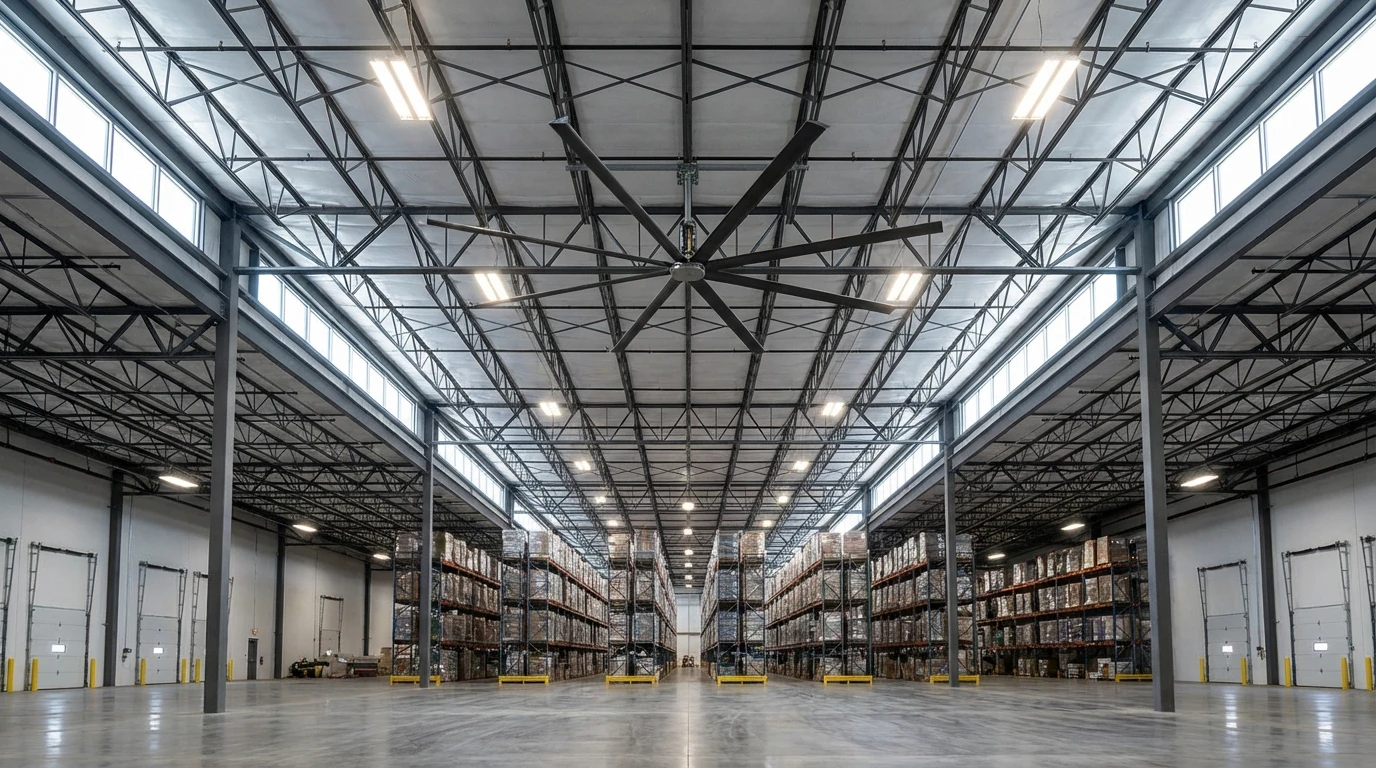
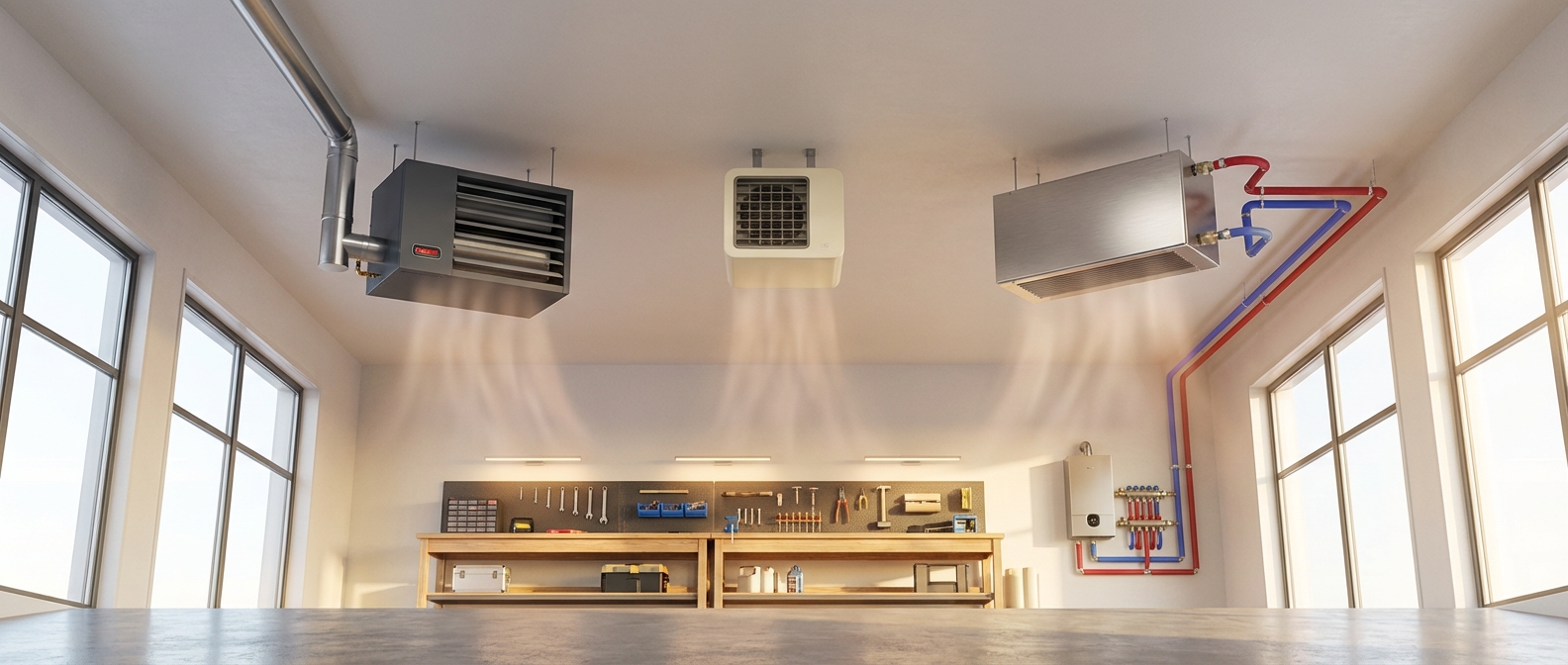
A unit heater earns its keep because it pushes heat where you work instead of trying to warm an entire building evenly. A unit heater is essentially a forced-draft convector, typically using a centrifugal fan, so it throws directional warm air hard enough to beat cold-start mornings. That makes it a natural fit for ceiling or wall mounting in garages, workshops, warehouses, and outbuildings where doors open often and heat loss is constant.
Your three paths are gas, electric, or hydronic, and each one fails in a predictable way if you pick it without checking infrastructure first. Gas wins when you have fuel access, but venting and combustion air drive the installation and commonly must comply with NFPA 1 and NFPA 54. Electric is simplest mechanically, but NEC rules govern fixed electric space-heating circuits, so circuit capacity and disconnect sizing decide what you can run. Hydronic is clean when you already have a hot-water loop, but piping and water temperature compatibility determine whether it actually delivers heat at the unit.
Start by listing what you truly have on site, gas line, adequate 240V capacity, or a hot-water loop, and you will be able to pick the right unit-heater type and features for your space in 2026.
The sections below follow that same decision path: first the constraints and sizing basics, then what to look for in gas, electric, and hydronic units, and finally the installation and buying details that drive real-world cost.
How to Choose the Right Unit Heater in 2026
Most "bad unit heater" purchases are mismatch problems: the fuel and infrastructure don't fit the building, the capacity doesn't match the real heat loss, or the controls don't talk to the heater. Pick in this order and you stop backtracking: constraints first, then capacity (BTU/h for gas or hydronic, kW for electric), then controls and comfort features.
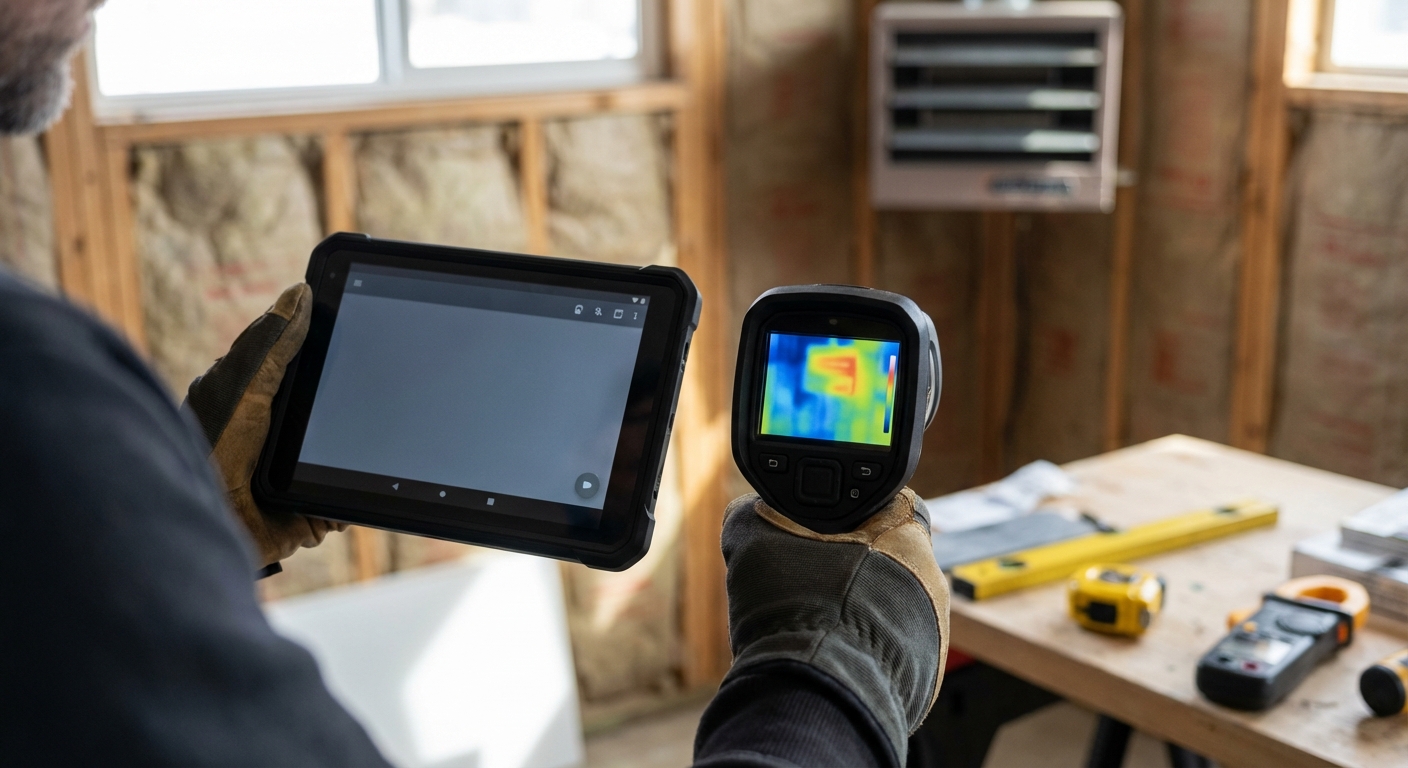
The fastest way to eliminate wrong options is to decide what you can actually support in the space:
- Fuel availability: natural gas/propane on site (gas), an existing boiler/loop with usable water temperature and flow (hydronic), or enough electrical service capacity (electric).
- Venting feasibility (gas): you need a realistic path to route flue products out and meet clearance requirements. If vent routing is impractical, stop shopping gas units.
- Electrical capacity: even gas and hydronic units still need power for the fan and controls; electric resistance needs the most electrical capacity because the heat itself is electric.
- Mounting height, clearances, and service access: you need room to hang it, keep required clearances, and still reach panels for cleaning and repair.
- Noise and air distribution: fan sound and "throw" (how far the air stream carries) determine whether the far end of the shop is usable or always cold.
Capacity tracks heat loss, not floor area. Volume (square footage times ceiling height) sets the baseline, but insulation quality and infiltration (air changes from leaks) swing the load hard. Air sealing and insulation improvements reduce demand directly, which is why heating system sizing and efficiency guidance focuses so heavily on verifying those measures.
Garages and warehouses with big doors behave differently because door-open frequency turns infiltration into the main event. A tight, insulated 1,000 sq ft shop with 9 ft ceilings can heat evenly with a moderate-capacity unit, while a similar-size bay with a 14 ft ceiling and frequent door cycles needs a higher capacity band and better air distribution to recover quickly.
Lock your target delta-T (how cold it gets outside versus your setpoint), then choose a capacity band with margin for door cycles and stratification, not just "square feet." Gas and hydronic shopping stays in BTU/h; electric stays in kW.
The thermostat is a purchasing gate, not an afterthought. A line-voltage thermostat switches 120/240 VAC power directly, so it must match the heater's line-voltage control circuit. A 24V thermostat sends low-voltage control signals (it does not switch line power), but it unlocks broader HVAC control options and a larger thermostat selection.
Thermostat and switch-control placement also matters in real installs, since project specs commonly require mounting controls in outlet boxes at consistent, reachable heights. Plan placement early so your thermostat reads the occupied zone, not the ceiling heat plume.
Line-voltage and 24V thermostats are not interchangeable. Electric resistance heaters commonly use line-voltage controls; many gas and hydronic unit heaters use 24V control circuits. Confirm the control voltage before you buy, then decide whether you want single-stage vs staged heat and whether you need fan delay (post-purge) to strip residual heat off the exchanger for more even comfort.
If you need both heating and cooling, you're fighting high utility rates with electric resistance, or you cannot vent gas cleanly, a high-efficiency heat pump (ductless mini split) or a furnace-based system is often the cleaner solution. Budget Heating carries heat pumps, air conditioners, furnaces, air handlers, coils, thermostats, refrigerants, and install accessories, which makes it easier to pivot when the constraints point away from a unit heater.
Takeaway: identify constraints, pick a realistic capacity band, then pick a control strategy (thermostat voltage, staging, fan behavior) that matches the equipment.
Best Gas Unit Heaters to Buy in 2026
Those constraints narrow the field quickly: if you have fuel access and can execute venting properly, gas becomes the most direct path to fast recovery heat in large, leaky spaces. The details that decide whether a gas unit heater is a good buy are mostly about airflow and venting, not the headline BTU rating.
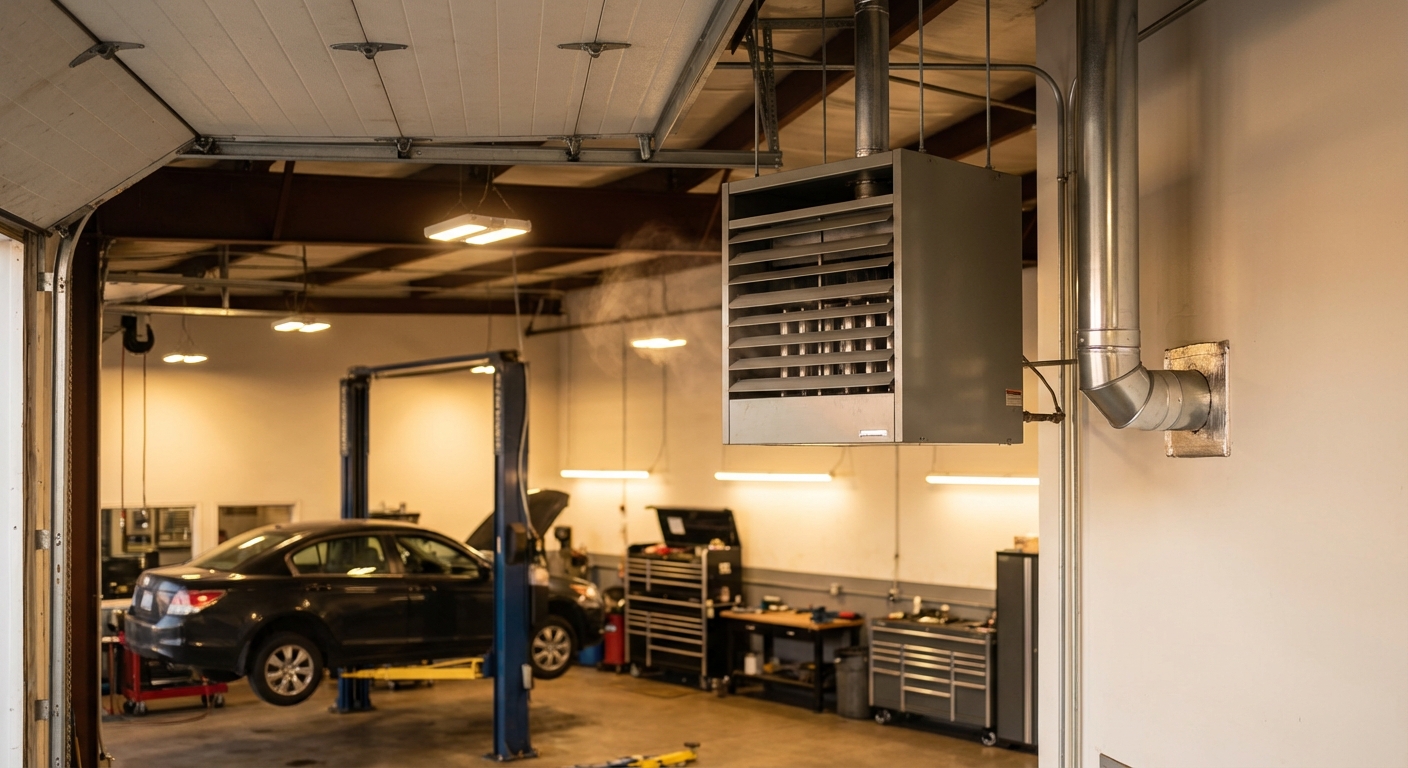
The best gas unit heater choice in 2026 is determined by your venting and combustion-air reality, not the BTU number on the box. Gas unit heaters win in garages and shops because they deliver fast recovery heat after cold starts and door cycles, but they only perform safely and predictably when the vent route, termination location, and air source are planned before you buy.
Start by picking the venting concept, then shop within that lane. Some gas unit heaters require a special pressurized vent system, and many installations require or strongly benefit from outside combustion-air piping connected to the heater intake. Sealed combustion (burner air piped from outdoors, exhaust piped out) is the cleanest fit for garages and workshops because it prevents the heater from pulling indoor air that can carry fumes, dust, or negative-pressure drafts.
"Top picks by feature set" looks like this: sealed combustion plus power-vent/direct-vent capability for tight buildings and fume-prone spaces; standard atmospheric combustion where an interior vertical vent path is straightforward; and higher-output families for large volumes and high ceilings, where commercial ranges can span roughly 13,000 to 350,000 BTUH with 270 to 4,750 CFM (manufacturer data).
A unit heater that recovers quickly is wasted if the discharge is blocked by shelving, door tracks, or stacked materials. Plan mounting around throw and service access: budget time and clearance to remove panels and work components without dropping the unit.
Manufacturer specs for one unit-heater family call out removable top and side panels specifically for service access, which only helps if you leave room to use them.
In tall spaces, assume stratification: aim discharge to mix air down into the occupied zone, and avoid aiming straight across a ceiling where heat will park above you.
- Map the vent path: shortest route, fewest turns, supported by the vent type the heater requires.
- Choose termination locations: keep clear of doors, windows, other intakes, and the local snow line.
- Lock in combustion air: indoor air versus dedicated outdoor air piping, based on fumes, pressure, and tightness.
- Confirm mounting clearances: ceiling height, discharge line-of-sight, and room to open service panels.
If you need even temperatures across multiple rooms, filtration, and ducted distribution, a high-efficiency 96% AFUE furnace outperforms code-minimum efficiency levels and fits whole-building comfort better than a single-point unit heater. Use a unit heater for fast zone heat in big air volumes; use a high-efficiency furnace when comfort depends on distribution.
Make the venting and combustion-air decision first, then compare outputs and options within that category. For current catalog details and manuals, verify requirements directly with Budget Heating before ordering.
Best Electric Unit Heaters to Buy in 2026
If venting or combustion air is the sticking point, electric becomes the straightforward alternative-as long as the panel and feeder can support the load. That shifts the buying decision from flues and terminations to voltage, amperage, and circuit planning.
Electric unit heaters are the cleanest install path when your building can support the electrical load: no gas service to run, no venting to cut through a wall or roof, and no combustion maintenance. They shine in smaller garages, workshops, outbuildings, and for spot heating where you want fast, localized warm air without dealing with fuel piping or exhaust.
Start with capacity in kW, because it dictates both heat output and circuit demand. As a real-world sizing range, Modine's horizontal electric unit heaters (HER series) are offered from 5 kW through 25 kW; verify what's currently stocked before you tie your plan to a specific kW and voltage option. If you're comparing add-on electric capacity options, review electric heat strips alongside unit heaters. Voltage is the next gate, with many shop installs centered on 240V, and some models available in higher voltages for commercial panels.
Air delivery decides whether the heater feels "present" in the space. Look for published fan throw or at least clear airflow guidance, plus adjustable louvers so you can aim heat to the work zone instead of the ceiling. On the control side, electric resistance units commonly pair with line-voltage thermostats, and fan delay options can help reduce the abrupt temperature drop at the end of a call for heat.
Your heater's nameplate amps are not your sizing number. Fixed electric space heating is treated as a continuous load (125% rule), meaning NEC requires branch-circuit conductors for the heater and associated motors to be sized at not less than 125% of the continuous load, so you multiply the operating current by 125% when planning the circuit. Expect a dedicated circuit, and confirm your panel has both the spare breaker space and service capacity to carry the added amperage.
If your project requirements include cooling in the same space, that decision can change the equipment category entirely, so validate the plan before committing to heat-only resistance hardware; in many cases, mini-split heat pumps are the more efficient path when you want heating plus cooling.
Takeaway: confirm available voltage and amperage at the panel, plan the circuit using the 125% rule, then pick the kW size and thermostat/control style that matches how you actually use the space. If you're shopping a current catalog like Budget Heating, filter by voltage first, then kW, then controls-and if you're weighing other electric heat formats, compare against electric furnaces before you commit.
Best Hydronic Unit Heaters to Buy in 2026
When you already have a boiler loop, hydronic unit heaters can deliver strong output without adding a new fuel or a large electrical heating load. The tradeoff is that the water side becomes the limiting factor, so selection has to start with your actual loop temperatures and flow.
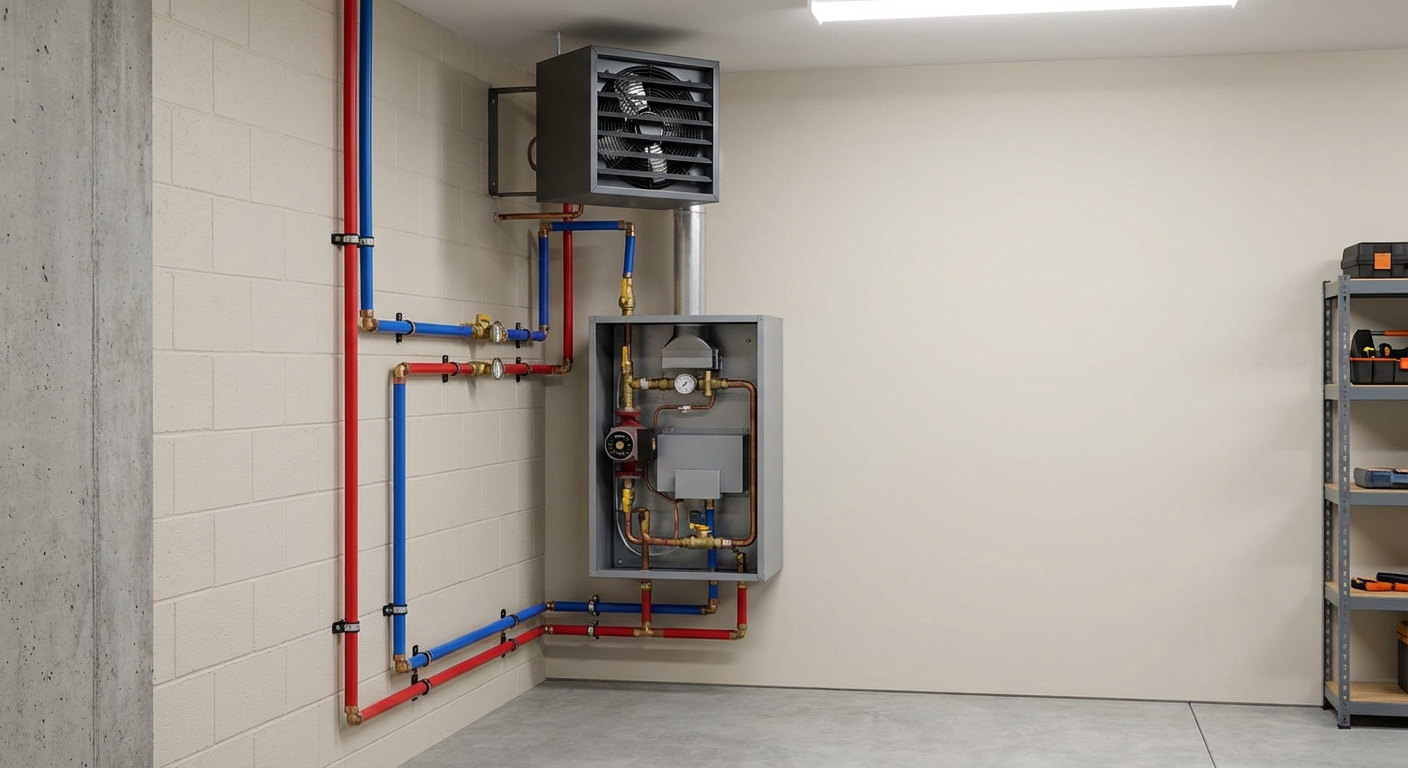
Hydronic unit heaters are a high-performance play when you already have a boiler or hot-water loop, but they succeed or fail on water temperature and coil selection, not the BTUs on the box. Get the water-side conditions right and you get quiet operation, strong heat output, and efficient heat delivery because the coil is fed with the temperature and flow it was rated for.
Performance tables are governed by entering-water temperature (EWT), meaning the water temperature entering the unit's coil; a heater rated at 180F EWT is a different machine at 140F EWT. Modine's hydronic unit-heater literature shows roughly 22,000 to 195,000 BTU/hr at 140F EWT with 60F entering-air temperature (EAT), which is the exact scenario that exposes undersized output when the loop runs cooler than assumed.
The "right model" is the one whose coil can deliver your required output at your actual EWT and available flow. Modine documents a high-efficiency 4-row coil with low water pressure drop, which matters because high head loss can force a pump upgrade or starve flow in long runs.
Validate coil construction and ratings before you buy: copper tubing is common, with published max working pressures such as 250 PSIG (higher in some constructions) and temperature ratings around 300F per coil manufacturer specs. If the space can see freezing conditions, confirm glycol compatibility and re-check performance since glycol changes heat transfer and increases pressure drop.
Plan valves and basic fan control early. Pair 2-way valves with variable-speed pumping, and 3-way valves with constant-speed systems, so the control strategy matches how the loop is intended to circulate. Add an aquastat or fan control so the fan waits for hot water, avoiding cold blow on startup.
Practical takeaway: confirm your loop's temperature range, fluid (water or glycol), and coil pressure/temperature ratings before selecting the heater and valve style, even if you are sourcing the unit and accessories from a single supplier like Budget Heating.
Installation, Costs, and Buying Tips for 2026
Once you have the right heater type, the next decision is less about the unit and more about the jobsite: where it hangs, how it gets power or fuel, and what it takes to run piping or venting cleanly. This is where installations diverge in complexity even when the heater specs look similar on paper.
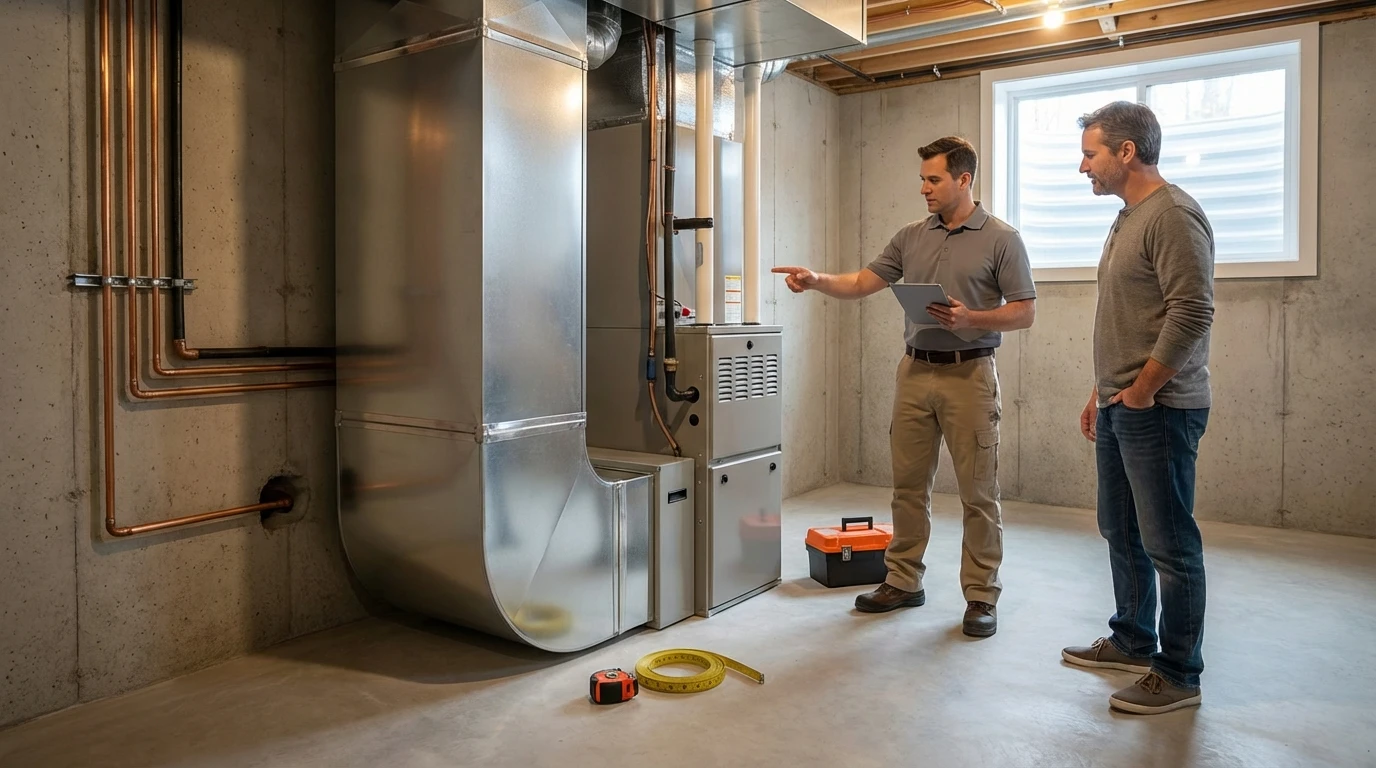
Budget accuracy comes from identifying installation unknowns early. The unit price is rarely the swing factor; venting, electrical, piping, and permit scope are what turn a simple hang-and-hookup into a multi-trade project (see this installation planning and quote terminology guide for what to ask).
- Mounting location: ceiling height, joist/steel spacing, lift access, and a safe service path for cleaning and fan access.
- Clearances: confirm the manufacturer-required side/top/front service space before you commit to a corner mount.
- Thermostat placement: pick a wall location away from direct discharge and exterior doors to avoid short cycling.
- Utility access: distance to gas meter or manifold, electrical panel, and a route for venting or hydronic piping.
- Penetrations: count roof/wall hits and note wall thickness, siding type, and any fire-rated assemblies.
- Gas: vent kit and termination, roof/wall thimble, gas shutoff and union, drip leg materials, hangers/supports, combustion-air piping if required.
- Electric: correctly sized breaker, wire/conduit, local disconnect and whip, mounting hardware, strain relief.
- Hydronic: isolation valves, unions, purge/drain valves, air vent/air eliminator, circulator pump or zone valve (as required), glycol and test kit where freezing is possible.
Use labor benchmarks as complexity signals. Gas projects carry more trade coordination because venting approach, gas piping run/size, wall or roof penetrations, and combustion-air piping can stack quickly. For context, gas-furnace installation labor commonly runs about $1,500 to $3,500, with permit fees up to about $500 depending on municipality, even though unit heaters are quoted differently.
Electric installs stay cheaper when panel capacity already exists: if you need a new 240V circuit, a subpanel, or a service upgrade, the "simple install" stops being simple. Labor-only electric installation ranges begin near $800, and stay lower than gas when the electrical path is straightforward.
Hydronic costs rise with tie-in complexity: longer supply/return runs, added pumps/valves, and freeze protection. Standards explicitly call out valves and caps/blind flanges as recognized line items, so budget for them instead of hoping they get "thrown in."
Lock pricing early when you can: PHCP/PVF product price increases of roughly 5 to 6.5% in early 2026 flow directly into installed cost via pipe, fittings, valves, and vent materials.
Plan for permits anytime you touch gas piping, run new electrical circuits, or penetrate rated assemblies; the paperwork and inspections are part of the schedule, not a surprise add-on.
Rebate and tax-credit eligibility is equipment-specific. Reconditioned or remanufactured equipment does not qualify for the referenced federal credit, and IRA/25C-style incentives commonly apply to qualifying heat pumps rather than unit heaters as a category. When comparing alternatives, use SEER2 efficiency metrics to keep budgeting apples-to-apples. Confirm eligibility before you buy, using Budget Heating's location-based Rebate Center.
- Photograph the proposed mounting area, the electrical panel (door open), and the closest gas/hydronic tie-in points.
- Measure ceiling height, mounting span, and the distances to utilities and any planned wall/roof penetration point.
- List utility details: panel amperage and spare spaces, gas meter size (if known), boiler supply temperature (hydronic), and your target control approach.
- Decide who furnishes accessories and who owns permitting and inspection scheduling.
Summary
The selection process comes back to the same three pressures from the start: what fuel or utilities you actually have, how complex the install can be in your building, and what your energy pricing does to operating cost over a season.
The right unit heater type in 2026 is the one that matches your existing infrastructure and the amount of installation work you are actually willing to take on.
Choose gas when you have gas available and can commit to doing the venting and combustion-air planning correctly; it is the fastest path to high heat output, but it carries the most jobsite coordination. Choose electric when you want the simplest mechanical install and clean operation, and you are prepared for the continuous-load circuit sizing reality that drives panel, breaker, and wire decisions. Choose hydronic when you already have a boiler loop and can verify performance at your actual EWT (entering water temperature) against the heater's table; if the EWT is lower than assumed, the output drops and the plan has to adjust.
Operating-cost example (illustration only): Assume a 30,000 BTU/h load running 6 hours/day for 120 winter days (21.6 MMBtu of heat). Using SaveOnEnergy's example inputs of $0.40/m3 gas and $0.03/kWh or $0.12/kWh electricity (example inputs, not universal rates), that season is about $760 on electric at $0.12/kWh (6,331 kWh), or $190 at $0.03/kWh. The gas side needs one more step: 21.6 MMBtu is delivered heat, and a gas unit heater is typically about 80 percent efficient, so it has to burn roughly 27 MMBtu, or about 765 m3, which lands closer to $306 at that rate rather than the $245 you get by ignoring combustion losses. Electric resistance is effectively 100 percent efficient at the point of use, so compare delivered heat to delivered heat or gas will look about 25 percent cheaper than it is. Note also that $0.03/kWh is far below any US retail rate, where 15 to 20 cents per kWh is typical, so rerun this with your own utility numbers before drawing a conclusion. A hydronic unit heater's energy cost tracks whatever heats your water, so with a gas boiler it generally lands in the same neighborhood as gas, plus a small fan draw. Energy price is the swing factor, not the label on the heater.
If you need cooling too, reconsider a heat pump or mini split before you buy heat-only equipment. Otherwise, lock the decision in with a simple process, then order with clear expectations: Budget Heating aims to process and ship orders within 2 to 3 business days after receiving order and payment (excluding weekends and holidays), and orders over $10,000 must be paid by wire transfer, ACH, or cashier's check. For Warranty and Technician Support during business hours, call 813-885-7999; you can also request a quote at admin@budgetheating.com.
- Confirm your constraints: fuel availability, venting/combustion air, electrical capacity, or boiler water conditions.
- Validate capacity and compatibility using the checklist for your heater type before you click "buy."
- Order your heater and accessories as a single shopping list, then check rebates and call support if anything is unclear.
Wrapping Up
Buying the best unit heater in 2026 comes down to fit, not hype: match the heater type to what your building can actually support, then size it to real heat loss and recovery needs. Gas units excel when you can plan venting and combustion air correctly, electric units win on installation simplicity when your panel can handle the continuous load, and hydronic units shine when your boiler loop can deliver the entering water temperature and flow the coil is rated for.
The consistent theme is to start with constraints first, then capacity, then controls. When thermostat voltage, air distribution, mounting clearances, and code driven requirements are handled up front, you avoid the most common purchase mistakes and get predictable comfort where you work.
Before you order, document your utility access, take a few measurements, and confirm the installation path so you can choose with confidence and move forward.
 Cooling
 Learning Center
 Money Saving Tips
 Product and Brands Insights
 State by State
 HVAC Systems