




 buying guides
 heating
 money saving tips
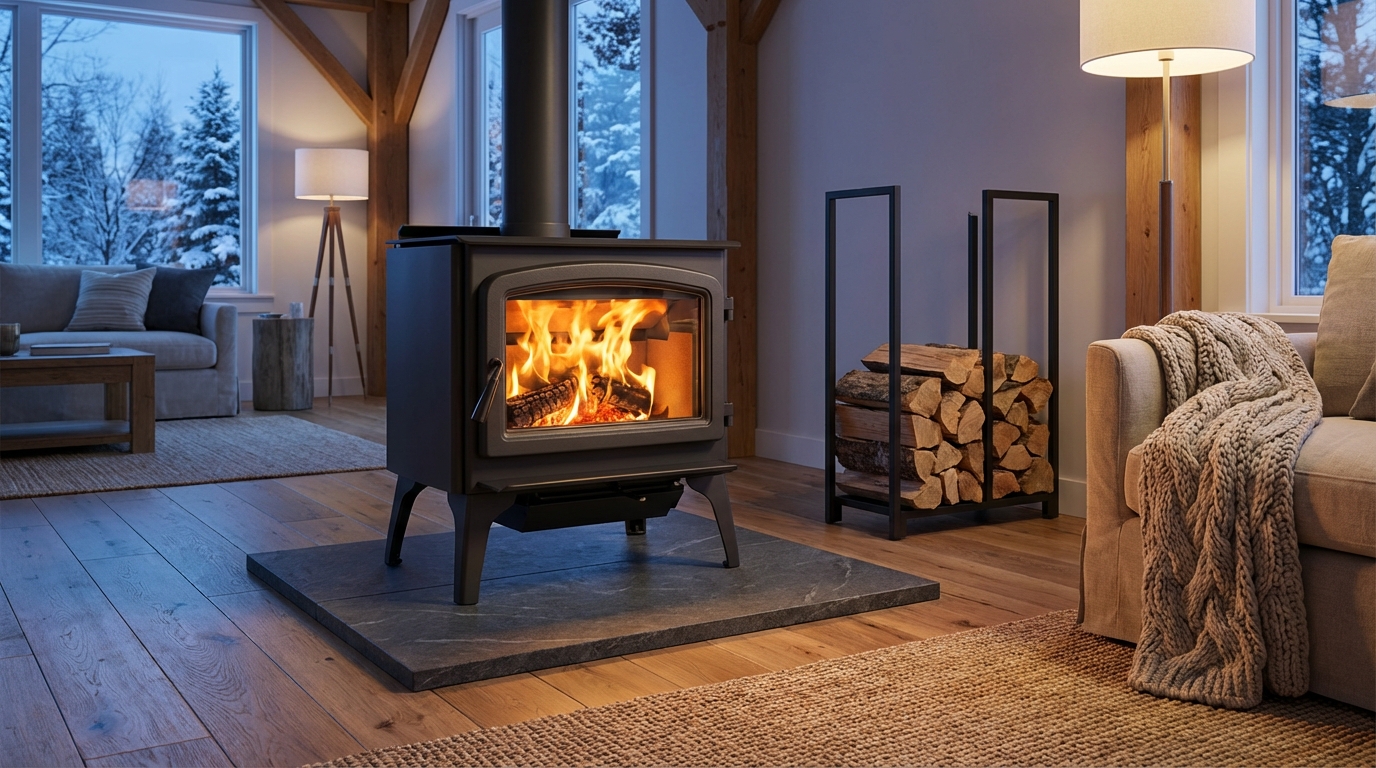
Buying a wood stove in 2026 fails when you shop by "heats up to 2,500 sq ft" claims and ignore the total project. The stove that looks perfect online can end up oversized for your actual heat load, noncompliant for your area, or paired with an install quote that blows up the budget.
You are balancing comfort and cost resilience against safety and predictability. Wood heat can carry a home through outages and price spikes, but only if the system is planned as a whole, not as a box purchase.
Start with the 2026 market floor: new residential wood heaters are governed by the EPA residential wood heater standards (NSPS Step 2), and that baseline applies across major categories like freestanding stoves and inserts. Then confront the real tradeoff this guide solves: wood heat is a reliable primary or supplemental option only when sizing, efficiency and emissions expectations, install realities, and incentive rules are handled in the right order. Heat pumps, gas furnaces, and dual-fuel setups still win in plenty of homes, especially where steady, set-and-forget heat matters.
For comparison shopping, typical 2025 to 2026 installed costs often land around $6,000 to $14,000 for HVAC installs and $4,000 to $10,000 for gas furnace replacement. You will finish this guide able to validate specs, plan the install, and decide if wood belongs as primary heat, backup, or not at all.
That starts with the decision that drives everything else: sizing the stove to your actual heat loss, not a retail label.
Sizing a Wood Stove in 2026
Sizing is the difference between clean, steady heat and a stove you fight all winter. The right target comes from your home's real heat loss and how well you can move warm air, then matching that need to a stove's certified output range, not the biggest firebox you can afford.
"Heats up to X sq ft" is marketing shorthand that collapses climate, insulation, ceilings, and layout into one number. Use the EPA certified-stove listings for model-level sanity checks: the database exposes fields such as firebox volume and heat output metrics (including maximum/upper and BTU ranges), so you can validate whether the claim matches how the unit is actually tested and reported.
You'll see why this matters fast: one manufacturer publishes an EPA-tested output range of 12,114 to 59,750 BTU for a model advertised up to 1,400 sq ft, while another retail listing pushes "up to 2,500 sq ft" alongside about 97,000 BTUs. Those are different classes of heater, and your house decides which one behaves well.
| Winter severity (rough design temp) | Starting estimate (BTU/hr per sq ft) |
|---|---|
| Mild (25F and up) | 20 to 30 |
| Cold (0F to 25F) | 30 to 45 |
| Very cold (below 0F) | 45 to 60 |
Example: a 1,600 sq ft home in a "cold" area at 35 BTU/hr per sq ft pencils to 56,000 BTU/hr. Treat that as your target range to verify against manufacturer specs and local code/installer guidance.
- Insulation and tightness: drafty, older windows, uninsulated attic or basement: add 15 to 25%. Tight, newer envelope: subtract 10 to 20%.
- Ceiling height: for ceilings above 8 ft, add about 10% per additional 2 ft in the main heated space.
- Layout: open concept moves heat easily: subtract about 10%. Chopped-up rooms and closed doors: add 10 to 20% and expect colder bedrooms.
Oversizing forces low-air, smoldering burns to keep the house from overheating. Smoldering makes more creosote, the sticky chimney deposit that raises maintenance needs and increases deposit-related risk, and it drops real-world efficiency because the stove never stays in its clean-burning "working" range. Undersizing drives the opposite failure mode: overfiring and short burn cycles, bigger comfort swings, and more tending because you are constantly chasing temperature.
Plan airflow like you plan BTUs. A small fan pushing cool air toward the stove room evens temperatures better than blasting hot air away. Floor grilles and stairwells help, but closed-off wings and upstairs bedrooms often stay behind unless doors stay open. If your layout fights air movement or your climate pushes the top end of your target, size the stove for steady living-area heat and keep a secondary heat source ready; for whole-home options, compare heat pumps and furnaces from Budget Heating alongside your stove plan.
Once the output range fits your house, the next filter is whether the stove can burn cleanly and efficiently across that range under the standards you actually have to meet.
Efficiency & Emissions
Clean, efficient wood heat is a spec-driven purchase in 2026. "EPA-certified" means the unit's emissions and efficiency were tested to EPA-recognized procedures and the specific model is listed as compliant under a defined NSPS step, so you can compare stoves on published numbers instead of showroom impressions.
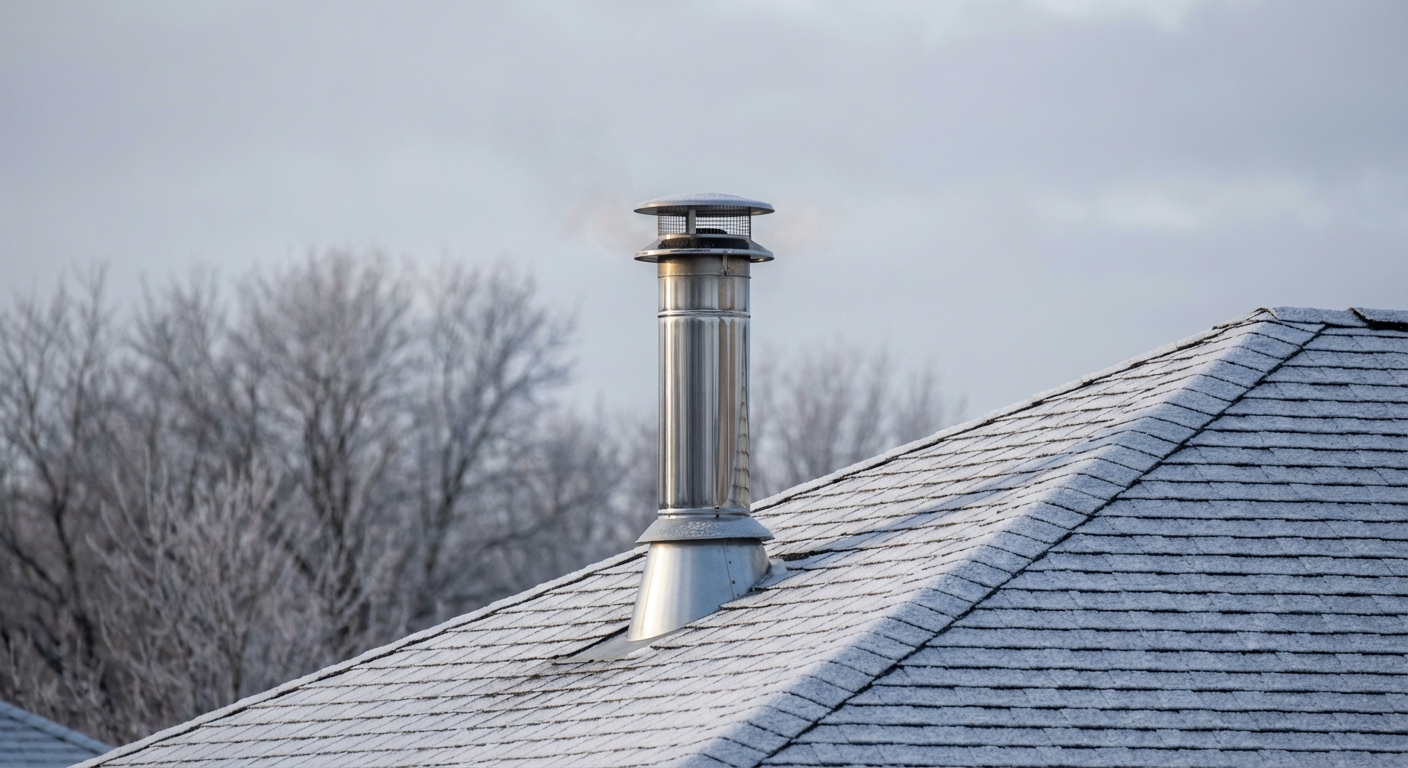
On the EPA listing, compare three fields every time: particulate emissions (g/hr) for how clean it burns, the efficiency metric (preferably HHV efficiency) for how much of the fuel becomes usable heat, and the heat output range for how steady it can run in your real burn cycle. For example, one EPA database entry for a Hearthstone hybrid shows 0.6 g/hr, 12,608 to 33,576 BTU/hr, and 79% tested efficiency, plus an explicit "Yes" for compliance.
That Step 2 baseline is also what makes g/hr a practical shopping filter. Step 2 limits are 2.0 g/hr on the crib-wood test method and 2.5 g/hr under the cordwood compliance pathway; Step 2 took effect in May 2020 and replaced the prior 4.5 g/hr limit.
Lower is not abstract. A certified test report can show, in plain numbers, what you are buying: one documented unit lists 1.3 g/hr particulate emissions with 58% HHV efficiency.
HHV includes the heat of condensation of water vapor in the exhaust, and it is the efficiency format the EPA commonly publishes. The practical rule is simple: compare apples-to-apples, HHV to HHV, or the "better" number is just a math convention.
A catalytic stove stays cleaner and steadier at low burn because the catalyst keeps combustion active after you turn the air down. The tradeoff is maintenance: the catalyst is a wear component that degrades and typically needs replacement about every 4 to 6 years depending on use and fuel quality.
Non-catalytic stoves simplify ownership and start up hard and fast, but they generally need more heat in the firebox to stay clean at the lowest settings. Hybrids split the difference, delivering strong low-burn stability with another component to inspect and maintain.
Moisture content and species swing both heat output and deposit formation. Wet or resin-heavy fuel pushes smoke, clogs baffles and catalysts faster, and makes "low and slow" burns unstable. If you are balancing wood with a mini-split for shoulder seasons, rebate and incentive finder is a practical place to cross-shop that HVAC side without guessing at equipment categories.
Those same published efficiency numbers are also what determine whether a given model can support incentive paperwork, which is why it pays to verify eligibility before you order.
2026 Rebates and Incentives
The federal wood stove credit is gone for 2026 purchases, so incentives now come from state, local, and utility programs. Those programs reward the same thing the federal credit did, a specific qualifying model backed by documentation, so shop the paperwork as hard as the stove. The Energy Efficient Home Improvement Credit (IRC 25C), which covered qualifying biomass stoves at 30 percent of purchase and installation cost up to 2,000 dollars per year, was terminated by the One Big Beautiful Bill Act for property placed in service after December 31, 2025. A stove purchased and placed in service in 2026 does not qualify, so do not let a dealer quote or a payback estimate include it.
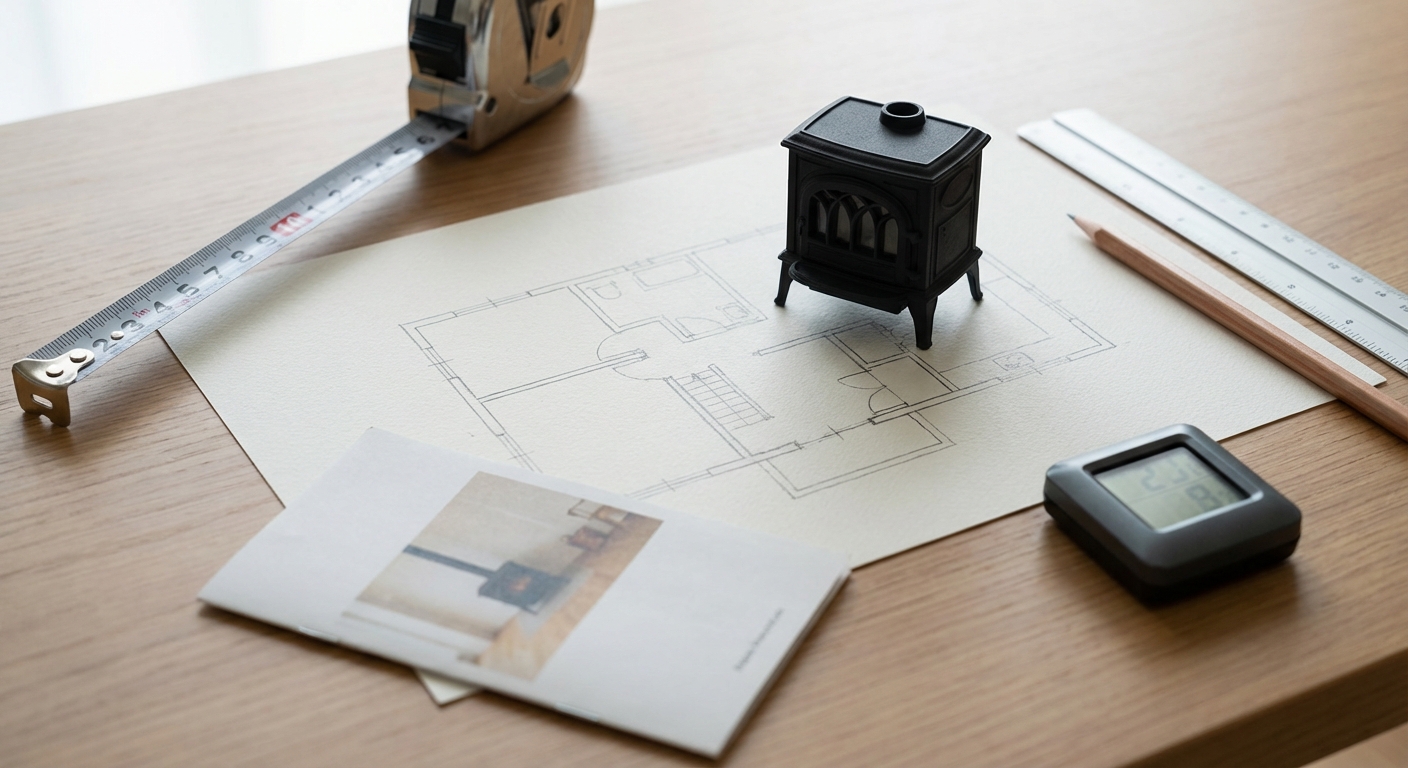
Two stoves with similar names can land on opposite sides of eligibility if their published certification details differ. Most state and utility biomass programs still screen on the benchmark the federal credit used, which was 75 percent HHV efficiency, so verify the specific model against your program threshold using the manufacturer's published documentation for that exact model number.
- Keep an itemized invoice showing the model number(s), installation date, and the total equipment and installation cost.
- Save the manufacturer's certification statement for the installed model.
Check state energy offices, local air-quality districts, and electric or gas utility rebate programs, then apply stacking logic: take each rebate off your out-of-pocket cost in the order the program requires, since some programs cap total incentives at a percentage of project cost. Pricing, billing, and documentation can help you identify location-based offers, but availability and rules are program-specific.
This is not tax advice. Confirm current-year federal and state rules with a tax professional before assuming any incentive.
After you have a short list of models that fit your heat load and can clear both emissions and paperwork requirements, brand choice becomes less about hype and more about long-term ownership.
Top Wood Stove Brands & Smart Alternatives
"Top brands" isn't a popularity contest. Good brands make it easy to verify specs, get parts, and keep the stove running for decades. The friction is that marketing "heats up to" claims vary wildly, warranties can hinge on who installs the unit, and a missing part can park your heat for weeks.
- Verified certified specs: Use EPA listings and the manufacturer spec sheet for particulate emissions (g/hr), HHV %, firebox volume (cu ft), and log length rather than relying on brochure sizing claims.
- Warranty and service network: Confirm who handles claims and where service is performed.
- Parts availability: Ask what's stocked (baffles, glass, gaskets) and confirm catalyst coverage if the stove is catalytic.
- Dealer/installer requirements: Verify whether authorized-dealer installation is required to keep the warranty valid.
- Fit/finish and intended use: Verify the output range matches your target, then choose build quality appropriate for primary heat vs occasional burns.
Quadra-Fire's Discovery II (31M-ACC-C) is easy to sanity-check because the numbers are explicit: 1.9 g/hr, 72.5% HHV, a 1.89 cu ft firebox, and a 16-inch recommended log length. That combination tells you what wood size it actually accepts and whether the firebox volume matches your burn-cycle expectations.
Blaze King's KE40 is the same exercise: verify the 75.3% HHV figure and the reported 2.48 kg/hr burn rate, then cross-check the rest of the fields in the EPA listing and the manufacturer sheet before you buy.
Heat pumps win when you want push-button, whole-home distribution and low maintenance. Gas furnaces win when natural gas is available and you want high-output forced-air heat that recovers fast. Wood wins as supplemental or backup heat when resilience matters, you have reliable fuel access, and "zone heat" is the point. If you pivot away from wood, read customer reviews is a straightforward place to compare whole-home HVAC equipment.
The final step is to turn all of those decisions-sizing, certified specs, installation realities, and incentive documentation-into a quick checklist you can use while comparing quotes.
Summary + Buyer Checklist
If you confirm three things-model specs, an installation plan, and documentation-you avoid almost every common buying mistake. Wrong specs means weak heat, a weak install plan creates safety and cost surprises, and missing records can cost you a rebate.
- Emissions rating (g/hr) from the EPA listing or manual.
- HHV efficiency (%) and whether it meets the threshold for any state, local, or utility program you plan to use, since the federal 25C credit ended for systems placed in service after December 31, 2025.
- Clearances, hearth R-value requirement, flue size, and the manufacturer heating area or BTU range.
- Permits and inspection path, plus confirmed clearances, hearth specs, and flue compatibility for your exact model.
- Fuel supply plan and an NFPA 211 annual inspection of chimneys, fireplaces, and vents for soundness, freedom from deposits, and correct clearances.
- Keep receipts and installation paperwork, plus the manufacturer certification statement, and file them with whichever state, local, or utility program you are claiming.
This is the same "total project" approach from the start of the guide: ignore broad "heats up to" claims, verify certified ranges against your heat loss, and make sure the install and paperwork are viable before you buy. Compare a few qualifying stoves, request install quotes, and plan your buy window; check rebates before you buy can help you price and source the equipment.
Wrapping Up
Buying a wood burning stove in 2026 works best when you treat it as a full system decision, not a quick product pick based on "heats up to" claims. Start with sizing based on your home's real heat loss and airflow, then validate each model using EPA-certified output ranges, emissions in g/hr, and apples-to-apples efficiency numbers like HHV.
From there, narrow your options by what you can actually install and support long term: clearances, hearth and flue requirements, permits, and parts and service availability, especially if you choose catalytic or hybrid designs. If you are counting on state, local, or utility rebates, confirm eligibility for the exact model number and keep the right documentation, and be aware that the federal 25C credit no longer applies to stoves placed in service in 2026.
Now take your target BTU range and short list of qualifying models, then compare a few installation quotes so you can choose a stove that heats cleanly, fits your home, and stays predictable for years.
 Cooling
 Learning Center
 Product and Brands Insights
 State by State
 HVAC Systems