




 buying guides
 hvac systems
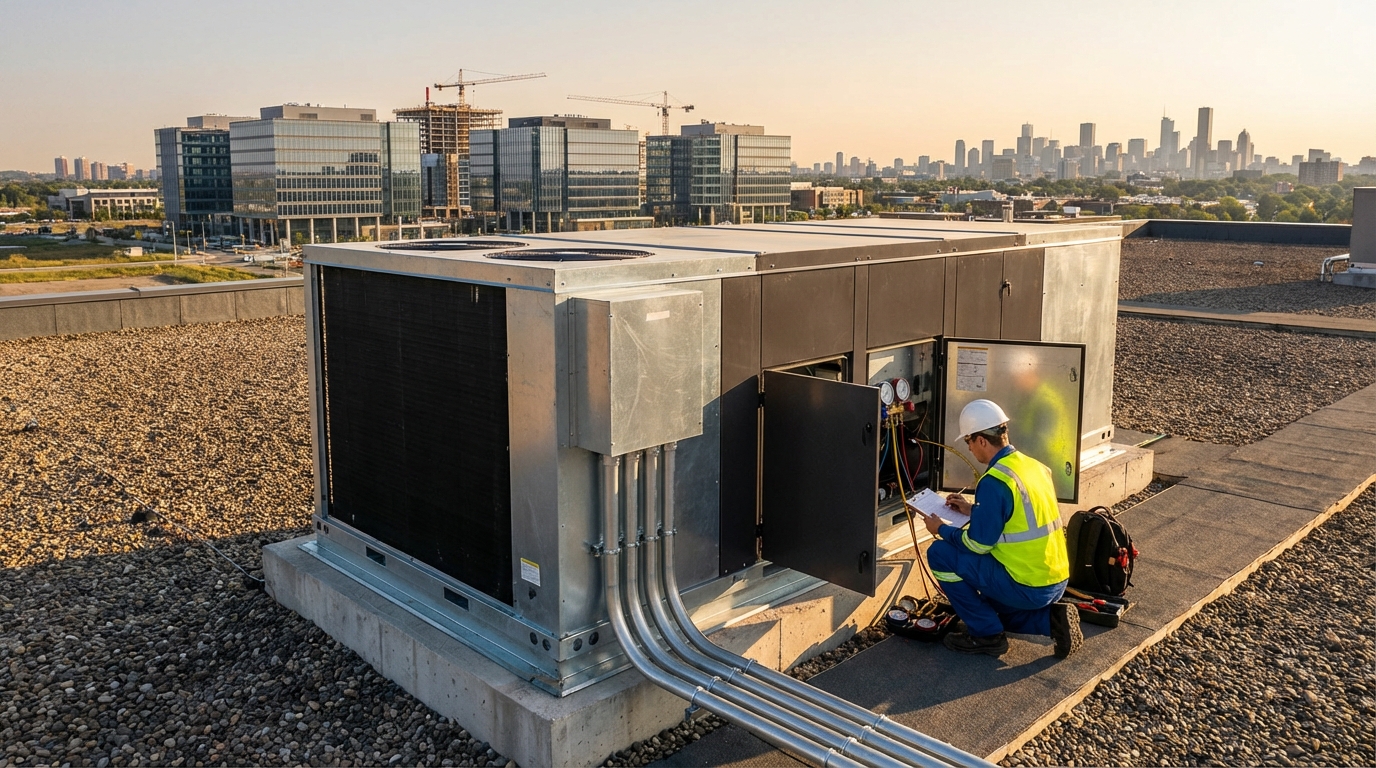
When you're replacing or selecting a light-commercial unit, the buying process turns into a mess fast: spec sheets that read like code, roof and curb constraints that don't match what's on the quote, and proposals that look "equivalent" until you notice a different power feed, control option, or efficiency label.
That confusion hits harder because downtime costs money. Comfort complaints stack up, tenants escalate, and every day you wait is another day you're paying for temporary fixes instead of a permanent replacement.
A packaged rooftop unit (RTU) simplifies replacement and specification because the equipment ships and installs as a single cabinet with predictable interfaces, and that reduces the number of moving parts in the order. The catch is that the "simple box" still fails if you miss curb compatibility, electrical requirements, heat section selection, controls integration, or the compliance labels your job expects. Packaged units typically cover about 3 to 25 tons, which is exactly where mismatched bids are common.
Unlike a split system that separates indoor and outdoor sections, packaged units keep the system in one cabinet. The buying guide video shows you how to read the spec sheet, which configuration choices actually change the unit, and what details must be confirmed before ordering. Expect wholesale-style pricing that often lands around 30 to 40% off list, with cost driven by configuration and specs, not just tonnage. You'll walk away knowing the right configuration to choose and the specs to verify so the unit fits and performs.
Packaged Unit Basics
Once you've decided a packaged unit fits the building, type selection comes down to heating strategy. The heat option you choose dictates how the unit behaves in winter, what utilities must be present, and what service skillset you're buying into.
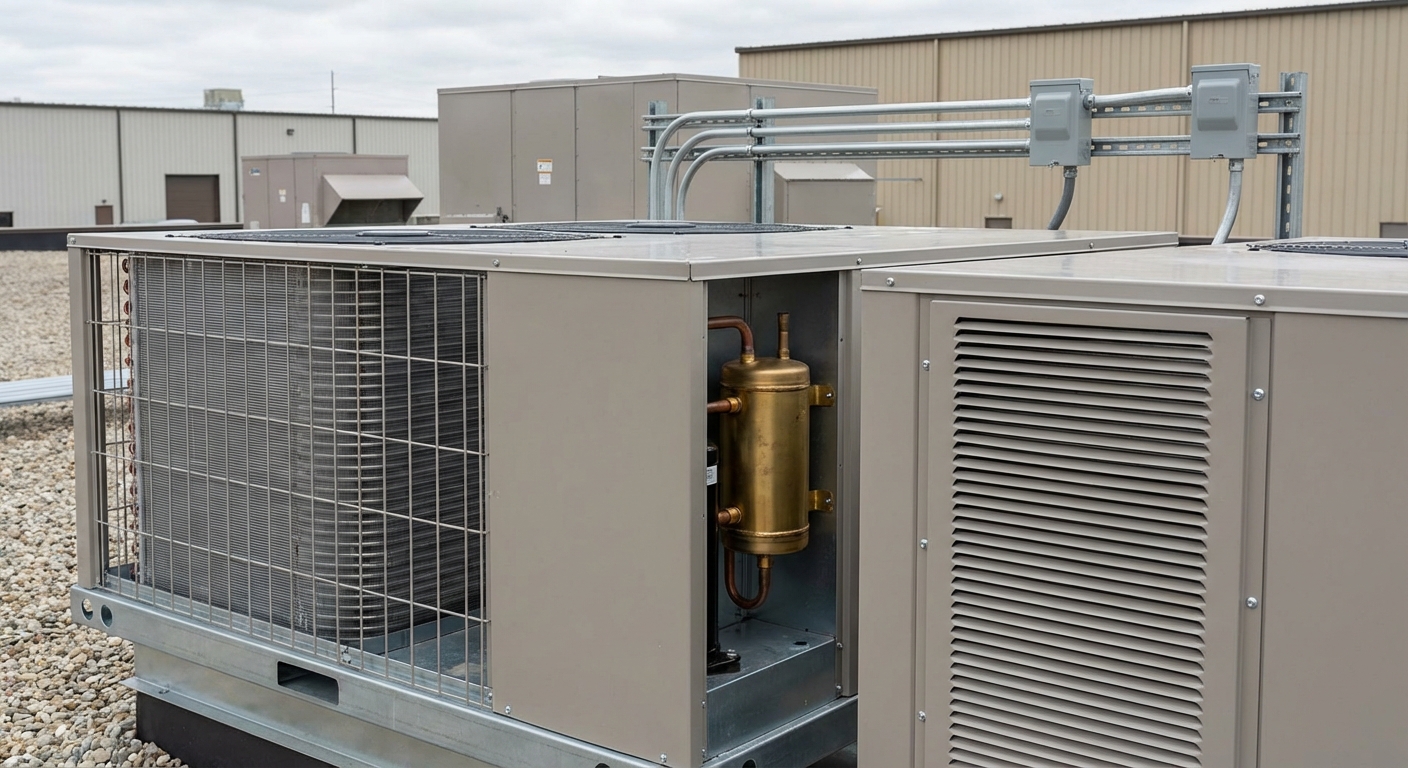
Packaged A/C with electric heat pairs standard mechanical cooling with electric resistance elements for heat. The advantage is straightforward troubleshooting: resistance heat is either on or off, with no combustion setup to tune. The friction is electrical demand: resistance heat requires high amperage and enough panel capacity to feed the heat section, not just the compressor and fans, so "fits on the roof" can still fail at the electrical service.
A packaged heat pump heats by moving outdoor heat indoors (it does not "make" heat with elements during normal operation). The catch is cold-weather behavior: when the outdoor coil frosts, the unit enters defrost by temporarily reversing refrigerant flow, and auxiliary electric heat is commonly enabled to keep supply air from going cold. If you can support the auxiliary electrical load, you get all-electric heat with predictable heat-pump operating cycles.
Gas/electric packaged units deliver heat through a gas burner section and cool through a conventional refrigeration circuit. The tradeoff is infrastructure and compliance: you need a compatible natural gas or LP supply plus combustion and venting requirements that meet applicable code, and service has to cover burners, ignition, flame-sensing, and safeties, not just refrigerant.
Don't treat split and packaged as interchangeable "boxes." A split heat pump system is two sections: an outdoor unit (compressor/condenser) and an indoor unit (air handler/evaporator coil) connected by a refrigerant line set. If the job was designed around that separation, forcing a packaged unit changes piping, placement, and service access assumptions.
"Dual fuel" typically means a split-system heat pump paired with a gas, propane, or oil furnace (hybrid). In practical control schemes, the furnace generally supplements when the heat pump is off, rather than both heating at the same time. Use the term precisely, or you'll order the wrong architecture.
Selection stays simple: if gas is available and you want gas-heat service expectations, choose gas/electric. If the site is all-electric, choose a commercial packaged heat pump when you can accept defrost and auxiliary heat behavior, and choose a packaged heat pump with backup heat strip when simplicity matters and the electrical service can carry the heat load.
How to Size a Commercial Packaged Unit
The heating choice sets the equipment type, but sizing decides whether it will actually perform once it is tied into real ducts, real ventilation requirements, and real building loads.
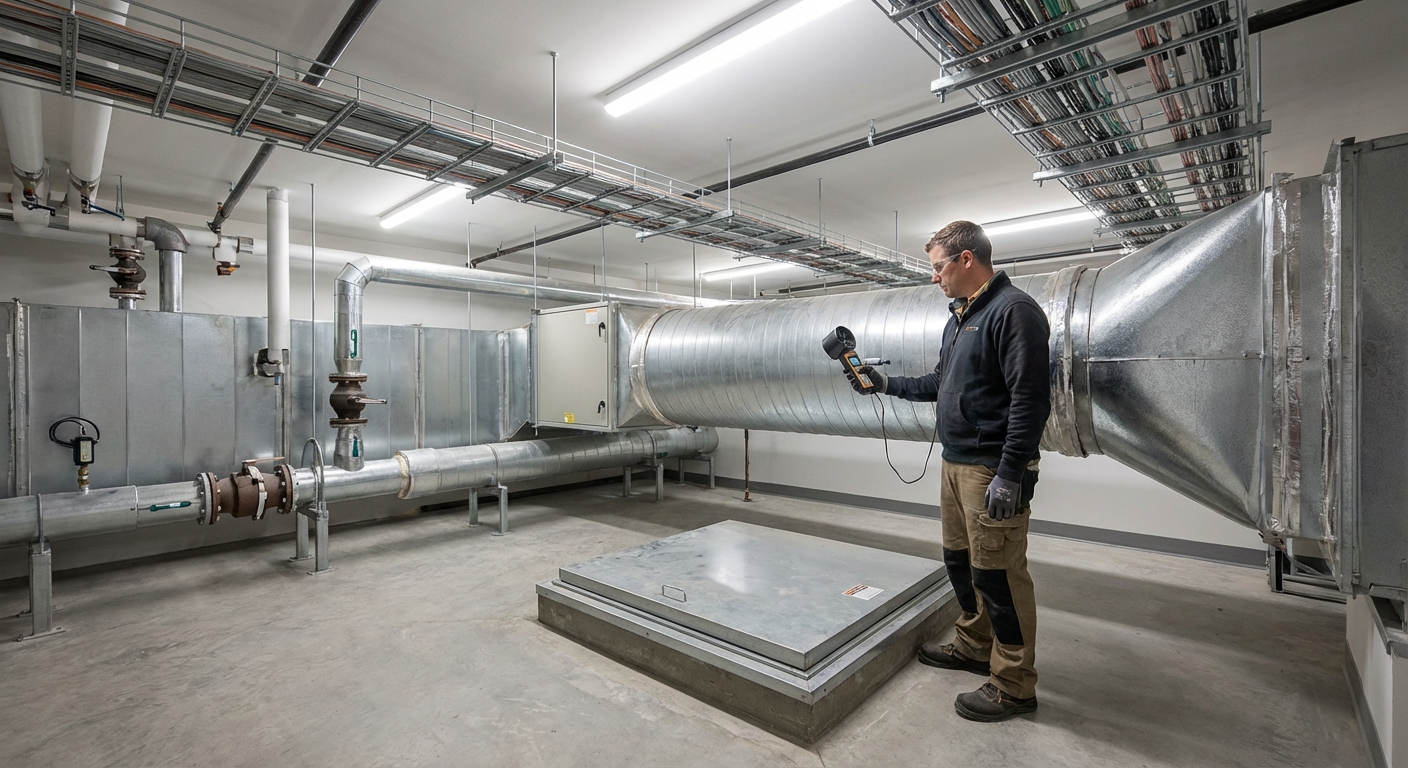
Most packaged-unit complaints trace back to two misses: the load was guessed, and the rated airflow never shows up at the diffusers. The result is predictable engineering fallout: hot and cold spots, humidity problems, short cycling, and higher kWh per delivered ton.
Correct sizing is a load-calculation problem first, and a "tonnage number" second—use quick sizing guidance as a check, not a substitute. ACCA Manual N is the recognized light-commercial load method because it forces the inputs that actually drive capacity: envelope conditions, ventilation, and internal gains. Manual N explicitly includes internal heat sources like lighting power, plug loads, machinery, and occupant density, which routinely dominate in retail, offices, kitchens, and high-density spaces.
Light commercial often lands in common packaged sizes, but the band depends on use: many applications fall around 3 to 10 tons. Real-world examples cluster by occupancy, such as offices commonly landing around 6 to 10 tons and restaurants around 8 to 10 tons.
Use 350 to 450 CFM per ton as a starting point, then expect it to move. Buildings with higher latent load, higher required outdoor air, or a specific sensible delta-T design will drive required CFM away from the default.
External static pressure (ESP) is the resistance the blower must overcome, and it decides whether your "10-ton" unit delivers 4,000 CFM or something far less. Require a blower performance check against the manufacturer's fan tables at the job's expected ESP. If the fan cannot hit target CFM at that static, comfort and operating cost get punished immediately.
ASHRAE 62.1 sets minimum outdoor air by occupancy, expressed as CFM per person and/or CFM per square foot, and that outdoor air load shows up directly in tonnage and moisture control. Demand-controlled ventilation (DCV) is permitted to adjust outdoor airflow based on actual occupancy, which changes the load assumptions the equipment selection must satisfy.
- Require a documented Manual N load summary (sensible, latent, and ventilation components called out).
- Confirm target supply airflow (CFM) tied to the load, not a rule-of-thumb tonnage pick.
- Verify expected ESP and the blower's delivered CFM at that static using manufacturer performance data.
- Document the ventilation assumption (ASHRAE 62.1 rate basis and whether DCV is assumed).
Efficiency, Refrigerants, and Controls
After load and airflow are locked, the remaining differences between "equivalent" bids show up in ratings, refrigerant choice, and how the unit will actually be controlled in the field.
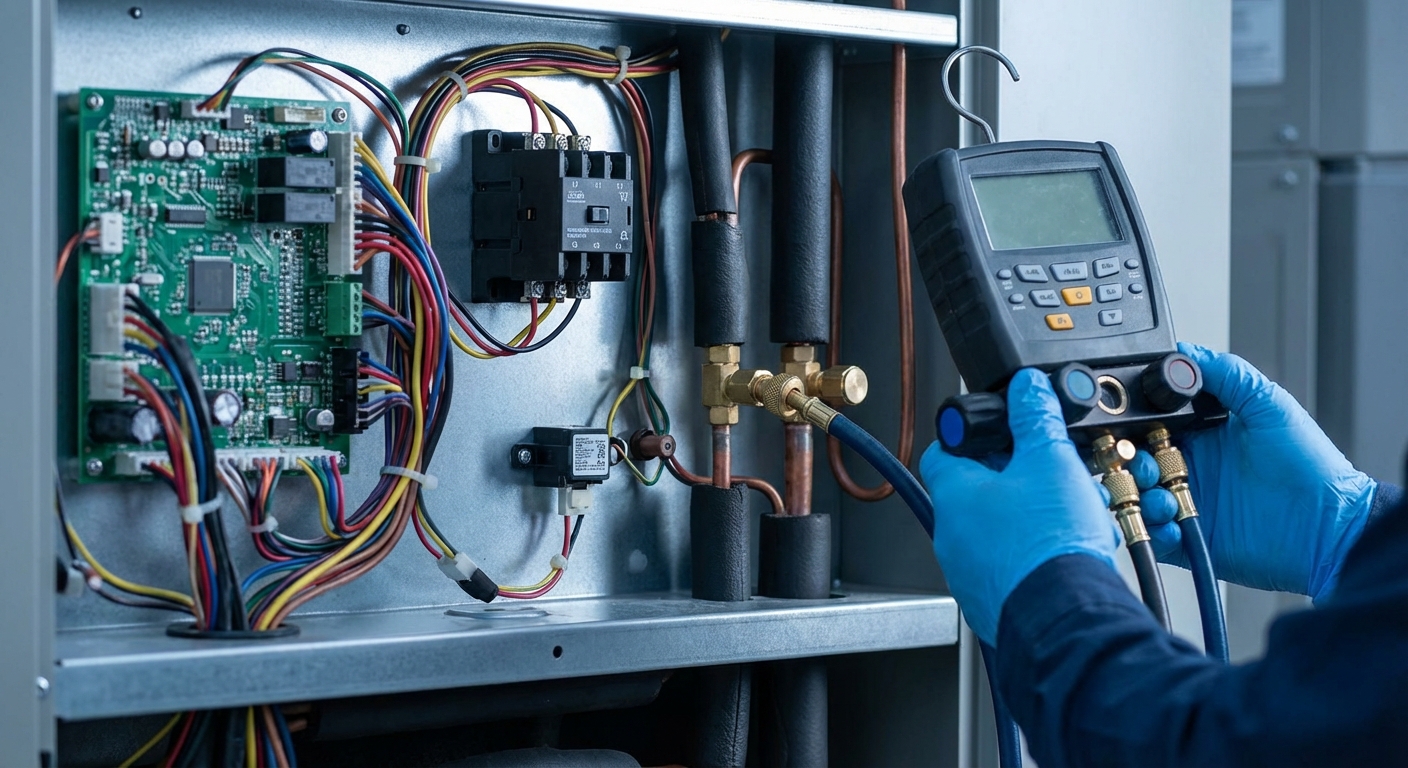
In 2026, spec literacy is cost control. A packaged unit that looks "high efficiency" on a cut sheet can be a bad buy if the rating number does not match the equipment class you are actually installing, or if the refrigerant and controls create jobsite friction that shows up at inspection and commissioning.
Compare commercial unitary and rooftop units on IEER (Integrated Energy Efficiency Ratio), because it is the part-load metric commonly used for commercial unitary/RTUs and it tracks how the unit runs for most of the year. Part-load dominates annual kWh in real buildings, so a stronger IEER usually beats a flashy full-load number on operating cost.
For smaller unitary equipment, SEER2 and EER2 cover cooling efficiency and HSPF2 covers heating efficiency on heat pumps. Match the metric to the unit class and the applicable AHRI test standard before you start comparing "better" and "worse."
U.S. DOE minimum efficiency updates effective Jan 1, 2023 remain the baseline reference point. Your submittal package should state the unit meets or exceeds the required minimum for its category and region, not just list a rating number in isolation.
Treat "meets or exceeds specified efficiency levels" as a pass/fail compliance line item in your review, then use efficiency ratings to rank the remaining options.
The EPA AIM Act phasedown pressure is pushing lower-GWP refrigerants such as R-32 and R-454B. Many lower-GWP refrigerants are A2L, so confirm A2L labeling and any applicable safety and code requirements directly on the nameplate and in the submitted documentation before the unit hits the roof.
UL Solutions publishes A2L installation and inspection checklists; use that mindset when you review submittals, because labeling gaps cause avoidable inspection delays.
Controls are where "efficiency" turns into fewer run-hours. Economizers reduce compressor time when outdoor air can do the cooling; staged heating cuts cycling and overshoot in shoulder seasons; variable-speed blowers reduce fan energy and smooth temperature swings when loads are light.
- Record the metric (IEER for commercial unitary/RTUs, or SEER2/EER2/HSPF2 for smaller unitary) exactly as listed on the submittal.
- Confirm minimums compliance with a clear "meets or exceeds" statement for the correct DOE category and region (Jan 1, 2023 baseline).
- Verify refrigerant and A2L labeling on the nameplate and submittal, including any stated safety/code notes tied to A2L.
- List the controls (economizer, staging, variable-speed airflow) that reduce real compressor, heat, and fan run-hours.
Choosing Between Packaged Units vs Split Systems and Mini Splits
Those spec details still sit inside a bigger decision: which system architecture the building can actually support without turning service access and zoning into a constant fight.
Choose the wrong HVAC architecture and you will fight comfort complaints, access headaches, and repeat service calls for years. System selection is a building-operations decision, not a catalog decision: match the layout, service access, zoning needs, and disruption tolerance first, then worry about headline ratings.
Packaged rooftop units (RTUs) keep most equipment outside the occupied space, which minimizes interior disruption compared with indoor equipment. They win in open retail and warehouses where one large zone is the real requirement, in straightforward replacements where existing roof curb, ducts, and electrical are already in place, and in tenant spaces with no practical mechanical room to give up.
Split systems (outdoor plus indoor sections) make sense when roof access is poor, when acoustics matter, or when the interior layout fights a single ducted zone. They also support better temperature zoning for offices, clinics, or retail layouts where east-facing glass, interior exam rooms, and back-of-house loads should not share one thermostat.
Ductless mini splits win when zoning is the whole point: additions, perimeter offices, conference rooms, and tenant build-outs that change every lease cycle. If you cannot justify duct reroutes or ceiling demolition, zone-by-zone indoor heads keep disruption and controls localized.
First: is variable-capacity (VC) on the table? VC equipment provides enhanced energy efficiency and improved customer comfort compared with conventional fixed-speed equipment. Ask for the capacity modulation range, control compatibility (thermostat, zoning, BAS integration), and documented part-load performance, because that is where most buildings live.
Second: what is the installation reality? DIY mini split marketing often omits labor time, hidden costs, and warranty or approval nuances. Verify the unit is suitable for commercial use and confirm warranty terms before you plan around "DIY."
Decision rule: pick the system by zoning, serviceability, and disruption tolerance first; then specify VC capability and controls that match how the space is actually used (see mini splits vs traditional ducted HVAC for the tradeoffs) and supported by your supplier, such as Budget Heating's inventory and technical support.
Buying Checklist
Once the architecture is set, the risk shifts from "did we choose the right type?" to "did we order the exact unit that fits the roof, utilities, and controls already on site?"
The order is only "right" if it fits the roof, power, gas, and controls, then arrives with documented condition. Most expensive mistakes happen after the model is picked: curb and duct misalignment, wrong voltage/phase, missing fuel conversion parts, or signing freight paperwork that kills a damage claim.
- Roof and duct fit-up: Confirm roof curb dimensions, curb-adapter compatibility, supply/return opening locations, and the unit footprint and weight for structural review.
- Electrical: Photograph the nameplate and capture voltage/phase/Hz plus Minimum Circuit Ampacity (MCA) and Maximum Overcurrent Protection (MOCP/MOP). MCA sets the minimum conductor ampacity; MOCP sets the maximum breaker or fuse protection allowed, so your electrician sizes conductors and overcurrent protection from the nameplate, not "typical" assumptions.
- Gas/electric specifics: Confirm gas type. Many packaged furnaces and gas/electric units ship factory-equipped for natural gas; propane/LP requires the manufacturer conversion kit, ordered separately.
- Controls and interfaces: Verify thermostat or controls compatibility and any required accessories (economizer interface, sensors, harnesses), including heat strip installation and accessory requirements.
Orders typically ship within 2 to 3 business days after payment (excluding weekends and holidays). At delivery, pick one: (1) accept without noting damage, (2) note damage on the delivery receipt and accept, or (3) refuse shipment. Startup and IOM paperwork routinely requires the installer to verify shipping condition, so treat receiving documentation as install-critical.
In-store pickup is available at select locations during checkout.
Use Budget Heating's Request a Quote page: https://www.budgetheating.com/request-a-quote/. If the form gives you trouble, email admin@Budgetheating.com or call 813-885-7999.
Compile a one-page spec pack (nameplate with MCA/MOCP, curb and duct openings, and controls requirements) before ordering.
Summary
The right packaged-unit configuration, backed by disciplined pre-install verification, prevents avoidable downtime and expensive rework.
Choose cooling-only, heat pump, or gas/electric based on the building's heating strategy, then size from the documented load and the airflow your system can actually deliver at available ESP. Compare efficiency using the correct metric for the equipment class (IEER where applicable), verify the nameplate refrigerant and A2L labeling, and confirm curb, electrical, gas, controls, and receiving paperwork before the unit lands.
Close the loop with permits and code checks (including economizer mandates where applicable and A2L compliance), and keep submittals, the IOM, and the startup checklist on site for inspection and warranty; manufacturer startup forms explicitly include checks like visible shipping damage and verifying the unit is level, and UL Solutions publishes checklists that support safe installation and inspection of systems using A2L refrigerants.
For 2026, rebates are typically utility, state, or program-driven, and ENERGY STAR's searchable tools help pinpoint local commercial incentives by class and efficiency tier; request a commercial quote at /request-a-quote/ and run your project through HVAC education resources at /Rebate-Center-s/2172.htm or /rebate-center/.
Wrapping Up
Choosing a commercial packaged rooftop unit should feel straightforward, but the details decide whether the replacement goes smoothly or turns into costly downtime. This guide walked through the core options, A/C with electric heat, packaged heat pumps, and gas electric units, then showed why proper sizing starts with a documented Manual N load and must be confirmed with real delivered airflow at the job's external static pressure.
It also highlighted where "equivalent" bids commonly fall apart: using the right efficiency metric for the equipment class (often IEER for RTUs), verifying refrigerant type and A2L labeling, and matching controls and accessories to the way the building is actually operated. Finally, it reinforced the practical fit checks that prevent expensive surprises, curb and duct alignment, nameplate electrical requirements, gas details when applicable, and careful receiving documentation.
Take the next step by assembling a simple spec pack and confirming fit, utilities, and controls before you place the order.
 Cooling
 Heating
 Learning Center
 Money Saving Tips
 Product and Brands Insights
 State by State