




 cooling
 learning center
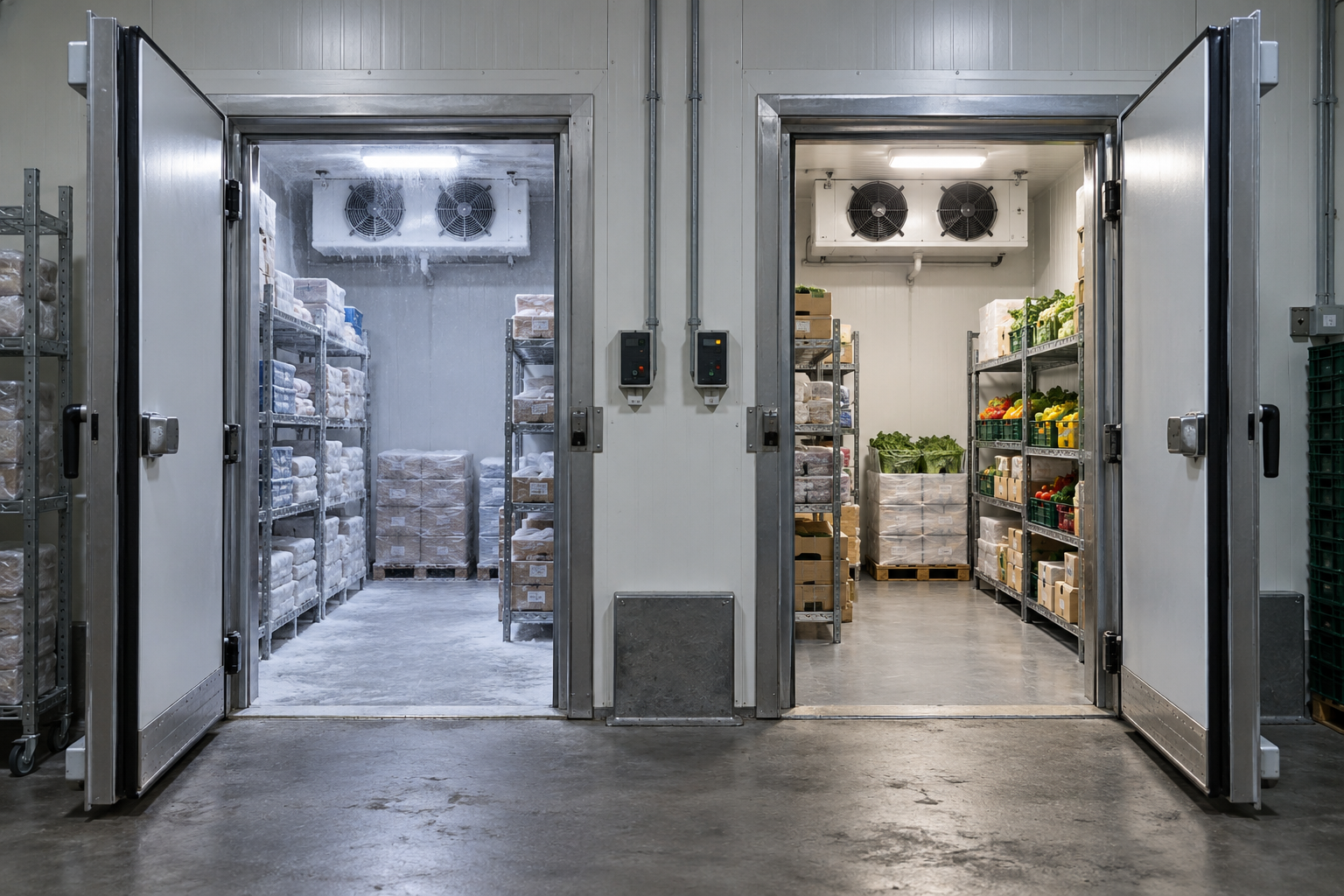
Stopping refrigeration may not melt frost on a coil surrounded by below-freezing air. A walk-in freezer evaporator must cool that space and clear frost under those conditions. A walk-in cooler evaporator serves an above-freezing space and may use a simpler defrost arrangement if the coil can warm enough to shed frost. The choice therefore turns on the required operating temperature, how the unit handles defrost, and whether its rated capacity and components match the rest of the refrigeration system.
How does operating temperature change the evaporator’s job?
The first distinction is the temperature each unit is designed to maintain. Heat passes from room air into a colder coil; the refrigerant's evaporating temperature is therefore different from the box temperature.
| Selection point | Walk-in cooler evaporator | Walk-in freezer evaporator |
|---|---|---|
| Application | Above-freezing, medium-temperature duty | Below-freezing, low-temperature duty |
| Coil operating condition | Selected for the cooler's required evaporating temperature and load | Selected for the freezer's lower evaporating temperature and load |
| Frost control | Off-cycle defrost can be suitable when the coil can warm enough to clear frost | Usually needs a defrost method that supplies heat while the box remains below freezing |
| Capacity comparison | Compare ratings at the intended operating conditions, then match the evaporator to the load and condensing unit | |
Evaporator temperature difference, often abbreviated TD, is the difference between box temperature and the refrigerant's saturated suction or evaporating temperature at the coil. It affects how much heat the evaporator can absorb. A box setpoint alone does not tell you the coil's operating condition, so a label such as "cooler" or "freezer" is a starting point, not a complete specification.
Why do freezer and cooler evaporators need different frost control?
Moisture carried by room air can freeze on a sufficiently cold coil. As frost builds, it restricts airflow through the fins and reduces heat transfer. A freezer's colder operating duty makes reliable frost removal particularly important, but a cooler coil can frost too.
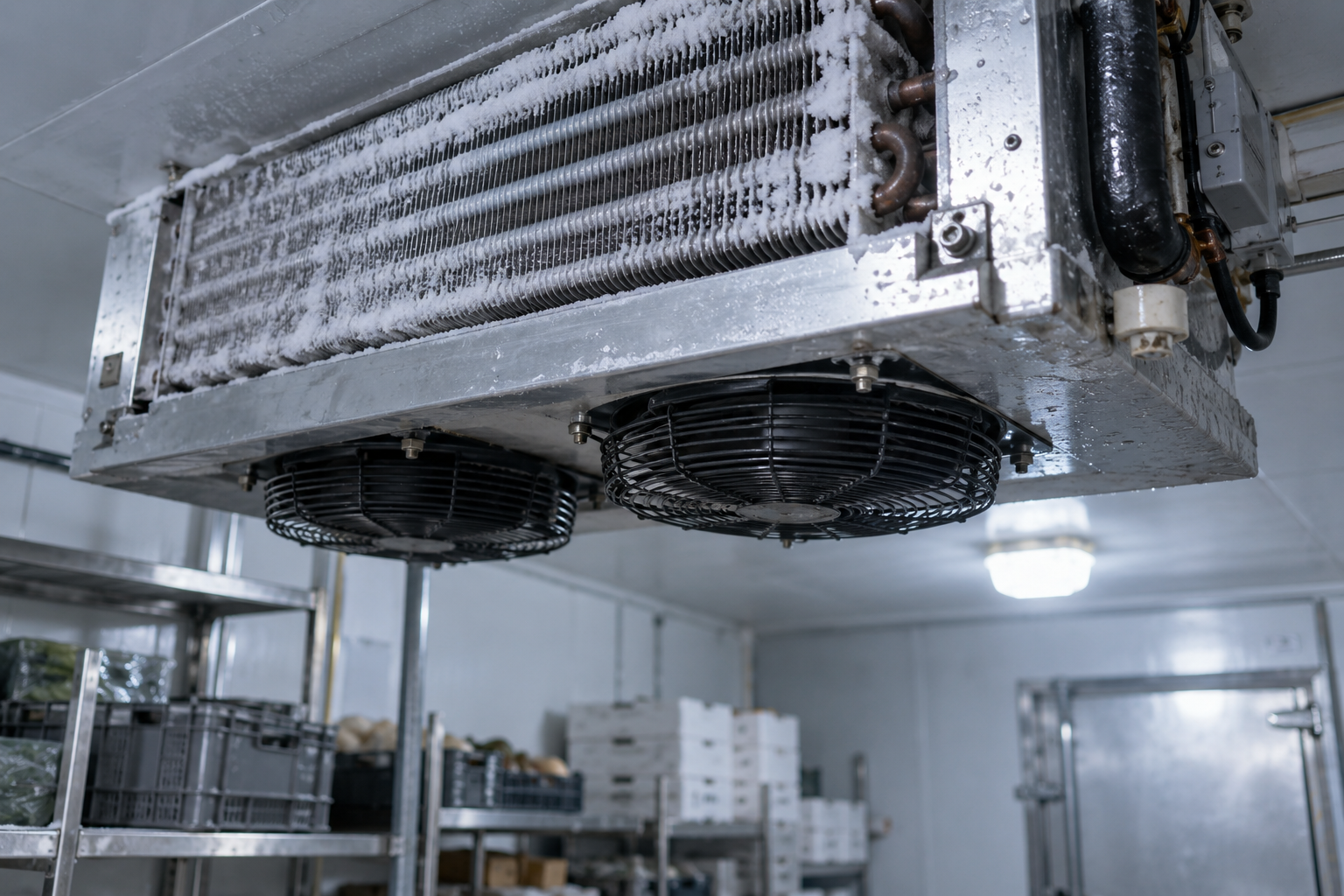
With off-cycle defrost, refrigeration stops and the coil warms enough for frost to melt. This is an option for some cooler applications, not a feature of every cooler evaporator. It cannot be assumed to clear a coil surrounded by below-freezing air: stopping refrigeration does not itself provide enough warmth to melt the frost.
With electric defrost, heaters warm the coil. The arrangement needs controls appropriate to the unit for starting and ending defrost, allowing meltwater to drain, and restarting the fans. For example, the Heatcraft controller documentation describes a freezer sequence in which fans restart after the drip period only when the coil has cooled; that sequence should not be assumed for every controller.
With hot-gas defrost, the refrigeration system supplies heat to the evaporator rather than relying on electric coil heaters. It requires a compatible system design, piping and controls, not simply an evaporator described as hot-gas capable. Heatcraft's HEM0735BY6HMAB0000 listing, for example, identifies hot-gas defrost while listing controls and accessories separately.
Meltwater must also leave the unit without refreezing in the pan or drain. Depending on the model and installation, a freezer application may call for pan heat, drain-line freeze protection and fan-delay controls. These details belong in the selected unit's installation and control instructions; the defrost method alone does not specify every accessory.
Why isn’t the stated capacity enough to compare units?
A stated BTU-per-hour capacity is meaningful only alongside its rating conditions. Evaporator output changes with refrigerant, saturated suction temperature and TD. A cooler rating and a freezer rating, even if the printed capacities are equal, do not show that the units deliver equal output at the same operating point. Heatcraft's performance guidance separates medium- and low-temperature ratings and provides corrections for different saturated suction temperatures.
Compare each candidate's published capacity at the refrigerant and operating conditions planned for the box, then compare that capacity with the calculated refrigeration load. Check the condensing unit's capacity at its corresponding design conditions as well. A larger headline evaporator rating cannot compensate for a condensing unit that cannot serve the load at freezer conditions.
Some product families publish separate cooler and freezer ratings; others identify a unit for one duty only. Use the rating and application designation for the exact model rather than transferring a number from another size or configuration. That distinction matters when comparing units that look similar but have different coils, airflow or defrost equipment.
What must match the condensing unit and controls?
The evaporator and condensing unit must operate as a pair at the intended box and design conditions. Start with the required temperature and load; compare both units' capacities at those conditions; then check the components and controls needed to make that pairing work. Heatcraft's selection guidance addresses capacity balancing, expansion devices, electrical loads and defrost requirements.
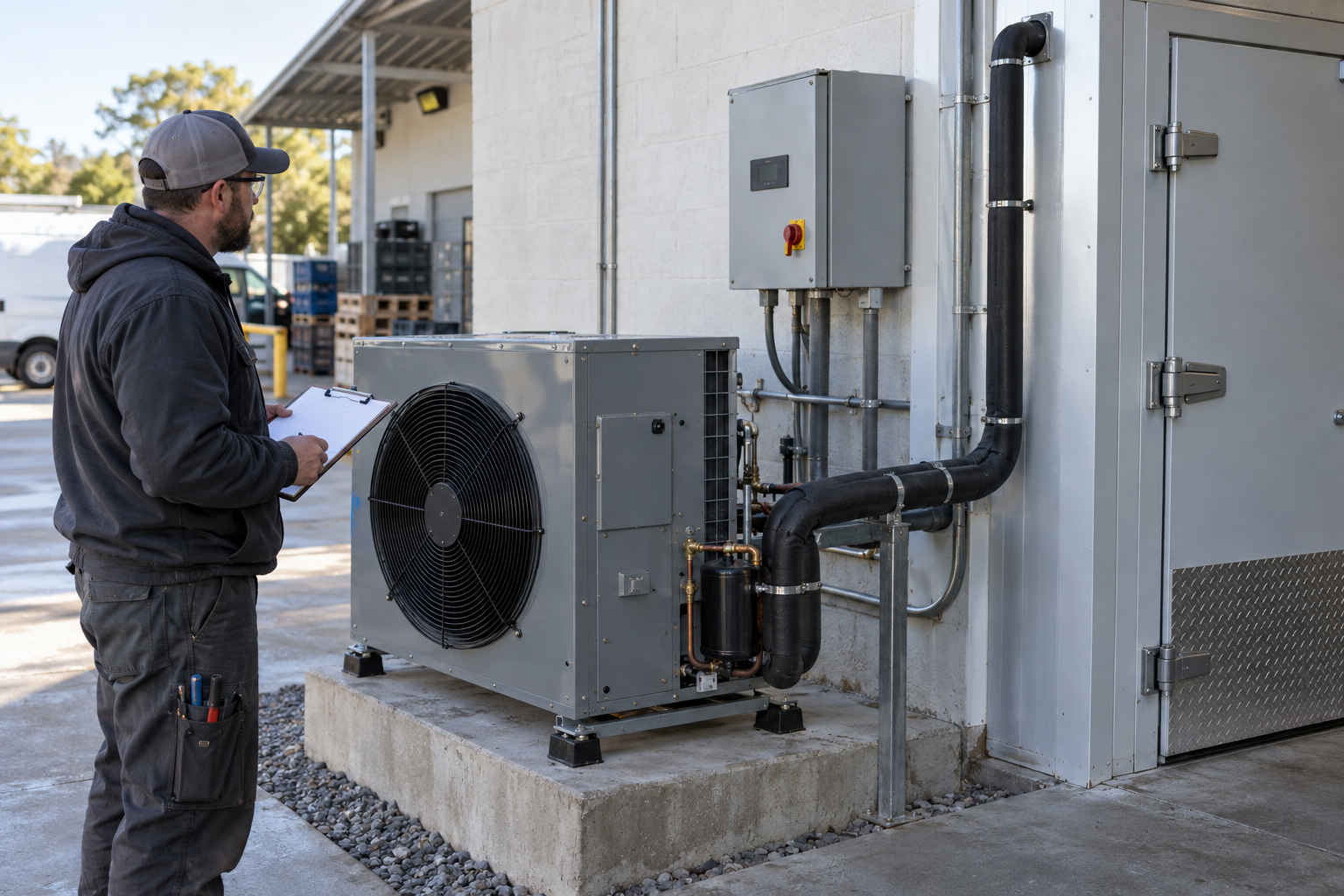
Confirm the specified refrigerant and expansion device, along with the evaporator's electrical supply and load. Next, check that the defrost initiation and termination controls, fan operation and any heaters or valves suit the chosen method. Mounting and airflow requirements also matter: an otherwise appropriate coil cannot perform as rated if its installed airflow is obstructed.
Adding heaters or changing a defrost timer does not automatically turn a cooler-only evaporator into a freezer unit. Its low-temperature capacity, refrigerant metering, airflow and permitted application still have to suit freezer operation. Conversely, choosing a low-temperature unit solely because it includes more defrost hardware does not establish that it is properly matched to a cooler system.
Budget Heating's evaporators for freezers and coolers category is a place to explore options. For any unit under consideration, use its individual specifications and installation instructions to establish its duty, required components and compatibility before ordering.
Which evaporator should you choose?
Choose for the intended box temperature and load, then select an evaporator rated for that duty with a suitable defrost arrangement and a verified match to the condensing unit and controls. A cooler evaporator is not a freezer substitute merely because its nominal capacity looks sufficient; the rating conditions and complete system configuration must fit the application.
 Heating
 Money Saving Tips
 Product and Brands Insights
 Buying Guides
 State by State
 HVAC Systems