




 hvac systems
 learning center
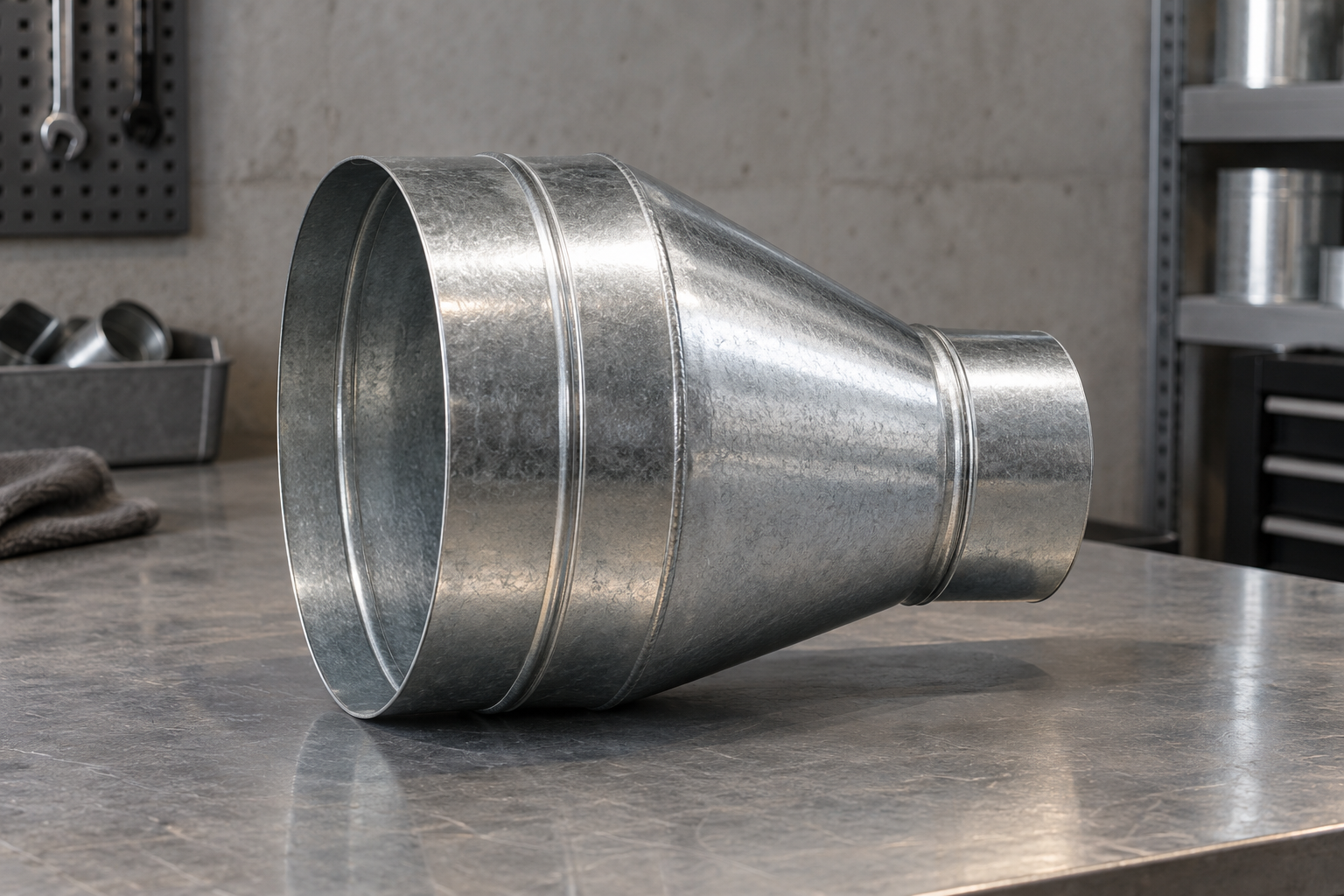
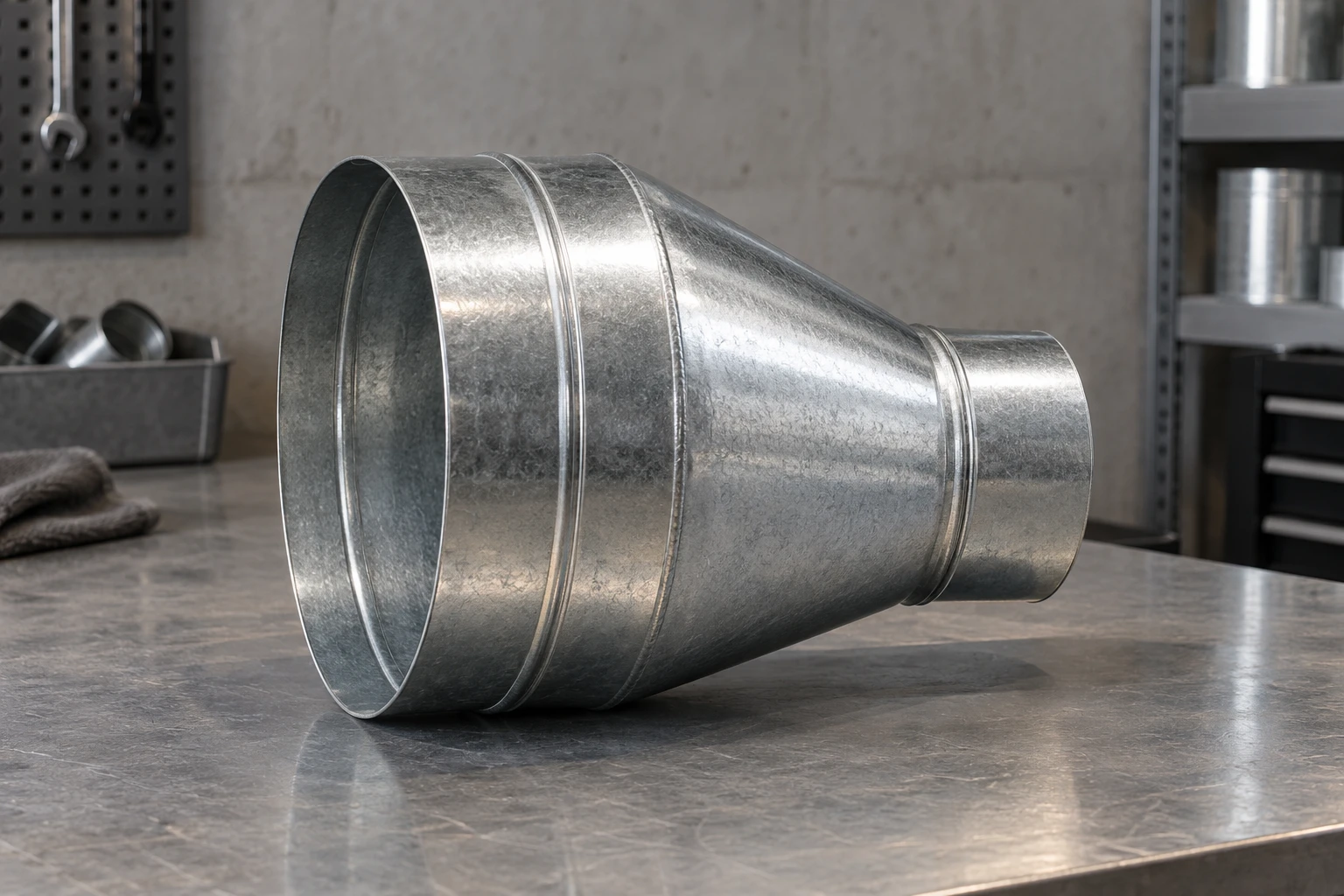
A round duct reducer joins two different duct diameters. Downsizing hurts airflow when the narrower fitting and downstream duct add enough resistance to limit what the blower can deliver. At a given CFM, air moves faster through the smaller opening, but faster-moving air is not more air. The effect on delivered airflow depends on how much air the run carries, the transition's shape, the downstream ductwork, and blower performance.
What Changes When Round Duct Diameter Shrinks?
Round duct cross-sectional area increases with the square of its diameter. Airflow in cubic feet per minute (CFM) equals that area multiplied by average air velocity, with consistent units. If the same CFM passes through a smaller opening, duct velocity must rise because there is less area for the air to cross.
For example, a 10-inch round duct has about 69% of the area of a 12-inch round duct. If CFM stays constant, average velocity in the 10-inch section is about 44% higher. This is a geometry comparison, not a recommendation to use either diameter: once a real system's resistance changes, its blower may deliver a different CFM.
That distinction matters when a smaller outlet feels forceful. The local air speed may be higher even while the total volume reaching the rooms has stayed the same or fallen. A reducer does not create airflow; it changes the passage through which the system attempts to move it.
How Does a Reduction Affect Pressure and Delivered Airflow?
A contraction adds fitting resistance as air passes from one diameter to another. The smaller duct beyond it can add more resistance through friction, particularly when a long run carries substantial CFM. The ASHRAE duct-design guidance treats fitting loss as dependent on geometry and flow conditions; the two diameters alone do not specify the pressure loss.
The blower responds to the resistance of the entire supply and return system, not just one fitting. Adding resistance changes its operating point and can reduce delivered airflow. How much it changes depends on the blower's performance and the resistance already present; a percentage increase in velocity calculated at fixed CFM is not a predicted percentage change in actual airflow.
A short reduction at a connection therefore has different consequences from reducing a long main run that must still carry the same air. In the latter case, the smaller duct continues to impose friction after the transition. Duct sizing must account for both the fitting and the run, along with the equipment's available airflow and pressure capacity.
Why Can a Smaller Transition Make Ductwork Noisier?
Higher velocity can increase air-generated sound, while abrupt changes in area or direction disturb the flow and create turbulence. A reducer's fitting resistance and pressure drop can contribute to ductwork noise, but the sound heard in a room is not necessarily generated by the reducer alone.
Location matters. Disturbed air entering a nearby register or damper can contribute to outlet noise; placing transitions and other fittings close together can compound flow disturbance. ASHRAE's sound-control guidance addresses the influence of outlet conditions and nearby components.
A reasonably placed transition into a properly sized smaller branch may be quieter than pushing substantial airflow through a long, undersized run. A gentle-looking fitting, however, cannot eliminate the velocity and friction effects of a downstream duct that is too small for its assigned airflow.
When Is a Round Duct Transition Appropriate?
A round duct transition makes sense where the designed duct sizes genuinely differ: at a component connection, for example, or after a branch has taken some airflow from a trunk. Reducing a main run before its airflow has decreased is a different choice. Before the branch takeoff, the smaller section must still carry the airflow destined for that branch as well as the remaining downstream outlets. It therefore carries more airflow than a reduced section placed after the takeoff, increasing its velocity and resistance.
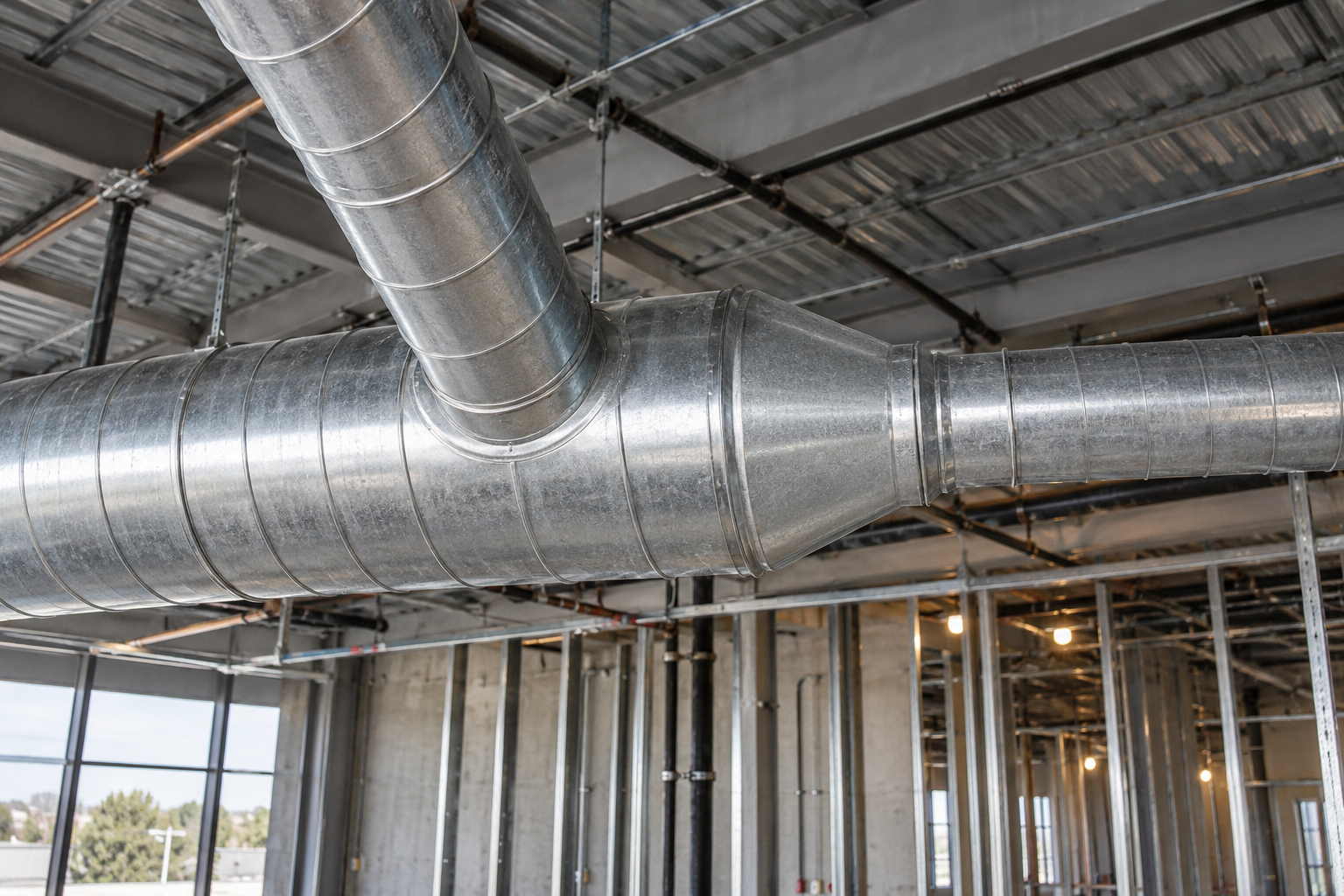
Transition shape and placement affect fitting loss. An abrupt contraction and closely spaced fittings can disturb flow; available transition length is worth considering where space allows. Length alone is not a cure. Making a reducer longer does not necessarily deliver a meaningful performance improvement, and neither shape nor length fixes an undersized downstream run.
Think of a metal duct reducer as a connection fitting, not a way to make an existing supply or return duct meet a new airflow requirement. If the smaller run cannot carry its assigned air within the system's pressure and noise design, the run needs to be reconsidered rather than merely joined to a larger one.
How Should You Choose the Reducer Size?
Start with the airflow required in that run and the duct sizes established by the system design. ACCA Manual D accounts for duct and fitting resistance, blower performance, and airflow when sizing residential ductwork. This applies on both the supply and return sides: neither should be narrowed simply because a convenient reducer will connect the pieces.

Once the intended diameters are known, check the fitting's two connection sizes, which end joins which duct, and whether its end configuration suits those connections. Allow room for the transition and nearby fittings. Budget Heating's Metal Reducers category and broader Metal Products category provide places to inspect the relevant listings; verify a particular item's dimensions and availability on its current product page before choosing it.
If the proposed smaller diameter differs from the designed run size, revisit the airflow and pressure calculations before selecting a fitting. An 18-to-16-inch reducer, for example, identifies its connection diameters; physical compatibility does not establish that the resulting system will deliver the required air.
Choose the Transition After Sizing the Duct
Size the duct for its assigned airflow and the blower's operating conditions first. Then choose a round duct reducer that fits those designed connections without introducing unnecessary disturbance. Faster air through a smaller opening is a velocity change, not a substitute for sufficient duct capacity.
 Cooling
 Heating
 Money Saving Tips
 Product and Brands Insights
 Buying Guides
 State by State