




 hvac systems
 learning center
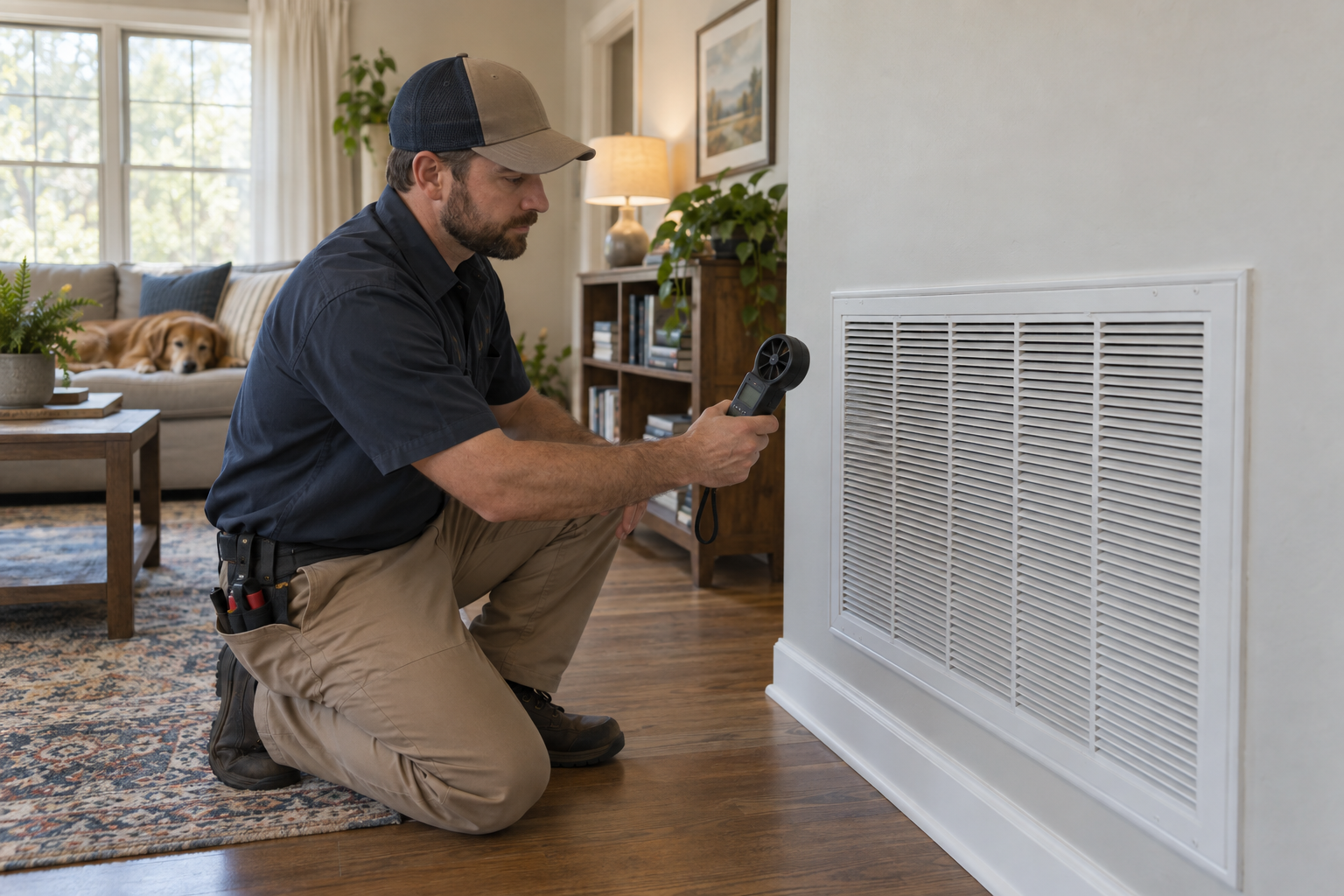
At the airflow this opening must carry, two grilles with the same listed dimensions can have different pressure losses and sound ratings. Compare candidates using their published free area and performance at that airflow, rather than dimensions alone. If the grille holds a filter, include the filter's resistance; also consider the wall opening and return duct behind it. A larger grille may reduce return air noise at the face, but it cannot remove a restriction farther down the return path.
Find the Airflow the Grille Must Carry
Start with the system's design airflow in cubic feet per minute (CFM) for the operating mode you are sizing. Equipment blower data and system design documents establish that target; actual blower airflow also depends on external static pressure. If the system has multiple return grilles, determine the planned CFM through this opening rather than assigning the full system airflow to each grille.
For an existing installation, look for a duct-design record or airflow measurements. If neither establishes the split among returns, have an HVAC professional determine or measure it. ACCA Manual T covers return-inlet selection, airflow measurement, and balancing. Equipment tonnage alone does not tell you how much air passes through a particular opening.
Compare Free Area and Airflow Performance, Not Just Grille Dimensions
Next, separate three dimensions that are easily confused. A grille's nominal size is its catalog designation. Its gross face area is the width times height of the face being considered; its free area is the smaller open area left between the grille's bars or perforations. Neither nominal dimensions nor gross face area tell you how much unobstructed space the air has to pass through. Check the selected manufacturer's sizing convention and area definitions. Hart & Cooley distinguishes geometric free area from its laboratory-measured effective area factor, Ak, for mechanically forced airflow. Use the factor specified for the selected performance table rather than substituting free area into that table.
As a calculation illustration only, suppose one return must carry 600 CFM and you assume an average velocity of 300 feet per minute through its free area. Required free area would be 600 ÷ 300 = 2 square feet, or 288 square inches. The assumed 300 feet per minute is not a universal quiet-grille target. Velocity calculated through free area is also not interchangeable with face velocity calculated using gross face area.
Use that calculation to narrow the search, not to make the final selection. At the target CFM, compare each exact model and size using its manufacturer's airflow and pressure-drop ratings and, where published, sound data. Note whether a velocity or sound rating is based on face area, free area, or another stated rating method. Two grilles with similar dimensions can impose different pressure losses and produce different noise under their published test conditions. Hart & Cooley's grille engineering data illustrates why model-specific performance matters.
Choose a Standard Return Grille or a Filter Grille
The location of the system's filter determines which grille type to consider. If filtration is elsewhere, a standard return grille covers the opening without holding a filter there; evaluate the grille at that opening's intended CFM. Budget Heating's Supply & Return Grilles category is a browsing starting point. If filtration is at the opening, a return air filter grille holds the filter behind a hinged or removable face, giving room-side access for changes. Browse Budget Heating's Return Air Filter Grilles category for that option. The access benefit comes with another airflow restriction to account for.
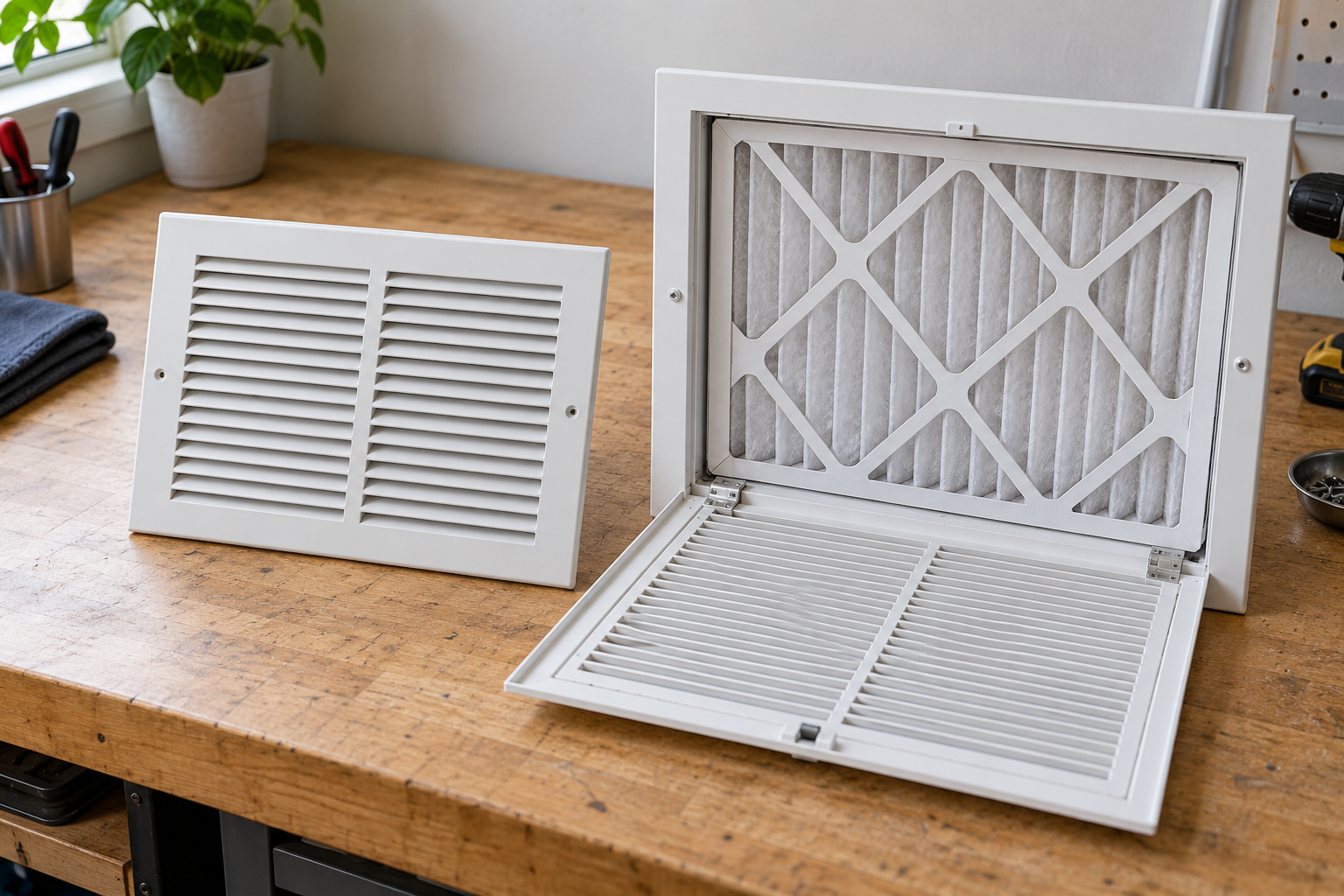
For return air filter grille sizing, assess both the grille's pressure loss and the installed filter's pressure drop at the intended CFM. Match the filter manufacturer's data to the filter type, dimensions, airflow, and condition: a smaller filter face at the same CFM has a different face velocity, while resistance generally rises as the filter loads. For a concrete example of why test conditions matter, 3M's commercial V-bank filter data reports initial pressure drops at a face velocity of 492 feet per minute. That commercial example shows why test conditions matter; it is not a rating for a residential grille filter or for a loaded filter.
A convenient access door does not offset excessive filter resistance. The filter must fit the grille's holder, and the combined grille-and-filter loss must fit within the system's available static-pressure budget. A standard grille avoids placing a filter at this opening, though a filter installed elsewhere still adds resistance to the system.
Check the Rough Opening and Duct Connection Before Ordering
Measure the existing rough opening's clear width and height, then compare those measurements with the chosen grille's installation drawing. Check the required cutout, overall face dimensions, frame overlap, mounting method, and orientation rather than assuming the listed grille size is the cutout size. For a filter grille, also leave enough room to open the face and remove the filter. A manufacturer installation drawing shows the kinds of dimensions that must be distinguished; use the drawing for the specific grille you select when ordering.
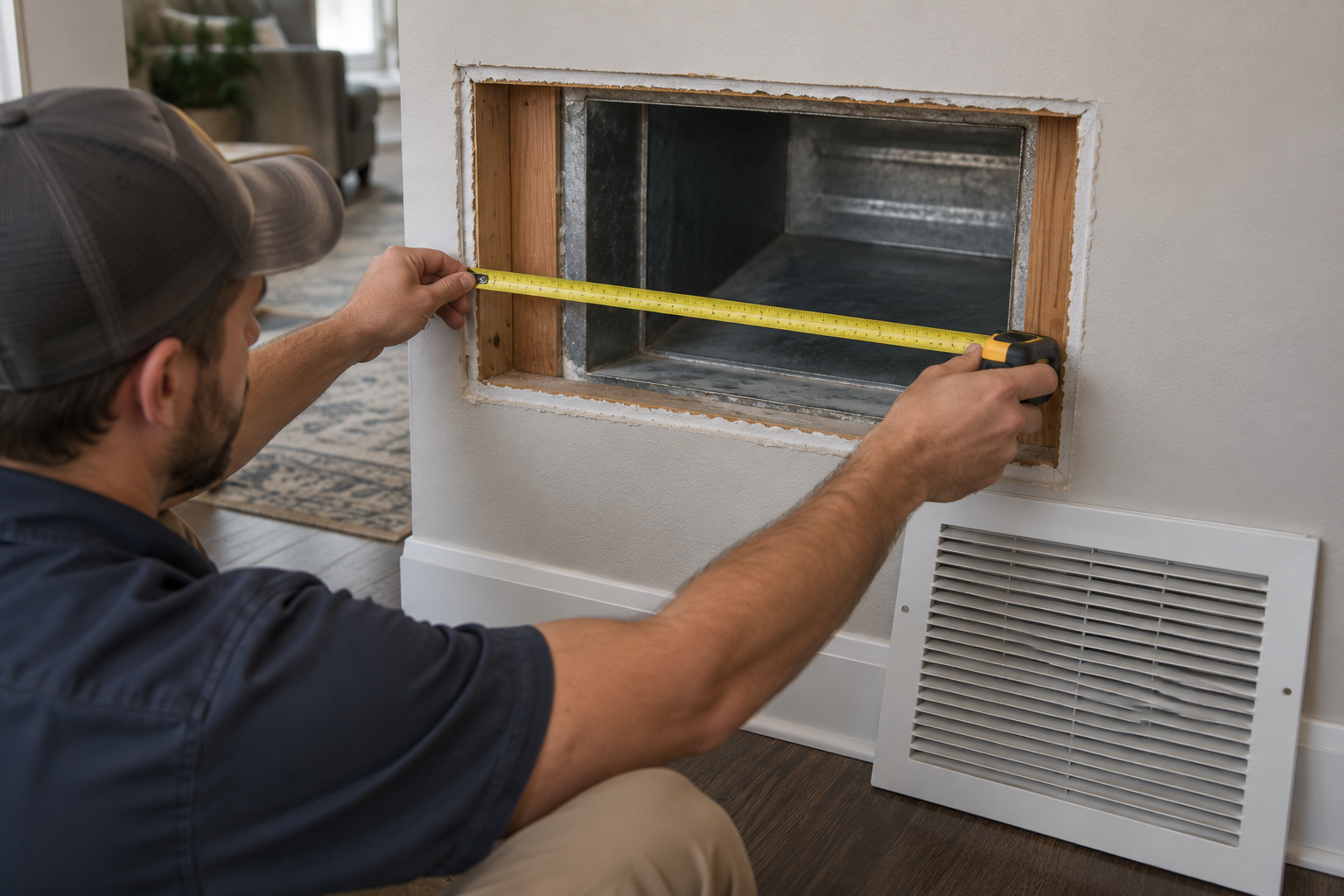
Look behind the opening before enlarging the grille. A narrow passage immediately behind it, a tight duct connection, or a sharp entrance can remain the controlling restriction even if the new face has ample free area. The U.S. Department of Energy's air-distribution guide identifies turbulence at a return-duct entrance as a potential source of restricted airflow and noise. Plan any opening change around the actual passage available behind the wall or ceiling, not just the grille's visible footprint.
Know When a Larger Grille Will Not Fix Return Noise
If sound is concentrated at the grille as air crosses its bars, reducing inlet velocity with an appropriately selected, less restrictive grille may help. But a whistle at a partly blocked opening, turbulence at the duct entrance, and airflow noise deeper in the return path are different problems. First check for an obstructed face and, where fitted, a dirty or inappropriate filter.
When the duct connection or return duct is undersized or obstructed, enlarging only the visible grille leaves that pressure loss in place. ACCA Manual D addresses duct geometry, fittings, pressure losses, and blower performance together. If noise persists or the return path appears restrictive, have an HVAC professional assess airflow and static pressure before altering ductwork. The measurements can distinguish a grille-level improvement from a return-system change.
Make the Final Grille Choice
The right grille is one that fits the opening and performs acceptably at that opening's design CFM. Compare the selected model's airflow, pressure-drop, and available sound data; add the specified filter's resistance if filtration is at the grille; and verify that the connection behind it supports the choice. If the return duct remains the bottleneck, address the return path rather than expecting a larger grille to silence it.
 Cooling
 Heating
 Money Saving Tips
 Product and Brands Insights
 Buying Guides
 State by State