




 buying guides
 hvac systems
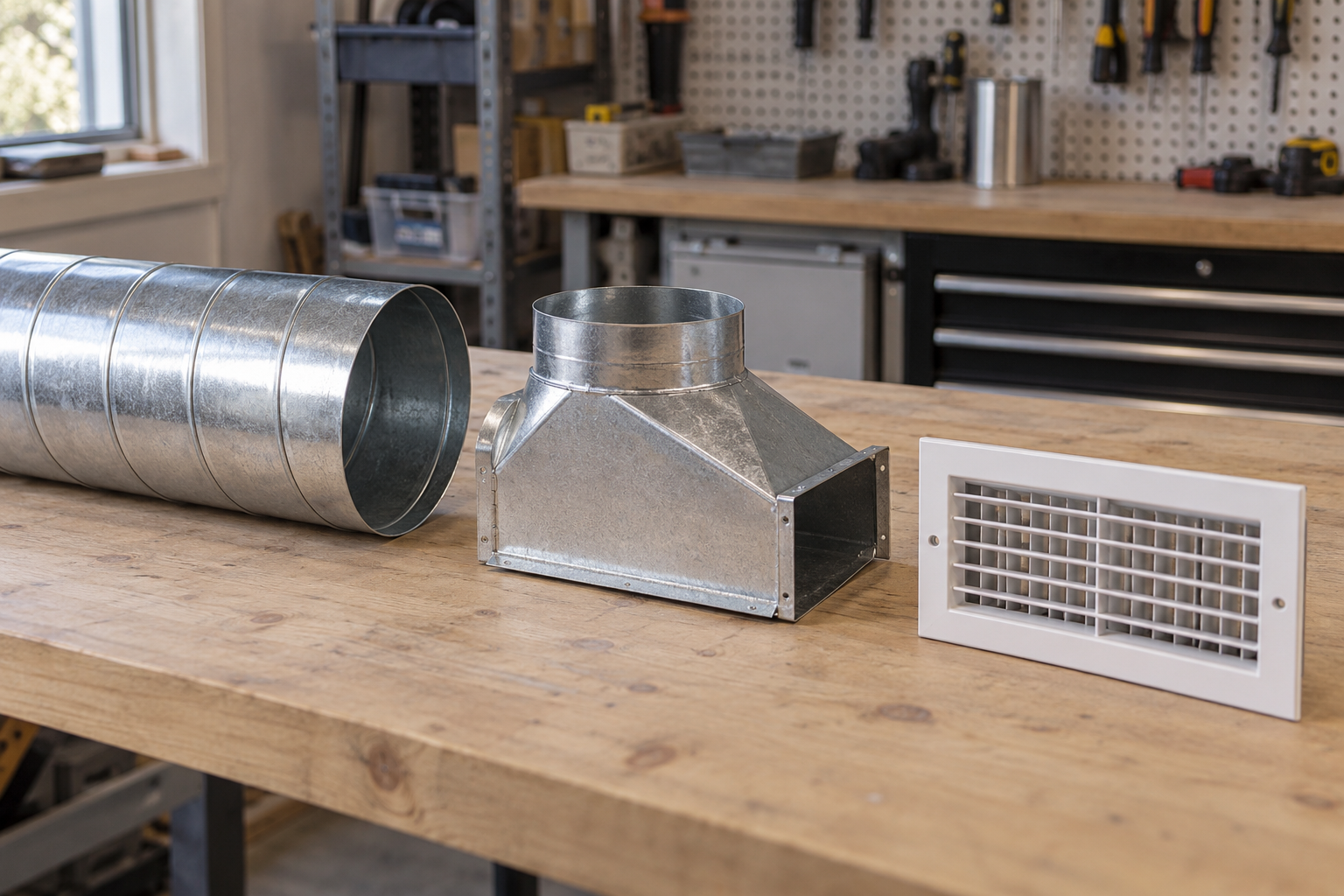
To match supply register boot sizes, treat the assembly as three separate fits: the boot's duct-side inlet must suit the intended duct, its rectangular outlet must suit the room-side opening, and the grille or register must be specified to fit that opening. Matching components does not establish the airflow a room needs or determine its duct diameter; those are duct-design decisions for a qualified HVAC practitioner.
Read a boot’s size as two connections, not one measurement
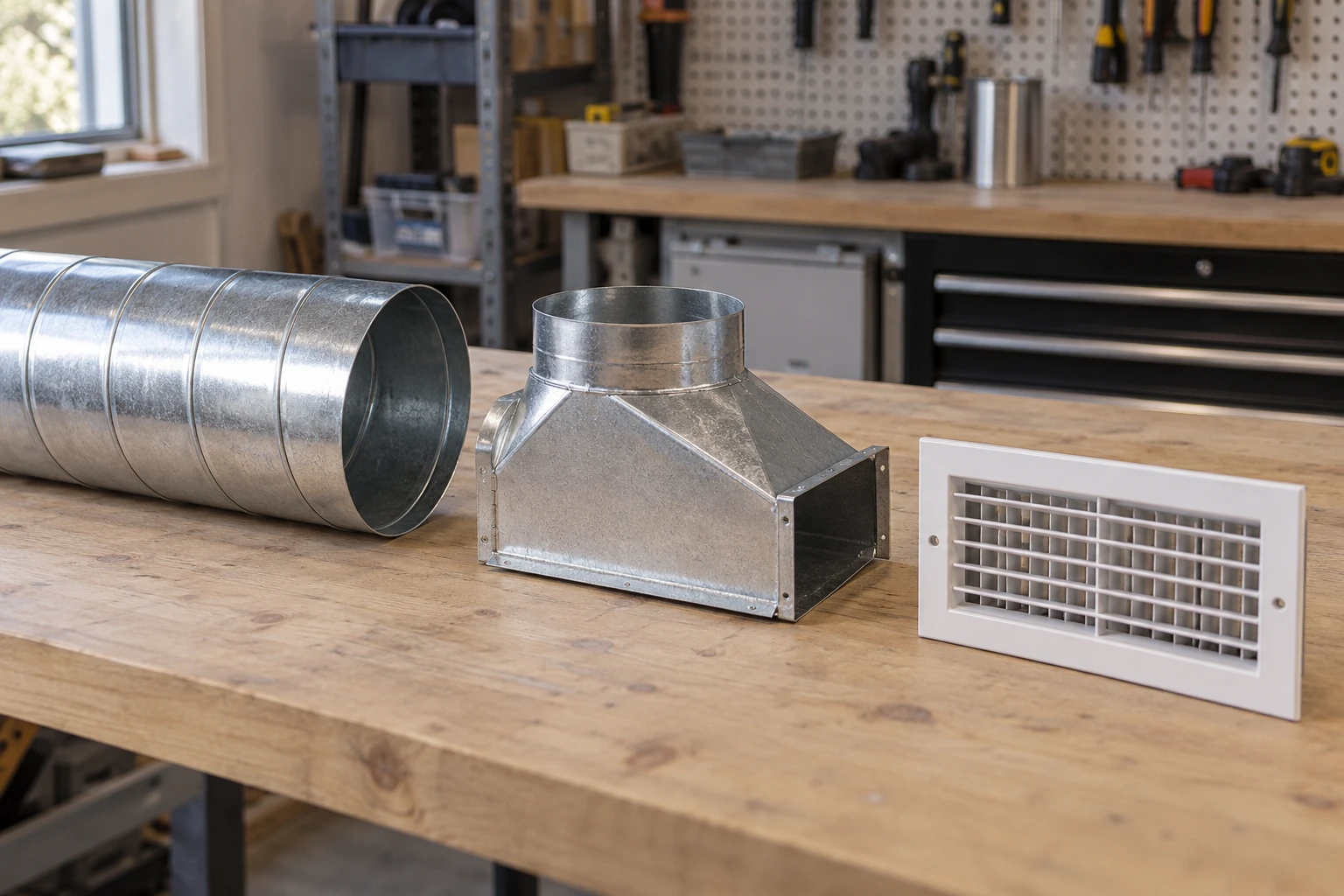
A boot connects a branch duct to a rectangular grille or register opening. Its size description may therefore contain two different connection dimensions: a round inlet diameter for the duct and a width-by-height rectangular outlet for the room. Read the labels on the particular product drawing rather than assuming that the first number always names the outlet or that a single stated size describes both ends. Speedi-Boot's product information identifies its register opening and round duct collar separately.
Connection labels are not a complete set of physical dimensions. A drawing may also identify the collar's outside dimensions, a mounting flange or drywall edge, and the boot's overall depth and footprint. Those measurements matter when a collar must accept a connection or the body must fit between framing members. For example, Royal Metal Products' end-boot information distinguishes its register opening from flange and drywall-edge dimensions. Use the selected product's dimensions, not its nominal size alone, to check the space it will occupy.
Match the round inlet to the intended duct
Start with the intended duct's nominal diameter, then compare it with the boot's stated round inlet. Do not choose the duct diameter by working backward from the rectangular outlet: the two connections serve different purposes. If the duct size has not already been determined, have a qualified HVAC practitioner establish it as part of the system design.
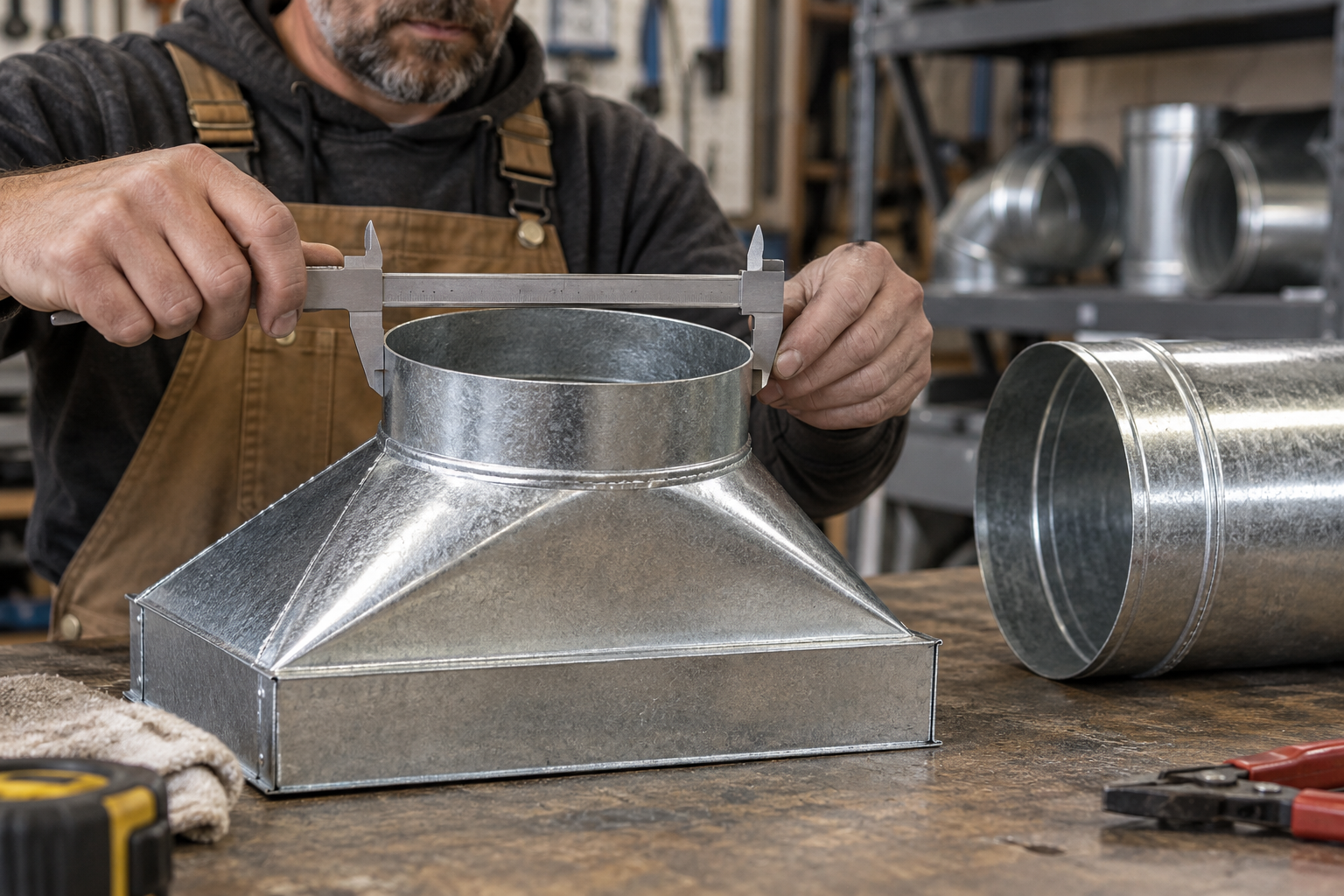
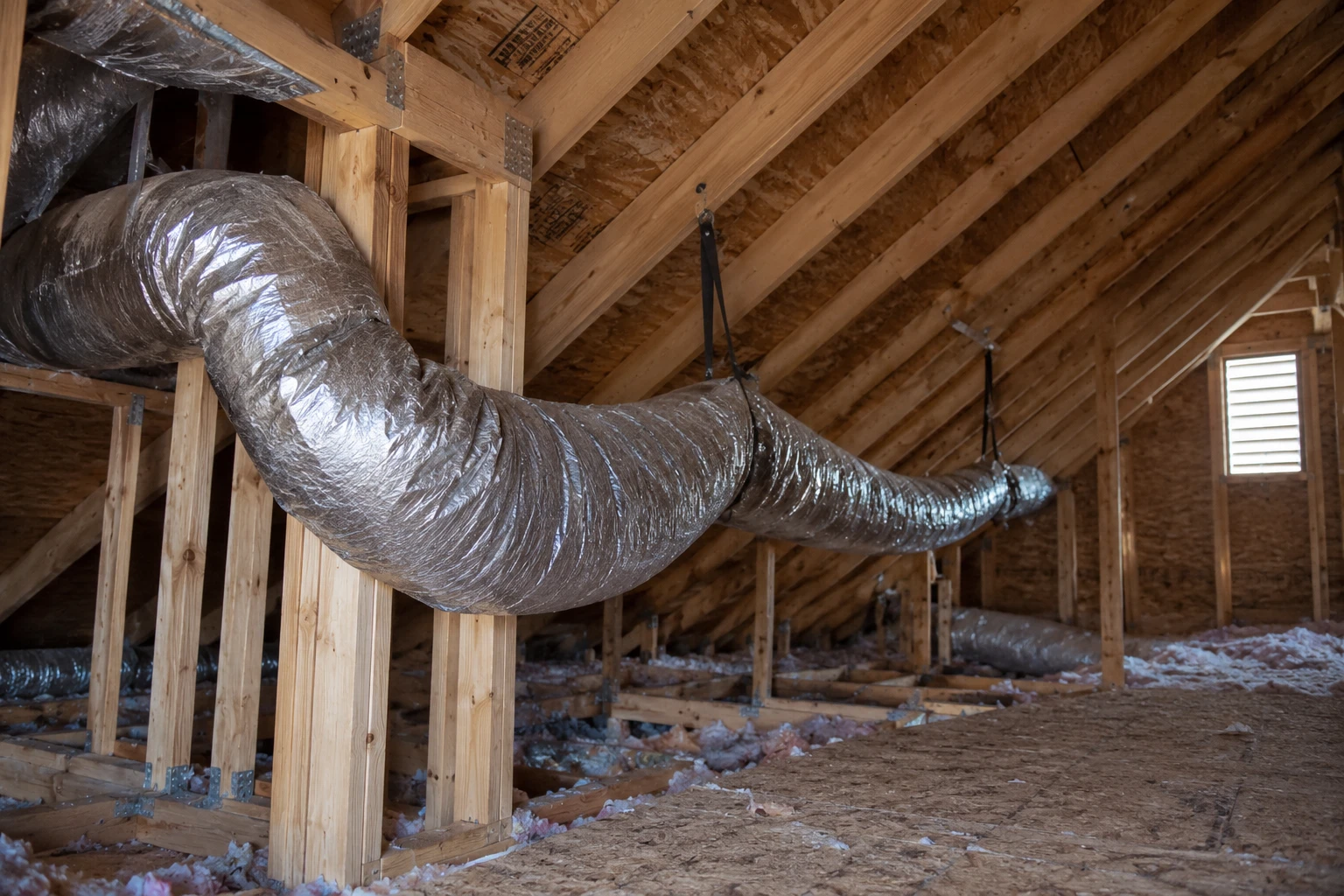
For a flex duct boot, diameter is only the first connection check. Look at the specified collar construction and the accessible collar length to confirm that the duct can be attached without crowding the boot or nearby framing. Then follow the flex-duct manufacturer's fastening and sealing instructions for that type of connection. ATCO's installation instructions, for example, distinguish connection methods and specify their applicable fastening and sealing materials; a diameter match alone does not make every tape, clamp or sealant appropriate.
Also consider where the collar points once the boot is installed. A correctly sized inlet is little help if its position leaves no practical route for attaching the duct or completing the specified seal. Check the duct approach before settling on the connection style.
Check the rectangular opening and mounting space
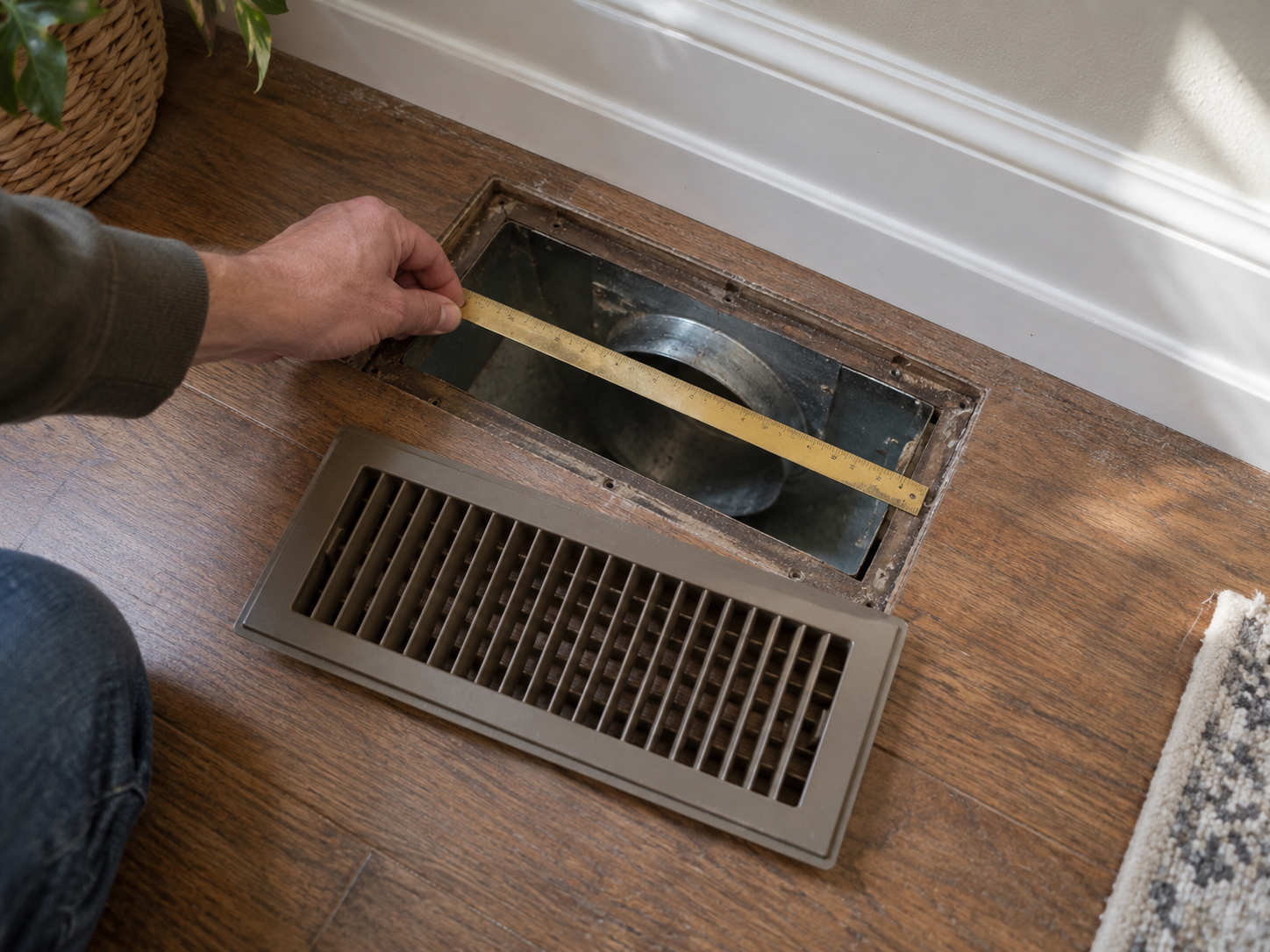
Measure the clear width and height where the room-side grille or register will fit, then compare them with the boot's specified rectangular outlet or register opening. Measure the opening itself, not the visible trim of an existing grille. Keep its orientation in mind: width and height must correspond to the way the outlet will sit in the floor, wall or ceiling.
A nominal opening describes a fitting relationship; it does not, by itself, specify every construction cutout or clearance. Check the chosen boot's drawing for its flange, edges, body depth and collar projection before cutting or altering surrounding material. Framing, flooring or wall finishes must leave room to position and secure the boot as intended. Where an existing opening is irregular, compare the clear opening and surrounding support with the product's mounting details rather than assuming its size label guarantees a fit.
This distinction is especially useful in a replacement: the old grille may cover a larger area than the boot outlet beneath it. Removing it to measure the actual opening prevents its face dimensions from becoming an incorrect boot measurement.
Choose a grille or register by its specified fit
Choose the grille or register by the opening size it is specified to fit, and compare that fit with the boot's rectangular outlet. Do not substitute the outside grille dimensions for the fitting size. Greenheck's grilles and registers drawings illustrate why: the depicted flush-mount frame has an overall dimension larger than its listed opening. Confirm both that the grille fits the outlet and that its frame has enough surrounding surface for its mounting holes or other specified attachment.
If you want an integral damper for adjusting the outlet, check the individual product description and drawing. "Register" commonly signals a dampered outlet and "grille" may describe an undampered one, but names alone are not reliable enough to confirm the hardware. Check the listed fit, frame and damper as separate features.
Budget Heating's supply grilles category is a starting point for comparing options. Before selecting a particular item, use its own listing to confirm the opening it fits and its outside dimensions.
Choose a boot shape that fits the duct route
After the connection sizes match, choose the HVAC register boot shape for the duct's approach. A straight boot places its inlet and outlet along a straighter path; a 90-degree boot turns the connection to meet a duct approaching from the side. Other configurations position the inlet differently. Equal nominal inlet and outlet sizes do not make these shapes interchangeable.
Compare the selected boot's inlet position, turn, depth and full footprint with the cavity and the planned duct route. Check which direction the rectangular opening must face, whether the collar clears framing and finished surfaces, and whether there is room to mount the boot and attach the duct. Lukjan's boot specifications distinguish configurations and their dimensions; the shape is an installation choice, not a way to infer the required airflow.
Budget Heating's supply and return register boots category provides a place to compare listings. Confirm the configuration and physical dimensions on the specific boot before choosing it.
Make the final three-part match
Before choosing a part, compare the selected boot's inlet diameter and rectangular outlet dimensions with the grille or register's specified fitting size, not its outside face. Work in order: match the established duct diameter to the boot inlet, the boot outlet to the measured width and height, and the grille or register to that outlet. Then make sure the collar points toward the duct, the connection method suits that duct, and the boot and mounting hardware clear the surrounding construction. If duct diameter or required airflow remains undecided, have a qualified HVAC practitioner establish it as part of the system design.
 Cooling
 Heating
 Learning Center
 Money Saving Tips
 Product and Brands Insights
 State by State