




 cooling
 learning center
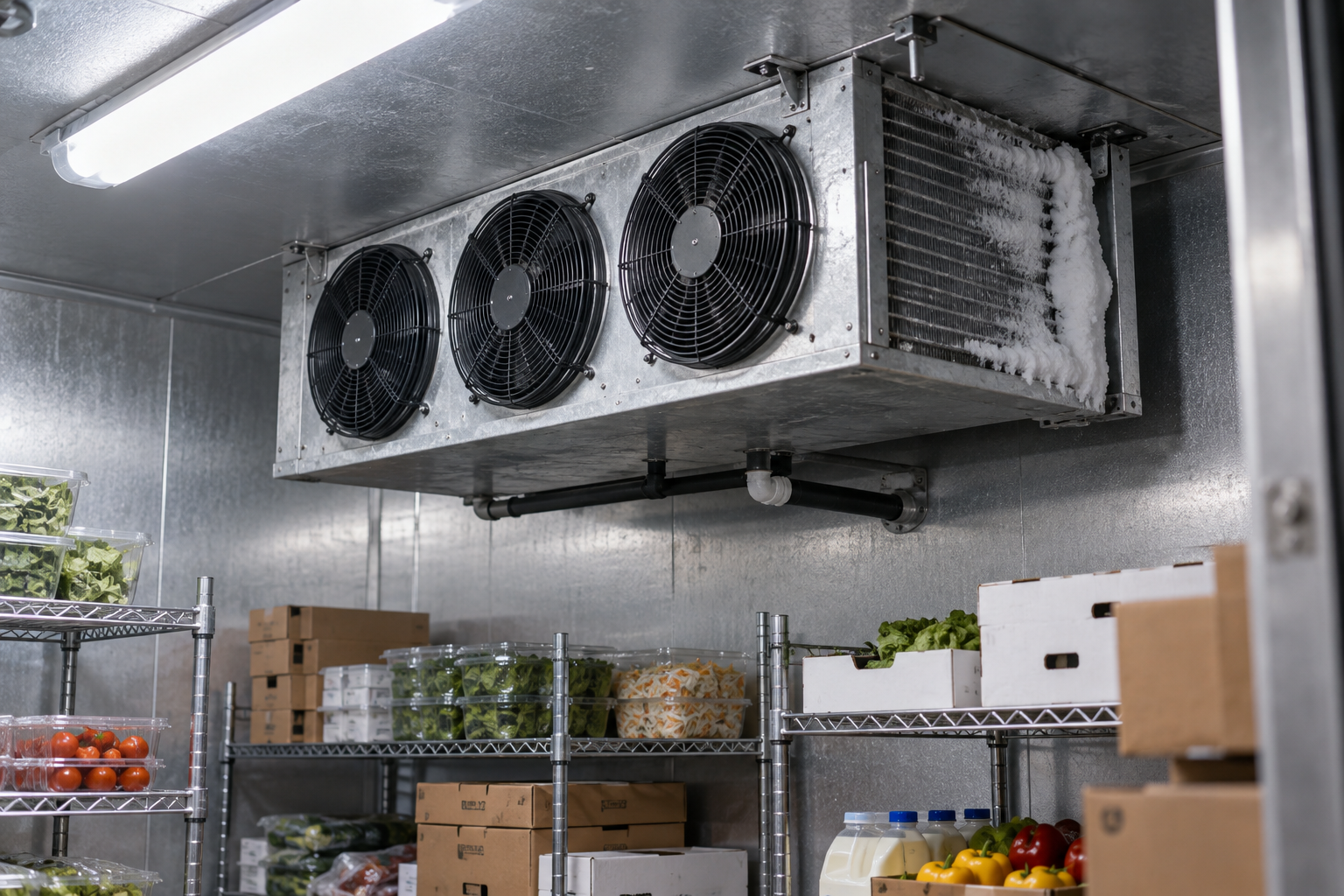
Frost that remains after the cooler's expected defrost period may signal ineffective defrost, but it does not identify a failed control. Restricted airflow or added moisture during frequent door openings can produce similar buildup. Start by noting when frost forms, whether it clears during the unit's normal defrost operation, and what is happening with doors and airflow at the same time.
Why Frost Builds on a Cooler Evaporator
Air carries moisture from door openings, stored goods, and ordinary room humidity. When that moisture reaches a sufficiently cold evaporator, it can freeze on the coil. As frost thickens, it impedes heat transfer and narrows the passages through which air moves. Reduced airflow can then make cooling less effective while the ice continues to build.
Some frost during operation is expected; defrost is intended to clear it before it becomes excessive. Persistent ice or unusually rapid buildup deserves attention. There is no single defrost interval or method to assume for every walk-in cooler: the expected sequence depends on its evaporator and controls. Compare what you see with the documentation for the installed equipment rather than applying a freezer's settings to a cooler.
Check Doors and Sources of Humid Air
Every prolonged door opening gives warm, humid air a route into the cooler. A door that stays ajar, a closer that fails to pull it shut, or a damaged walk-in cooler door gasket can keep adding moisture even when traffic is light. That extra moisture may freeze at the evaporator faster than the unit's usual defrost operation clears it.
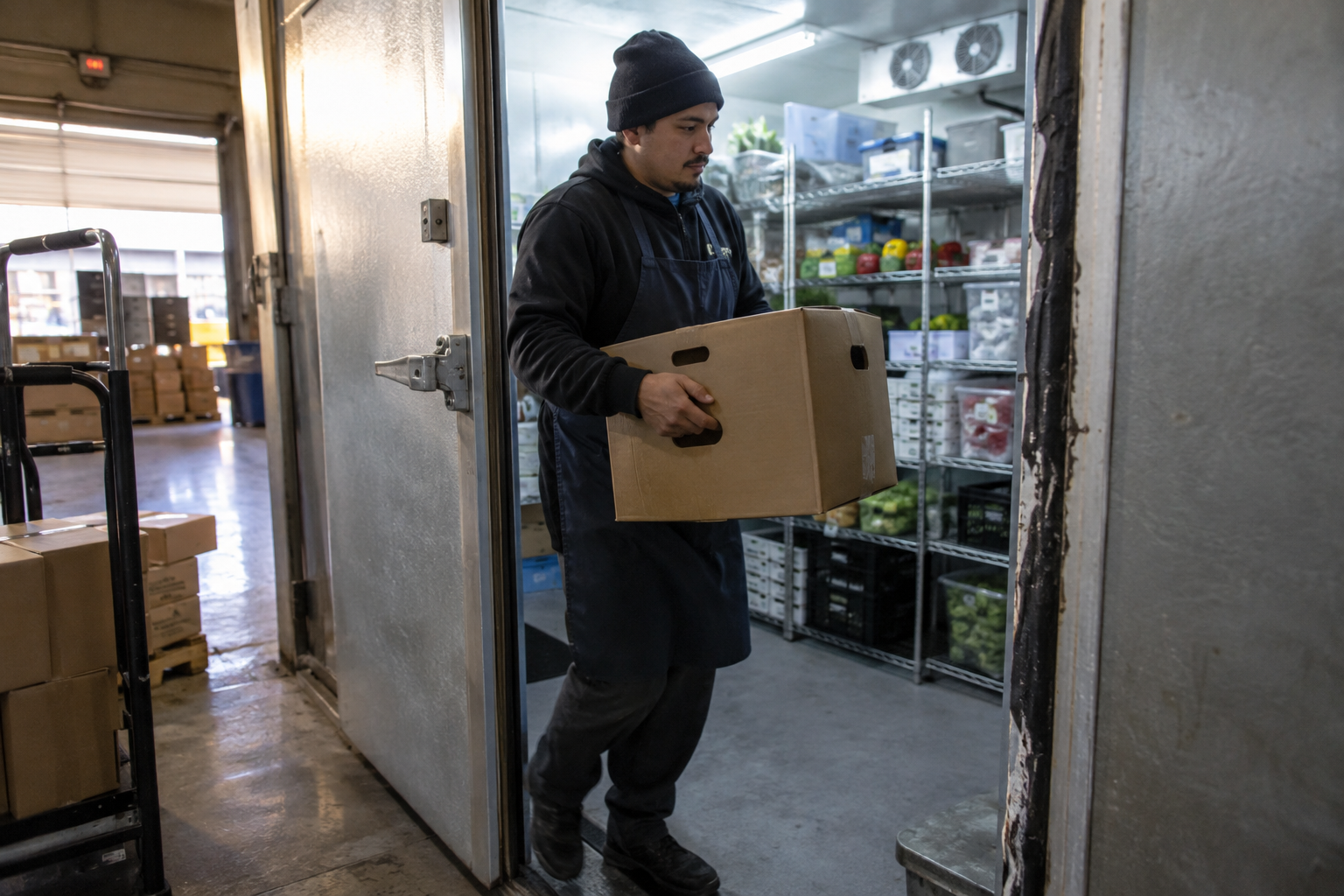
Watch the door close from normal use: does it latch fully, or catch on a cart, threshold, or stored product? Look for visible gaps, loose gasket sections, or torn material without removing anything. If icing worsens after deliveries or other periods of frequent opening, record that timing. Door conditions are useful to report, but correcting a visible gap does not rule out an airflow or equipment problem if frost persists.
Look for Blocked Airflow or a Fan That Is Not Running
An evaporator must draw room air across its coil and send cooled air back into the space. Product stacked in front of the fans or in the discharge path interferes with that circulation. Ice itself can also choke airflow between coil fins, so a cooler that begins with a blockage can become progressively harder to cool. Keep stored goods out of the unit's air paths; the required clearances depend on the installed model.
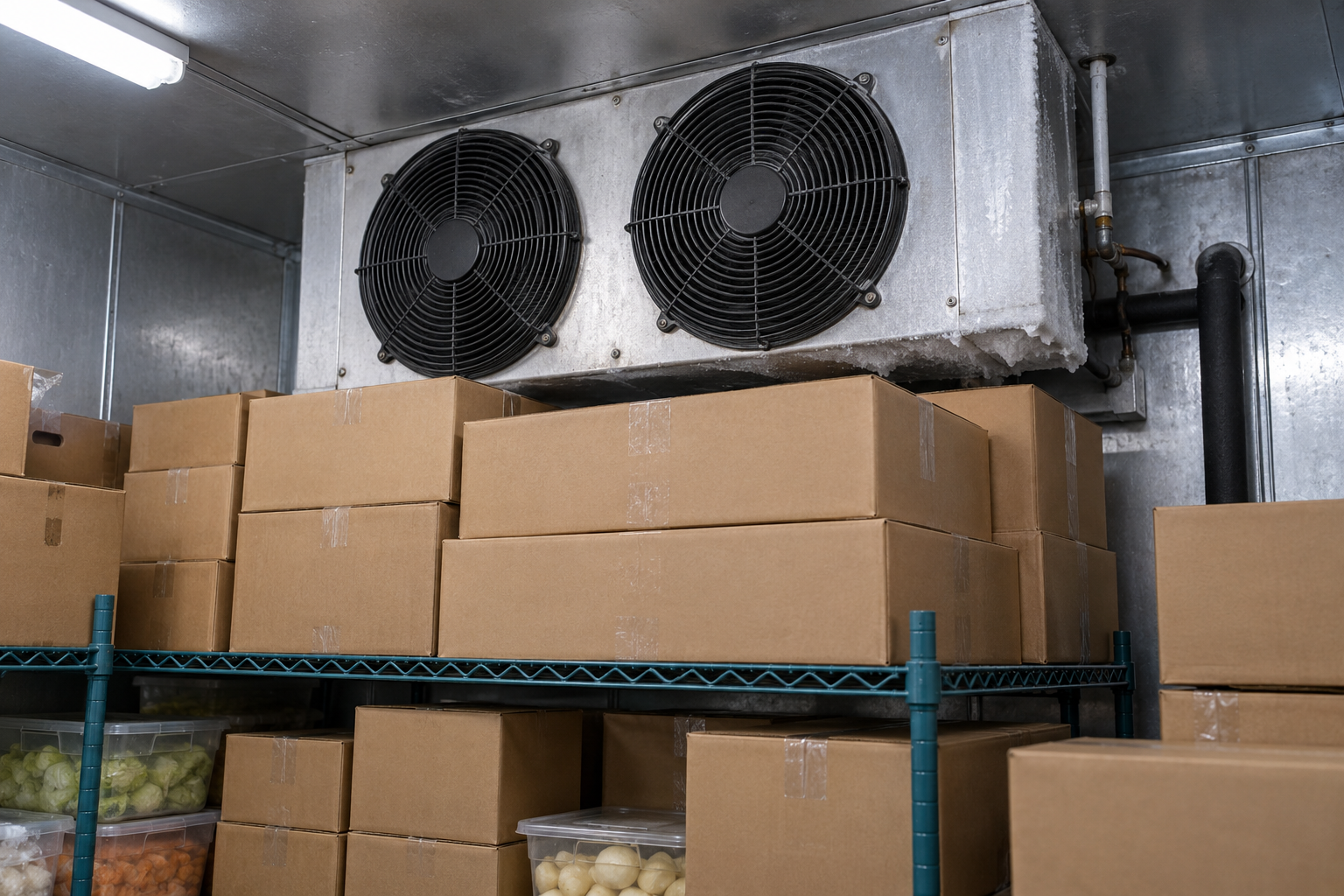
Observe the evaporator fan from outside its guard while the cooler is operating. If it appears stopped, note the time and whether defrost is underway rather than assuming the motor has failed. Depending on the equipment and control state, fans may be intentionally stopped during defrost or delayed afterward. A fan that repeatedly does not run when its model's instructions say it should needs professional investigation.
Compare Frost Buildup With Defrost Timing
The most useful timing question is whether frost clears during the installed unit's expected defrost period. If heavy ice remains afterward, or ice and water appear to collect around the drain pan, report those observations to a refrigeration technician. Ineffective defrost and drainage problems both merit investigation; the visible result does not identify a particular timer, sensor, heater, or control.
If frost clears but returns quickly, compare the return with door traffic and any visible airflow obstruction. Those conditions can increase the frost load even when a defrost period occurs. They can also coexist with a defrost fault, which is why timing is a description for the technician, not a reason to replace a control on sight.
Use the unit's identification and instructions to establish what operation to expect. Record the time frost is visible, whether it diminishes, and any displayed alarm. Do not change the schedule or force a defrost cycle to test a theory.
What to Do Before Calling a Refrigeration Professional
A short observation log makes a service visit more useful. Note the cooler's identification and any displayed temperature or alarm, then record:
- Whether the door closes and seals, especially during busy periods.
- Whether stored goods block the evaporator's visible intake or discharge path; move product clear without reaching into the unit.
- Whether fans appear to run during normal cooling, and whether a stopped fan coincides with apparent defrost operation.
- When frost appears, whether it clears, and whether ice or water accumulates near the drain pan.
Follow your operation's procedures for monitoring cooler conditions and stored product. Arrange qualified refrigeration service for persistent heavy icing, a fan that does not run when expected, frost that appears not to clear, or drainage trouble. Leave guards and electrical panels in place; electrical, control, defrost-component, and refrigerant diagnosis belongs to the technician. Do not chip ice off the coil.
If that diagnosis calls for an evaporator replacement, use the equipment identification and the technician's specifications to check application and compatibility before choosing a unit. Budget Heating's evaporators for freezers and coolers category is a browsing starting point, not a substitute for matching the replacement to the system.
Use the Timing and Conditions to Guide the Next Step
Correct obvious door or loading issues and track what happens across the cooler's expected defrost operation. Frost that clears but rapidly returns calls for a look at moisture and airflow conditions; frost that remains calls for professional investigation of defrost and the wider refrigeration system. Either pattern gives a technician a better starting point than ice appearance alone.
 Heating
 Money Saving Tips
 Product and Brands Insights
 Buying Guides
 State by State
 HVAC Systems