




 cooling
 learning center
 product and brands insights
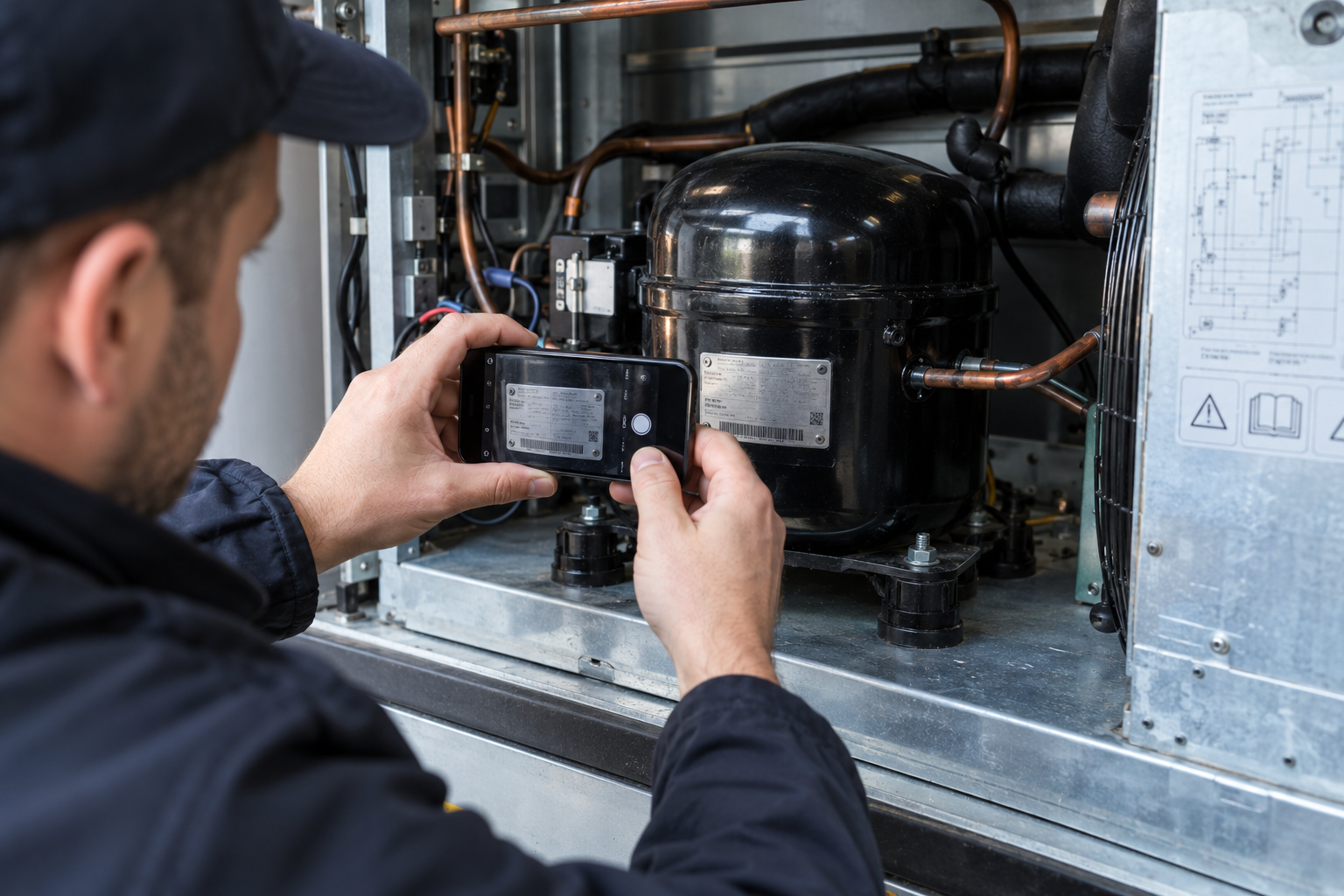
For a commercial refrigeration compressor replacement, start by photographing and transcribing the original compressor's entire data plate. The full model number helps identify a candidate; its electrical rating, refrigerant approval, temperature application, and equipment fit determine whether that candidate is suitable. Keep the equipment label and system records alongside the plate rather than relying on a partial model number.
What should you copy from the data plate?
Photograph the whole compressor data plate clearly enough to read punctuation and small suffix characters. Then copy these details exactly as printed; leave a field blank rather than filling it in from memory:
- Manufacturer and complete model number: Include every prefix, suffix, dash, and configuration identifier. A shortened refrigeration compressor model number can omit a variation needed to identify the right part.
- Serial number: Record it separately from the model number so the manufacturer can identify the original compressor precisely.
- Electrical markings: Copy rated voltage, phase, frequency, and any other printed ratings or limits without treating them as specifications for a different model.
- Refrigerant and application markings: Record them if present. Not every plate supplies all the system information needed for selection.
Separately photograph the equipment identification label and note its make, full model, and serial number. Use the equipment label or system records to establish the system refrigerant and intended duty when those details are absent from the compressor plate. Keeping the two sources separate avoids mistaking an equipment specification for a marking on the original compressor.
Use the full model number to find a candidate
Search the original manufacturer's information using the complete model designation. Its characters may distinguish compressor variations, but their meaning depends on the documented family: do not apply a decoding rule from one family to another. Check the exact designation against the manufacturer's product data before searching for a successor.
If the original number has been revised or discontinued, use a manufacturer cross-reference to identify a proposed replacement, then read the conditions attached to that replacement. For a Copeland compressor, Copeland's online product information provides a starting point for model data and cross-references. Preserve both the original number and the proposed replacement number in your notes so their specifications can be compared.
A shared brand, horsepower figure, or similar-looking shell can help narrow a search, but none establishes interchangeability. The cross-referenced part still has to meet the system's operating and fit requirements.
Match the electrical rating to the equipment
Compare the candidate's specified voltage, phase, and frequency with both the original compressor markings and the equipment's available electrical supply. These ratings can differ within one model family. A matching family name therefore cannot stand in for the candidate's exact electrical designation; use its manufacturer specifications to confirm the match.
Check starting and control components separately. A replacement may specify components different from those associated with the original compressor, particularly across electrical variants. Record the required components from the candidate's documentation rather than assuming the existing ones can be reused. This is a parts-identification check, not a wiring instruction.
Confirm the refrigerant and temperature application
Establish the system's refrigerant designation from its equipment information or service records, then check that the exact candidate is approved for it in the manufacturer's specifications. Do not infer refrigerant approval from the original compressor's family name or from a candidate with similar capacity. If the refrigerant is not shown on the compressor plate, the system information supplies that missing selection detail.
Next identify the refrigeration duty and application temperature. Low-, medium-, and high-temperature applications involve different evaporating-temperature conditions; compressors that appear similar need not have the same approved operating range. Describe the actual equipment application, such as a freezer rather than a medium-temperature cooler, when checking manufacturer selection data, and compare the expected operating conditions with the candidate's published limits.
An approved refrigerant alone does not settle the choice. The candidate must also suit the system's application and operating conditions. Use the exact model's refrigerant approvals and application data rather than transferring specifications from another model in its range.
Check capacity, configuration, and physical fit
Compare cooling capacity using manufacturer performance data for the intended refrigerant and relevant operating conditions. Capacity figures quoted at different rating conditions are not a direct like-for-like comparison. Horsepower can narrow the field, but it cannot replace a performance comparison for the equipment's duty.
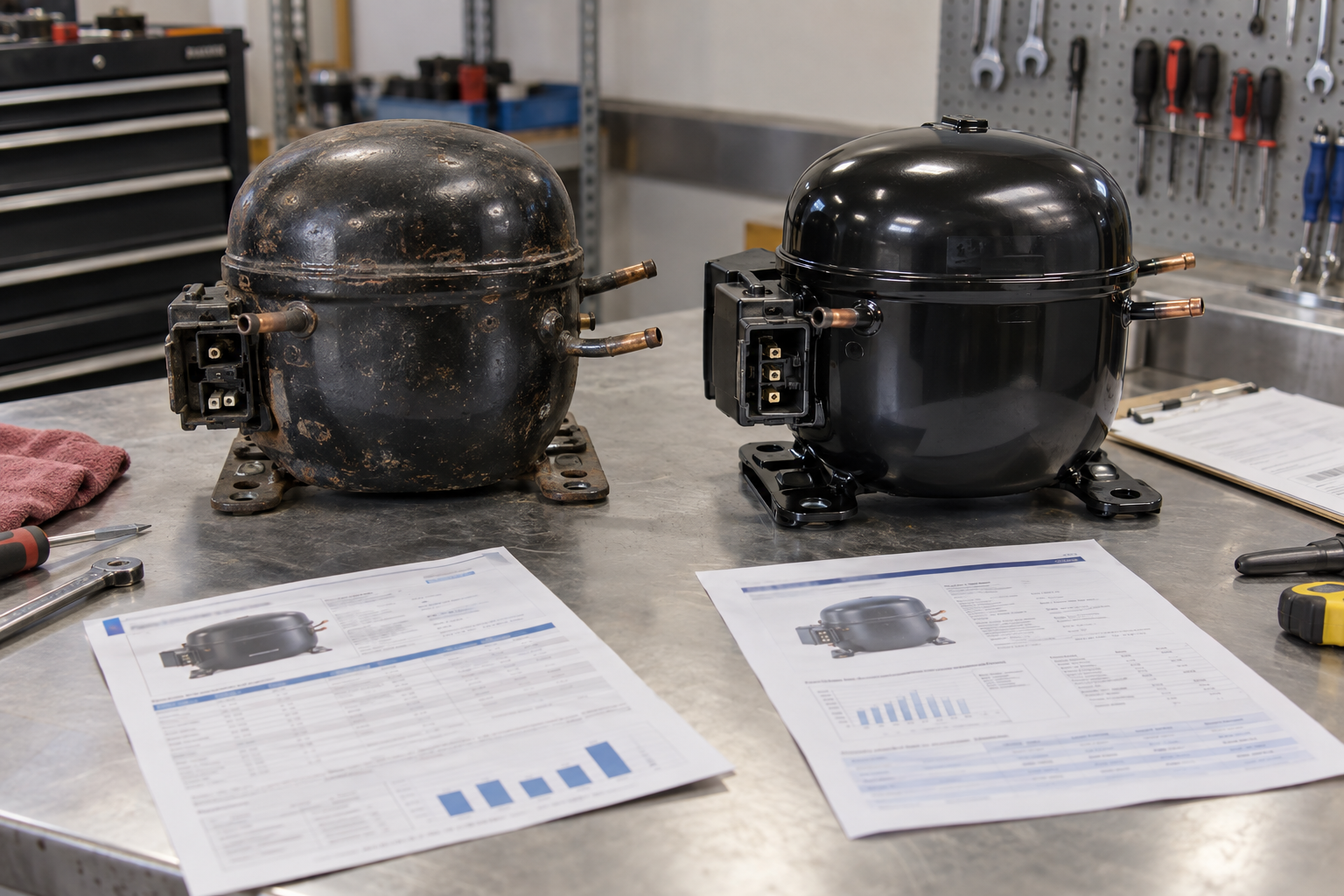
Then check the candidate's compressor type and configuration, dimensional drawing, mounting arrangement, and suction and discharge connections against the equipment. A shell that fits the available space may still have different mounting points or connections. Include any model-specified accessories and electrical components in the fit check; do not treat a physical match as permission to substitute one compressor for another.
Where a manufacturer designates a replacement, compare its stated requirements with the existing equipment rather than assuming the cross-reference resolves every connection or component difference. That leaves an identified candidate whose performance and fit have been checked for the particular system.
Check the exact replacement against a product listing
With the candidate's full designation in hand, find a specific product listing that expressly covers its commercial refrigeration application. Budget Heating's general compressor and brand categories also include AC and heat-pump parts, so those category names alone are not a suitable shopping match. Compare the listing's complete part number and stated specifications with the manufacturer-designated candidate and the equipment requirements. A category or brand page is not confirmation that a particular replacement is available.
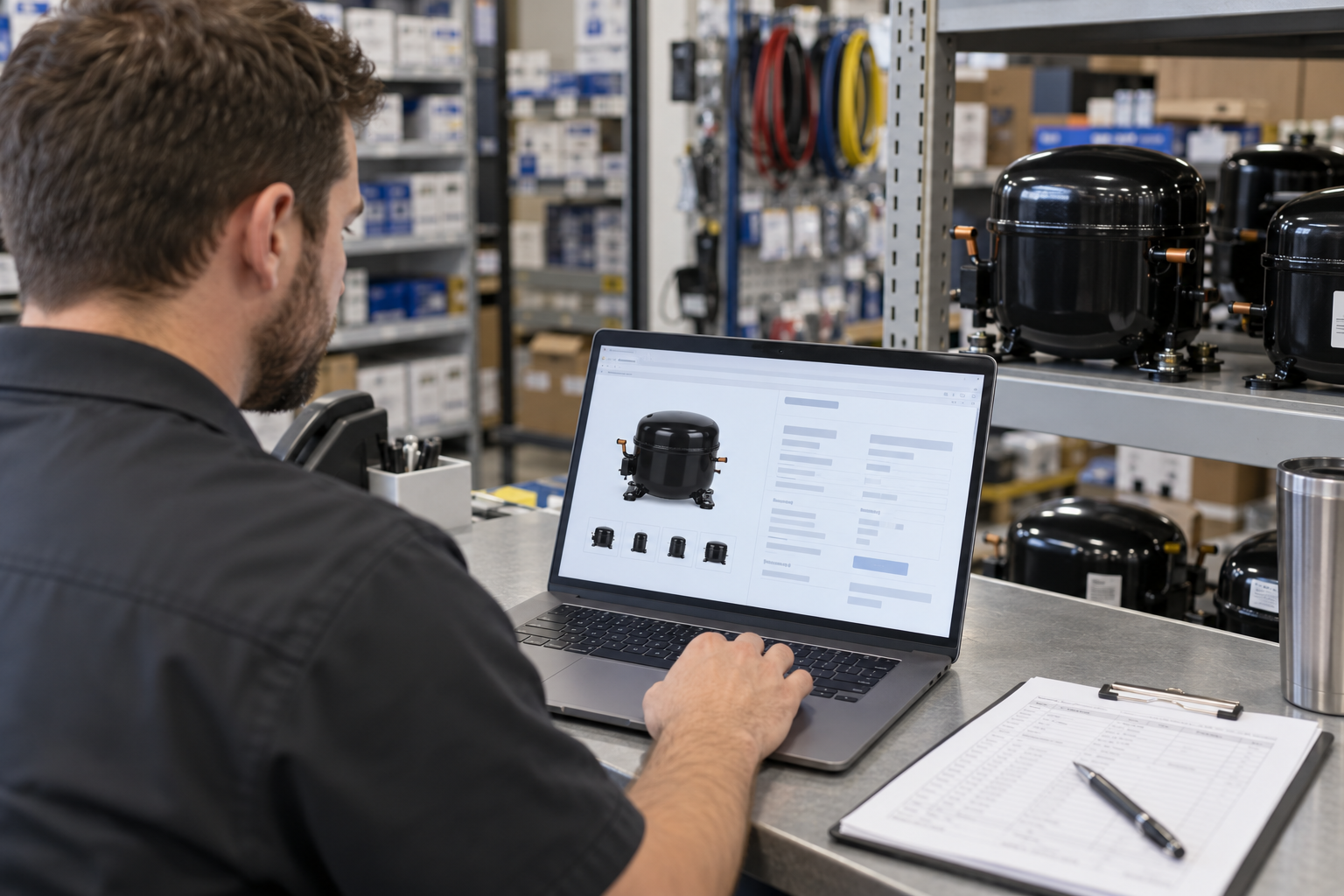
Check the exact listing's current availability and ordering details before placing an order. If it asks for existing equipment identifiers, use the make, model, and serial number recorded from the equipment label rather than substituting the compressor's serial number.
Identify the part before ordering
The reliable sequence is to record the original plate, identify a manufacturer-designated candidate, check it against the system, and confirm its exact product listing before ordering. If the plate cannot be read, use the equipment identification and manufacturer information to recover the correct compressor designation instead of guessing from size or horsepower.
 Heating
 Money Saving Tips
 Buying Guides
 State by State
 HVAC Systems