




 buying guides
 cooling
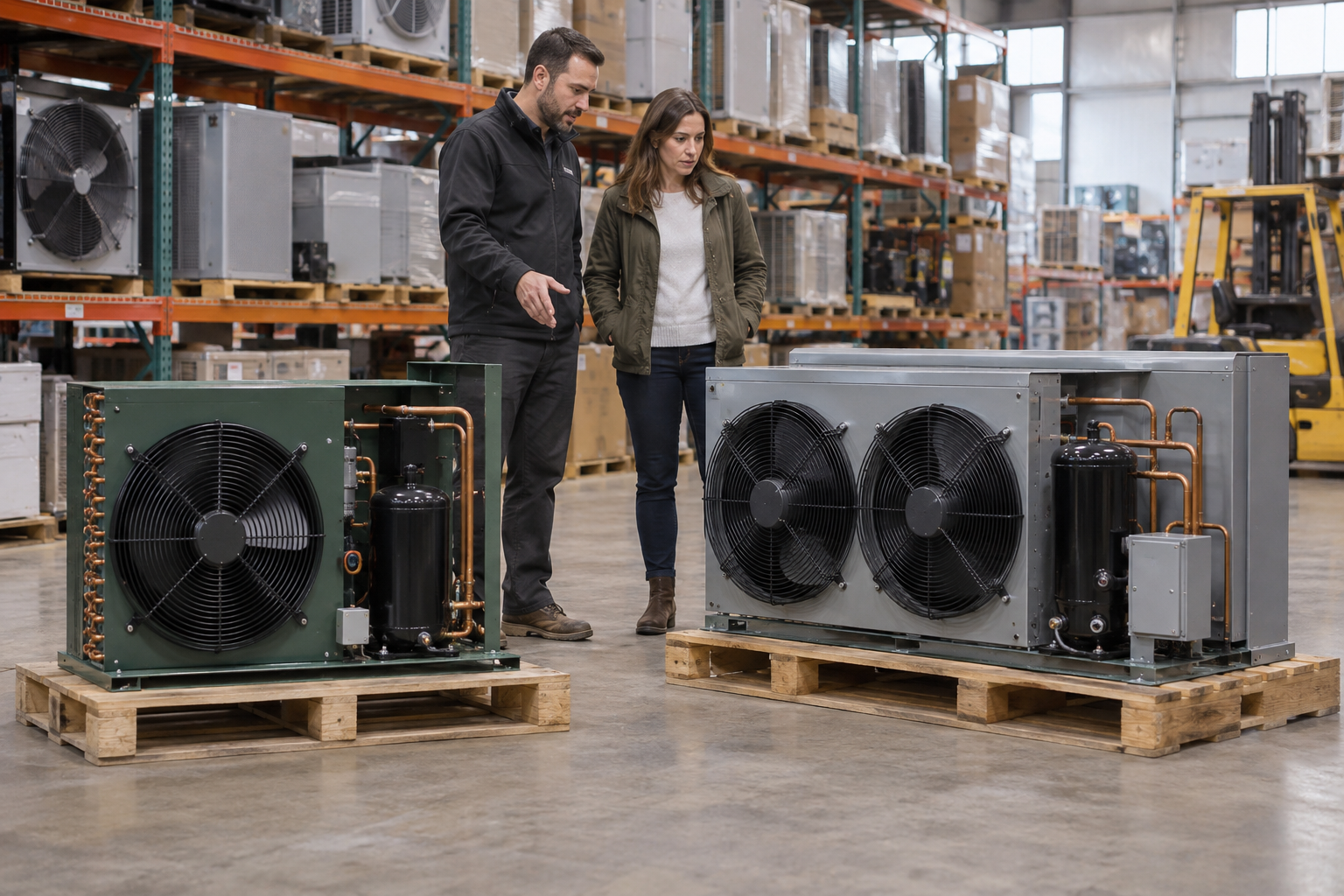
The intended temperature duty matters: a medium-temperature cooler listing does not establish approval for a freezer installation. Both blends can serve refrigeration applications, but similar uses do not make them interchangeable in a particular system. When buying new equipment, choose the R448A or R449A configuration approved for the complete unit and its intended application. When considering a change to an installed system, follow the equipment manufacturer's instructions for that model rather than treating a compressor listing as permission to substitute refrigerants.
What Differs Between R448A and R449A?
R448A and R449A are distinct zeotropic refrigerant blends: their component percentages differ. Both have an A1 safety classification, but that shared classification says nothing about whether a particular refrigeration unit is configured for both. Each blend has its own pressure–temperature data.
Because these blends have temperature glide, the refrigerant's saturation temperature changes as it evaporates or condenses at a given pressure. Their charts therefore distinguish dew-point and bubble-point temperatures. Using the wrong blend's chart can distort a technician's interpretation of operating temperatures even when the observed pressures appear similar.
In Chemours' specified comparisons, the blends show broadly similar capacity and efficiency, alongside differences in glide, pressure and discharge temperature. Those results describe the modeled conditions, not a universal performance ranking. In an actual design, even a modest difference may matter if a compressor is near an operating limit or if the expansion device and controls were selected around one refrigerant's characteristics.
Can I Use R449A in Equipment Listed for R448A?
Not solely because the equipment is listed for R448A. Its refrigerant specification belongs to a system design that includes the compressor, heat exchangers, expansion device, controls and intended temperature range. Use R449A only if the complete-unit manufacturer approves it for that exact model and provides instructions applicable to the proposed configuration.
There is an important distinction between ordering an approved option and changing an installed unit. Budget Heating's Kramer KFO060M4SDA/KL6A052ADASC matched cooler-system listing identifies R448A and R449A for that particular medium-temperature package. It is an example of a listing that names both refrigerants, not a rule for other Kramer models or authorization to switch the refrigerant in a system already installed.
For an existing system, an approved conversion must address the equipment and its operating conditions, not just whether the replacement blend can run in a compressor. The manufacturer's applicable instructions determine whether components, controls or operating checks require changes. Without that model-specific approval, retain the unit's specified refrigerant.
Does Compressor Approval Also Approve the Complete Unit?
No. Refrigeration compressor refrigerant approval describes suitability of an identified compressor under stated application conditions. Its application envelope defines the operating range that must be respected; approval for the compressor does not approve every condensing unit or matched system built around it.
For example, Danfoss' MTZ compressor guidance shows an R448A/R449A operating envelope and identifies discharge-temperature concerns outside its stated limits. That is guidance for the covered compressors and conditions, not a refrigerant specification for an unrelated complete unit.
A complete unit adds heat exchangers, refrigerant metering, controls and an intended temperature application. Components such as evaporators may also be listed separately from complete systems. For a purchase, match the complete-unit model and unit nameplate to the manufacturer's specifications. A compressor model number is useful when evaluating the design, but it cannot replace the complete unit's refrigerant designation.
What Should I Check Before Ordering an R448A or R449A Unit?
A compressor listing identifies one component; a condensing-unit listing identifies an assembly; a matched-system listing identifies paired equipment. Note the exact model numbers and what is included before comparing refrigerant options. Then read the stated refrigerant and temperature application together, and have the designer or installer assess whether the listed capacity and operating conditions suit the installation.

For example, Budget Heating's Kramer KFO060M4SDA/KL6A052ADASC matched-system listing names R448A and R449A and identifies a medium-temperature walk-in cooler application. Its refrigerant options belong to that named package; its rating conditions and the installation's load matter when deciding whether the package fits.
Use the current exact-model product listing to identify the offered configuration, then compare it with the manufacturer's specifications for those model numbers before ordering. Resolve any document discrepancies before ordering. On delivery, verify the unit's nameplate against the ordered configuration before installation. Budget Heating's refrigeration category and Kramer page help you browse, but neither establishes an individual unit's refrigerant configuration or current availability.
Do R448A and R449A Use the Same Service Settings?
No. Use the pressure–temperature chart for the refrigerant actually specified and present in the system. R448A and R449A have separate saturation values, so a pressure reading should not be translated into temperature using the other blend's chart.

For these blends, use dew-point temperature when calculating superheat and bubble-point temperature when calculating subcooling. The correct chart supports those calculations, but it does not by itself supply a target charge, superheat or control setting for every refrigeration unit.
Follow the specified unit's service documentation when checking an expansion device, pressure control or refrigerant selection in a controller. Danfoss' Optyma instructions, for example, distinguish R448A from R449A control selections; they are an example for the equipment covered by those instructions, not settings for another model. Apply commissioning instructions at startup and normal-operating targets under the conditions each procedure specifies.
Which Refrigerant Should You Select?
Select R448A or R449A for refrigeration according to the exact unit's approved configuration and intended application. If the system is already installed, change refrigerants only under instructions that authorize the change for that equipment. The blends' similar uses, and even approval for a particular compressor, do not override the complete unit's specification.
 Heating
 Learning Center
 Money Saving Tips
 Product and Brands Insights
 State by State
 HVAC Systems