




 cooling
 product and brands insights
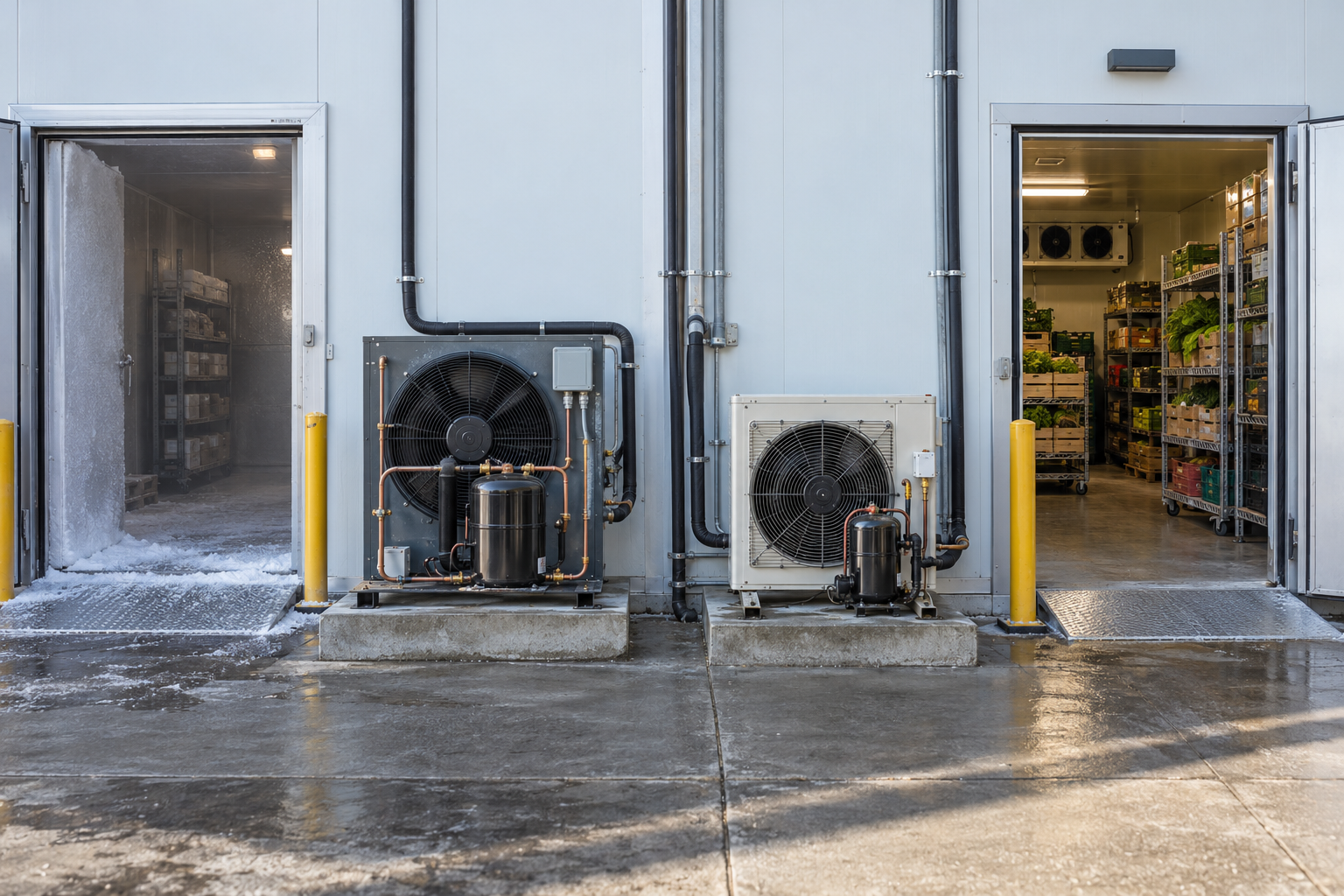
A low-temperature Kramer refrigeration condensing unit is the starting point for freezer duty; a medium-temperature unit is the starting point for cooler duty. The choice depends on more than the label or a similar-looking capacity figure. Compare capacity at the required operating conditions, then confirm electrical service and the components the unit will operate with. Kramer's condensing-unit range distinguishes the two duties.
Which Temperature Class Fits a Freezer or Cooler?
Start with the design box temperature and the evaporating temperature needed to maintain it. The evaporator must run colder than the space it cools, and freezer duty generally calls for a lower evaporating temperature than cooler duty. Kramer publishes separate medium- and low-temperature configurations because their operating conditions differ.
| Selection point | Low-temperature duty | Medium-temperature duty |
|---|---|---|
| Typical application | Freezer | Cooler |
| Operating comparison | Evaluate capacity at the freezer design's lower evaporating or suction condition. | Evaluate capacity at the cooler design's evaporating or suction condition. |
| Selection basis | The calculated load at the application's design conditions, not the temperature-class name alone. | |
A medium-temperature capacity rating at a warmer suction condition does not tell you how that unit will perform at a freezer's design condition. Nor should normal holding duty be confused with a special pull-down load: cooling a newly loaded space or warm product within a specified time can impose a different demand. Include the intended operating scenario when calculating the load rather than selecting by box temperature alone.
There is a limited qualification to the usual freezer-versus-cooler distinction. Kramer offers extended-range medium-temperature configurations as well as low-temperature models. Check the particular model's approved operating range and defrost equipment before selecting freezer duty; the temperature-class label alone does not establish the application. The Kramer K-Series product information identifies the applicable option.
Why Similar Capacity Figures May Not Describe Similar Performance
Rated capacity is the rate of heat removal at specified conditions. In Kramer's Next-Gen II 3–22 HP performance data, capacity changes with the selected model, refrigerant, ambient temperature, and suction or return-gas conditions. A capacity number without those conditions is not a promise that a unit will maintain a particular box temperature.
The Next-Gen II catalog illustrates a particularly important comparison trap: it publishes R404A medium- and low-temperature family capacities at 95°F ambient and 60 Hz, but at different suction temperatures. Those figures describe performance at their respective rating points. Comparing the numbers as though they were measured at one common freezer condition would misstate what they mean.
Calculate the refrigeration load for the design conditions, then find the chosen complete model's capacity at the applicable refrigerant, evaporating or suction temperature, and outdoor ambient. The load accounts for what the room and its contents require the system to remove; the condensing-unit rating describes what that unit can remove at its stated conditions. HTPG's RapidSpec selection software replaces KramerBox and includes box-load calculation and equipment selection. The manufacturer or its representative can help select equipment for the calculated load.
A medium-temperature rating at a warmer suction temperature cannot be substituted for a low-temperature rating at the freezer design point. Likewise, a rating using a different refrigerant or ambient condition needs the appropriate model-specific performance data before it can answer the same design question.
How Do Electrical Requirements Affect the Choice?
A site's available electrical supply can rule out a model before circuit sizing begins: cooling capacity cannot make equipment specified for a different phase suitable for that supply. The complete Kramer model determines its required voltage, phase, and frequency; its freezer or cooler designation and horsepower do not.
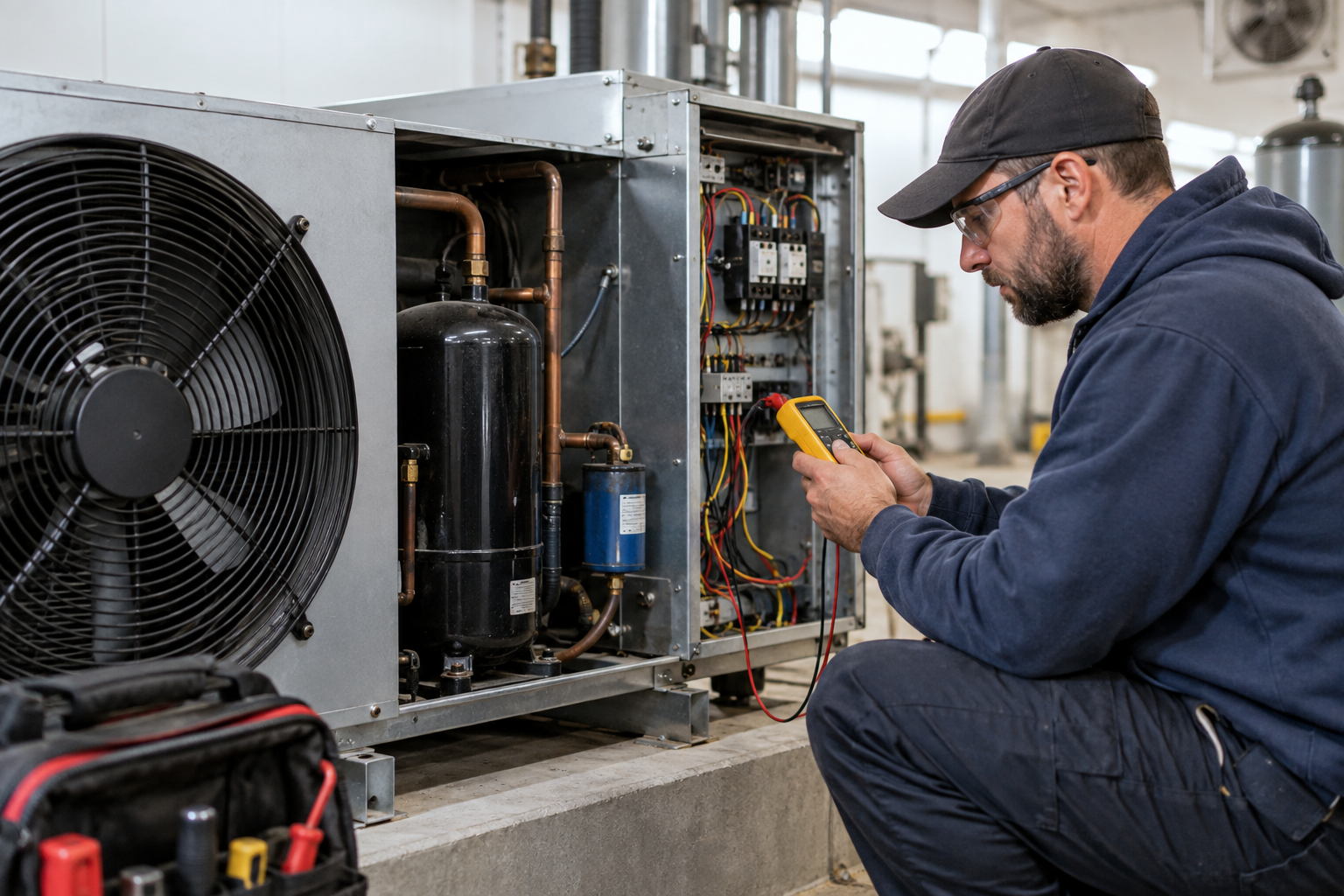
Supply compatibility and circuit sizing answer different questions. Voltage and phase establish whether the selected equipment suits the site's power. Minimum circuit ampacity (MCA) is used to size the supply conductors, while maximum overcurrent protection (MOPD) limits the protective device. Kramer's Next-Gen II catalog distinguishes electrical configurations by model code, and its Next-Gen II electrical tables give circuit values that vary by model and configuration. A capacity rating, or an MCA or MOPD value copied from another unit, cannot answer either question for the selected model.
Configuration also affects how those circuit values are read. Kramer's Next-Gen II electrical tables include a control-circuit allowance in MCA and direct users to confirm circuit data with Application Engineering when applied electric-defrost loads exceed the table values. Use the data for the complete ordered configuration, including applicable defrost equipment, when specifying the circuit.
Establish the site's supply while narrowing the model choices, rather than after selecting by refrigeration capacity. For the final electrical design, the installer should use the selected equipment's current nameplate and installation information.
What Else Must Match the Condensing Unit?
The condensing unit is one part of the refrigeration circuit. The evaporator absorbs heat in the box; the expansion device meters refrigerant into it; the condensing unit compresses and rejects the collected heat. Matching the condensing unit and evaporator means selecting components that work together at the intended load and operating temperatures, not pairing units simply because their nominal capacities look alike.
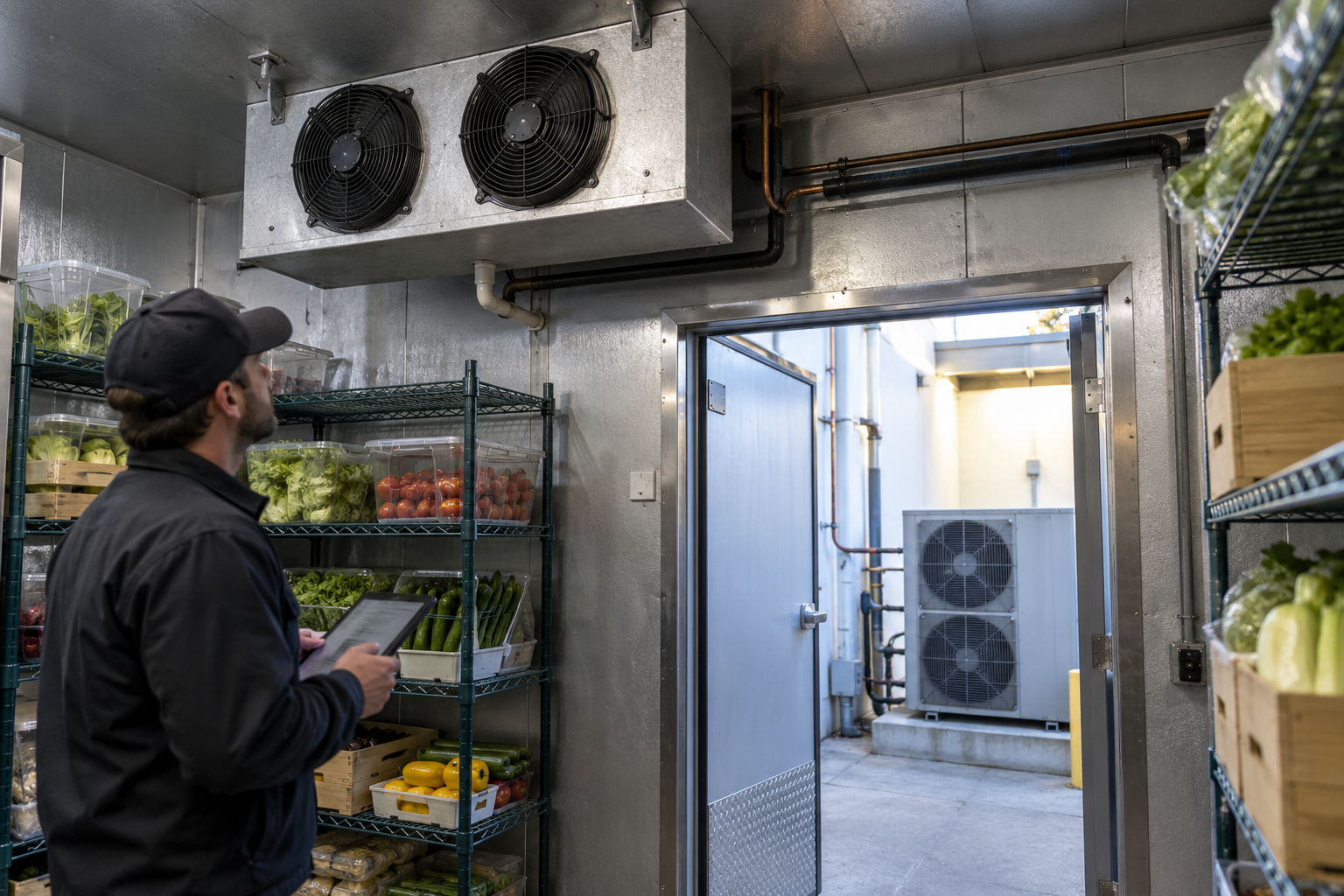
Confirm the selected model's approved refrigerant and operating range, then size the evaporator and expansion valve for the same design conditions. The expansion valve must suit the system capacity and its ratings. Liquid-line pressure loss can reduce performance, so line sizing remains part of the system design even where a condensing-unit configuration provides subcooled liquid.
For a freezer, include evaporator defrost and drainage in that match. Kramer's Low Profile unit-cooler information describes multiple defrost configurations; it does not establish one arrangement for every installation. Defrost controls and the number of evaporators they can serve also depend on the chosen configuration.
A practical matching sequence is to establish the box temperature and calculated load, select the condensing unit at the required operating conditions, then confirm its refrigerant and electrical configuration against the evaporator, expansion device, line design, and applicable defrost arrangement. Kramer's selection guidance calls for matching the condensing unit to the evaporator and system conditions rather than treating catalog capacity as a complete system selection.
Choosing the Right Kramer Unit
Choose freezer or cooler duty first, then compare Kramer condensing units at the design load and the operating conditions the job requires. A candidate is ready for selection only when its complete model specifications also suit the available electrical service and the matched refrigeration system. Use the current individual model information, not a family rating, to settle those details.
 Heating
 Learning Center
 Money Saving Tips
 Buying Guides
 State by State
 HVAC Systems