




 hvac systems
 learning center
 money saving tips
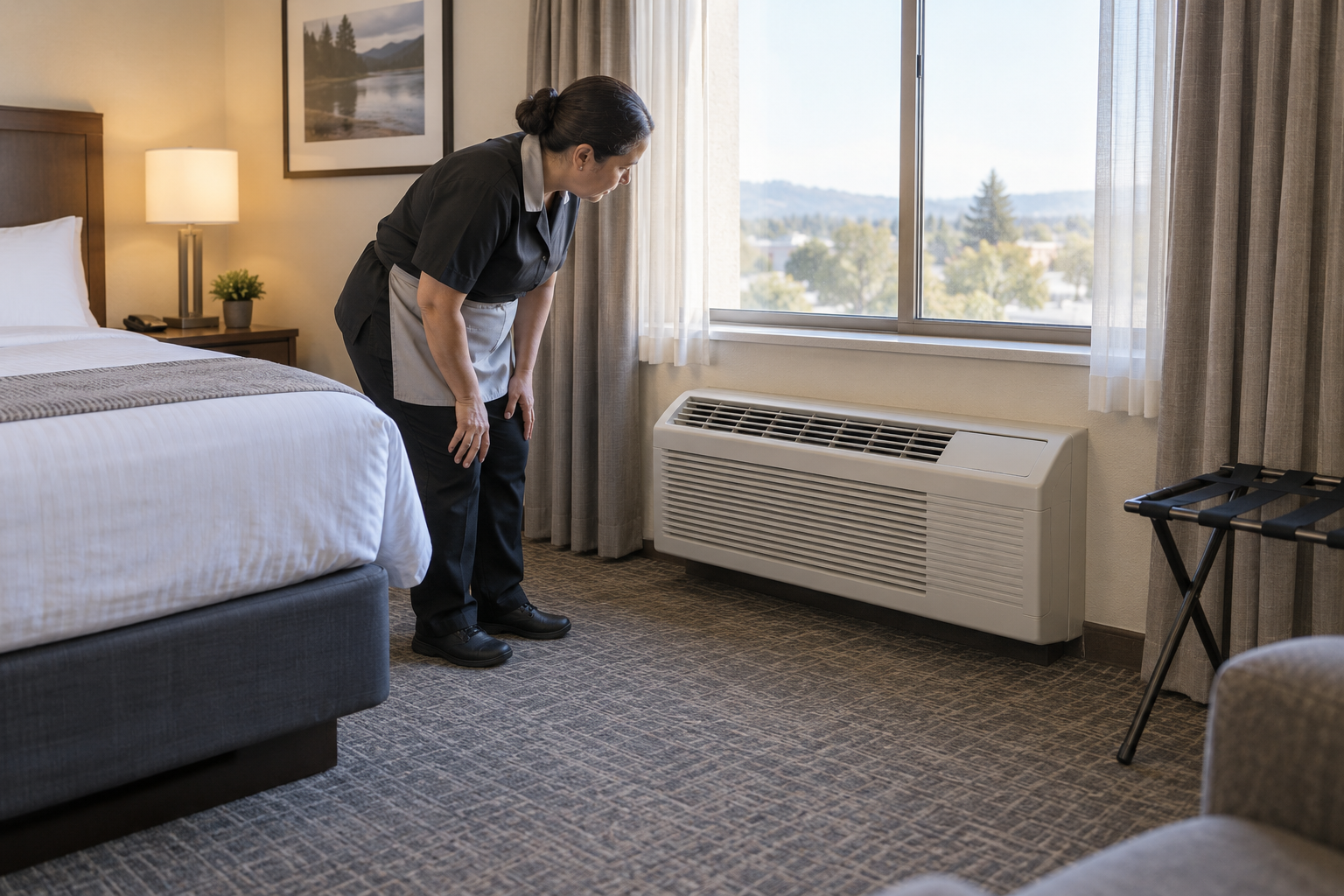
At each guest-room turnover, housekeeping can note visible PTAC problems before the room is reassigned. Recurring filter and accessible-control reviews, followed by planned service before the main cooling and heating periods, complete the three-part cadence. Designated maintenance staff handle accessible tasks using the installed model's cleaning instructions; qualified technicians handle repairs. This keeps checks consistent across rooms without assuming every PTAC has the same filter, controls or drainage design.
The Maintenance Schedule at a Glance
Use this cadence as a property workflow, then set each unit's cleaning and service tasks according to its model-specific instructions. A monthly review is a starting point for finding buildup, not a universal monthly cleaning rule.
| When | Owner | Check or task | Escalate when |
|---|---|---|---|
| Every room turnover | Housekeeping | Look for blocked airflow, visible dirt or water; note unusual sound or odor and ordinary control response. | Water, persistent abnormal operation or a concerning odor is present. |
| Monthly review to start; adjust for conditions | Designated maintenance staff | Inspect filter condition and accessible controls; clean or replace filters when required by the model's instructions and condition. | Buildup returns quickly, a filter is damaged, or controls do not respond as expected. |
| Before heavy cooling and heating periods | Maintenance lead and qualified technicians | Review room logs, verify appropriate operating modes and arrange model-specific inspection and service. | Inspection identifies a drainage, electrical or mechanical problem needing repair. |
Increase the review frequency where occupancy, dust or repeated filter buildup warrants it. Keep the turnover check brief; it is not a substitute for scheduled service.
What to Check Between Guests
While the room is vacant, housekeeping can make a noninvasive check of the PTAC unit. Look for luggage, furniture or curtains obstructing the return or discharge air path, and note dirt visible on the grille. Check the floor and wall around the unit for water or staining. A brief check using normal guest-accessible controls can also reveal an unresponsive display, unusual noise or odor.
Record what happened rather than naming a failed part: for example, "cooling selected; fan ran; no change noticed during brief check." A short test does not establish a fault by itself. The <a href="https://www.greecomfort.com/assets/our-products/ptac-ii-r32/documents/ptac-ii-r32-owner-s-manual-a.pdf">Gree PTAC II R32 owner's manual</a>, for example, describes a protective delay of about three minutes before the compressor starts after a power outage or a restart. Maintenance can assess the observation under the installed unit's operating instructions.
Send visible water, a burning odor, persistent abnormal noise or a unit that will not operate normally to maintenance before assigning the room to another guest. If an obstruction is simply a movable room item, clear it; leave panels, wiring and fault diagnosis to maintenance personnel.
Recurring Filter and Control Checks
At each recurring review, designated staff should identify the installed model before working on its return-air filter. Check for loading, damage and correct fit. Clean or replace the filter only as that model directs, then reinstall it correctly before operating the unit. Filter access and cleaning methods differ: the Gree ETAC III R32 owner's manual is an example of instructions for a particular unit, not a procedure for every hotel PTAC.
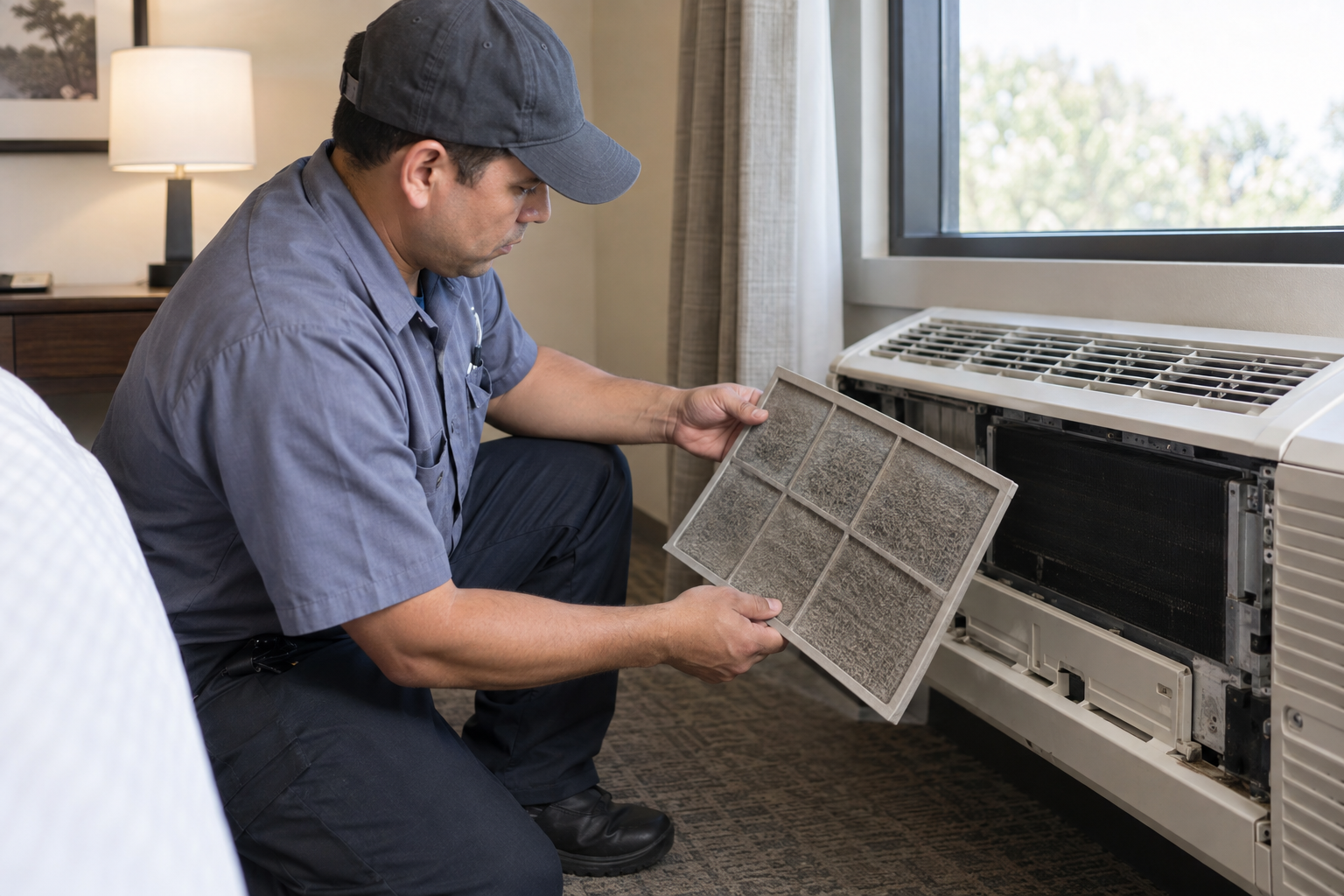
Hotel PTAC filter cleaning should follow both the unit's specified interval and its observed condition. More dust or heavier use can call for earlier attention. Record the date and whether staff inspected, cleaned or replaced the filter; otherwise, a monthly check can easily be mistaken for a completed cleaning.
With the unit reassembled, check accessible settings, display and airflow during normal operation. If a control response is unexpected, note the selected mode, room conditions and what the unit did. Allow for any model-specific start delay before treating a short wait for cooling as a failure.
How to Handle Water and Drainage Concerns
Visible water at or below a PTAC needs prompt attention because it can damage the room. Water inside the room is an observation, not a diagnosis: condensate handling varies by unit, and a clogged drain is only one possible cause of indoor dripping on the Gree ETAC II described in its owner's manual.
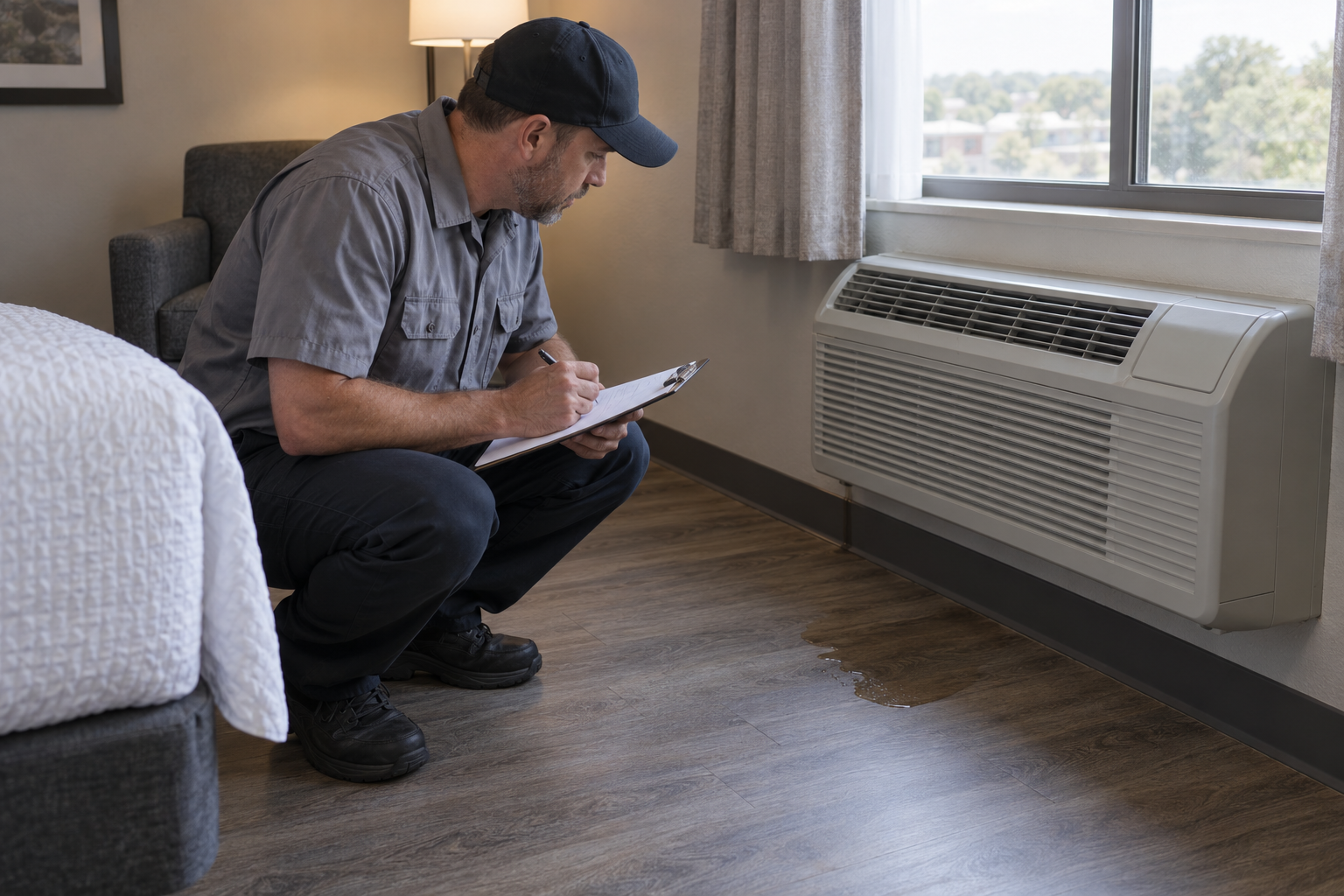
Keep the affected room out of service pending maintenance review when water could affect the guest space. If it is safe to do so, stop the unit with its normal accessible controls. Open a work order stating where the water appeared, whether it was actively dripping, the selected operating mode and when it was noticed. A photograph can help staff distinguish a recurring leak from an old stain.
Assign PTAC drainage inspection and correction to trained personnel following the installed model's instructions. Staff making the room check should not remove panels or attempt to clear an internal drain. Maintenance should record the cause found, the action taken and whether water reappears during an appropriate operating check before the room returns to service.
What to Schedule Before Cooling and Heating Seasons
Plan seasonal PTAC maintenance ahead of the property's heavy cooling and heating periods, when rooms can be released in blocks rather than taken out of service unexpectedly. Begin with recurring complaints and filter records to identify rooms that need more than routine inspection. Give staff the installed model's instructions and schedule its specified component inspections and cleaning.
During planned work, verify cooling or heating operation under conditions appropriate for the selected mode. Include the drainage and operating checks called for by the applicable model. Do not treat one unit's maintenance interval as the standard for another: the Friedrich SG-series installation and operation manual, for example, specifies inspections for named components of that series.
Reserve electrical access, refrigerant work and internal mechanical diagnosis or repair for qualified technicians. If planned cleaning requires access beyond the staff member's training, schedule the appropriate service personnel rather than expanding a routine room-check assignment. Document any room that cannot pass its operating check so it is not marked complete merely because a seasonal visit occurred.
How to Run the Schedule Across Many Rooms
Give each room a maintenance-log entry with its unit model, check date, filter action, observed symptom, assigned owner and work-order closure. Keep a short handoff from housekeeping to maintenance: room number, observation and time are more useful than a guessed diagnosis. Model identification matters when rooms have different filters, controls or service instructions.
Group preseason appointments by floor or room block and coordinate them with guest stays. Review the log periodically for filters that load sooner than expected and for repeat water or control complaints; shorten the relevant inspection cadence or arrange deeper service where the pattern warrants it. Keep unresolved work orders visible until the room has been checked again.
If a unit or accessory needs replacing, Budget Heating's hotel-style PTAC unit and PTAC accessories categories provide places to begin browsing. Match any proposed item to the installed model and check its current product listing before ordering.
Put the Cadence Into Practice
Start the PTAC maintenance schedule with a turnover check in every room, a recurring condition review and service booked before peak seasons. Assign each exception to an owner, close it only after follow-up, and keep technical repairs with qualified personnel. That gives a multi-room property one workable process while allowing each installed unit's instructions to govern the work itself.
 Cooling
 Heating
 Product and Brands Insights
 Buying Guides
 State by State