




 hvac systems
 money saving tips
 product and brands insights
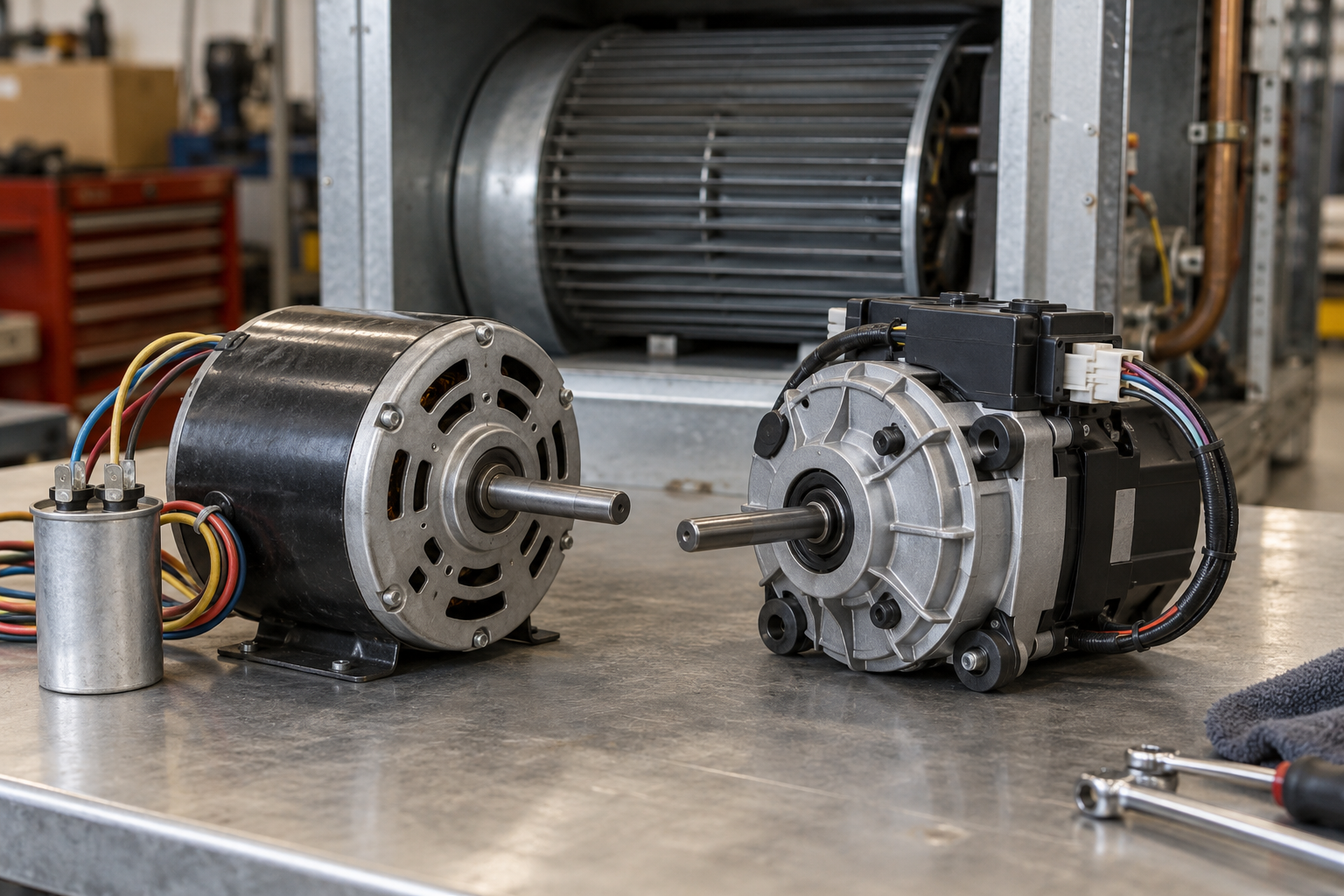
A PSC blower uses wired speed leads and a run capacitor; an ECM uses an electronic module and depends on the control interface specified for its system. Carrier's FMC5X, for example, has a three-speed PSC blower, while Trane's VelociTach system requires a correctly configured board and matching motor harness. An ECM blower motor replacement must therefore suit the air handler's controls, electrical supply and blower assembly; matching horsepower or fitting the bracket is not enough. Start with the unit's OEM motor part number: a like-for-like replacement retains its intended control arrangement, a documented substitute serves a specified application, and a conversion kit changes what the existing controls can operate only where that kit expressly supports the equipment.
How Do ECM and PSC Air Handler Motors Differ?
On a PSC air handler motor, the selected speed lead determines which winding receives power, while a run capacitor is part of the motor's operating circuit. The air handler's wiring determines which lead is used for a given blower setting. For example, Carrier's 42NH/42NL instructions describe fan wiring and capacitor replacement for those units. Another air handler may use different connections or settings.
An ECM uses an electronic module to operate the motor. How the air handler requests a blower setting depends on the particular ECM and equipment interface. For instance, Goodman's service information for one multi-speed ECM describes separate power and control wiring with designated control terminals. Trane's guidance for certain terminal products describes binary 24-volt and analog 0–10 VDC control options, along with configuration requirements. "ECM" therefore identifies a motor technology, not a single interchangeable control connection.
That motor control method is central to the ECM vs PSC blower motor decision. An air-handler board wired to select PSC speed leads does not, by that fact alone, provide the control an ECM expects. Conversely, a PSC motor cannot interpret ECM commands. Even between ECMs, similar-looking connectors do not establish that the commands or programmed settings match: two motors can fit the same space yet respond differently to the same board.
Which Part Numbers Identify a Compatible Replacement?
Start with the air handler's full model and serial information, then record the installed motor's label and OEM part number. Equipment configurations can use different motor and blower-wheel combinations, so a generic description such as "indoor blower motor" is too broad. Look up the approved replacement or documented superseding number for the exact unit rather than treating a similar rating as an OEM substitution. For equipment covered by Trane's terminal-unit instructions, replacement part and configuration requirements are tied to the documented application.
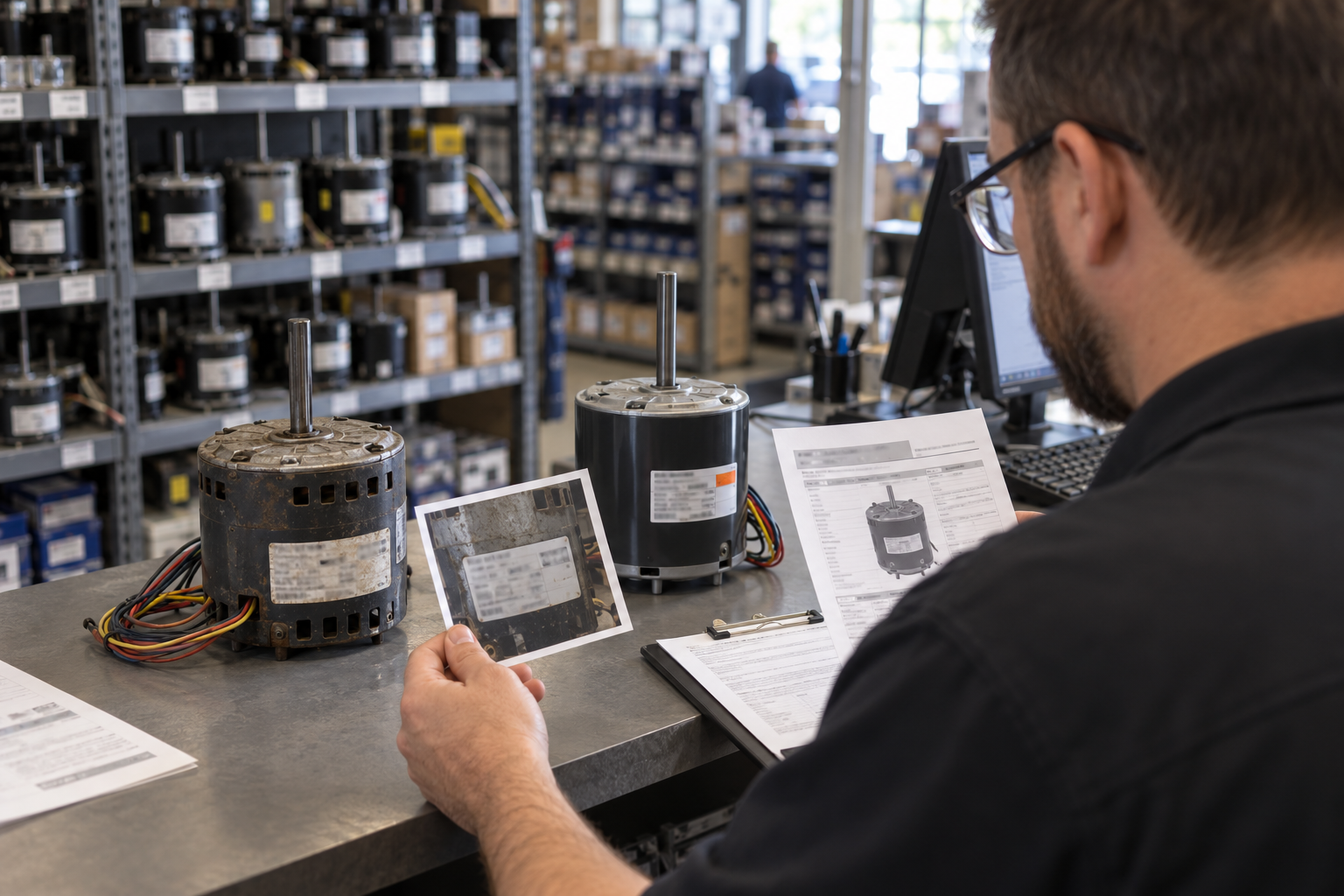
Identify what the repair actually replaces. An ECM motor and its electronic module may be supplied or serviced as different components, depending on the equipment. Carrier's FEM4X/FCM4 service documentation, for example, distinguishes a separately available module from a complete motor replacement. Ordering a motor assembly when only a specified module is called for, or ordering a module when the required part is an assembly, changes both the parts needed and the work involved.
Which Electrical Connections Must Match?
Compare the candidate part with the air handler's nameplate and model-specific wiring diagram. Supply voltage, motor ratings, wiring and control-board output must suit the replacement. Horsepower describes only one aspect of the motor; it does not establish that the air handler can power or command it correctly.
For a PSC replacement, check which speed leads the unit connects for its operating settings and which run capacitor the replacement motor specifies. The capacitor is an electrical operating component, not an optional accessory to select solely by physical fit. The applicable motor instructions and unit diagram determine the connections and capacitor rating.
For an ECM replacement, distinguish the incoming power connection from the control connection. Verify the specified signal or interface, harness and any required configuration for the exact application; an identical plug shape is insufficient. Trane's VelociTach instructions, for example, call for the correct harness, motor-voltage match and board configuration within that system. Those instructions are an example for the equipment they cover, not a wiring scheme for every ECM air handler.
What Must Fit Besides the Electrical Connections?
A replacement motor can fit its bracket yet leave the blower wheel in the wrong position. Compare motor mounting, shaft dimensions and the space available for the complete assembly. On a direct-drive blower, the wheel attaches to the motor shaft: its diameter must suit the wheel hub and attachment, while its usable length must allow the wheel to sit in the required position. The motor body, end bell or ECM module, connectors and wiring also need clearance from the housing and access panel. Rotation must suit the wheel and air-handler arrangement; a motor with reversible direction offers a different option from one with fixed direction.
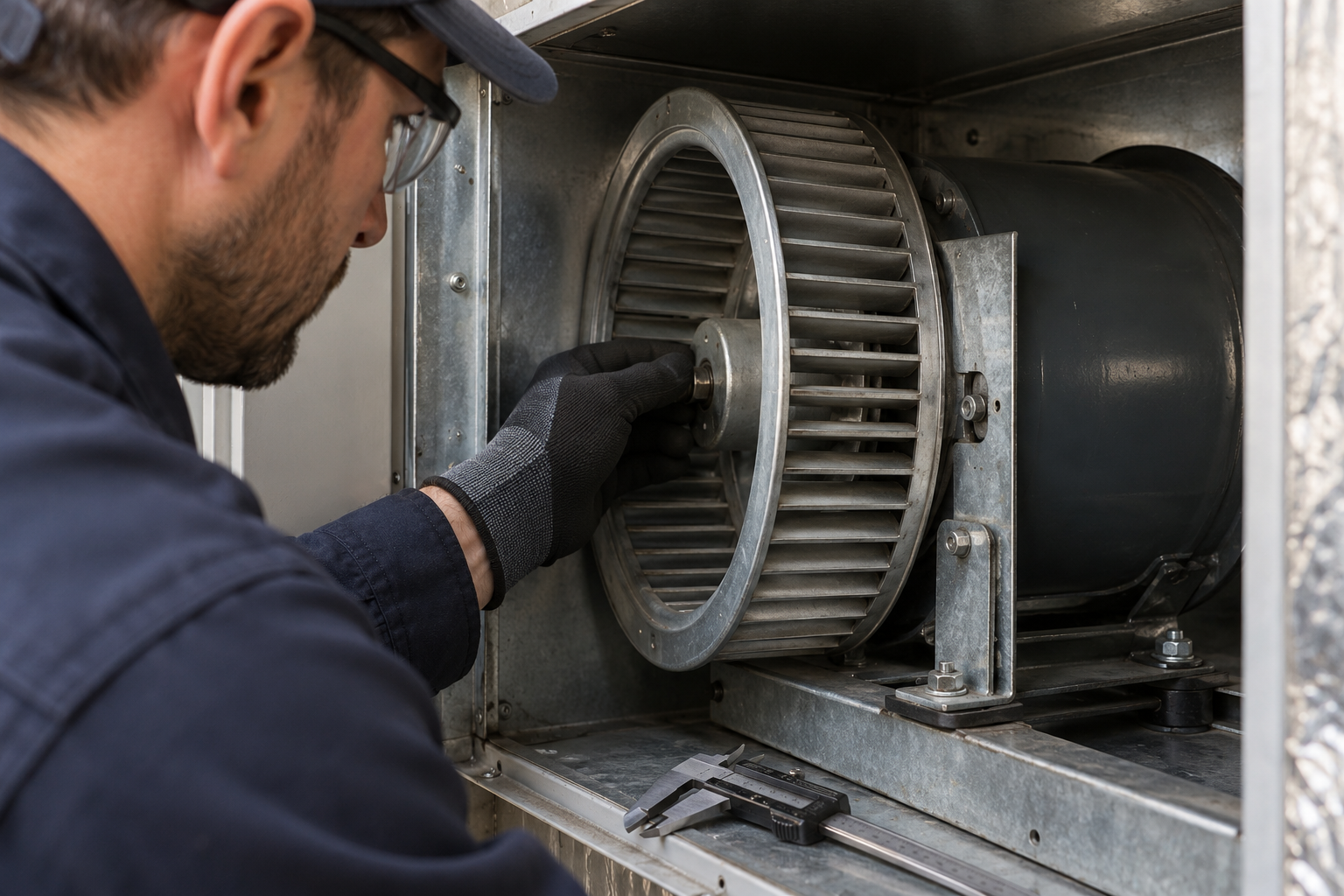
The secured wheel must occupy its specified position and turn without rubbing the housing. Even then, physical fit does not establish suitable airflow. Motor output, blower-wheel configuration and system conditions affect the air delivered through the unit. Match the replacement to the blower requirements of the particular air-handler model rather than applying another model's dimensions or performance expectations.
When Is a Like-for-Like Replacement or Conversion Appropriate?
A like-for-like OEM replacement is usually the most direct path because it retains the intended motor type and control arrangement, provided the part and setup are approved for the unit. A manufacturer-approved substitute can also be appropriate within its stated applications. "Replacement ECM" alone is not an application match: a substitute specified for one family of constant-torque ECM motors, for example, does not thereby cover every ECM interface.
Changing motor type is a different project. A supported conversion may require an interface, mounting components, wiring changes or configured settings, not merely a standalone motor with suitable horsepower. Mainstream Engineering's QwikSwap product information distinguishes conversion products by the ECM types they address and calls for application-specific electrical checks. In a separate Trane BLDC upgrade example, kit selection depends on unit characteristics, and existing rotation and speed values are used to configure the replacement module. QwikSwap defines its supported applications by motor type and product limits; the Trane kit is tied to specified units. Confirm the applicable product's compatibility criteria rather than treating either example as permission for any conversion.
Before selecting an individual product, compare its stated application or approved part number with the identified unit. Then confirm whether the listing describes a complete motor, a module or a kit, and check its control, electrical and mechanical specifications against the applicable instructions. If the proposed part changes motor type, obtain instructions that expressly support that conversion for the existing equipment rather than assuming the original board will run it.
Budget Heating's indoor evaporator and blower motors category is the more focused browsing path for an indoor blower. Its broader fan motors category also covers other fan applications. Browse by application, then use an individual listing and the equipment documentation to establish whether a candidate part fits; an outdoor condenser-fan motor is not interchangeable with an indoor blower simply because both are HVAC fan motors.
Choose the Motor That Matches the Air Handler
Choose from the air handler outward: identify its model and approved motor part, establish how it powers and controls the blower, then confirm the replacement fits and drives the existing wheel as specified. If changing from ECM to PSC or the reverse, use a conversion expressly supported for that application. A matching horsepower rating, or a motor that appears to bolt in, does not settle compatibility.
 Cooling
 Heating
 Learning Center
 Buying Guides
 State by State