




 heating
 hvac systems
 learning center

Heat pump thermostat compatibility depends on more than a heating-and-cooling stage rating. The control must suit the equipment's thermostat interface, command its compressor stages, operate its reversing valve in the correct mode, and support any backup-heat functions. Those requirements come from the specific heat pump, indoor equipment, and thermostat, not a universal wiring diagram.
How many heating and cooling stages does the heat pump need?
A compressor stage is a distinct capacity step the thermostat can call for. A single-stage heat pump has one compressor call; a two-stage heat pump has a second call for additional capacity. Compressor stages generally serve both heating and cooling. The reversing valve changes operating mode; it does not count as another compressor stage.
Start with the outdoor-unit model and its installation instructions to determine the required heat pump thermostat stages. For a conventional two-stage arrangement, a thermostat must be able to call for the second compressor stage, not merely have a second heating output intended for backup heat. Thermostat instructions distinguish a Y2 compressor call from an Aux/E backup-heat call. If the control cannot issue the equipment's required compressor calls, it cannot stage that equipment as intended.
What does “3 Heat | 2 Cool” mean for a heat pump?
In one supported heat-pump configuration, a 3 heat 2 cool thermostat counts two compressor stages used for heating plus one auxiliary-heat stage as three heating stages. The same two compressor stages provide the two cooling stages. That rating describes capacity for calls, not a required number of connected wires or a fixed assignment for every system.
A system with fewer stages may not need all that capacity. Conversely, "3 Heat | 2 Cool" does not establish whether a particular thermostat offers the auxiliary outputs, emergency mode, or fuel-changeover behavior a system needs. Compare its heat-pump configuration and terminal functions with the equipment requirements rather than selecting by the category label alone.
Does the thermostat control the reversing valve correctly?
A heat pump uses a reversing valve to change the refrigerant flow between heating and cooling. The thermostat's O/B output controls that valve, but the required energized mode depends on the equipment. Thermostat setup commonly distinguishes O, energized in cooling, from B, energized in heating; the heat pump's instructions determine which setting applies.
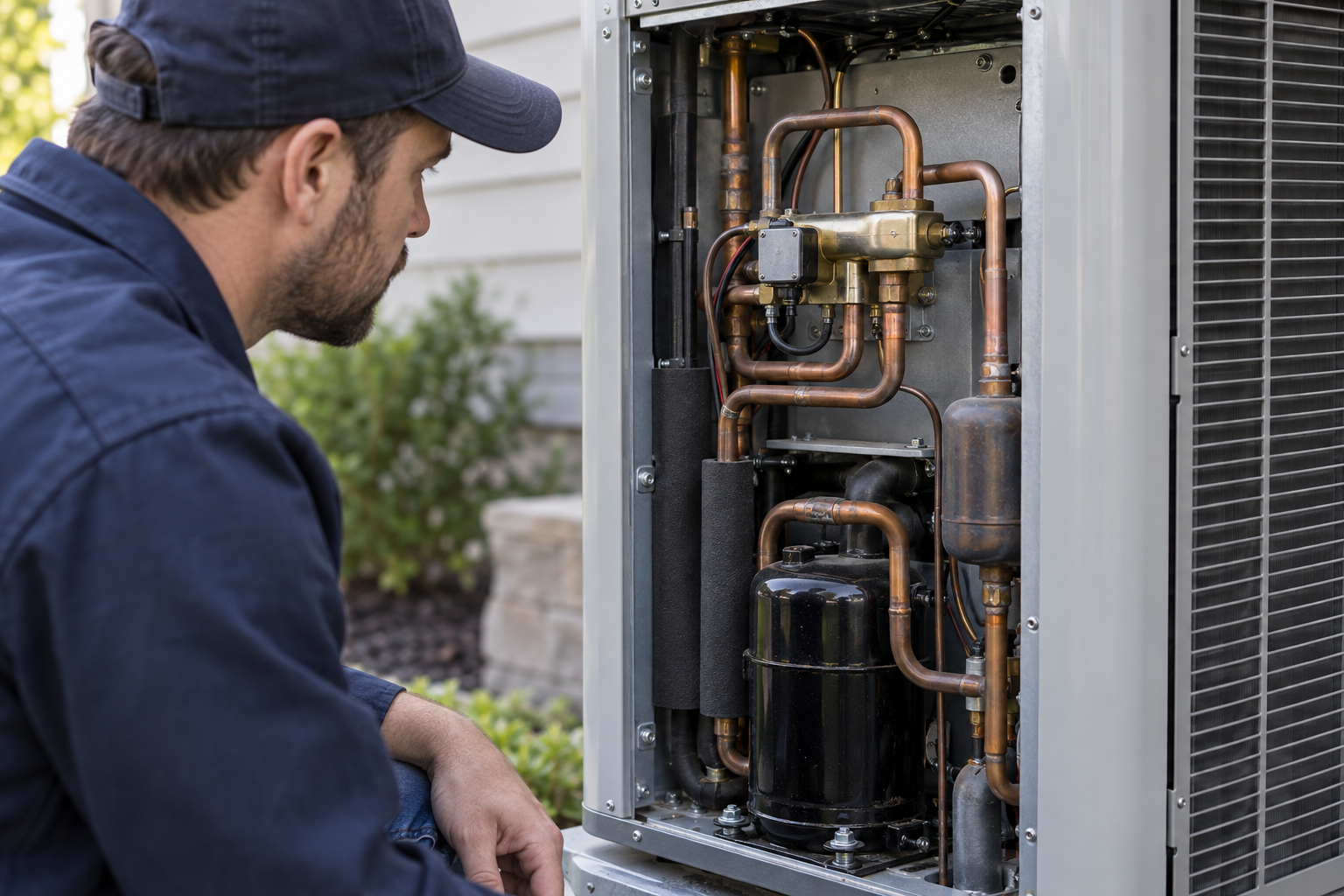
If the heat pump reversing valve thermostat is set for the opposite behavior, the equipment can deliver heating when cooling is requested, or cooling when heating is requested. An O/B terminal alone is therefore insufficient: the thermostat must support the equipment's changeover behavior and be configured for it. This is a mode-control requirement, separate from stage count.
How should auxiliary and emergency heat be controlled?
Auxiliary heat supplies additional heating when the heat pump alone cannot meet demand; electric heat strips are a common example. Depending on the system's controls, backup heat may run with the compressor or the compressor may be cut off. An auxiliary heat thermostat needs an output and configuration suited to the backup equipment, not just enough numbered heating stages.
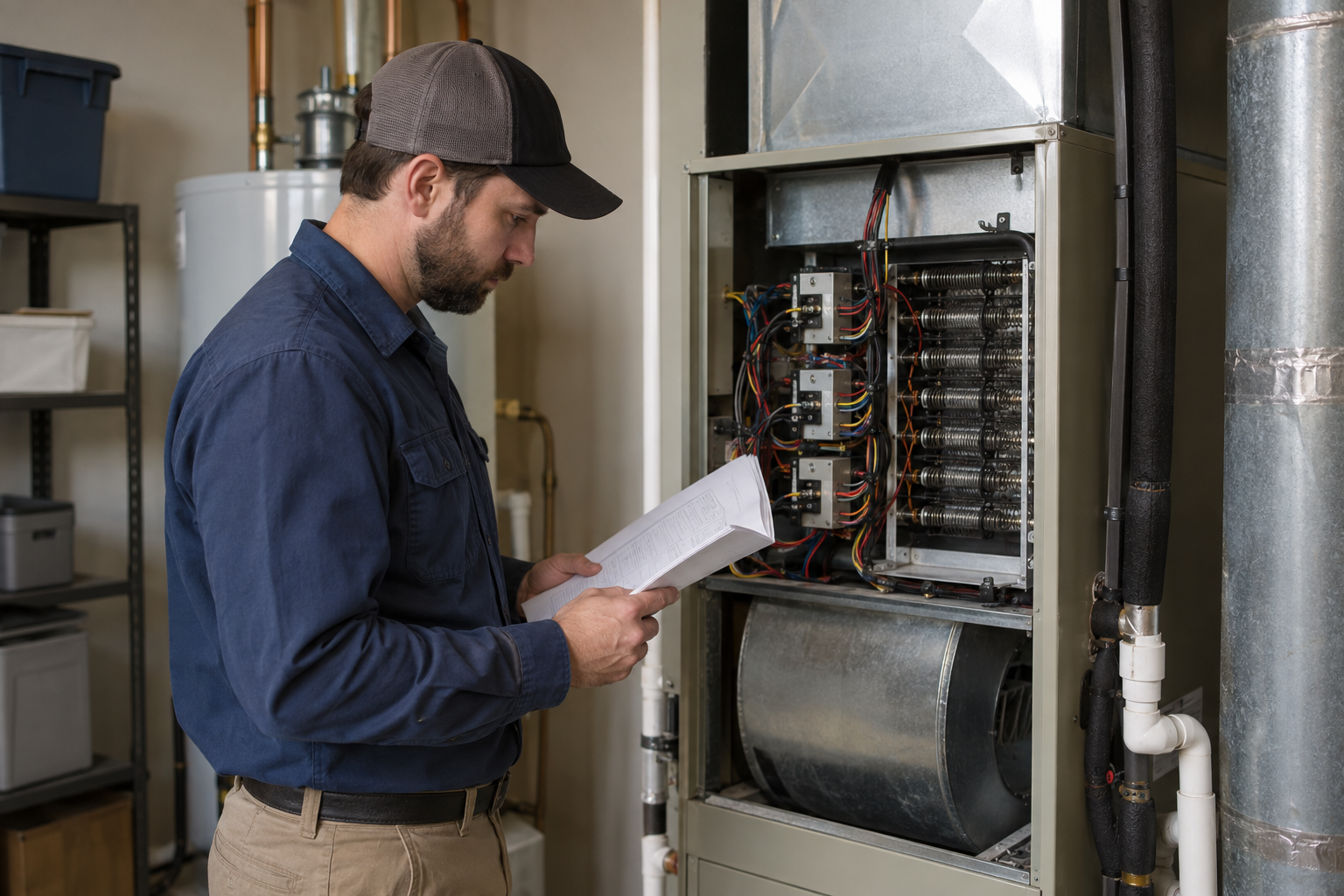
Emergency heat is different: it is a selected operating mode that, where supported, uses backup heat instead of normal compressor heating. The same heat source may serve both auxiliary and emergency operation, or the system may have separate connections or sources. Thermostats also differ in whether they control those functions together or independently. An Aux/E marking does not, by itself, settle which arrangement the control supports.
What changes when backup heat is a furnace?
A furnace used as backup makes the system dual fuel, rather than simply a heat pump with electric resistance strips. Electric auxiliary heat may operate alongside the compressor; a heat-pump-and-furnace system needs coordinated changeover between its heat sources and may need to prevent simultaneous heating.
That changeover may be handled by a thermostat or a separate equipment control board. Controls can use outdoor temperature and other staging settings to decide when to switch fuels. Before choosing a thermostat, identify which component in the installed system makes that decision and what signals it requires. Three available heating stages do not substitute for the required dual-fuel logic.
Can a 24-volt thermostat replace the existing control?
A conventional 24-volt system accepts discrete thermostat calls for functions such as compressor stages and backup heat. Some communicating systems instead exchange information over a system-specific connection and require an approved controller. The presence of low-voltage wiring does not make a standard 24-volt thermostat a direct replacement; check the equipment's supported control interface first.
Power is a separate question. A C wire supplies a common connection for thermostats that require one, but it cannot add missing compressor, reversing-valve, or backup-heat functions. Check the exact thermostat's power instructions. Likewise, do not choose a replacement from wire colors or matching terminal letters alone: identify what each existing connection does from the equipment and control instructions.
How can I narrow the controls on Budget Heating’s site?
Gather the outdoor and indoor equipment model numbers, then identify the control interface, compressor-stage count, reversing-valve operation, backup-heat type, and any required emergency or dual-fuel mode. These details give you a useful specification to compare with a candidate thermostat. If an existing connection is unclear, use the equipment wiring diagram rather than treating its color as a function.
Browse Budget Heating's Thermostats / Controls category, or its 3 Heat | 2 Cool thermostats category when that stage range is relevant. Those pages help narrow the search; a category label does not establish a particular product's availability or fit.
For any candidate, check its current product listing and manufacturer installation instructions against the equipment's instructions. Read the supported heat-pump configuration, not just a headline stage rating: conventional-system ratings and terminal assignments can differ from heat-pump settings.
What makes the final match?
A compatible heat pump thermostat is one whose specified control interface and heat-pump configuration match the installed equipment's required functions. Resolve any unclear connection or operating mode from the equipment and thermostat instructions before ordering; for communicating or dual-fuel controls whose arrangement remains unclear, have a qualified HVAC professional identify the required controller.
 Cooling
 Money Saving Tips
 Product and Brands Insights
 Buying Guides
 State by State