




 heating
 learning center

Why Regular HVAC Maintenance Matters for Every Home
Think of maintenance as an investment that protects comfort, health, efficiency, and the value of your equipment. A well cared for system runs smoother, uses less energy, and is far less likely to quit on the hottest or coldest day. Like routine tune ups for a car, small checkups keep the whole system dependable and predictable.
This matters for homeowners, renters, and landlords alike who want to cut utility bills, avoid emergency repairs, and breathe cleaner indoor air. Regular HVAC maintenance is not just about comfort. It improves energy efficiency, extends equipment life, reduces unexpected breakdowns, supports indoor air quality, keeps warranties valid, and lowers overall ownership costs.
In the pages ahead, expect a clear, practical look at what maintenance really delivers. You will see how consistent care helps your system use less energy, how it adds years of service, why it prevents surprise failures, and how it supports healthier air in the spaces you live and manage. You will also learn how staying on top of maintenance protects warranties and keeps total costs in check, so you can plan instead of react.
Benefit 1: Lower Energy Bills: How Maintenance Keeps Your System Efficient
Energy savings start with airflow. Clean filters and clear ducts keep static pressure low, so the blower moves the required air with less wattage. In practice, lower static pressure reduces blower amp draw, and cleaning alone can cut blower electricity roughly 41% to 60%.
Coils need the same attention. Dust and biofilm insulate evaporator and condenser surfaces, forcing longer run times. Washing restores heat transfer, so the compressor and fans do less work.
Then verify refrigerant charge and controls. Correct charge, accurate sensors, and proper fan speeds keep superheat, subcooling, and temperatures in line, trimming compressor and blower energy.
This all ties to SEER2. Because SEER2 testing is sensitive to duct restrictions and static pressure, a maintained system operates much closer to its tested rating, and that consistency shows up as noticeably lower utility bills.
Benefit 2: Fewer & Less Costly Repairs: Catch Small Problems Before They Become Emergencies
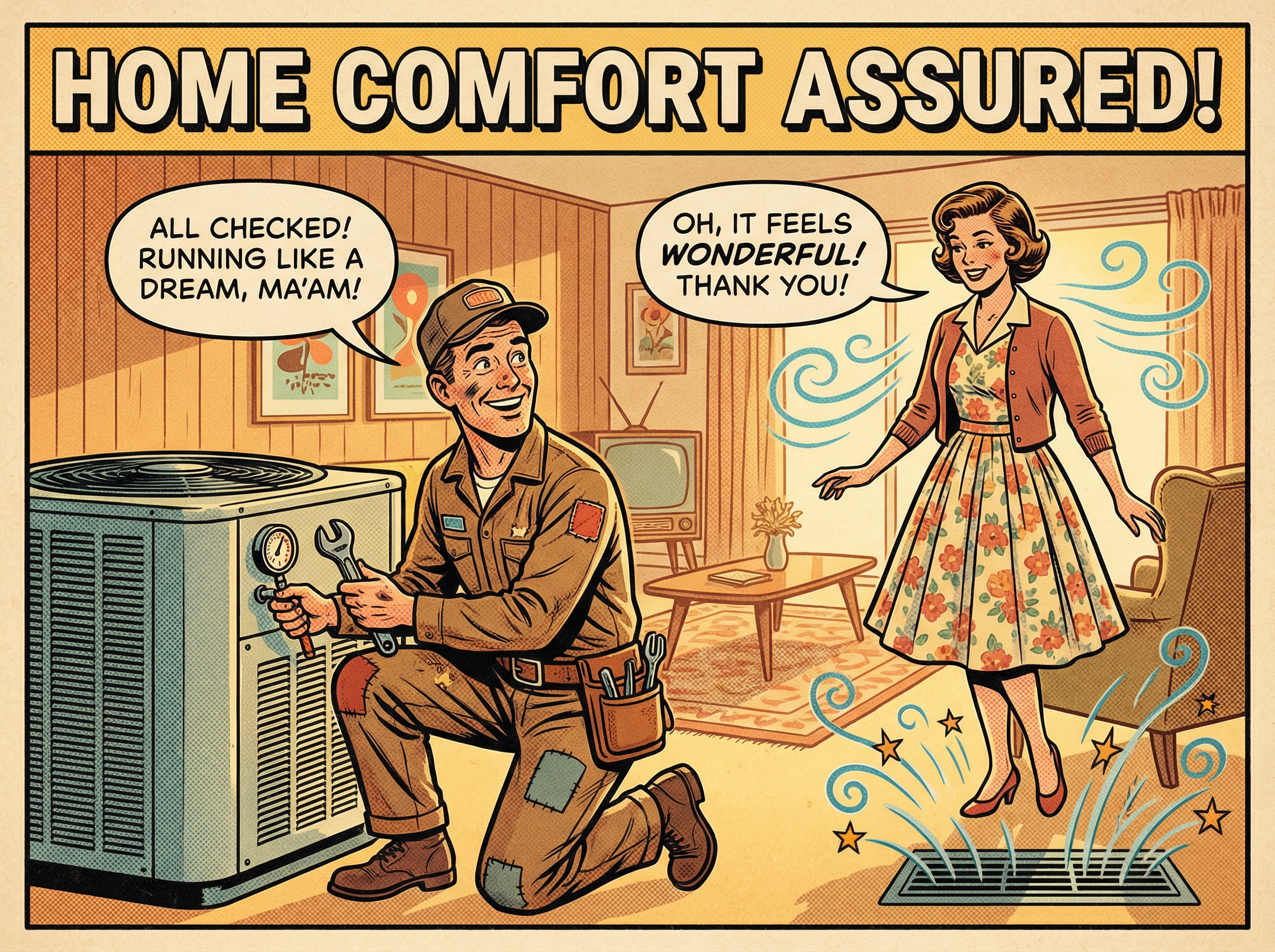
Routine tune-ups are like tightening a loose hinge before the door tears out. During an inspection, a technician spots worn belts, loose or burned electrical connections, failing capacitors, clogged condensate drains, and early refrigerant or airflow issues that would otherwise snowball into a no-heat or no-cool call. In our experience at Budget Heating (BudgetHeating.com), replacing a $20 capacitor at the first sign of weakness can keep a compressor from overheating and failing.
Financially, a predictable tune-up, usually around $120 to $200, beats an emergency visit plus major parts. Compressors often run $2,000 to $4,000 installed, and heat exchangers $1,500 to $3,000, not counting after-hours premiums. Catching small faults early lowers total repair spend across the life of the system and avoids the scramble of mid-season breakdowns. It is steady, planned maintenance instead of surprise, high-ticket repairs.

Benefit 3: Longer Equipment Lifespan, Get More from Your HVAC Investment
Regular maintenance is like riding a bike with properly inflated tires, everything turns easier and parts last longer. Lubrication, coil and blower cleaning, timely part replacement, and balanced airflow keep the system from fighting friction and blockages. When compressors, motors, and heat exchangers can move air and refrigerant freely, they run cooler and with less effort, which cuts mechanical stress.
That reduced strain extends the lifecycle. Well-maintained systems are more likely to reach 15 to 25 years, while neglected units commonly fail much earlier. By delaying premature replacement, you lower lifetime cost of ownership and avoid large one time capital expenses. In our experience at Budget Heating (BudgetHeating.com), customers who follow a simple seasonal plan reliably stretch equipment life and protect efficiency, turning routine service into measurable return on the original HVAC investment.
Benefit 4: Better Indoor Air Quality, Health and Comfort Advantages
Routine maintenance keeps the air you breathe cleaner by letting filters do their job, capturing dust, pollen, and pet dander before they circulate. Choosing the right MERV rating and holding humidity near 30 to 50 percent supports that goal, with details in the homeowner checklist. Inside the system, the evaporator coil and blower are the lungs of your HVAC. When coils are clean, condensation drains properly and does not become a breeding spot for microbes.
In our experience at Budget Heating (BudgetHeating.com), a simple tune up often cuts dust and musty odors right away. Dirty coils and blowers spread that growth into ducts, so debris builds up far more slowly when they are maintained. Result: fewer airborne irritants, fewer allergy and asthma triggers, and easier breathing, all because the system is not recirculating what should have been trapped or washed away inside the equipment.
Benefit 5: More Reliable Performance (and When Maintenance Isn’t Enough)
In our experience, routine tune ups keep systems steady: proper airflow, calibrated thermostats, clean coils, and well set controls reduce surprise breakdowns, limit short cycling, improve dehumidification, and keep rooms at consistent temperatures.
- Bigger is not better, oversizing causes short cycling.
- Replace filters on a schedule, not only when they look dirty.
- Do not close vents to save energy, it raises duct pressure.
- Cranking the thermostat will not heat or cool faster.
Maintenance has limits. It cannot fix a wrong sized unit, severely leaky or undersized ducts, or a compressor near end of life. In those cases consider professional duct sealing or rebalancing, zoning to handle uneven loads, or replacing with correctly sized equipment. In very cold climates, a different heating technology may be a better fit.
Benefit 6: Warranty Protection, Safety Checks & Resale Value
Most manufacturers tie parts coverage to proof of annual professional maintenance. Keep every receipt and tune‑up report, and make sure the visit includes a written checklist. In our experience at Budget Heating (BudgetHeating.com), warranty claims move faster and are rarely challenged when that paper trail is in order.
Seasonal safety inspections catch issues before they become hazards: carbon monoxide leaks on fuel equipment, loose electrical connections that cause overheating, and refrigerant leaks that sap performance. With recent SEER2, EER2 and HSPF2 changes, plus the transition to A2L refrigerants, trained technicians are essential for code compliance, safe handling and preserving the efficiency you paid for.
Regional needs matter too: hot‑humid homes need condensate and coil attention, cold climates benefit from combustion and defrost checks, and coastal properties need corrosion inspections. A documented service history is like a stamped service book, it reassures buyers and inspectors, supports resale value, and helps the home sail through due diligence.
Benefit 7: Improved Home Comfort & Consistent Temperature Control
When a system is tuned, your home feels even. Routine maintenance tightens up comfort control, so rooms settle at the same temperature, hot and cold spots fade, and dehumidification is stronger during the cooling season. In our experience at Budget Heating (BudgetHeating.com), small adjustments like thermostat calibration and confirming proper balance across supply and return runs can make a difference in a single visit.
Comfort is not just about equipment output, it is about zone balance. We verify airflow, set fan speeds as specified, and balance registers so each space gets its share. Paired with basic home envelope upgrades and duct sealing, a maintained system delivers the steady comfort most homeowners expect, and it cuts down on comfort complaints or the sense that a system is underperforming. The result is stable temperatures, healthier humidity, and a home that feels consistent from morning to evening.
HVAC Maintenance Checklist: What a Pro Does (and What You Can Do Between Visits)
A little routine care keeps comfort steady and bills predictable. Here is what you can safely handle, and what to leave to a licensed technician.
- Filters: check every 30 to 90 days, replace or clean on schedule, pick a MERV 8 to 13 that your system supports.
- Vents and returns: keep grilles unblocked, vacuum registers monthly for steady airflow.
- Thermostat: review schedules each season, replace batteries yearly, recalibrate or replace if readings drift.
- Condensate drain: inspect monthly during cooling, use distilled vinegar per the manufacturer, confirm the drain pan is dry.
- Outdoor unit: maintain 2 to 3 feet of clearance, remove debris, avoid pressure washing fins unless the manufacturer allows it.
- Indoor air quality and envelope: aim for 30 to 50 percent humidity, seal common air leaks, consider duct sealing to reduce run time.
- Track monthly energy use and symptoms, and log maintenance dates. In our experience at Budget Heating (BudgetHeating.com), this helps spot issues early.
- Professional tune ups: schedule spring and fall. Ask the tech to clean evaporator and condenser coils, clear and test condensate drains, verify refrigerant charge, tighten electrical connections, lubricate motors, inspect blower and belts, verify airflow and delta T, inspect ducts, and test safety controls. Keep the report and receipt.
Safety first: you can handle filters, debris, and thermostat checks. Leave refrigerant, electrical diagnostics, combustion service, and deep coil or duct work to pros. If you smell gas, see arcing, get persistent short cycling, or find water or ice around equipment, shut it off and call a technician.
Conclusion: Schedule Regular Maintenance to Save Money, Improve Health, and Protect Your Home
Regular HVAC maintenance pays you back in seven ways: lower energy bills, longer equipment life, fewer surprise breakdowns, cleaner indoor air, steadier comfort, warranty and safety protection, and a smaller environmental footprint. For most homes, schedule professional service at least once a year, ideally before cooling and heating seasons twice yearly, and keep up with simple homeowner tasks between visits to lock in these benefits.
If you are weighing repair versus replace, or just want a clear plan, our team can help you map out the right maintenance cadence and parts. We have 30+ years in HVAC, were the first to sell systems online, and have fulfilled over 200,000 orders with U.S.-based technical support.
- Get a Custom Quote: pricing and options for new or replacement systems.
- Talk to Our Team: call for fast, U.S.-based guidance on service timing and parts.
- Shop Filters & Accessories: wholesale pricing, many items ship free, financing with Affirm.
- Schedule Your Next Tune-up: book a qualified technician, and keep service records to protect warranties and safety.
 Cooling
 Money Saving Tips
 Product and Brands Insights
 Buying Guides
 State by State
 HVAC Systems