





 how to guide
 learning center
Why choosing the right living room air conditioner matters
The living room is the heart of the home, where comfort gets noticed first. Picking the right air conditioner is less about buying the biggest unit and more about matching it to the space, like choosing shoes that fit. Size, layout, sun exposure, ceiling height, and how the room is used all matter. An oversized unit cools fast, then shuts off, leaving sticky air and more noise from frequent starts. An undersized unit runs constantly, struggles on hot afternoons, and leaves hot and cold spots. The right match delivers steady temperature, manages humidity, keeps sound levels reasonable, controls energy costs, and helps the equipment last longer by avoiding hard starts and short cycling.
With 30 plus years in HVAC, we follow a simple path that works: calculate the load, choose an appropriate system type for the room, compare efficiency ratings, and plan for proper installation and maintenance. That step by step approach turns a busy living room into reliable, year round comfort.
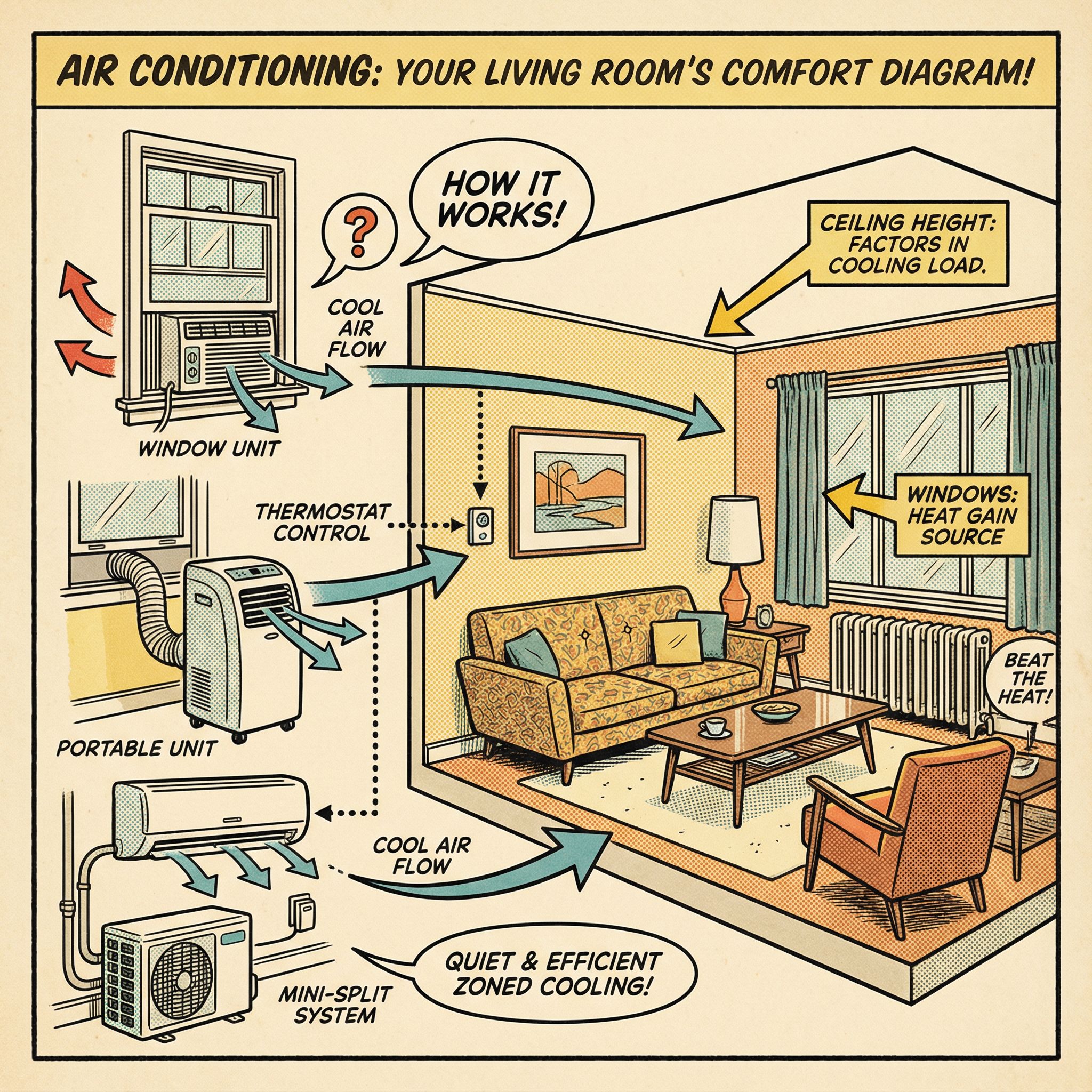
Types of air conditioners: window, through the wall, portable, mini split and central
Choosing an AC comes down to your space, budget, and how permanent you want the install to be. Here are the core types with plain English pros and cons so you can shortlist fast.
- Window AC: Sits in a window opening. Pros: lowest upfront cost, quick DIY, cools a single room. Cons: blocks the window, seasonal removal, moderate noise.
- Through the wall AC: Slides into a wall sleeve for a permanent single room setup. Pros: frees the window, better sealing and security. Cons: wall cut and sleeve needed, efficiency typically below mini splits.
- Portable AC: On wheels with a vent hose to a window. Pros: easy to place, no heavy lifting in a window. Cons: generally less efficient and noisier; dual hose models perform better than single hose.
- Ductless mini split: Outdoor unit plus one or more indoor heads, no ducts. Pros: very quiet, high efficiency, precise zoned comfort; many are heat pumps for heating. Cons: higher upfront cost, pro installation usually required.
- Central AC or central heat pump: Uses ducts to serve the whole house. Pros: even whole home cooling, clean look. Cons: needs existing ducts in good shape; retrofits can be costly. For separate room control, multi zone mini splits fit better.
How to size your AC: BTU basics and a quick calculator for living rooms
Start with BTU per hour, which is the cooling capacity. A quick calculator: area in square feet × 20 = starting BTU, then apply adjustments for sun exposure, windows, ceiling height, and how many people use the room. Typical living rooms commonly need roughly 6,000-12,000 BTU depending on size. For example, 300 ft² × 20 = 6,000 BTU, while 450 ft² × 20 = 9,000 BTU.
Getting the size wrong has real consequences. Oversizing leads to short cycling, the system cools the air fast, shuts off, then restarts over and over, like tapping the gas in stop-and-go traffic. That wastes energy, adds wear, and leaves humidity high because run times are too short for proper moisture removal. Undersizing makes the unit run constantly, drives up bills, and still fails to hit the set temperature during peak heat.
Other sizing factors: ceiling height, windows, sun exposure and occupancy
After you get a baseline BTU from square footage, refine it with real-world variables. Increase capacity for higher ceilings. Add for lots of glass, especially south or west facing windows, and subtract if the room is well shaded. Tight, well insulated rooms often need less, while drafty areas with air leakage need more. Open plan spaces that share air with a living room pull extra load. Account for the number of regular occupants and any heat-generating electronics or lighting.
For tricky spaces, skip guesswork and ask for a professional Manual J load calculation. It evaluates these factors room by room for an accurate target, which is especially helpful for oddly shaped rooms, high ceilings, open floor plans, or humidity concerns. In our experience at Budget Heating (BudgetHeating.com), that level of detail produces sizing you can trust.
Using fans and ventilation: ceiling fans, direction and when to combine with AC
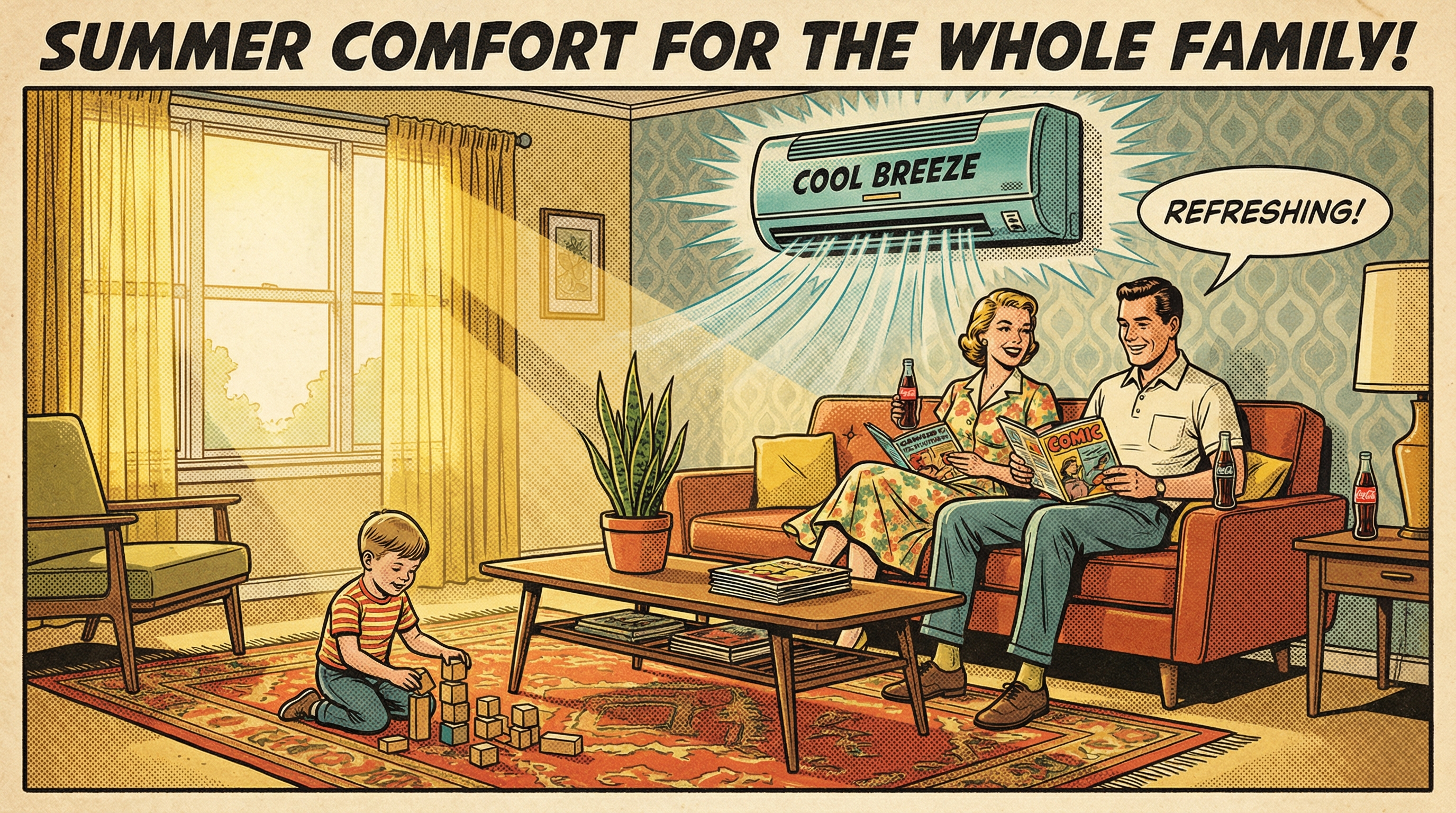
In practice, we set ceiling fans counterclockwise in summer so air moves downward across skin, boosting perceived cooling and letting the thermostat sit a few degrees higher. Run fans with the AC to mix air between rooms, even out hot and cool spots, and limit thermostat changes. When outdoor conditions allow, use ventilation fans to improve circulation and refresh indoor air. To help the AC further, cut solar heat gain with interior shades, add exterior shading, and seal air leaks.
Energy efficiency explained: SEER, SEER2, EER and inverter tech
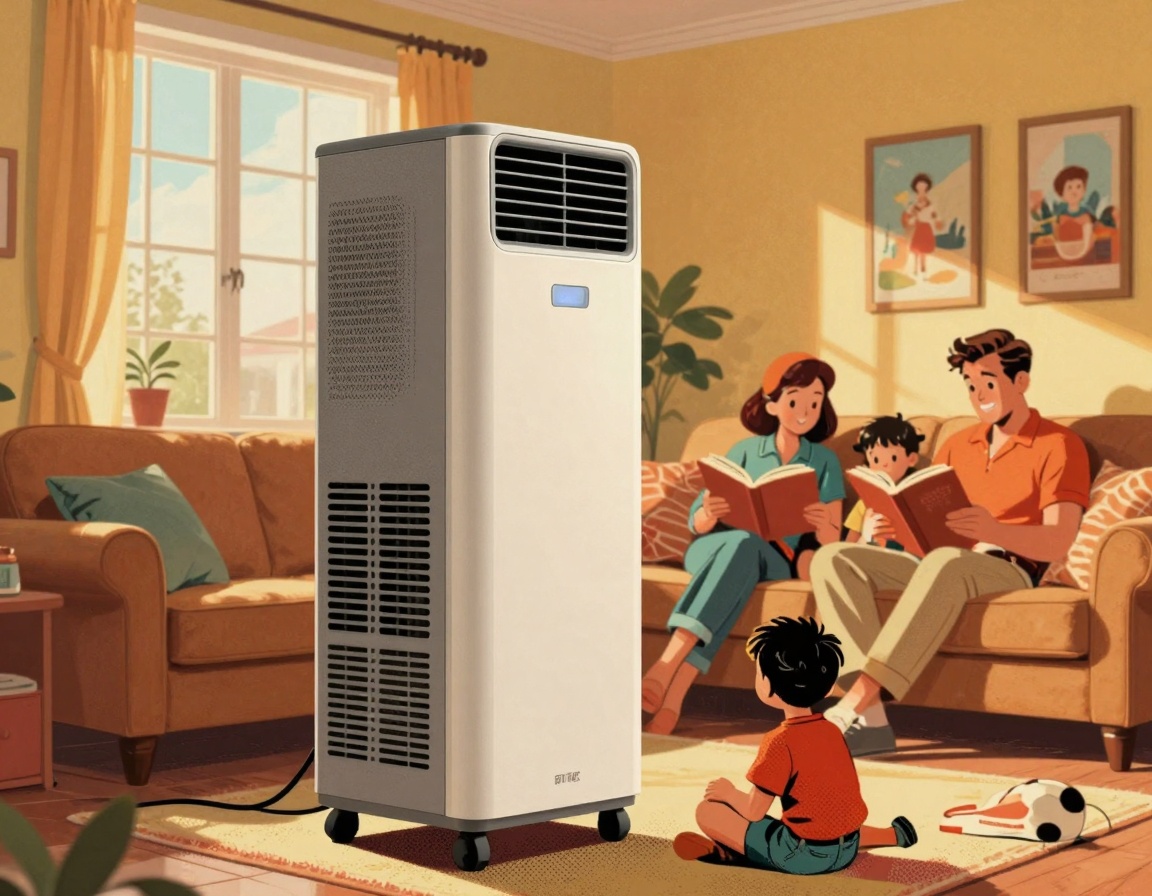
SEER and SEER2 describe seasonal cooling efficiency across typical weather. EER or EER2 measures efficiency at a single hot condition, useful on peak days. Since 2023, SEER2 is the updated U.S. test, so the same unit often scores a bit lower than legacy SEER values.
Inverter systems use variable-speed compressors and fans to match capacity to the load. That steadies temperatures, improves humidity control, reduces short cycling and lowers operating cost. In our experience at Budget Heating (BudgetHeating.com), inverter units run quieter and keep rooms drier. Also consider ECO modes, ENERGY STAR, and smart controls like timers, schedules, or Wi-Fi to trim runtime.
How to compare models:
- Check SEER2 for seasonal efficiency, EER or EER2 for peak days.
- Confirm compliance with regional minimums. Northern minimum ~13.4 SEER2, Southern higher.
- Verify refrigerant: many new models use lower-GWP A2Ls like R-32 or R-454B. Confirm model and installer meet current safety requirements.
- Estimate payback: roughly 7 dollars per month saved per added SEER point. Payback ~ price premium / (7 x SEER difference). Example: a 2 SEER step that costs 600 dollars pays back in ~43 months.
- Plan maintenance: clean filters and annual service preserve rated efficiency.
Noise and comfort: dB ratings, airflow patterns and where to place the unit
Noise and comfort go hand in hand. In a living room, the unit should fade into the background while still moving enough air to blend temperatures. For media or conversation spaces, prioritize quiet models and compare published dB ratings. Ductless indoor heads often operate around 20-35 dB, while window and portable unit noise varies widely.
Airflow matters just as much. Choose multi-speed fans and wide-angle louvers to distribute air across seating areas. Place the indoor discharge so it blows toward occupied seating, and avoid blocking the path with furniture or drapery. This prevents hot and cold spots and keeps comfort even with minimal distraction.
Installation considerations: DIY vs professional, mounting, condensate and electrical needs
DIY is realistic when the mounting, drainage, and power requirements match your skill set and tools. Before any work begins, verify the following to avoid surprises and rework:
- Physical mounting: Confirm window type and structural strength for window installs. Through the wall units need a sleeve and proper sealing. For mini splits, pick an outdoor location with required clearances and a simple route for line sets.
- Condensate drainage: Plan a safe path by gravity where possible, or use a pump where needed. Think of it like a gutter, steady fall to a safe discharge point.
- Electrical needs: Match 115V or 230V, check the unit’s amperage, and determine if a dedicated circuit is required.
- Quality and permits: Installation quality drives performance, noise, and longevity. Confirm permits, any required clearances, and that the installer will document model numbers, charging and commissioning steps, and expected noise.
Maintenance checklist and common mistakes to avoid
From years of installs and service, we see the same preventable issues. Use this quick plan to keep things reliable and safe. Think of filters as the system’s lungs, keep them clean and the whole body breathes easier.
- Replace or wash air filters every 30-90 days and vacuum return grilles.
- Keep the outdoor condenser clear, maintain 2-3 feet of open space around it.
- Inspect and clear the condensate drain line. Where a secondary pan exists, add a pan alarm.
- Schedule yearly professional service: coil cleaning, electrical checks, refrigerant charge verification, blower performance and static pressure readings.
Safety for window units: lift with two people, use proper brackets, keep the unit level or slightly tilted to drain, seal gaps, and plug directly into a grounded outlet, never an extension cord.
Pro-only tasks: refrigerant circuit work (EPA Section 608), brazing and line-set work, high-voltage wiring, and full system commissioning.
Common mistakes to avoid: oversizing under the idea that bigger is better, cranking the thermostat very low expecting faster cooling, shopping by SEER alone without matching capacity and installation quality, treating refrigerant like a consumable top-off, and hiring the lowest bid without verifying credentials.
When this approach is not ideal: portable ACs are poor long-term for quiet, efficient dehumidification, choose a mini-split or a good window unit. Central AC is overkill for a single room, choose a ductless mini-split. Mini-splits can be impractical for renters or strict HOAs, choose a high-efficiency window or through-the-wall unit. Limitations include cost, building rules, and noise.
Conclusion: pick the right size, type and installer, then maintain it
Dial in the basics: match the equipment to the space, pick the right installer, and keep up with maintenance for steady comfort, predictable bills, and long life. Follow a clear path: assess the room and constraints, shortlist system types, compare efficiency and noise, verify install needs and warranties, then set a maintenance plan. Next, bring in a qualified pro for load calculations, electrical and refrigerant work, and commissioning, and request 2-3 itemized quotes. If this feels like a lot, our team can guide you from plan to install.
- Get a Custom Quote: send your project details for 2-3 itemized options.
- Talk to Our Team: call our U.S.-based support for straight answers today.
- Shop Systems: browse heat pumps and ductless mini splits to compare models.
 Cooling
 Heating
 Money Saving Tips
 Product and Brands Insights
 Buying Guides
 State by State
 HVAC Systems