




Goodman 1.5 Ton 14.5 SEER2 R32 Heat Pump with 8 kW Heater: What this unit is and who it's for
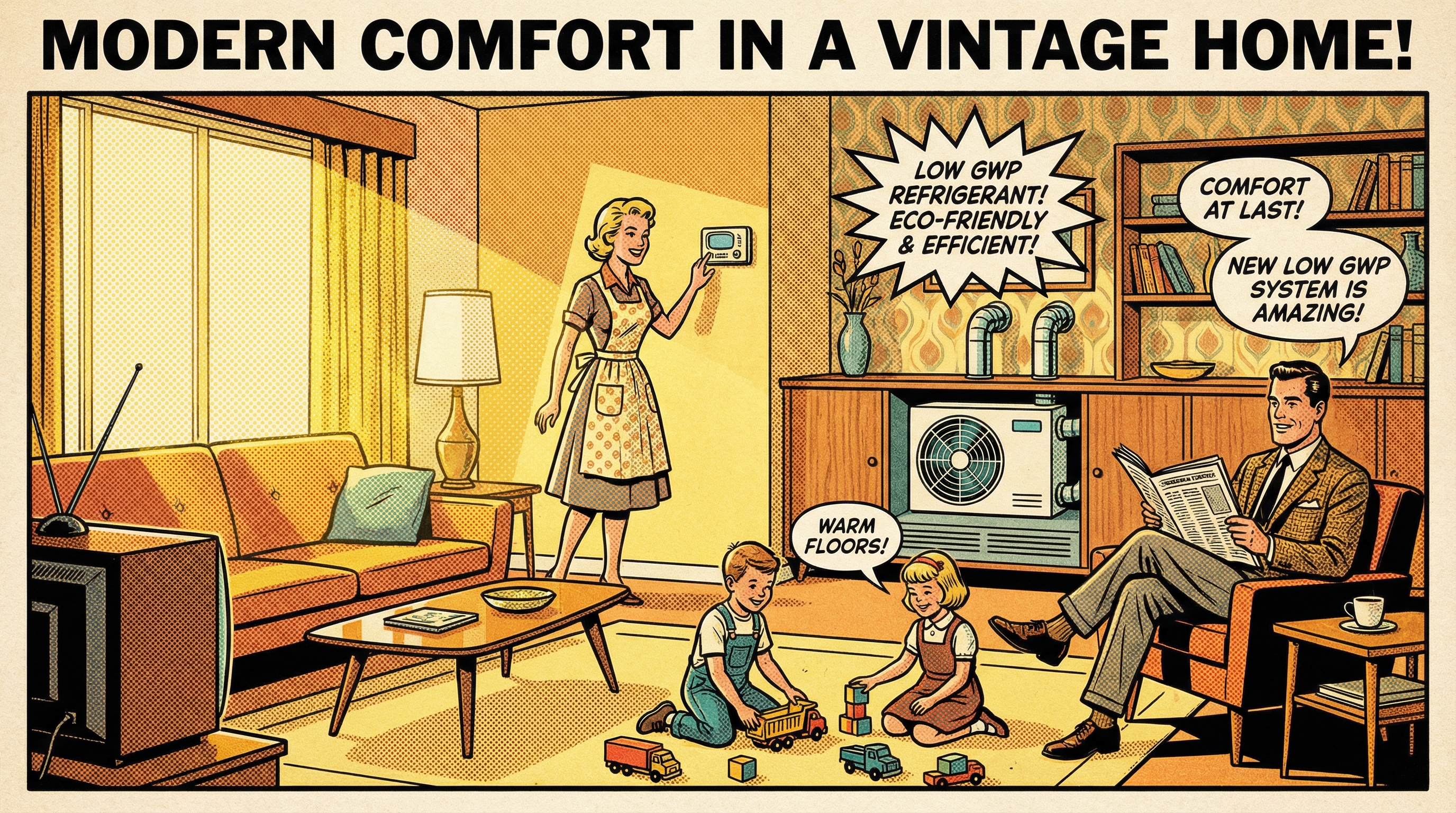
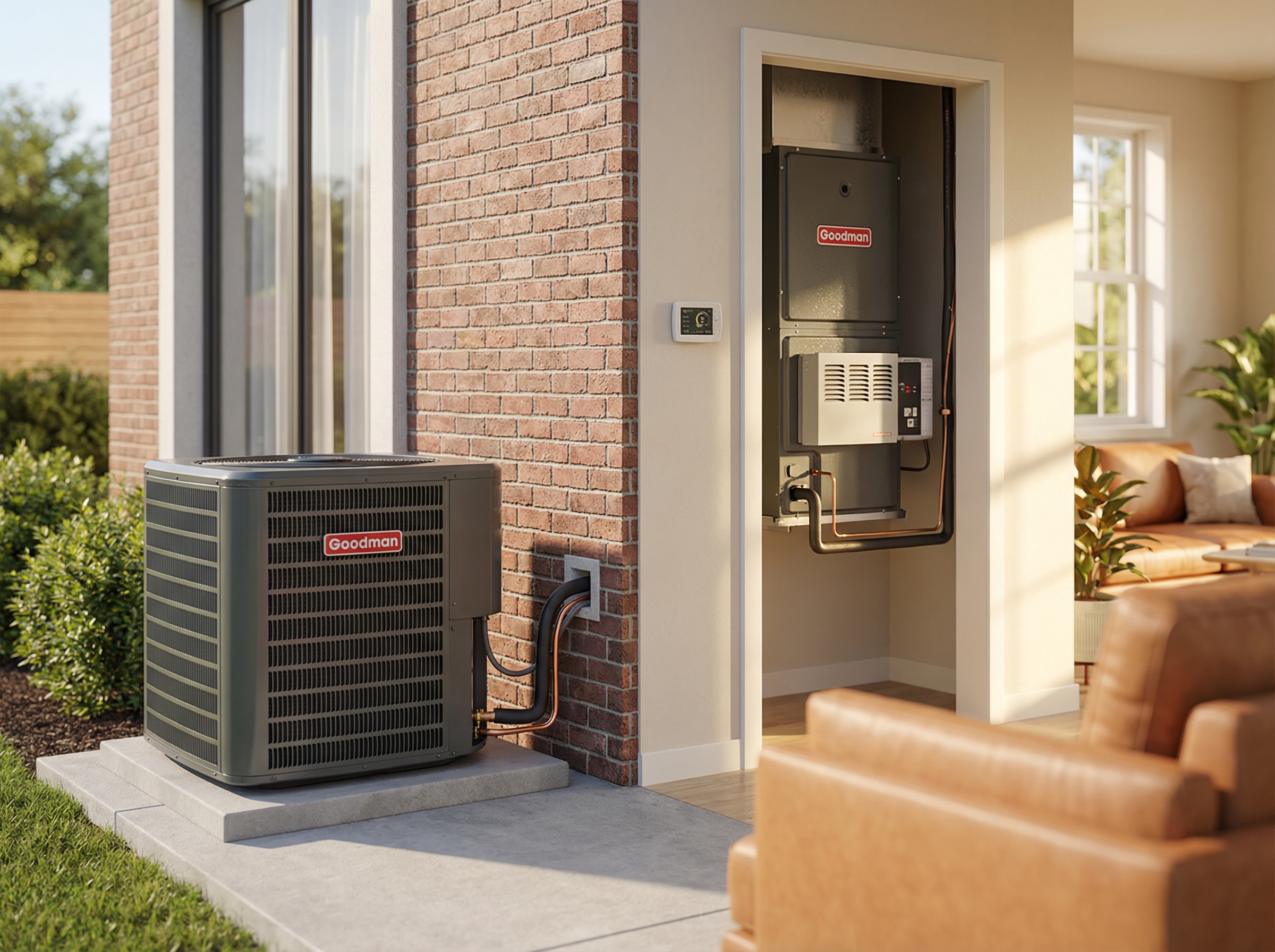
This 1.5 ton split heat pump pairs an outdoor unit with a wall mounted air handler that includes an 8 kW electric heat strip, giving smaller homes, apartments, and zoned areas one system for cooling and heating. With a 14.5 SEER2 rating under the newer DOE test procedure and low GWP R32 refrigerant, it aims for everyday efficiency, regulatory compliance, and reduced climate impact. The integrated electric heat serves as dependable backup during colder snaps. When correctly sized and professionally installed, it is a practical, budget minded package for small to moderate loads.
Heat pumps work by transferring heat, not generating it. Think of it like moving water with a pump instead of boiling a new pot every time. Moving heat generally takes less energy than creating heat with resistance elements, which is the basic efficiency advantage. In this setup, the heat pump does the heavy lifting most days, while the 8 kW strip provides supplemental warmth when needed. In short, a compact, efficient solution for small spaces that values comfort, simplicity, and sensible operating costs.
Key specs: 1.5 Ton capacity, 14.5 SEER2, HSPF2 expectations and R32 refrigerant
This 1.5 ton split heat pump delivers roughly 18,000 BTU per hour and uses R32 refrigerant. The headline efficiency is 14.5 SEER2. SEER2 is the seasonal efficiency rating for cooling, essentially how much cooling you get for the electricity used over a typical season. Think of it like miles per gallon for air conditioning, higher numbers indicate more output per kilowatt hour. At 14.5 SEER2, the unit sits modestly above the current U.S. minimum of 14.3 SEER2, placing it in the entry to mid efficiency tier rather than the premium range.
On the heating side, buyers can reasonably expect HSPF2 in the neighborhood of 7.5 to 7.8 for this size and R32 class, which aligns with comparable Goodman R32 models. That reflects solid seasonal heating efficiency for its category. An integrated 8 kW electric auxiliary heater is included, providing straightforward electric backup when conditions exceed the heat pump's capacity. In short, the rating sheet points to practical, modern refrigerant technology, a modest bump over minimum cooling efficiency, and built-in electric heat support.
Performance: Cooling, heating and the role of the integrated 8 kW backup heater
With a 1.5 ton split, this system is sized for smaller homes or dedicated zones and favors everyday practicality over chasing top tier lab numbers. The 14.5 SEER2 rating brings noticeably better efficiency than many older systems, and the use of low GWP R32 keeps the refrigerant choice modern and responsible. Expect steady, even cooling without fuss.
In heating, the heat pump is your primary source. When outdoor temperatures dip and capacity falls, the integrated 8 kW electric strip acts like a short burst booster rocket: it raises supply air temperature quickly so the thermostat can reach setpoint, then switches off to avoid unnecessary power draw. In our experience at Budget Heating (BudgetHeating.com), it typically comes on during brief cold snaps or fast recovery from setbacks. If needed, you can select Emergency Heat, and the strip alone maintains comfort until the heat pump is available again.

Sizing, duct readiness and where a 1.5 ton unit makes sense (square footage guide)
A 1.5 ton Goodman can be the right fit when the home's heat gain and loss match its capacity. As a quick screen, spaces around 600-1,100 sq ft can qualify, but insulation quality and climate push the number up or down. We always recommend a room by room Manual J load calculation, since rules of thumb miss window gains, orientation, and infiltration.
Air distribution matters as much as tonnage. Before green lighting a 1.5 ton, contractors should verify the duct system can move about 600 CFM, roughly 400 CFM per ton. Think of airflow like lanes on a road: if they are too narrow, traffic backs up.
- Measure total external static pressure and confirm it aligns with the air handler's capability.
- Ensure return and filter capacity are adequate, not just supply runs.
- Check indoor air handler fit: allow service clearance, plan airflow path, and manage condensate. For a wall mounted unit, expect roughly 20×13×36 in and plan the drain routing.
When this Goodman heat pump may NOT be the best fit: tradeoffs, limitations and better alternatives
From hands-on installs, here are cases where a different approach makes more sense.
- Very cold climates: As outdoor temps drop, capacity falls and this unit leans on the 8 kW electric strip. That keeps you warm, but winter bills can jump because electric resistance is far less efficient than the compressor. In regions with long stretches below freezing, consider cold-climate, higher SEER2 models with strong low-temp output, or a hybrid setup that pairs the heat pump with a gas furnace to cut strip-heat runtime.
- Whole-home loads beyond a small space: A 1.5 ton size suits smaller homes or a single zone. Using one small condenser to carry a larger house invites comfort gaps and short cycling if you oversize. A properly sized multi-ton system or zoned design will perform better.
- Chasing top incentives or minimum operating cost: This is not a top-tier efficiency platform, so it may miss rebate thresholds and the long-run savings that variable-speed, higher SEER2 cold-climate units deliver.
Common mistakes to avoid: assuming modern heat pumps do not work in cold weather (they do, but plan for auxiliary heat), comparing legacy SEER to SEER2 one-to-one, and believing lifespan is mostly about model when installation quality and routine maintenance drive the 15 to 20 year outcome. Plan a realistic balance point and confirm the air handler, wiring, and breaker can support the 8 kW strip.
Energy efficiency, operating costs and how SEER2 affects your bills
Think of SEER2 like miles per gallon for cooling. Higher SEER2 means fewer kWh to deliver the same comfort. Replacing an older 10 to 13 SEER unit with 14.5 SEER2 generally lowers cooling electricity use, but your actual savings hinge on climate, daily runtime, your electricity rate and duct quality. In cooling season, energy use tends to track efficiency, so a higher rating yields a smaller kilowatt hour line on your bill.
Heating costs are dominated by how often the 8 kW auxiliary strip runs. Every hour it is on, it consumes about 8 kWh. A quick estimate is your local rate times 8 times the hours it runs. If the strip engages rarely, most of your bill reflects the heat pump's efficiency. If it runs often, costs climb quickly. In our experience at Budget Heating (BudgetHeating.com), proper ducting and thermostat staging help minimize strip use. The posted equipment price is about $2,880, and financing options like Affirm are available on qualifying orders. Installation labor and long term payback are site specific, so ask your contractor for quotes and a simple modeled operating cost comparison.
Installation, site prep, A2L/R32 requirements and typical project costs
Start with site prep: a level pad, clearances, and, in snow zones, a raised condenser. For electrical, confirm service capacity, breaker and wire sizes, dedicated circuits, thermostat wiring, and heat strip load.
R32 is an A2L refrigerant. Confirm your jurisdiction has adopted A2L provisions and that your contractor has A2L training and EPA 608. Use A2L rated line sets, pressure test, leak check with nitrogen, pull a deep vacuum, then verify charge, airflow, and static pressure with documented readings. Pull permits and schedule inspections per local code. In our experience at Budget Heating (BudgetHeating.com), sticking to these steps keeps installs safe. Think of commissioning like a preflight checklist.
Typical costs: equipment is about $2,880 for the system only. Labor, permits, materials and electrical upgrades vary by site and are not included. Ask for itemized quotes and modeled operating costs from contractors. Financing is available to spread costs.
Safety, maintenance and warranty: R32 cautions and an owner's care plan
We separate owner care from pro work. R32 is an A2L refrigerant, mildly flammable, so treat the sealed circuit like a closed fuel line: never cut, braze, or open it. If you notice refrigerant odor or suspect a leak, ventilate, shut power off, avoid flames, and call a licensed technician.
- Owner tasks: check or replace filters monthly, keep the outdoor unit clear and remove winter snow, gently rinse the outdoor coil with power off, keep the condensate line clear, and verify thermostat settings.
- Pro-only tasks: any refrigerant work on R32/A2L systems, major electrical repairs, and system design or commissioning by licensed technicians trained on A2L refrigerants.
Annual professional tune-ups and documented commissioning support warranty coverage. Many warranties expect certified installation with permits, and service records make future claims smoother.
Regulatory context, incentives and compliance (SEER2/HSPF2, R32 and AHRI paperwork)
Since the 2023 efficiency transition, split heat pumps must meet roughly 14.3 SEER2 and 7.5 HSPF2 to be legal for sale and install. In practice, we see a 14.5 SEER2 Goodman match clears the federal cooling bar, but compliance hinges on the matched AHRI rating, not any single box. We verify the HSPF2 on the AHRI certificate for the exact outdoor and indoor pairing, and inspectors do the same. R32 is classified A2L, and many jurisdictions are still adopting A2L language into mechanical and fire codes. Confirm your local adoption timeline, permit notes, and that installers are trained on A2L handling. Incentives are a separate hurdle: utilities and tax credits typically need higher efficiencies than the federal floor. Keep the AHRI certificate and match number for rebates, inspections, and closeout paperwork.
Final verdict: who should buy the Goodman 1.5 Ton 14.5 SEER2 R32 with 8 kW heater
This Goodman 1.5 ton R32 heat pump with an integrated 8 kW electric heater is a practical, mid efficiency pick for smaller homes, apartments, or zoned areas where balanced performance and upfront affordability matter. At 14.5 SEER2 and using lower GWP R32, it delivers compliant comfort with simple ownership and built in backup heat. If you want predictable comfort without chasing every last kilowatt hour, it is a solid fit, especially in mild to moderate climates.
Consider higher SEER2 or cold climate models if you live in very low temperatures or are pursuing maximum incentives and the absolute lowest lifetime operating cost. Smart next steps: get a Manual J, match the exact system with AHRI documentation, request itemized installation quotes with a commissioning checklist, and confirm your installer has A2L training and will handle permits. Our team has been sizing, matching, and shipping Goodman systems for 30 plus years, and we can walk you through selection, paperwork, and logistics.
- Get a Custom Quote
- Talk to Our Team, U.S. based phone support for quick answers
- Shop Goodman heat pumps
- Ask about free shipping and financing with Affirm
 Cooling
 Heating
 Learning Center
 Money Saving Tips
 Product and Brands Insights
 Buying Guides
 State by State
 HVAC Systems