




 cooling
 heating
 hvac systems
Your AC is aging and your furnace is next, and every contractor quote forces the same decision: replace two boxes, or pick one system that does it all.
Budget caps what you can install, but comfort risk and future energy bills decide what you can live with. If you compare only the upfront price or only the cooling number on the brochure, you miss the part that drives year-round satisfaction: what the system does when it is 95°F in July and 25°F in January.
The core difference is mechanical and it changes everything. An air conditioner is cooling-only. An air-source heat pump, an HVAC system that heats and cools by moving heat using a reversible refrigeration cycle, delivers cooling in summer and heating in winter by reversing refrigerant flow.
That flexibility adds equipment and control complexity, but it also expands your options for operating-cost exposure and long-term planning. The U.S. Department of Energy states heat pumps are an energy-efficient alternative to furnaces and air conditioners and are suitable for all climates.
To compare quotes correctly, you also have to speak the current label language: SEER2 under 2023 testing rules, and for heat pumps you will also weigh the heating-side metric, HSPF2.
You will be able to choose confidently between an AC and a heat pump based on your climate fit, cold-weather comfort behavior, upfront versus operating cost, and what the efficiency labels actually mean for your bills.
Those label numbers and system claims only matter if they translate into what you actually pay and feel at the register and in your rooms. That starts with efficiency metrics, refrigerant realities, and a simple way to sanity-check operating costs.
Efficiency, Refrigerants, and Real Operating Costs
SEER2 became the efficiency yardstick in January 2023, and it is intentionally tougher than legacy SEER. The key change is the test setup: SEER2 evaluates performance under higher external static pressure, which better reflects real duct resistance than the older procedure. The practical implication is simple: compare like with like. A "15 SEER2" heat pump is already speaking the new language, so don't let an older SEER number sneak into a quote and make one system look better on paper than it will look on your meter.
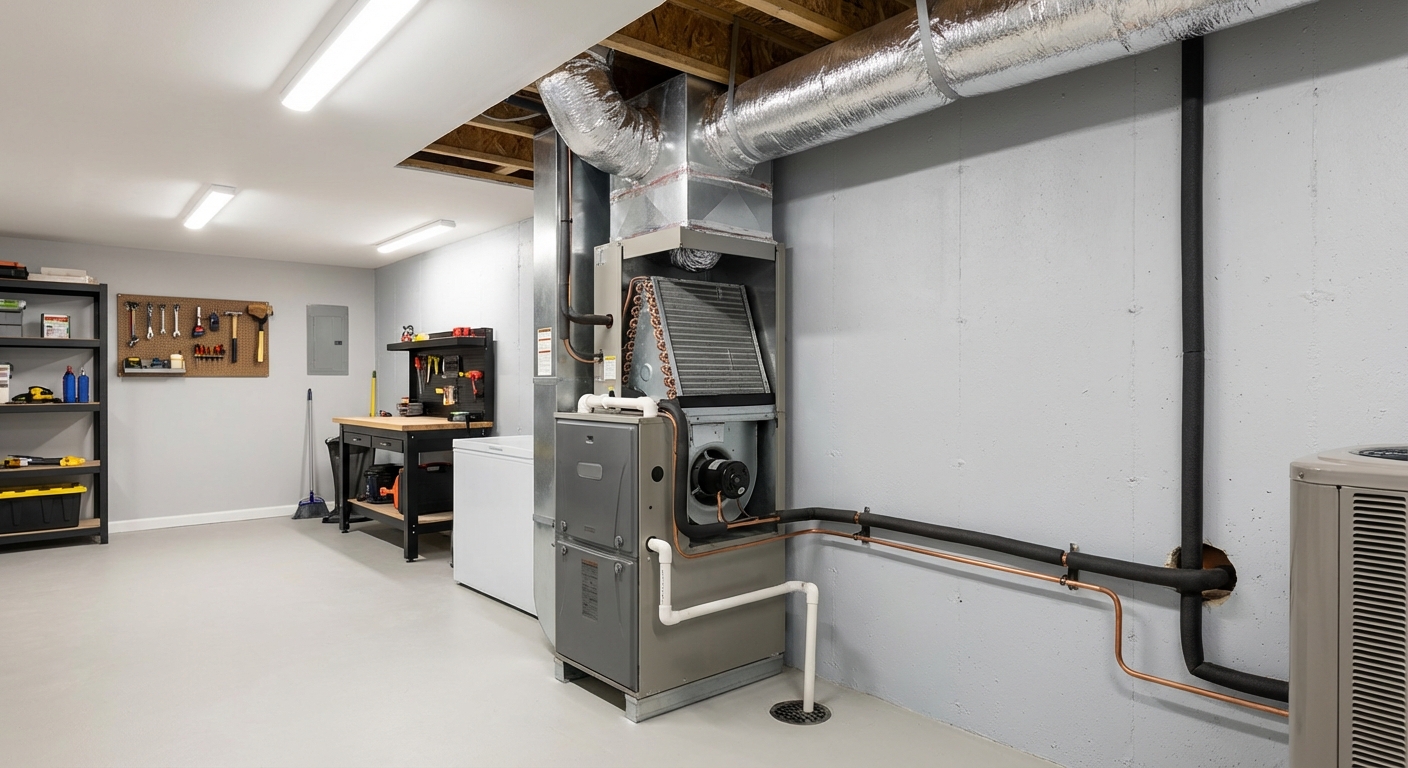
The math behind the label is straightforward: SEER-type metrics express seasonal cooling output divided by energy input, essentially a seasonal cooling COP. That's why a small change in rated efficiency shows up directly in kWh when your run-hours are high.
HSPF2 is the heating-season companion metric for heat pumps under the same updated test framework, and it connects cleanly to COP (coefficient of performance). Use a seasonal COP of about 3 as a decision anchor: that is roughly 3 units of delivered heat for every 1 unit of electricity you buy. If two quotes are both "15 SEER2," HSPF2 is often where the heating-cost gap hides.
For a quick operating-cost check, keep assumptions explicit and consistent, then use a converter when you need to translate between SEER2, HSPF2, COP, and kW per ton. Example: a 3-ton (36,000 BTU/hr) 15 SEER2 system running 1,000 cooling hours uses about 2,400 kWh (36,000 x 1,000 / (15 x 1,000)). At $0.16/kWh, that's $384 for that cooling season under those assumptions.
Refrigerant choice is no longer a footnote, and for new equipment it is largely already settled. R-410A has a GWP of about 2,088 and is a blend of R-32 and R-125, which put it squarely in the AIM Act HFC phase-down. Under EPA's Technology Transitions rule, residential air conditioners and heat pumps manufactured on or after January 1, 2025 must use a refrigerant with a GWP under 700, and the allowance for installing systems built from pre-2025 components ran through January 1, 2026. What you will actually be quoted today is R-454B (GWP about 466), which most major manufacturers adopted, or R-32 (GWP about 675). Both are classified A2L under ASHRAE, meaning mildly flammable, which triggers specific code-compliant installation practices, leak-detection requirements, and technician familiarity. If a proposal still lists R-410A equipment, treat it as a flag and ask what it is and what it means for future refrigerant cost and repair support.
Availability matters on day one, not just at replacement time. Suppliers such as Budget Heating carry current A2L equipment along with the line sets, leak-detection components, and installation materials that determine whether an A2L install is smooth or a schedule-killer, plus service refrigerant for the large installed base of existing R-410A systems.
- Demand SEER2 and HSPF2 listed in writing, plus the exact indoor-outdoor match.
- Ask what refrigerant the quoted equipment uses (R-454B and R-32 are the current A2L options) and what A2L code requirements the installer is pricing into the job.
- Normalize operating cost with one shared run-hour and electric-rate assumption, then compare kWh, not marketing—especially when weighing the benefits of a heat pump air conditioning system.
Sizing and System Options
Efficiency ratings and refrigerant choices set the ceiling for performance, but sizing determines whether you get anywhere near it. If the capacity and configuration are wrong for the house and duct system, the best label numbers in the world won't deliver stable comfort.

Sizing errors cost more comfort than they save money. An oversized heat pump short-cycles, so it stops and starts more often, leaves humidity behind, runs louder, and puts extra wear on compressors and contactors. An undersized system runs long, struggles on design days, and still fails the real test: stable temperature and controlled indoor moisture.
"Tonnage" is just capacity. 1 ton of HVAC capacity equals 12,000 BTU/hr. Typical residential heat pumps generally range from about 1 to 5 tons, which is why you see common options like 2 ton (24,000 BTU/hr), 3 ton (36,000 BTU/hr), and 4 ton (48,000 BTU/hr). The grounded way to compare those numbers is simple: you're buying how fast the system can move heat, not a promise of comfort if the home and ducts don't support it (a mini-split sizing BTU calculator can help sanity-check capacity ranges).
A Manual J load calculation is the standardized residential method that estimates your home's heating and cooling loads based on construction and design conditions. Manual J is the code-approved method for sizing residential HVAC systems and accounts for insulation, infiltration, windows (U-factor/SHGC), ceiling height, and duct losses. Rules of thumb miss the variables that actually swing the load, so two same-size houses can legitimately need different tonnage.
A "complete system" performance rating depends on certified combinations: the outdoor unit plus the matched indoor coil and air handler or furnace, plus the metering device. If the proposal doesn't specify an AHRI-matched system, you're not actually being quoted the performance on the label, because published SEER2/HSPF2 ratings are based on that specific indoor-outdoor pairing.
Require a load calculation (or documented equivalent inputs) and insist every proposal lists the exact matched indoor and outdoor model numbers before you compare quotes.
Climate Fit and Comfort
Sizing is based on loads, and loads are ultimately shaped by weather. That is why the same equipment can feel quiet and even in one region and frustrating in another, even when the ratings on paper look similar.
Climate doesn't just change efficiency numbers. It changes what "comfortable" feels like in your rooms, and it changes what your system must deliver reliably during your worst week of weather.
In hot-humid climates, comfort is humidity control first and temperature second. An AC-only setup paired with a furnace for heating is the rational choice when winter is short and you care more about strong dehumidification than electric heat performance. In hot-dry climates, the load is mostly sensible heat, so a heat pump makes whole-home sense because it covers cooling and the lighter heating season without fighting moisture as the main enemy.
Mixed climates reward shoulder-season efficiency. You get long stretches where outdoor temps sit in the sweet spot for heat pumps, so one system can handle spring and fall heating, then run as your primary AC all summer, without the furnace carrying half the year.
Heat pump COP decreases as outdoor temperature drops. Typical COP runs about 3.0 to 4.0 at 47°F, but cold-climate heat pump COP can decline to about 1.75 to 2.5 at 5°F. Expect defrost cycles in cold conditions: they're normal, they temporarily reduce delivered heat, and they increase energy use. When the unit is defrosting or the load exceeds capacity, supplemental heat may engage to keep indoor temperature stable.
In colder regions or gas-favored markets, a dual fuel heat pump system, a hybrid setup that uses a heat pump for milder conditions and a gas furnace when it's colder or cheaper to run, keeps comfort steady without living on backup heat. Your control strategy should follow the home's thermal balance point, the outdoor temperature where heat pump output matches the home's heat loss, then switch below that based on comfort goals and local utility rates. Dual-fuel switchover temperature can be set in a thermostat or control logic, and it should reflect your rate reality, not guesswork.
Pick the system strategy that matches your worst-week weather and your fuel-price reality, then choose equipment that can execute that plan (see this heat pump vs. furnace climate guide).
Installation, Maintenance, and Buying Tips
Once you've chosen a system type and a climate-appropriate strategy, execution becomes the difference-maker. The same heat pump or AC can perform like two different products depending on whether airflow, charge, and controls are verified or merely assumed.
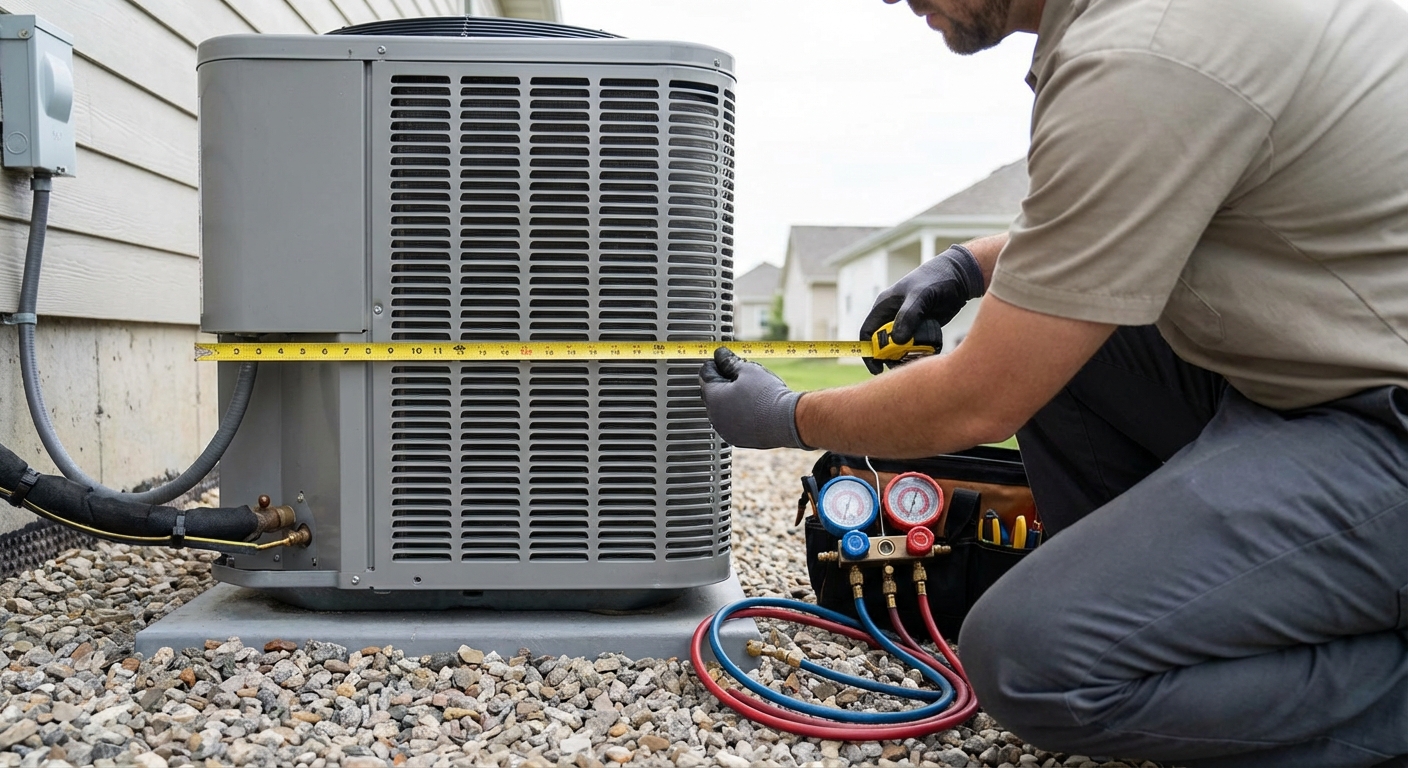
A top-tier heat pump or AC installed sloppy delivers mediocre comfort and misses its efficiency numbers. Install quality is the difference between "rated performance" on paper and quiet, even temperatures in real rooms.
Central systems are a chain of dependencies: the outdoor unit, the indoor coil or air handler, the refrigerant lines between them, the electrical circuit and disconnect, and a condensate drain that must move water reliably. The non-obvious part is the verification work. You are not just "hooking up a box." You are confirming the duct system can actually deliver designed airflow, checking filter and blower setup, and looking for duct damage, leakage, or restrictions that turn a correct-size system into a noisy, short-cycling one.
Some ductless mini splits are genuinely easier to mount and connect, and DIY-style mini splits use pre-charged line set designs to simplify installation (and the advantages of ductless heat pump mini splits can make them appealing in the buying decision). "DIY" still means doing electrical to code, safely routing and supporting the line set, managing condensate, and commissioning the system carefully. Pre-charged line sets reduce refrigerant-handling steps, but they do not eliminate code requirements or the need to confirm the system is operating correctly. Warranty terms can also differ by DIY vs pro-installed; for example, MRCOOL 5th Generation DIY mini-splits include a limited lifetime warranty, a 7-year compressor warranty, and a 5-year parts warranty.
Proper refrigerant charge and proper airflow improve efficiency, comfort, equipment life, and noise performance. Filters and coil cleanliness support both, because dirt and restrictions are how "minor maintenance" turns into low airflow and poor heat transfer.
Compliance is part of the install plan, not an afterthought. Under EPA regulations, anyone who opens a refrigerant circuit to install, service, repair, or dispose of a system containing regulated refrigerant must hold EPA Section 608 certification, and certification is also required to purchase refrigerant. That is a federal requirement, not a best practice. Pre-charged DIY mini-split line sets use self-sealing quick connects specifically so the homeowner never opens the refrigerant circuit, which is what keeps that install path available to non-certified installers. If a job requires evacuating, charging, or recovering refrigerant, it requires a certified technician. A2L equipment such as R-454B and R-32 adds further installation, leak-detection, and inspection requirements tied to local code. Match the install path to your skill level, local permitting realities, and warranty priorities, and treat airflow and charge verification as non-negotiable.
Bottom Line
If you're deciding whether to replace an aging AC-and-furnace pair or move to a single reversible system, the same framework applies: match the equipment to your climate and comfort needs, and require proof that the system is sized and installed to perform. The best choice for most homes is a heat pump, as long as your winters are within its cold-weather comfort range and you are willing to insist on verified sizing and a properly matched system.
- Climate stress: hot-only cooling load leans AC-only; frequent subfreezing hours lean dual fuel; most mixed climates lean heat pump.
- Fuel reality: cheap natural gas favors dual fuel; higher gas prices or no gas service favors all-electric.
- Ducts and zoning: marginal ductwork or room-by-room needs can push you toward ductless or added zoning, not bigger tonnage.
- Budget: AC-only is usually the lowest upfront; dual fuel is typically the highest equipment complexity.
- Comfort: prioritize humidity control in summer and realistic cold-snap expectations for COP drop and defrost cycles.
- Verification: require Manual J (or equivalent inputs), then compare SEER2 (cooling label) and HSPF2 (heating label) on the exact configuration.
- Confidence: only compare AHRI-matched systems, and only hire installers who prove airflow and refrigerant charge are correct.
The federal Energy Efficient Home Improvement Credit (Section 25C), which previously provided up to $2,000 annually for qualified heat pump installations, was terminated by the One Big Beautiful Bill Act for property placed in service after December 31, 2025. Systems installed in 2026 and later do not qualify, so do not let a quote or a payback calculation assume it. State, utility, and local rebates are now the primary incentive path, and they vary widely by location and change on their own schedules. A location-based rebate lookup can materially change payback, so confirm current program rules and funding availability before you sign.
- Learn which system type fits your constraints.
- Size the job with Manual J inputs.
- Compare AHRI-matched systems by SEER2 and HSPF2.
- Check state, utility, and local rebates (the federal 25C credit ended for systems placed in service after December 31, 2025).
- Quote or order with an installer who will document airflow and charge; compare central air conditioners and heat pump options and get help sizing.
Wrapping Up
Choosing between an air conditioner and a heat pump comes down to what your home needs in both July and January. AC-only systems focus on cooling and often pair well with a furnace in hot, humid regions, while heat pumps offer efficient year-round comfort in many climates, especially when you evaluate both SEER2 for cooling and HSPF2 for heating, not just the upfront price.
Whichever direction you lean, the details decide the outcome: correct sizing with a Manual J load calculation, AHRI-matched indoor and outdoor equipment, and an installation that verifies airflow and refrigerant charge. Add in refrigerant considerations like R-410A versus R-32, plus your local fuel costs and winter temperatures, and the "best" system becomes the one that fits your climate, budget, and comfort expectations.
Take the next step by gathering a couple of quotes that list SEER2, HSPF2, AHRI match numbers, and documented sizing assumptions, so you can compare options with confidence.
 Learning Center
 Money Saving Tips
 Product and Brands Insights
 Buying Guides
 State by State