




 cooling
 learning center
AC Running but Not Cooling? What to Know First
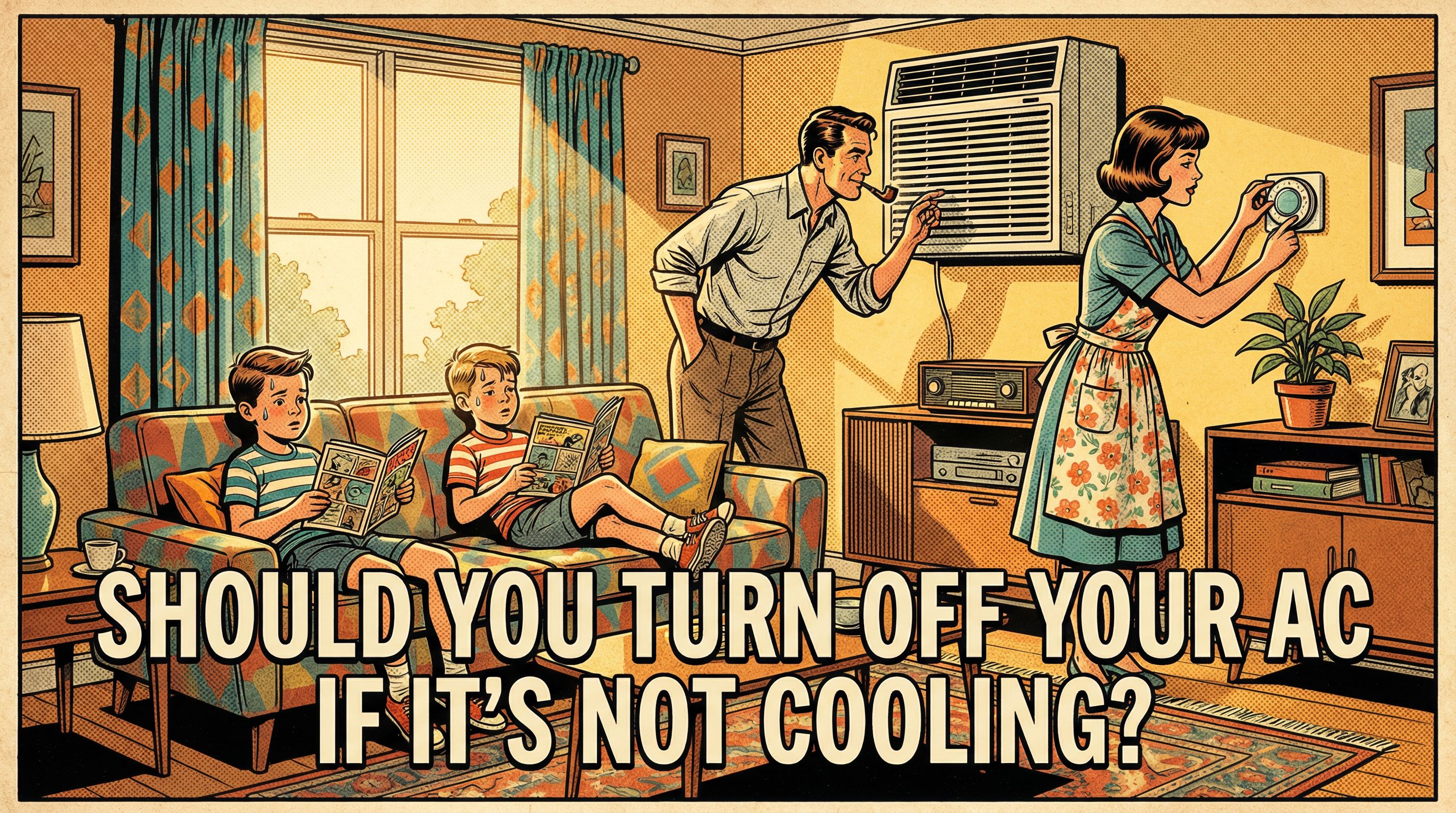
AC running but the house still feels warm? We see this often in the field. A struggling air conditioner can waste energy, raise humidity, and accelerate equipment wear. Think of it like revving a car in neutral, lots of stress with no results. Here is a simple way to decide when to shut it off versus what quick checks are safe to try.
- Turn it off immediately if you see ice on the refrigerant lines or coil, hear harsh grinding or buzzing, smell burning, or the system is short cycling repeatedly. Running through a fault increases the risk to the compressor and other parts.
- Safe checks you can try: confirm the thermostat is set to Cool and a few degrees below room temperature, replace a dirty filter, open supply and return vents, clear leaves or grass from the outdoor coil, and verify breakers have not tripped.
For a normally operating AC, modest thermostat setbacks are usually better than shutting the system fully off. In contrast, if the system is running but not cooling, switching it off is often the safest and most economical move to avoid further damage and wasted power.
Immediate Safety Steps: Should You Turn the Unit Off Right Now?
We advise shutting the system down immediately if you notice any of the following:
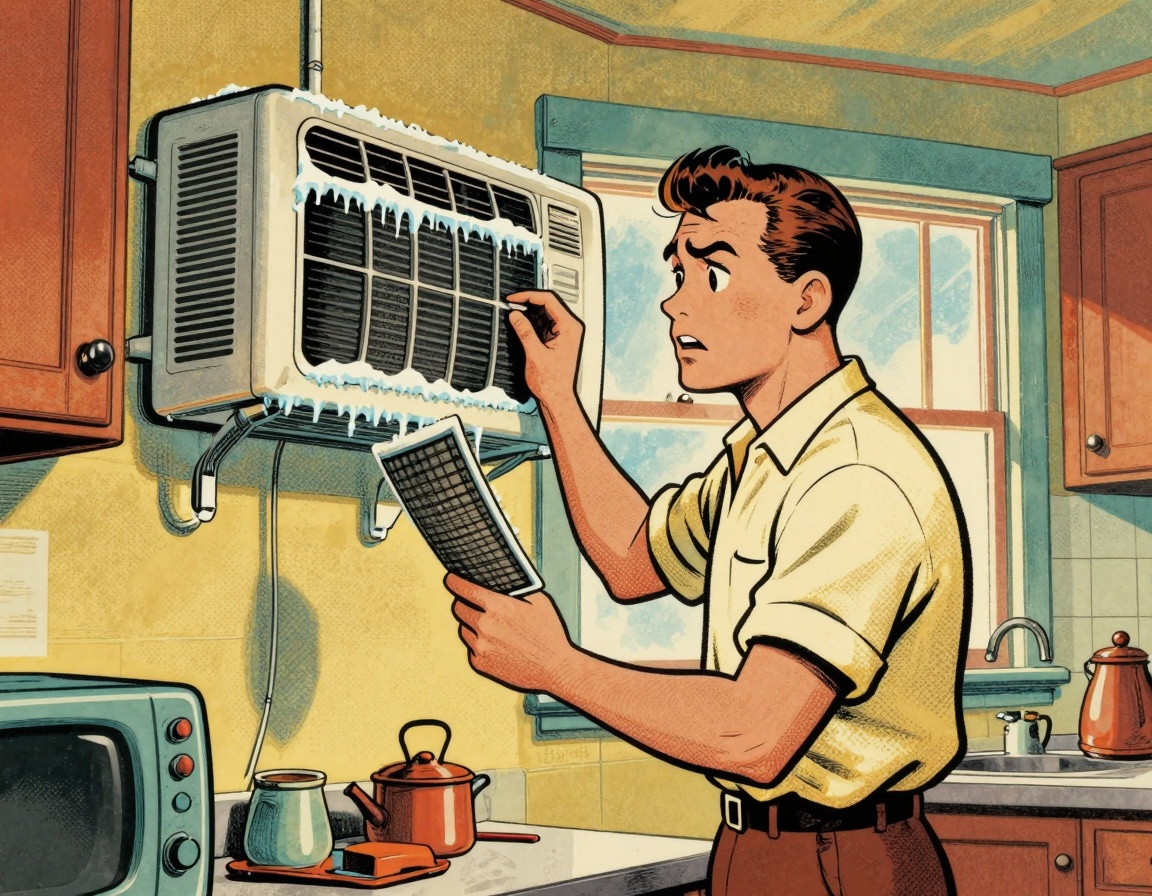
- Ice on refrigerant lines or the evaporator coil
- Burning smell, smoke, or electrical arcing
- Repeated circuit-breaker trips
- Loud grinding or pronounced hissing
- Water pooling around the indoor unit
For a safe shutdown, turn the thermostat to Off, then de-energize the equipment at the outdoor disconnect or the relevant breaker. Wait until all moving parts stop and hot components cool before touching the unit. If there is smoke, a strong burning odor, or signs of electrical failure, keep it off, evacuate if needed, and contact emergency services or a licensed HVAC technician.
If you see ice, keep cooling Off and set the indoor fan to On for 30 to 60 minutes to thaw the evaporator coil. This moves room air across the coil, like opening a freezer door to warm it. Do not run the compressor while the coil is iced.
Quick Checks You Can Do Right Now (Before Calling Help)
- Airflow first: replace or clean the filter, open all supply and return grilles, clear vents, and close windows, doors, and blinds. Low airflow chills the evaporator below freezing, ice forms, and airflow drops even more.
- Indoor unit, power off: look for frost on the coil or the large insulated suction line. Check the condensate pan and drain for visible clogs. If you see ice, keep the system off until it thaws.
- Outdoor unit, power off: clear debris within 2 to 3 feet. Verify the condenser fan spins freely by hand. Gently rinse fins with a hose, avoid bending them, and never open electrical compartments.
Do not open panels, bypass safety switches, or attempt refrigerant work. Limit yourself to visual checks and filters or vents only.
Is It Safe to Leave the AC Running if It's Not Cooling?
When an AC runs but does not cool, it mostly wastes electricity. In our experience, an hour of ineffective run time costs far more than the brief startup current you save by letting it continue, so the startup surge worry is misplaced.
Short-term operation may be acceptable only if all the following check out:
- Supply vents are clearly cooler, roughly a 15 to 20 F drop across the coil.
- No ice on lines or coil, and no water dripping where it should not.
- No short cycling or tripped breakers.
Otherwise, shut it off. A non-cooling unit removes little moisture, leaving the home hot and sticky and raising mold or mildew risk. While waiting, use fan-only with windows closed, or a standalone dehumidifier, rather than Cool mode.
Signs of Refrigerant, Compressor, or Electrical Problems: What to Watch For
With 30 plus years in HVAC, we see patterns. Refrigerant indicators include weak cooling with long runtimes, lukewarm vents, ice on coils or lines, and loud hissing or bubbling near the unit. Compressor issues may hum without starting or heat the discharge line. Electrical trouble includes burning smells, visible arcing, or dead controls.
- Ice on coils or refrigerant lines
- Outdoor fan will not run
- Loud hissing or bubbling, possible refrigerant leak
- Burning smells or electrical arcing
- Repeated breaker trips
- Compressor will not start
Refrigerant diagnosis and charging are regulated under EPA Section 608, so do not attempt DIY. Before calling, gather make, model, serial number, system age, filter size and last change date, when symptoms began, noted noises or smells, and indoor and outdoor temperatures and indoor humidity if available.
Common Causes of an AC Not Blowing Cold Air
When an AC quits blowing cold, the root is usually either airflow restriction or a problem inside the sealed refrigerant circuit. Knowing which side you are on keeps troubleshooting focused and prevents parts-chasing.
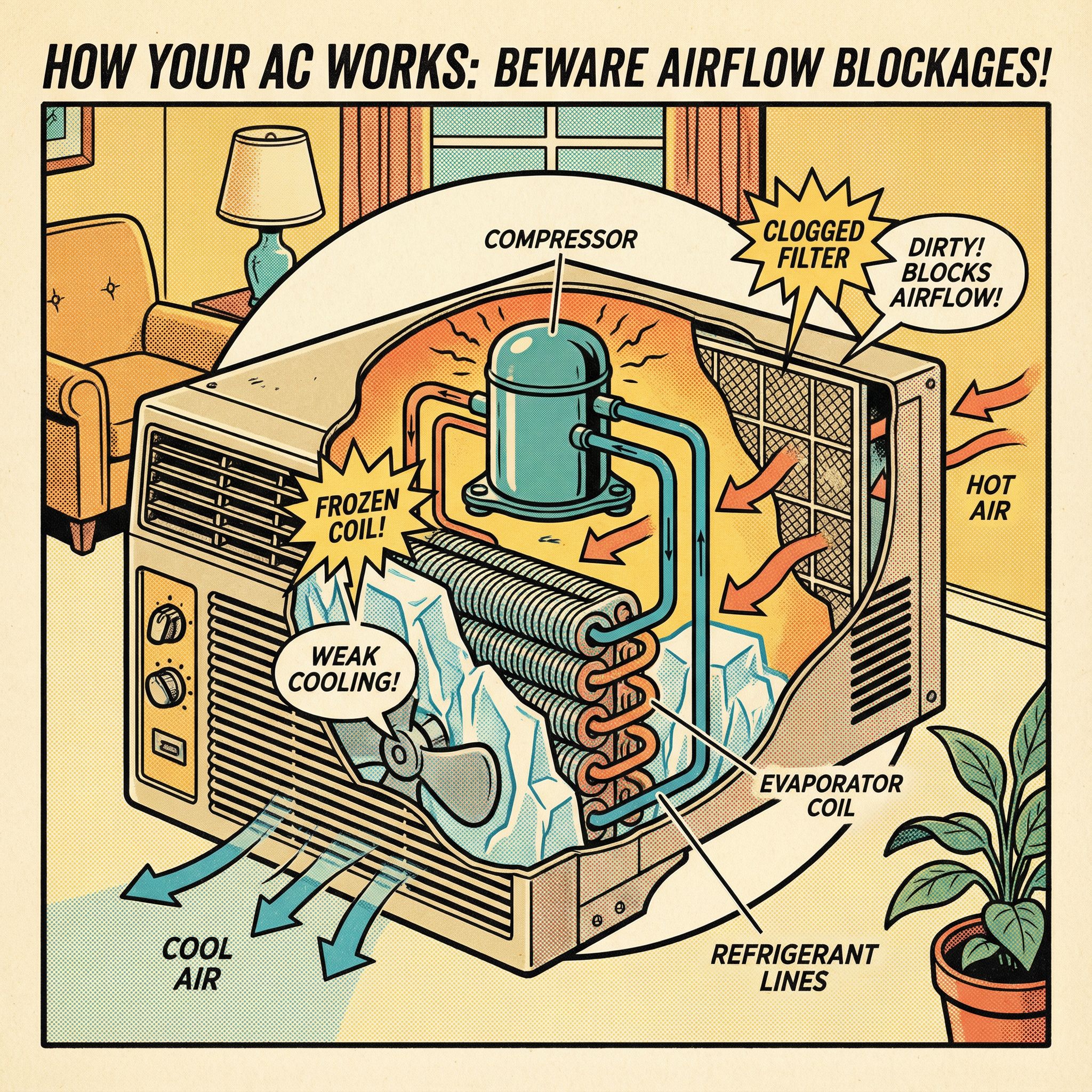
- Restricted airflow from a dirty filter, blocked returns, or closed supply registers.
- Low refrigerant or a refrigerant leak.
- A frozen evaporator coil.
- Failed outdoor components, such as the compressor or condenser fan motor.
- Electrical or mechanical faults in the air handler or the outdoor condenser.
Here is how the mechanical and refrigerant side works: refrigerant is the courier that carries heat from indoors to outdoors, and the compressor is the courier's engine. Low charge or leaks reduce heat pickup, so air feels lukewarm. A weak compressor or stalled condenser fan stops heat rejection, pressures rise, and the system may shut off. In our experience at Budget Heating (BudgetHeating.com), separating airflow issues from refrigerant or mechanical faults is the fastest way to get the unit cooling again.
When Turning It Off Helps: Real Examples and Risks to Avoid
Shut the system down if you see ice on the coil or refrigerant lines, water collecting around the indoor unit, or the unit runs but air stays warm. In our experience at Budget Heating (BudgetHeating.com), letting it run anyway is like driving on a flat tire, you might move a little, but you are damaging the wheel. When a system cannot cool, the compressor can overheat or flood, and a small issue like a dirty filter or minor leak can turn into a major compressor failure. Turning it off reduces mechanical stress and lowers the chance of a costly repair.
- Persistent warm air from vents with correct settings
- Continuous runtimes without reaching setpoint
- Frequent short cycling
- Ice re-forming after a full thaw
- Ongoing water around the indoor unit
- Hissing or bubbling noises suggesting a refrigerant leak
How to Troubleshoot: Step-by-Step Checklist and Safe Restart
Before digging deeper, confirm the simple items first. Think of it like rebooting a phone, a clean start only helps if power and settings are correct.
- Thermostat set to Cool and a temperature below the current room reading.
- Replace thermostat batteries if your model uses them.
- Indoor air handler or furnace service switch On.
- Outdoor condenser disconnect inserted and On.
- Check the breaker. If tripped, you may reset it once. Do not keep resetting a breaker that trips again.
After the visual and airflow checks, try one controlled restart. If symptoms persist, stop to avoid damage.
- Move the thermostat to Off.
- De-energize the system at the indoor switch and the outdoor disconnect, or the breaker.
- Wait a few minutes.
- Restore power, then set the thermostat to Cool and your desired setpoint.
- Allow the system to start and stabilize.
If cooling does not resume, or you notice no cool air, ice, unusual noises, or another breaker trip, leave the system Off and contact a qualified technician.
Repair vs. Replace: Costs, SEER2 Rules, and Regional Considerations
In our field experience over three decades, repair makes sense when a system is younger, has a single failed part, and otherwise cools and dehumidifies well. Replacement pays off when efficiency is far behind today’s standards or failures are stacking up. SEER2 is the newer rating method since 2023 that better reflects real operation, like measuring mpg on a tougher drive cycle. Stepping from SEER 14 to SEER 18 can cut cooling electricity about 22%, but only with proper sizing and ducts. Climate matters: hot humid regions need strong dehumidification and careful sizing, hot dry areas emphasize sensible capacity, and high altitude or colder climates change equipment selection.
Regulatory context: SEER2 minimums now vary by U.S. region, and the HFC phasedown is pushing lower‑GWP refrigerants such as R‑32 and R‑454B. Only certified technicians can handle refrigerants, and future availability plus code rules can affect long‑term costs. Repairing older refrigerant platforms can be viable, but factor in future serviceability.
- Do not rush to replace if the unit is under 10 years, properly sized, and needs a minor repair.
- Skip replacing central equipment if ducts are undersized or leaky and cannot be corrected, consider ductless mini splits instead.
- In mild climates with low cooling hours, ultra‑high SEER upgrades may have long payback, moderate SEER2 can be smarter.
- Ask for a Manual J load calculation.
- Confirm Manual S equipment selection.
- Review Manual D duct design.
- Require leak testing and proper charge.
- Discuss maintenance plans and warranty coverage.
Bottom Line: When to Turn Off Your AC and What to Do Next
If your AC is running but not cooling, turn it off, or at least stop the compressor, to avoid wasted energy and possible damage. After basic safety checks and one controlled restart, keep it off and call a licensed technician if the issue remains or if you see refrigerant, compressor, or electrical problems.
We know that is a stressful spot. To prevent repeats, replace or clean filters, keep the outdoor unit clear, seasonally rinse the condenser, and schedule annual professional maintenance.
With 30+ years in HVAC, our team can help you decide on repair versus replacement and match you with in stock equipment at wholesale pricing.
- Get a Custom Quote
- Talk to Our Team, U.S.-based phone support
- Shop Air Conditioners, Heat Pumps, and Mini Splits
 Heating
 Money Saving Tips
 Product and Brands Insights
 Buying Guides
 State by State
 HVAC Systems