





 buying guides
 hvac systems

A 208/230V label alone does not tell you whether a package unit takes single- or three-phase power. A single-phase unit requires single-phase power; a three-phase unit requires three-phase power. Choose a unit whose rated electrical input matches the supply at the installation point, then determine whether its circuit requirements and added load are supportable. Heating needs affect that assessment: if electric heat is planned, the kit must be approved for the selected unit, and its electrical load and supply arrangement must be included in the installation plan.
What Is the Functional Difference Between Single-Phase and Three-Phase HVAC?
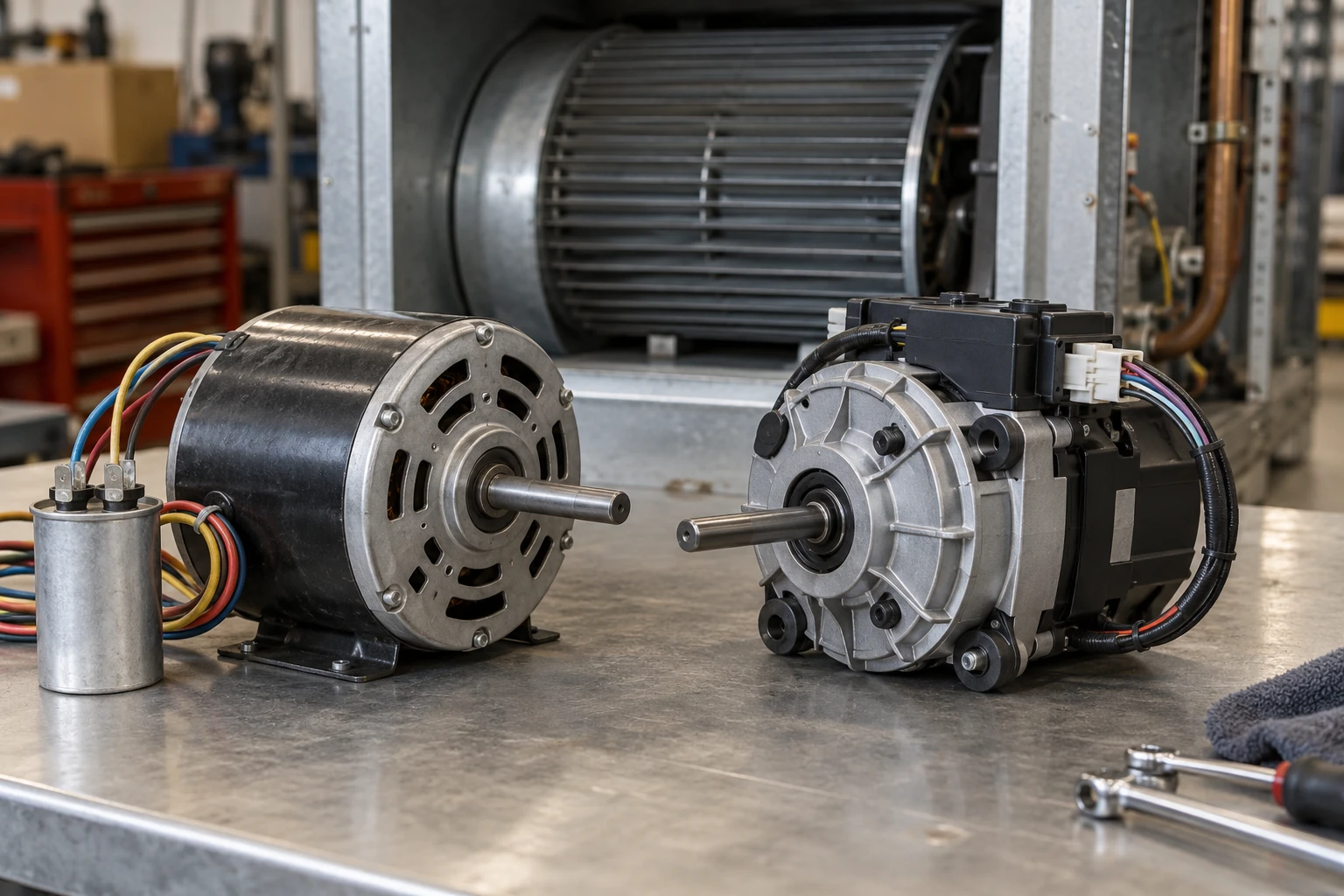
Single-phase AC supplies one alternating voltage waveform. Three-phase AC supplies three waveforms offset in time. Motors designed for those supplies use different electrical arrangements to produce the rotating magnetic field that drives them. A compressor or fan motor specified for three-phase input is therefore not interchangeable with a single-phase motor merely because both units carry a similar voltage label.
In a single-phase vs three-phase HVAC comparison, phase describes how equipment receives power; it does not, by itself, specify cooling capacity, heating method, efficiency, or operating cost. Both configurations can serve commercial applications. Compare equipment sized for the space and its heating needs first, then choose a version compatible with the electrical supply.
How Do You Determine Which Electrical Service the Building Has?
Start with the building's electrical drawings, utility information, and service or panel labels. Those can identify a likely voltage and phase, but an older label may not describe the supply available at the proposed equipment location. Have a licensed electrician confirm the characteristics there rather than inferring them from the street address, building type, or a voltage printed on an existing appliance.

Ask the electrician to assess two different things: whether the appropriate supply can reach the unit and whether the building service has capacity for its load alongside other loads. The unit's branch circuit is a separate question. A panel with room for a breaker, or an existing circuit with a familiar voltage, does not alone answer either question.
When Does a Single-Phase or Three-Phase Commercial Package Unit Make Sense?
A single-phase commercial package unit makes sense when it meets the space's cooling and heating requirements and suitable single-phase power is available. The same check applies when comparing gas package units. Keep in mind that many product lines offer single-phase versions only in smaller capacities, so a larger space may narrow the choice to three-phase models. Confirm the capacity range available for each supply type before settling on a size. A three-phase version is an option where the required three-phase supply is available and can support it. Neither choice is automatically better because the property is commercial. A three-phase unit cannot simply be connected to a single-phase circuit; providing a different supply would require a separately planned electrical project.
Product descriptions illustrate why the input specification matters. Budget Heating lists the Daikin DSC0361D000001S as a 208/230V single-phase, cooling-only package unit, while its Rheem RGECYB036ACT07BAAAA0 listing specifies 208/230V, three-phase, 60 Hz input for a gas package unit. These have different heating configurations as well as different phase requirements; they are examples of specifications to compare, not substitutes selected on voltage alone.
Use Budget Heating's commercial HVAC equipment category to explore equipment types, then check the individual model's current listing and manufacturer specifications before selecting a configuration.
Why Must Voltage, Phase, and Circuit Ratings All Match?
Read the selected equipment's nameplate and installation instructions together. Its rated supply voltage or permitted operating range tells the installer what voltage the unit accepts; its phase marking specifies the supply arrangement; and its frequency must also match. "208/230V" is not a complete compatibility test: equipment marked three-phase needs the specified three-phase supply even if a single-phase circuit has the same nominal voltage.
Next, check minimum circuit ampacity (MCA) and maximum overcurrent protection (MOCP, sometimes labeled MOP) for the exact model and installed configuration. MCA is used to size the supply-circuit conductors under the manufacturer's instructions; MOCP limits the rating of the specified breaker or fuse. Neither number says how much unused capacity remains in the building's overall electrical service. Model, voltage, and optional heat can change these circuit ratings, so do not carry a value from one package unit into another purchase.
Optional heat shows why configuration matters: Daikin's electrical data for its three-phase DSC036XXX3D configuration lists different supply-circuit MCA and MOP values without heat and with the three-phase EHK3-10 heater option. Those figures do not apply to the single-phase DSC0361 mentioned above, which is paired with different heater kits and has its own ratings. The relevant figures are those for the unit and options actually selected.
How Does an Electric Heat Strip Affect the Choice?
An electric heat kit uses resistance elements to provide heat. When approved for the equipment, it may supplement a heat pump or provide electric heating in a cooling-only package unit. Unlike choosing a unit with no electric heat, adding a kit introduces a substantial electrical load and can change conductor, protection, and supply arrangements.
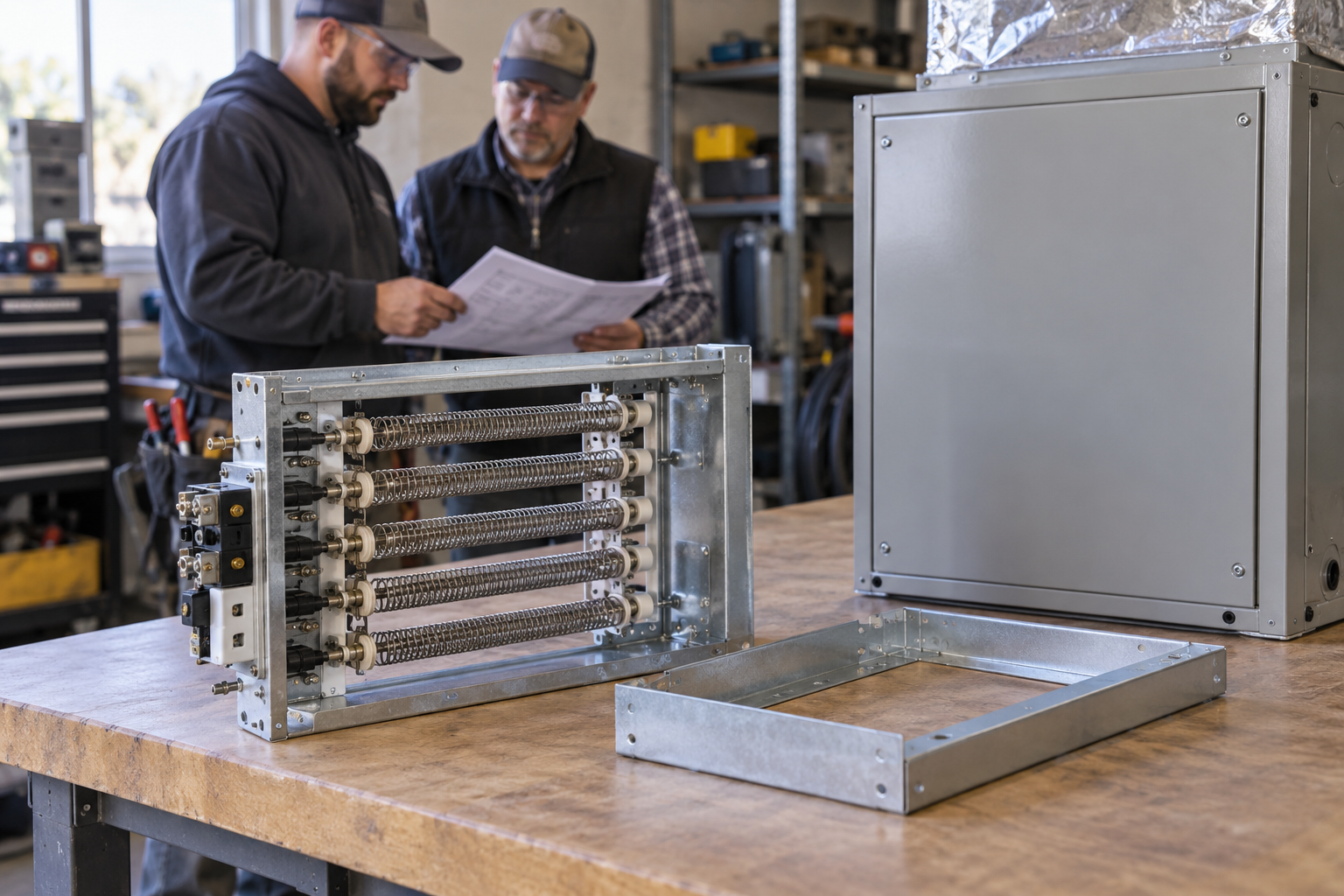
A three-phase heat strip is not a universal accessory for three-phase package units. The manufacturer must approve the kit for the exact unit and its intended heating configuration. Its voltage and phase, heater size, wiring instructions, and any minimum-airflow requirement matter alongside physical fit. For an example of model-specific instructions, Daikin's DCC/DCH installation manual identifies heater-kit provisions and minimum airflow by unit and kit size.
Budget Heating's Rheem RXHE-AG020CC listing describes a 20 kW, 208/230V three-phase kit for compatible RACD/RACG units. That description does not make it an approved accessory for every RACD/RACG model, or for the Rheem gas package unit discussed above. The listing alone does not establish the chosen combination's circuit ratings or whether the heater needs a separate circuit. Use the applicable RACD/RACG and kit instructions to select the approved configuration and its specified wiring and protection.
Budget Heating's three-phase heat strips category is a starting point for finding kits; use the specific package-unit model and manufacturer accessory information to establish fit.
What Must Be Planned Before a Package Unit Is Installed?
Before installation, have the electrician plan the required circuit or circuits, protection, disconnect, and any service work for the final unit-and-heat configuration. That assessment includes the building's other electrical loads; the HVAC installer should coordinate the equipment selection and its mechanical requirements with the electrician.
Electrical compatibility is only part of a workable installation. Placement, support, access clearances, and duct connections also have to meet the chosen unit's instructions. For example, Daikin's DSC/DSH installation manual addresses rigging, roof-curb support, clearances, and duct weatherproofing for the models it covers. The installer should apply the instructions for the unit actually being installed, along with applicable local requirements.
Which Equipment Should You Order?
Order the package unit that meets the application's heating and cooling needs and matches the verified voltage and phase at its installation point. Have the final circuit ratings and building load assessed with all selected options included. If electric heat is needed, choose a manufacturer-approved kit and plan its specified supply arrangement before purchase. Three-phase equipment is the right choice when those conditions support that particular three-phase model, not simply because the job is commercial.
 Cooling
 Heating
 Learning Center
 Money Saving Tips
 Product and Brands Insights
 State by State