




 HVAC maintenance
 hvac systems
SEER Ratings Explained: What They Mean for Your Energy Bills
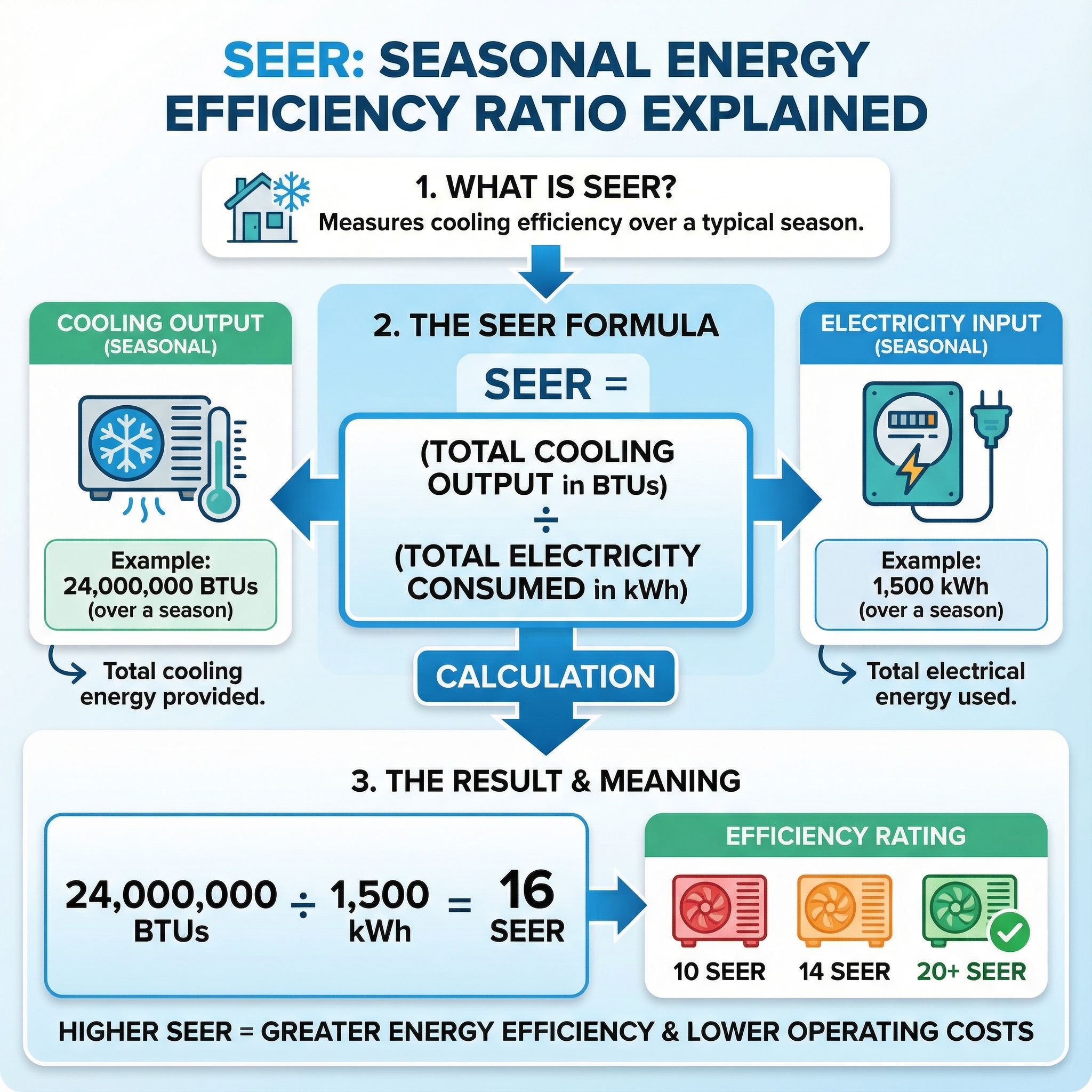
SEER tells you how efficiently a cooling system converts electricity into cooling. Higher ratings typically mean lower utility bills, less strain on equipment, and greater long-term savings. It matters because comfort costs add up over an entire summer, and we keep the explanation simple and practical so you can read a spec label with confidence.
Think of SEER like miles per gallon for your air conditioning. A higher MPG means you travel farther on the same fuel, and a higher SEER means more cooling from the same electricity. SEER is a seasonal measure, it reflects performance across a typical cooling season rather than a single snapshot, so real bills depend on weather patterns and how you use the system. Use SEER to compare efficiency across models, then remember the bigger picture: a higher rating usually means the system works easier to deliver the same comfort. In short, SEER frames the long-term cost of staying cool, helping you balance the upfront price of equipment with the ongoing cost to operate it over the months that matter most.
What is SEER? How the Seasonal Energy Efficiency Ratio Is Defined
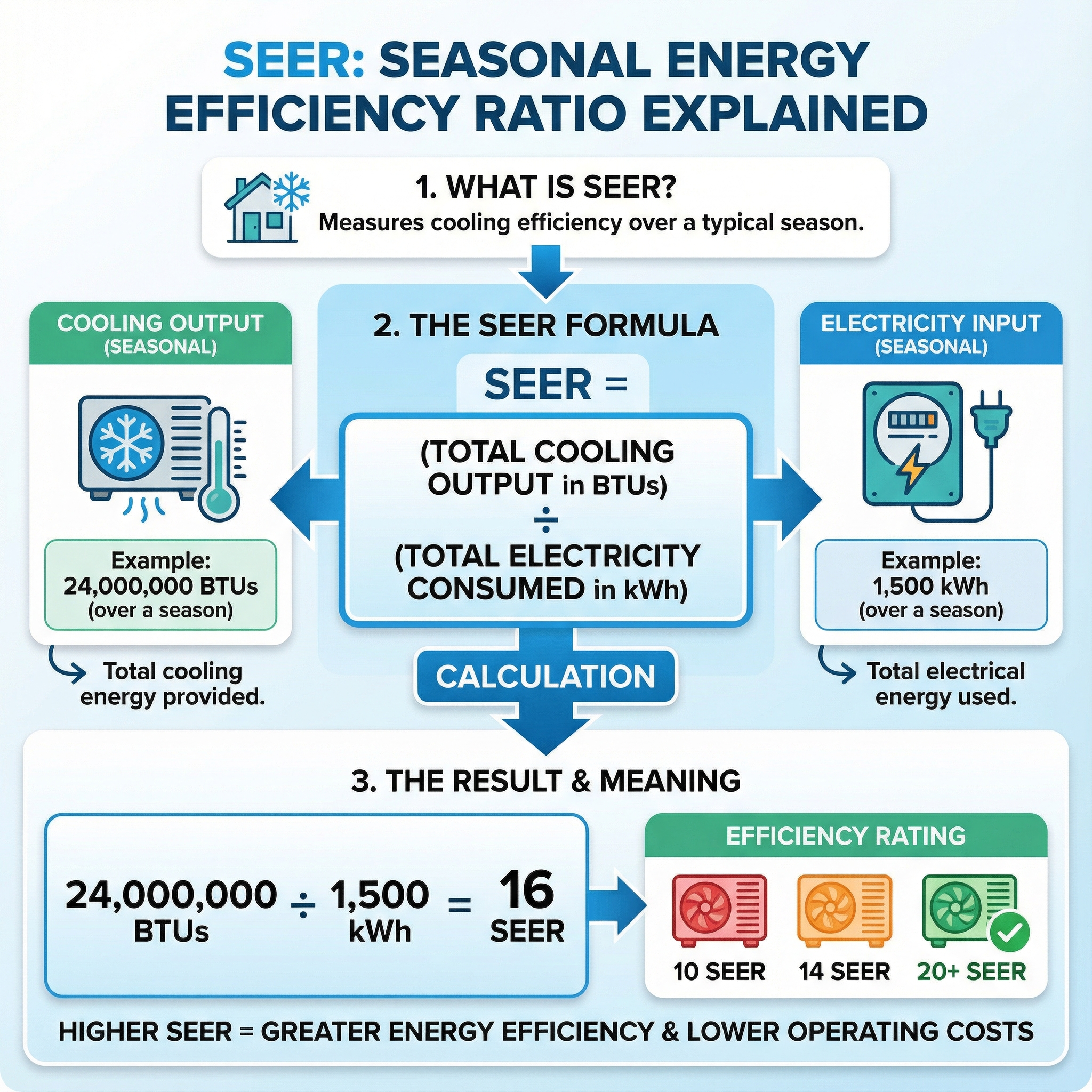
SEER is determined by a standardized seasonal test: total cooling produced over the season in BTUs divided by the seasonal electric input in watt-hours. Think of it like miles per gallon measured on a lab route. It is a system rating, not a single-box score. In our field experience, the official value applies to a matched set, outdoor unit plus indoor coil and air handler or furnace with the correct metering device, installed to spec. Typical ranges: many older units run 10 to 13, today’s baseline equipment often lands around 14 to 17, and premium high efficiency systems reach 18 to 20+ under lab conditions.
How Higher SEER Helps: Energy, Comfort and Environmental Benefits
Higher SEER equipment uses less electricity to deliver the same cooling, so your kWh per BTU drops and your monthly bill follows. You get the same comfort with a lighter pull on the meter.
Comfort also improves. Variable speed and multi stage systems run longer at low output, like cruise control smoothing out small hills. That steadier operation wrings out humidity, evens out room temperatures, and keeps sound levels low.
There is an environmental upside too. Lower kWh means less load on the grid and fewer greenhouse gas emissions, and many high SEER models can qualify for utility rebates. In our experience at Budget Heating (BudgetHeating.com), homeowners notice the quieter, drier, more consistent feel right away, then see the savings on their next bill.
Choosing the Right SEER for Your Home: Practical Guidelines and Checklist
Use this quick path to pick a practical SEER target without guesswork.
In our experience at Budget Heating (BudgetHeating.com), this checklist keeps choices grounded in your home’s needs and local rules.
- Start with climate: hot areas aim SEER 16 to 18+, moderate 14 to 16, cool 13 to 15.
- Confirm your local minimum efficiency requirements, including SEER2.
- Insist on a Manual J load calculation for your home, not a square foot estimate.
- Get multiple bids that show a baseline and at least one higher SEER option.
- Ask each installer to translate options into annual kWh, bill impact, and simple payback.
- Verify incentives: utility rebates, tax credits, and any manufacturer promotions.
- Choose qualified installers and ensure the outdoor unit, indoor coil, and air handler are properly matched as one system.
This process keeps the decision clear, defensible, and aligned with real-world performance.
Tips to Improve AC Efficiency Without Replacing the Unit (Maintenance & Safety Checklist)
From decades in the field, we see simple habits keep an AC close to its rated SEER. Airflow is the lifeblood of efficiency, a clogged filter is like breathing through a straw.
- Replace or clean filters every 1-3 months.
- Keep supply and return vents open and unobstructed.
- Clear leaves, grass, and clutter from the outdoor unit.
- Shut power, then gently rinse the outdoor coil with a garden hose.
- Use a programmable thermostat to avoid overcooling.
- Check the condensate drain and trap for clogs or leaks.
- Test CO detectors and maintain safe clearances around equipment.
Safety first: leave electrical diagnostics and any refrigerant work to licensed professionals, and never open sealed refrigerant circuits. Routine professional tune ups help preserve rated efficiency.
How SEER Impacts Your Monthly and Annual Energy Bills (Cost & Savings)
Higher SEER lowers the electricity your system needs, so bills drop. In our 30+ years we typically see a move from SEER ~10 to ~16 cut cooling energy about 30 percent. Simply replacing older equipment with units that meet modern minimums often produces 15 to 30 percent lower annual cooling costs.
Payback comes from those avoided kilowatt hours. It is faster in hot climates, with long run seasons, and where power rates are high. It stretches in mild regions or with low electricity prices. Installation quality also determines how much of the rated efficiency you actually experience.
Expect diminishing returns as SEER rises. The jump from 14 to 16 can have a solid payoff, while stepping from 16 to very high ratings adds smaller incremental savings and higher equipment cost, so the payback period lengthens.
When Upgrading to a Higher SEER May Not Make Financial Sense (Tradeoffs & Common Mistakes)
Higher SEER is not automatically better for every home. We often see these pitfalls: assuming a higher number guarantees better comfort or doubles savings, trying to raise SEER by replacing only the outdoor unit, and treating the lab SEER as a fixed real‑world result. SEER is like the highway MPG on a window sticker, actual performance depends on sizing, installation quality, duct condition, insulation, and maintenance. As SEER climbs, incremental savings shrink while upfront cost rises.
- Cooler climates with limited cooling hours: a modest SEER paired with insulation or air sealing usually wins.
- Leaky ducts or weak envelope: fix ducts and the shell first, then consider efficiency upgrades.
- Tight budgets: a moderate SEER often delivers better lifecycle value than chasing the top rating.
SEER vs EER (and SEER2): What the Tests and Regulations Mean for You
SEER is a seasonal score, like your car’s average MPG across a year of mixed driving. EER is a point-in-time snapshot at a specific outdoor temperature. In our experience, SEER helps you compare likely annual energy use, while EER shows how a system holds up on the hottest afternoons.
Beginning in 2023, the DOE shifted to updated test procedures called SEER2 and EER2 and raised minimum efficiency levels by region. Current minimums typically land around SEER2 13.4 to 14.3 depending on your zone, with additional EER2 requirements in hotter regions.
Focus on SEER or SEER2 to gauge overall seasonal costs. Pay close attention to EER or EER2 if you live in a high-heat area or must meet a specific regional compliance threshold.
Real‑World Savings Examples and a Simple Way to Estimate Cooling Costs
In real bills we see roughly 30% lower energy use when moving from SEER 14 to 20. If your peak summer cooling runs about $200 per month, a SEER 20 system may land near $140. A simple rule: new bill = old bill x (old SEER / new SEER). Example: 200 x 14/20 = 140. From 14 to 18, use 14/18, about 22% lower.
- Find your average summer cooling cost per month.
- Apply the ratio above to estimate a new monthly bill.
- Multiply by cooling months for a seasonal total.
- Ask contractors for kWh savings and payback estimates, and check utility, state, and manufacturer rebates.
Summary: Balancing SEER, Installation Quality, and Cost Over Time
SEER reflects seasonal cooling per unit of electricity. Higher SEER usually lowers bills, but the benefit hinges on climate, cooling hours, electric rates, plus correct sizing, installation, ductwork, and insulation. Aim for a SEER modestly above your local minimum, insist on a proper install and maintenance, and judge lifecycle cost, not just a label.
If that balance feels tricky, we can help. With 30+ years in HVAC and 200,000+ orders fulfilled, our team gives grounded guidance at wholesale pricing.
- Get a Custom Quote
- Talk to Our Team by phone for fast, U.S.-based support
- Shop Central AC and Heat Pumps
Ask about free shipping and Affirm financing.
 Cooling
 Heating
 Learning Center
 Money Saving Tips
 Product and Brands Insights
 Buying Guides
 State by State