




 buying guides
 heating
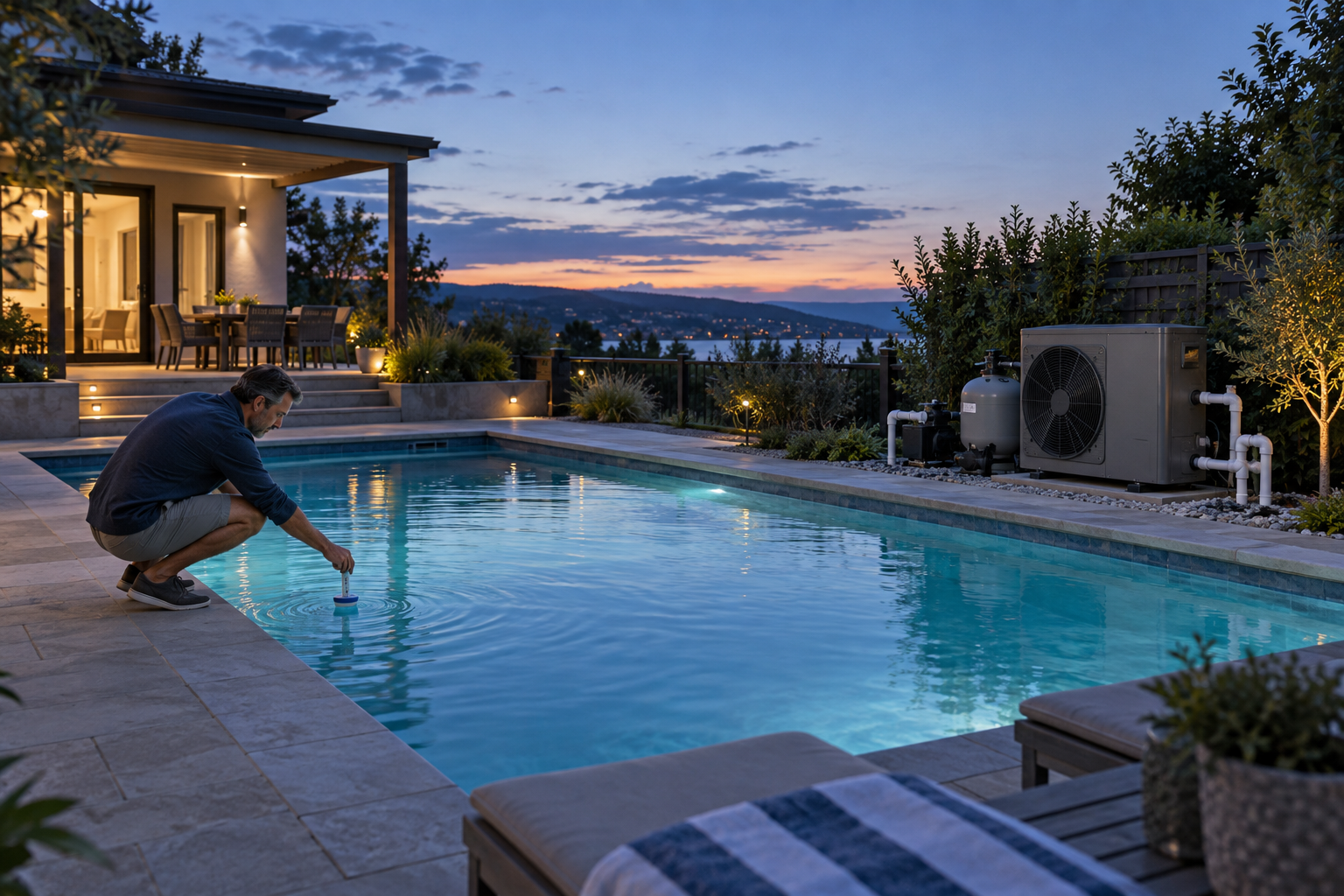
Pool heat pump sizing starts with three questions: How much water must you heat, how many degrees must it rise, and how quickly do you want that to happen? Those answers give you an initial heating-capacity target in BTU/h, British thermal units delivered per hour. Then compare heat pumps at air and water temperatures relevant to your swimming season, allowing for heat the pool loses while it warms. Pool gallons alone cannot determine the right size.
Step 1: Estimate how much water you are heating
Use a documented pool volume if you have one. Otherwise, measure dimensions in feet and estimate gallons:
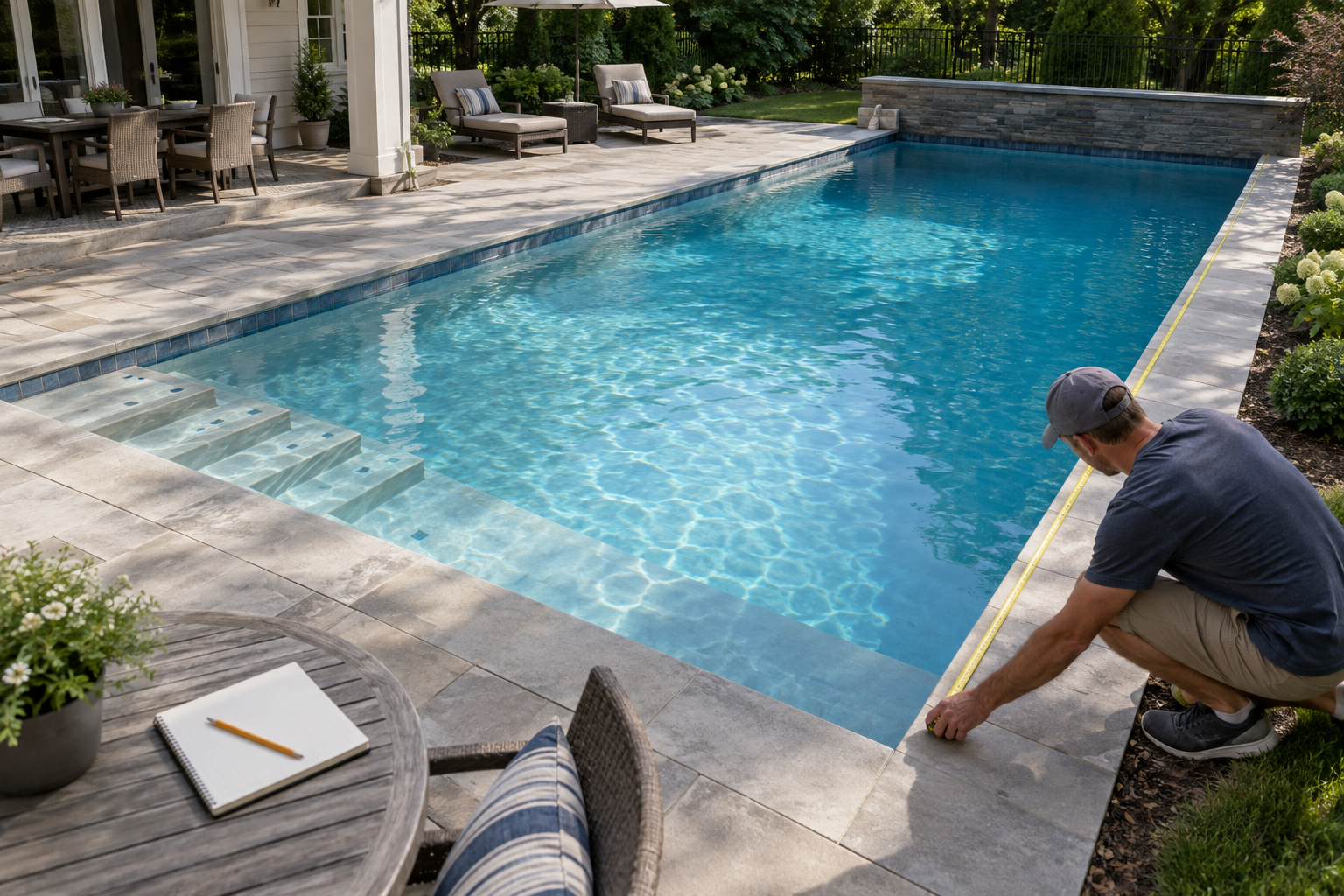
- Rectangular pool: length × width × average depth × 7.48.
- Round pool: π × (diameter ÷ 2)² × average depth × 7.48.
The dimensions produce cubic feet; multiplying by 7.48 converts cubic feet to U.S. gallons, the conversion used in DOE's pool-volume guidance. For a floor that slopes uniformly from shallow to deep, estimate average depth as (shallow-end depth + deep-end depth) ÷ 2. Measure water depth rather than the height of an empty pool wall.
For an L-shaped or otherwise irregular pool, divide the water surface into simpler sections and add their estimated volumes. A single maximum length multiplied by maximum width can substantially overstate the amount of water. Steps, benches, and changing bottom contours also affect an estimate, so use documented capacity when it is available. The gallon figure tells you how much water needs heating; the desired temperature change and heating schedule determine how much heating output you need per hour.
Step 2: Set the temperature rise and warm-up window
Record the starting water temperature before the period you want to heat and choose a target water temperature. Subtract the starting temperature from the target to get the required temperature rise. For example, water at 72°F headed for 82°F needs a 10°F rise. Next, set a realistic warm-up window: the number of hours the heat pump can actually run before you want to swim, not merely the number of calendar hours until then.
Decide whether that window represents an occasional cold-pool recovery or normal operation. Bringing cool water up to temperature by a firm weekend deadline can require a high hourly heating rate. Once the pool is warm, maintaining it means replacing heat as it escapes; the demand depends heavily on weather, exposure, and cover use. A household willing to heat gradually may make a different capacity choice from one that wants rapid recovery after every cool spell.
Use temperatures and deadlines that reflect when you intend to swim. A warm-up target based on a mild afternoon will be less demanding than reaching the same water temperature during a cool, windy shoulder-season period. Write down both scenarios if either matters to you; they will make the equipment comparison more useful than a single pool-size rule.
Step 3: Calculate an idealized BTU-per-hour requirement
Approximately 8.34 pounds of water occupy one U.S. gallon, and raising one pound of water by 1°F takes about one BTU. This water-heating relationship appears in Pentair's engineering guide; here, dividing total heat by operating hours expresses the required rate of heat delivery. That gives a first-pass calculation for heat delivered to the water:
Gallons × 8.34 × desired rise in °F ÷ heating hours = ideal average BTU/h.
For a hypothetical 15,000-gallon pool starting at 72°F with an 82°F target, the rise is 10°F. Heating the water alone takes approximately 15,000 × 8.34 × 10 = 1,251,000 BTU. Spread evenly over 24 hours of operation, that is about 52,100 BTU/h delivered to the water. Allow 48 operating hours instead, and the ideal hourly rate falls to about 26,100 BTU/h. The total heat needed for the water is the same; the shorter deadline concentrates delivery into fewer hours.
This is an ideal water-heating rate, not a guaranteed warm-up time or a model-selection cutoff. It assumes continuous heat delivery throughout the hours counted and does not include heat escaping from the pool during warm-up. If the circulation schedule permits only part of each day for heating, use those operating hours in the calculation. Heat loss and the pump's output under actual weather conditions must be considered before comparing equipment.
Step 4: Adjust expectations for climate and pool heat loss
A pool loses heat while the heat pump is adding it. Evaporation is a major pathway; wind across an exposed water surface encourages that loss. A larger exposed surface presents more opportunity for heat loss, even when two pools contain the same number of gallons. That is why pool dimensions, exposure, and whether the water is covered matter alongside volume.
Weather affects both sides of the comparison. Air temperature and humidity affect heat-pump performance, while wind and evaporation affect how much heat the pool must replace. Cooler shoulder-season conditions may therefore mean less available heating output when the pool needs more heat. A higher target water temperature also makes maintaining comfort more demanding when the surroundings are cool.
A pool cover reduces evaporation while it is in place. Covering the pool during warm-up and when it is not being used can reduce the heat the equipment must replace; the benefit depends on local conditions and how consistently the cover is used. Do not size around nightly cover use if the pool will usually remain uncovered.
Choose which conditions the heat pump should handle well. If swimming mainly occurs in mild weather and the pool stays covered between uses, gradual heating may be acceptable. If you expect a specified temperature soon after cold, windy periods, give that recovery requirement more weight. An unusually cold day may still take longer than a normal-season warm-up; sizing for every extreme can mean choosing more capacity than everyday use calls for.
Step 5: Compare heat pumps at relevant rating conditions
Start with the air and water temperatures printed alongside a heat pump's BTU/h rating: that number represents heating output at those test conditions. Electrical input is a separate measure of power consumption. Consider the stated humidity, too, before comparing the published output with your calculated rate. The AHRI heat-pump pool-heater program distinguishes heating output from efficiency and identifies operating conditions as part of a meaningful comparison.
Look for a manufacturer performance table showing output under conditions near those in which you plan to swim. Pentair's UltraTemp technical guide, for example, publishes different capacities at different rating conditions. A single headline BTU/h value should not be assumed to hold through cooler weather. Compare the table's heating-output figures and stated operating limits for the temperatures that matter to you.
Keep three quantities separate: your calculated ideal BTU/h is the average heating rate needed on the chosen schedule without losses; rated heating BTU/h is a pump's output under stated conditions; electrical input is the power it uses to operate. Compare heating output, not electrical input, with your target, then allow for pool losses and changes in output at relevant temperatures. When two candidates look close by their headline ratings, their performance at your intended conditions can be the more useful distinction.
Step 6: Choose capacity and the equipment function you need
Favor more heating capacity when a short warm-up deadline or cooler swimming season is important. A smaller-capacity option can be reasonable when the pool is regularly covered, conditions are mild, and you can wait longer for warm-up. Compare the purchase prices of candidates against the recovery time you actually need rather than paying for a headline capacity you will rarely use.
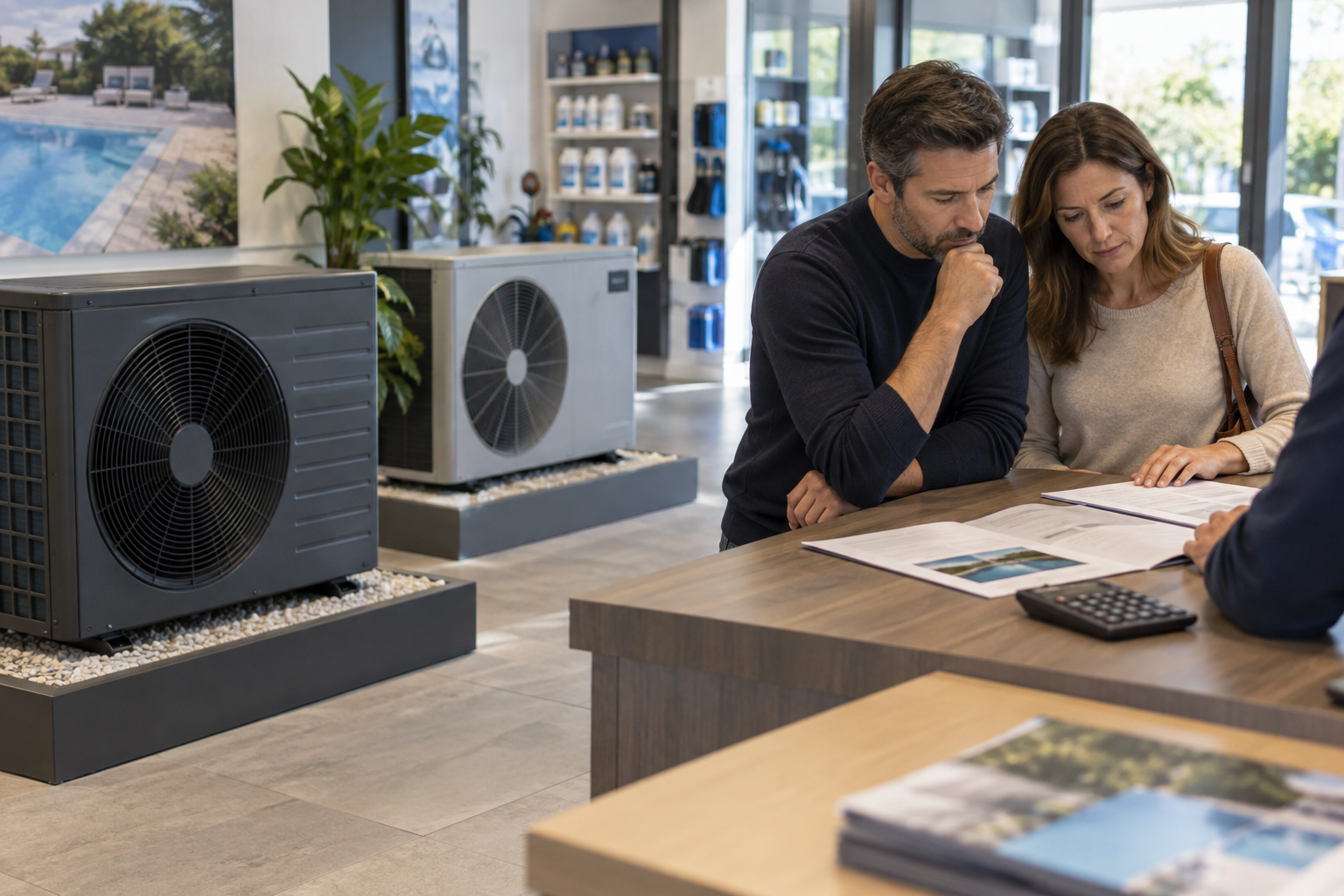
Choose the equipment function separately from its heating capacity. Consider heat-only pool heat pumps if warming the water is the goal, or heat-and-cool pool equipment if you also need active water cooling. Cooling capability does not compensate for insufficient heating output. For any candidate, use its current product listing and manufacturer specifications to check the exact model's capacity, rating conditions, operating limits, and installation requirements.
Choose for the conditions in which you swim
Choose for the weather and schedule in which you expect to swim, not just the pool's gallon count. The calculated hourly requirement gives you a starting point; relevant rated output and expected heat loss turn it into a practical capacity choice. Decide how much faster recovery is worth to you, then compare pool heat pump models using their published heating performance under conditions that resemble your own.
 Cooling
 Learning Center
 Money Saving Tips
 Product and Brands Insights
 State by State
 HVAC Systems