




 learning center
 money saving tips

HVAC Zoning Systems: What They Are and Why Homeowners Ask ‘Are They Worth It?’
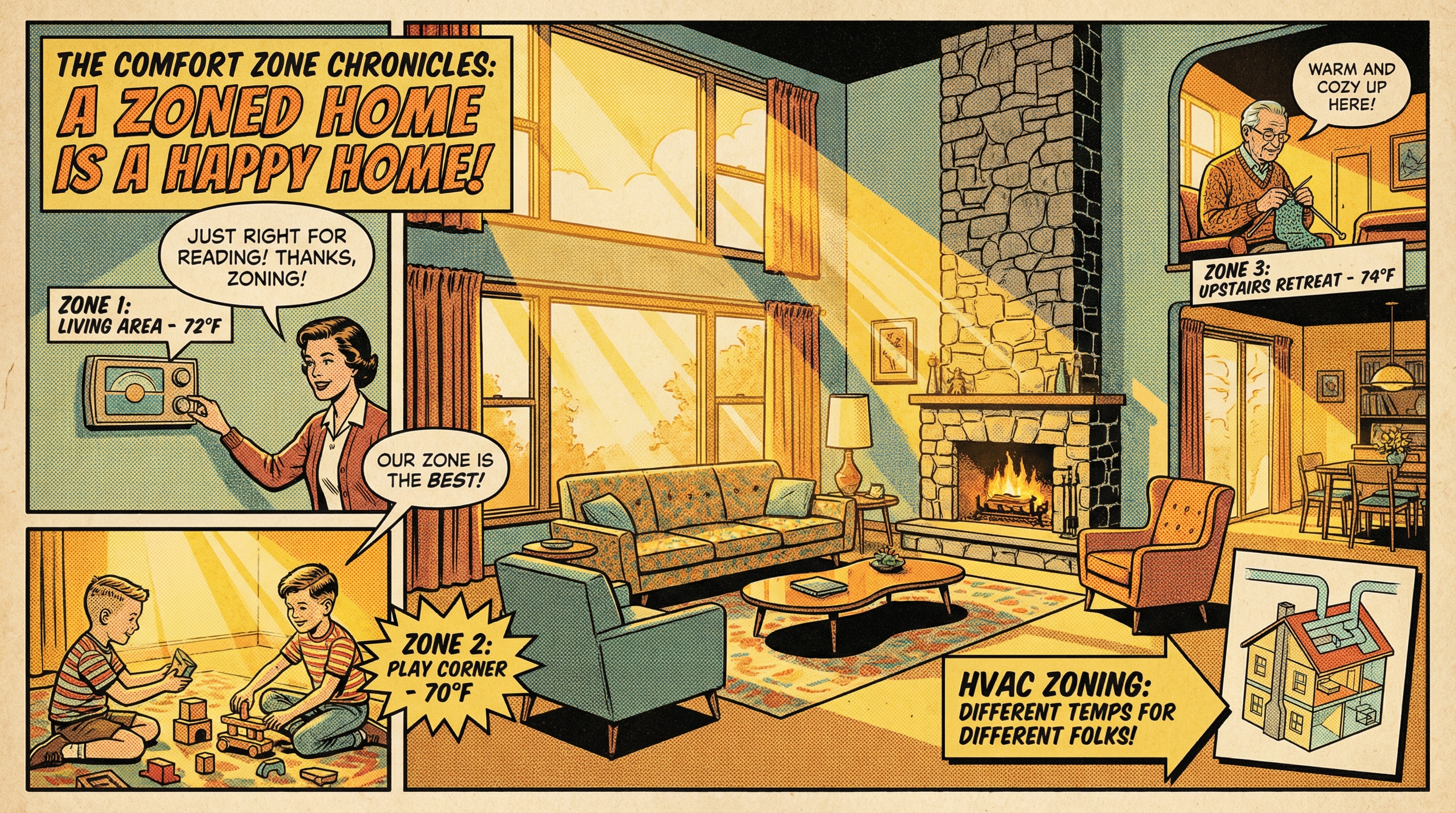
Hot and cold rooms, thermostat tug-of-war, and climbing utility bills drive a common question: is zoning worth it? Zoning divides a home into independent temperature areas using multiple thermostats and motorized dampers, so the system sends air only where it is needed. Think of it like using light switches for individual rooms instead of one master switch for the whole house.
When designed and set up correctly, zoning can lift comfort, cut wasted conditioning in empty spaces, and reduce wear on equipment, which can mean fewer repairs and a longer service life. It works alongside filtration and ventilation, but zoning itself does not filter air or bring in fresh air.
This article explains how zoning works in plain terms, who benefits most, and where it makes little sense. We cover common home layouts that favor zoning, equipment compatibility, expected costs, and what a realistic payback looks like. We also outline alternatives such as balancing, smart thermostats, or targeted upgrades, so you can compare options. By the end, you will know what zoning can fix, what it cannot, and how to decide if it fits your home and goals.
Quick takeaway (TL;DR): When HVAC Zoning Is Usually Worth the Cost
HVAC zoning tends to pay off in the right scenarios: larger or multi-story homes, additions, spaces with very different use patterns, or stubborn hot and cold spots. We typically see big comfort gains and lower peak demand, while yearly energy savings vary by design and are often modest. Tradeoffs include higher upfront cost, more parts, and the need for careful design. Poor retrofits on single-stage equipment or weak ductwork can backfire. Compare zoning with duct sealing or targeted mini splits before deciding.
What Is an HVAC Zoning System? Definition and Core Components
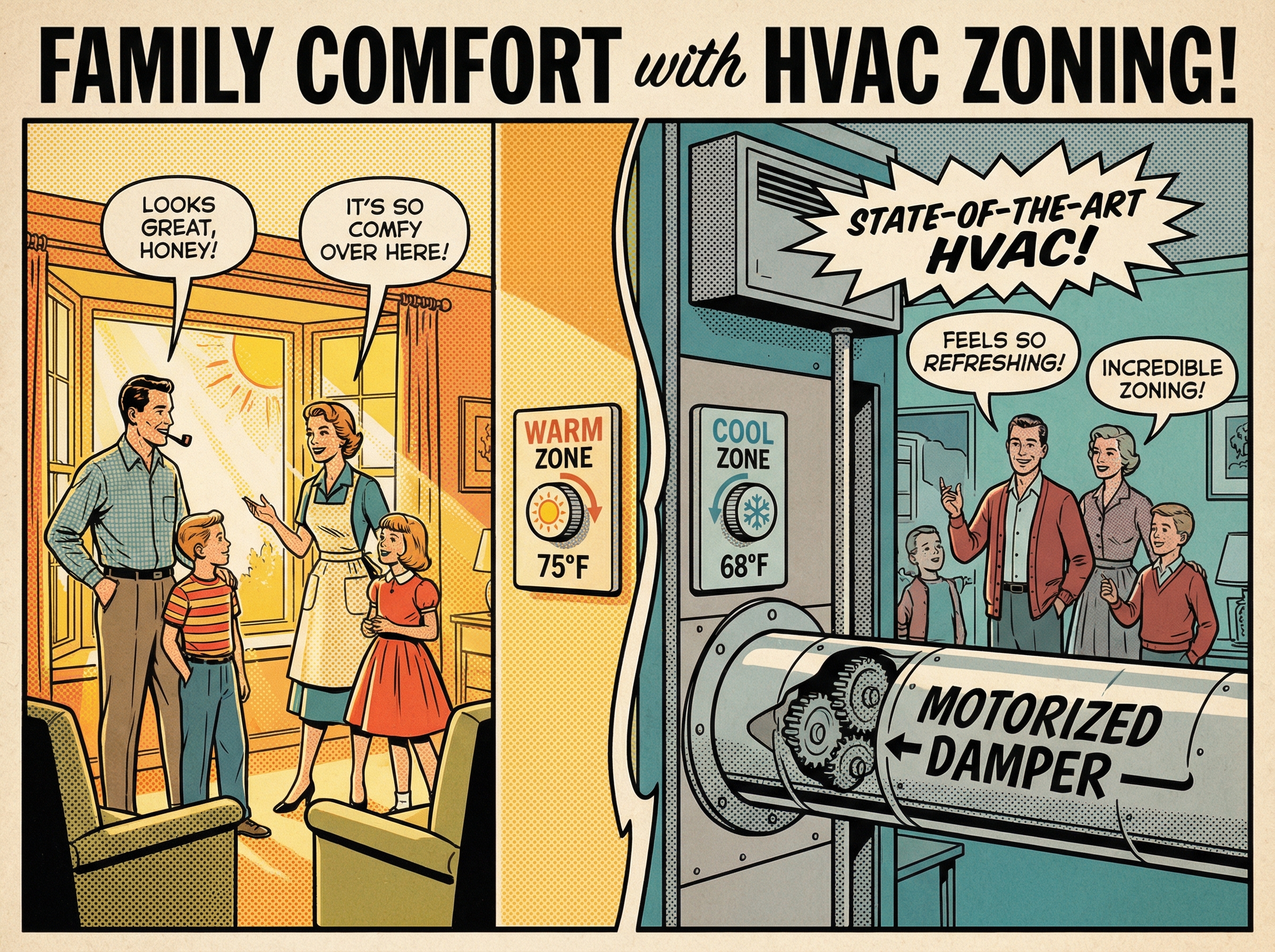
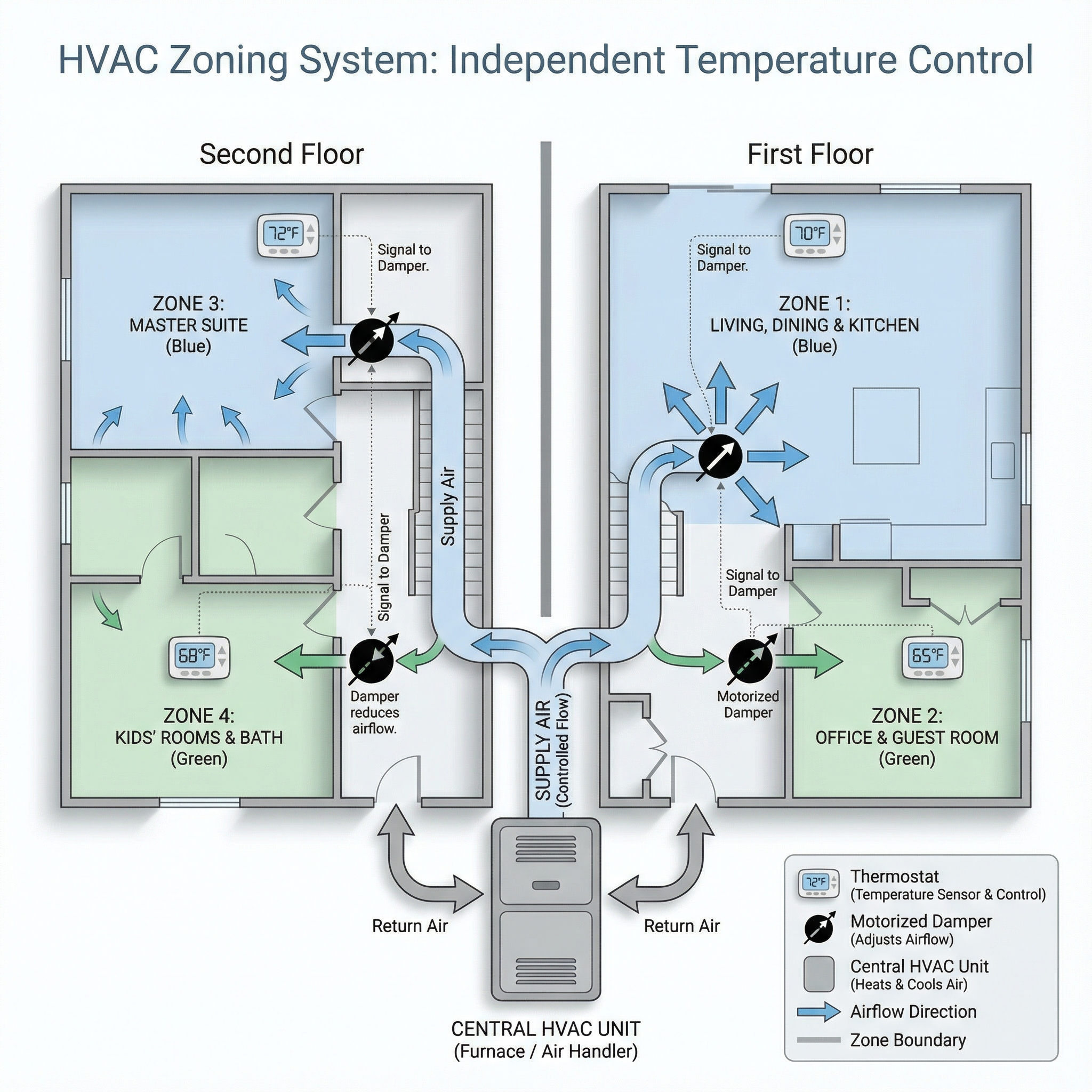
An HVAC zoning system divides a home or building into multiple temperature zones that can be controlled independently. It uses motorized duct dampers or, in ductless designs, separate air handlers, coordinated by multiple thermostats and a central control panel. Each thermostat signals the panel, which opens or closes dampers like traffic-control gates or runs the correct air handler for that area. In practice, we find clear wiring and labeling prevent zones from working against each other.
- Zone thermostats for each area
- Central control panel or control board
- Motorized dampers installed in duct branches
- Separate air handlers for ductless zones
- Low-voltage wiring or communication cables between devices
Types of Zoning Solutions: Ducted Zones, Multi‑Zone Mini‑Splits and Equipment Efficiency
Ducted zoning keeps your existing trunk and branches, dividing the home into areas that open or close as needed. It suits whole‑home comfort when ducts are in good shape. Ductless multi‑zone mini‑splits give each room its own indoor head, great for additions, basements, or homes with limited ductwork. A hybrid approach is common, a central ducted system for main spaces, plus one or two ductless heads for hot or cold spots. That way, each space gets the right capacity without oversizing the main unit.
Efficiency matters. SEER and the updated 2023 SEER2 apply to the central AC or heat pump serving the zones, and higher ratings lower operating cost. SEER2 numbers run a bit lower than old SEER for the same unit, so compare within the same test. In our experience at Budget Heating (BudgetHeating.com), variable‑speed or two‑stage equipment pairs best with zoning, like a dimmer switch that trims output to match a small zone. Single‑stage can work, but design must prevent short cycling and high static pressure. New systems must meet regional SEER/SEER2 minimums.
When Zoning Systems Are Most Likely Worth It: Use Cases and a Homeowner Screening Checklist
Zoning pays off most when parts of the home behave differently. Strong candidates include multi story layouts, large footprints, rooms with uneven sun exposure, guest suites or basements used intermittently, and households with mixed temperature preferences.
- Clarify goals: comfort, efficiency, or both.
- Check ducts for leakage and static. Confirm equipment compatibility, variable speed or two stage preferred.
- Ensure adequate returns and a pressure relief plan (avoid constant bypass as a crutch).
- Define practical zones, grouped by occupancy and sun exposure.
- Request detailed quotes including Manual J, S, and D, plus a zoning layout.
- Prefer professional commissioning with airflow balancing and damper settings.
- Compare alternatives when benefits look marginal: duct sealing, added returns, or a targeted mini split.
How Zoning Works: Dampers, Thermostats and Controls
In a zoned system, we group rooms with similar needs into zones and place a thermostat in each one. When a zone calls for heating or cooling, a central control panel opens motorized dampers for that zone and keeps other zones closed, then tells the equipment to run. Air is delivered only where it is requested, similar to opening specific valves on a plumbing manifold. The control panel coordinates multiple calls, so if two zones need conditioning at once, it opens both and manages run time accordingly. Zoning pairs well with smart thermostats, letting schedules and setbacks run independently by area.
This setup delivers personalized comfort and avoids conditioning rooms that are empty. If zones are routinely turned down or off when not in use, many homes see meaningful energy savings, and the equipment experiences less strain because it is not pushing air into unneeded spaces. Design matters: closing ducts changes static pressure and airflow, so we avoid too many tiny zones and make sure each zone has adequate supply and return air. Systems work best when zones mirror real life, such as grouping guest rooms that are used occasionally or separating upstairs sleeping areas from daytime living spaces.
Benefits: Comfort, Peak‑Demand Reduction and Energy Impacts of Zoning
Zoning lets you heat or cool the rooms you use, not the whole house. The result is fewer hot and cold complaints, tighter room‑to‑room balance, faster response when you change a setpoint, and often quieter operation. Paired with variable‑speed equipment, longer low‑speed cycles can improve humidity control. Think of it like putting dimmers in individual rooms instead of one master switch for the whole house.
Peak demand is where zoning often shines. By conditioning fewer spaces during the hottest hour, on‑peak compressor and blower power typically drops. In measured homes, we have seen double‑digit reductions, and field studies have documented cuts up to about 36 percent in multi‑zone setups. That helps with utility demand charges and right‑sizing backup power.
Annual energy use tells a more modest story. Across monitored projects, savings commonly land in the 0 to 6 percent range. Some homes see little change, and a poor design can even raise fan energy.
- Where zoning tends to excel: large homes with part‑time spaces, meaningful set‑backs by zone, variable‑speed or inverter equipment, tight ducts with controlled static pressure.
- What limits savings: leaky or undersized ducts, aggressive damper closure that drives high static, tiny zones on single‑stage systems that short cycle.
In our experience at Budget Heating (BudgetHeating.com), the winning recipe is right‑sized equipment, verified duct performance, conservative minimum airflow per zone, and smart schedules. That combination delivers consistent comfort, measurable peak reduction, and realistic energy outcomes.
Costs, Installation and Ongoing Maintenance for Zoned HVAC Systems
Upfront pricing for a retrofit usually lands in the low-thousands to several thousands of dollars, driven by how many zones you add and how easy your ducts are to reach. Hardware counts and wiring add up, and labor rises when access is tight or when minor duct changes are needed to fit components.
Think of static pressure like blood pressure in the ductwork. Zoning changes airflow, and if too many zones close at once, pressure can climb. Safe designs keep a minimum amount of duct open at all times, pair the system with an ECM blower or a pressure regulated bypass, and are commissioned to verify static pressure stays within the equipment limits.
Plan on annual maintenance: inspect and exercise each damper, verify thermostat to damper responses, manage filters, and perform static pressure testing with common zone combinations. Proper commissioning should test every thermostat and damper, confirm airflow, and confirm control responses. That routine protects comfort and equipment life, and keeps total cost of ownership predictable.
Common Mistakes and Tradeoffs: When Zoning Might Not Be the Best Choice
From decades in the field, we see zoning misunderstood and misapplied.
- Myth: zoning is just a luxury. Reality: it delivers when the home and equipment fit, otherwise benefits are modest.
- Myth: zones can be added anywhere. Poor retrofits on single stage systems, leaky or undersized ducts, or without pressure relief raise static, increase fan energy, trigger short cycling, and can damage equipment.
- Myth: one smart thermostat equals zoning. A single control cannot manage different room loads.
- Myth: it is an easy DIY. Design, sizing, and safeties are critical.
When zoning is not the best choice:
- Open plans or evenly loaded homes. Better: duct sealing and balancing, improved returns and airflow, or a smart thermostat with remote sensors.
- Homes with weak insulation or significant leakage. Better: envelope upgrades first.
- Only one or two stubborn rooms. Better: targeted ductless mini splits.
Think of dampers like closing lanes on a highway. Pressure rises unless there is a relief path.
Conclusion and Next Steps: A Practical Checklist to Decide on Zoning
Zoning delivers when your layout and ducts support it, and when it is paired with properly sized, efficient equipment. Any new or replacement system with zoning must meet SEER or SEER2 minimums for your region on AC, and national standards for heat pumps. Energy codes and the ACCA Manuals J, S, D and Zr should guide design, and many jurisdictions require duct sealing, leakage testing and verified sizing.
- Map the layout, define zones and doors.
- Inspect and seal ducts, confirm static pressure limits.
- Get quotes with Manual J, S, D and a zoning plan, plus commissioning.
- Compare variable‑capacity options that pair well with zoning and may unlock rebates.
If this feels like a lot to juggle, we can sanity check your design and spec the right pairings from our 30+ years in HVAC.
- Get a Custom Quote
- Talk to Our Team, U.S. phone support available
- Shop Zoning Controls
- Shop Variable-Capacity Heat Pumps
 Cooling
 Heating
 Product and Brands Insights
 Buying Guides
 State by State
 HVAC Systems