




 buying guides
 money saving tips
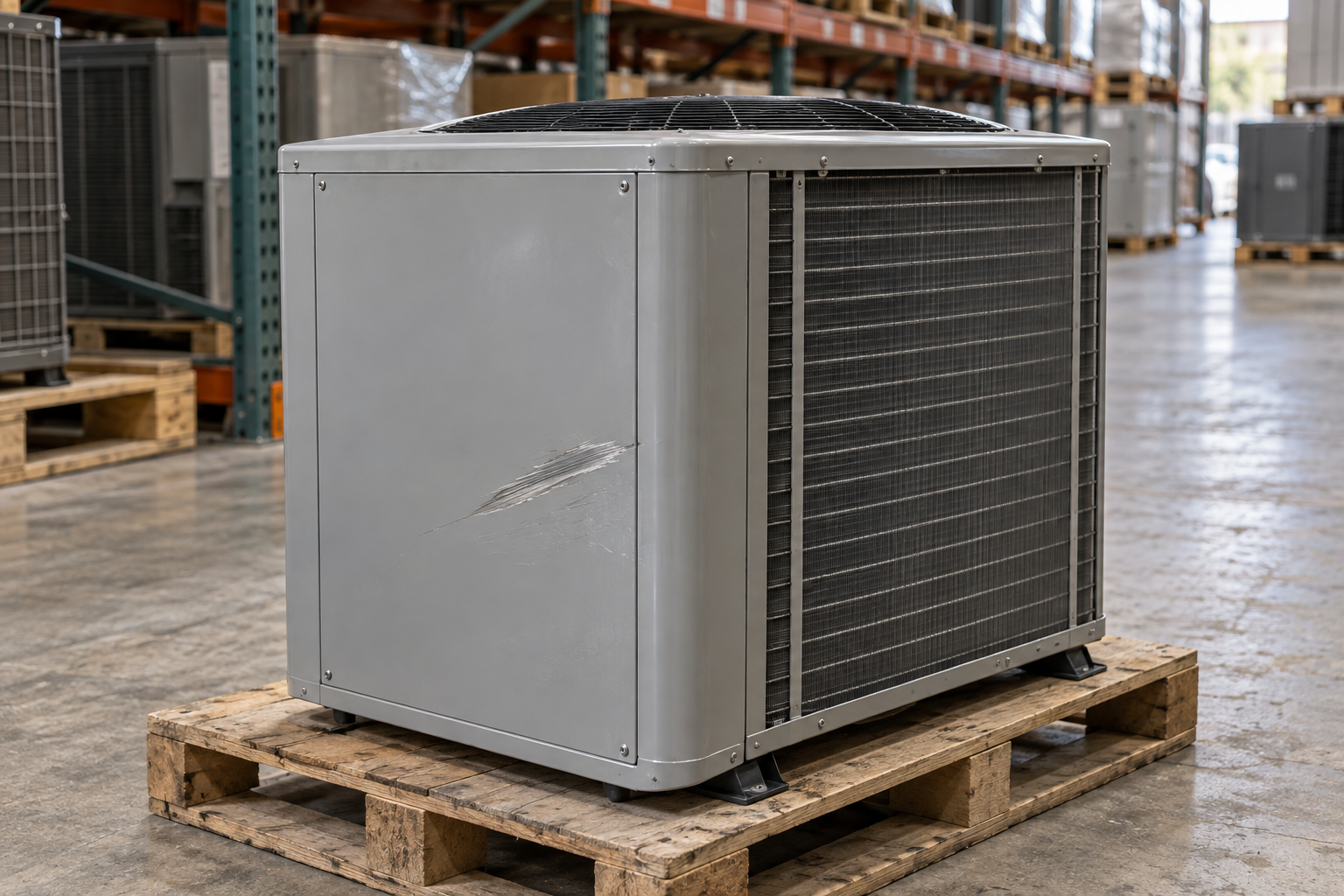
With scratch and dent HVAC equipment, the location of damage matters more than how noticeable it looks. A scuff confined to an exterior panel may change only the unit's appearance. A dent that obstructs airflow, bends refrigerant tubing, crowds a fan or prevents an electrical cover from closing can affect operation or installation. For a closeout purchase, compare the individual unit's description and photos with the work each affected part must do, then check the terms that apply to that item.
Exterior scuffs and cabinet dents: when the housing still does its job
An exterior cabinet panel can have a visible scratch or shallow dent and still serve its purpose. The distinction is whether the damage changes the panel's fit or the space around working parts. Look at the dent's position as well as its depth: is it on a broad, otherwise flat surface, or at an opening, corner, fastener, seam or grille?
A displaced panel may narrow an air opening or make it difficult to remove a service cover. A bent grille can intrude into the fan's space; a distorted mounting point can affect how the equipment sits or attaches. Those concerns are different from cosmetic damage on an air conditioner because they involve airflow, secure assembly or access for service. For example, the Bosch BOVA20/BOVC20 installation manual calls for unobstructed airflow and provides clearances for that equipment. Its measurements are model-specific, but the reason to examine an obstructed opening applies to the affected unit.
Panel fit matters during installation and later maintenance, too. A cover that will not fasten or come off as intended can impede a technician's access even if the visible mark is small. Ask for a view showing the whole affected side and nearby openings when a close-up does not show how the panel sits. The installer can assess the actual fit and clearances before the unit is operated.
Bent fins versus damage to the condenser coil
On an outdoor unit, the fan moves air across the condenser coil, and fins provide surface area around refrigerant-carrying tubing. Bent fins can restrict air movement across the affected area. A small patch and a broad crushed section therefore deserve different attention, but damaged condenser fins do not, by themselves, mean that refrigerant is leaking. Carrier's coil-care guidance explains the airflow concern associated with crushed fins.
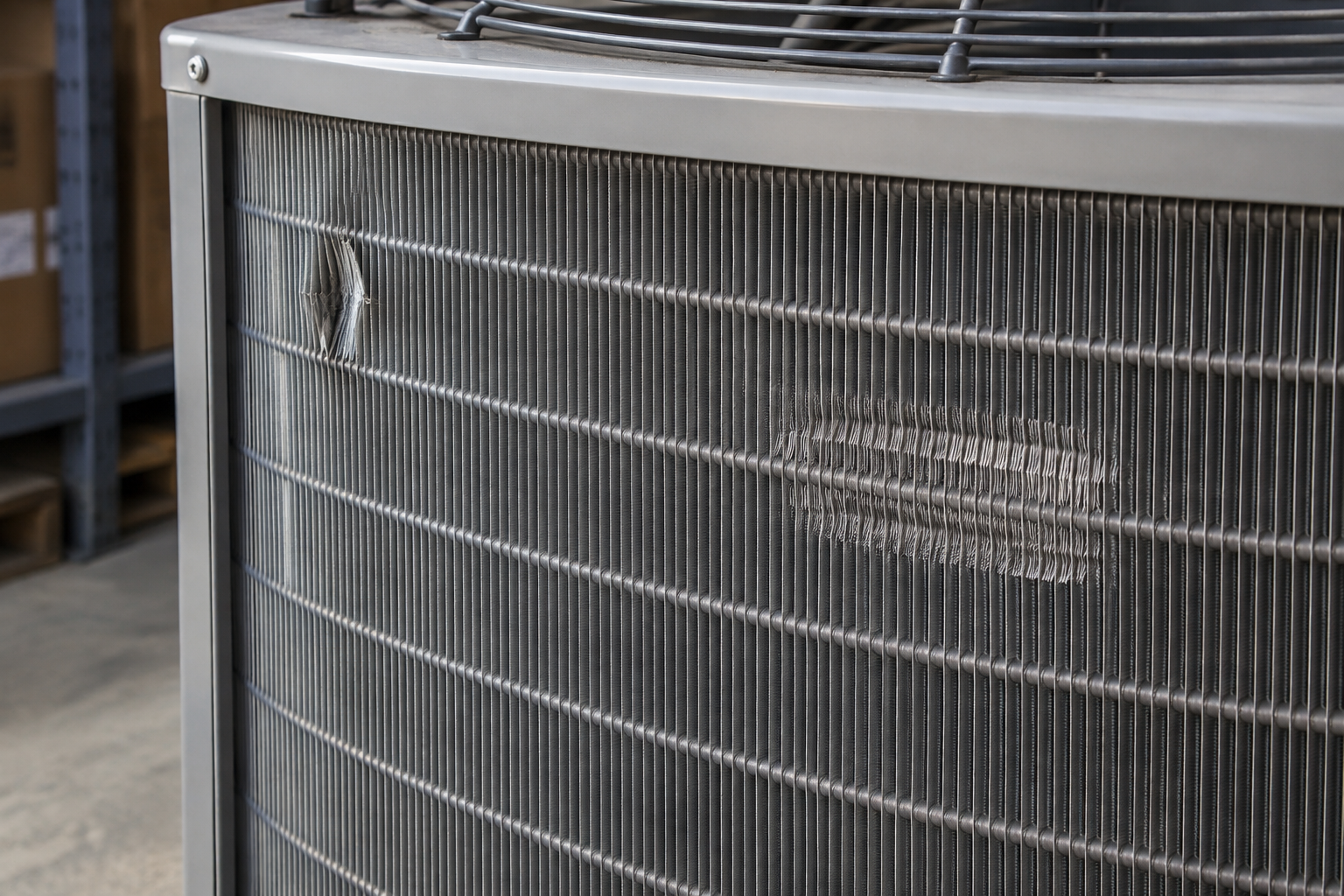
Damage to the tubing or its joints is a separate concern. Those parts contain the refrigerant; a bent, punctured or displaced tube or connection can threaten the sealed circuit. In photos, look for where deformation begins and ends: does it appear limited to thin fin material, or does it reach a tube, joint or coil frame? A wide photo helps locate the area, while a close-up helps show whether the tubing is involved. Neither view establishes that the circuit holds pressure.
Where fin damage is extensive or appears to reach tubing, have a qualified installer assess the unit rather than treating the fins and refrigerant circuit as the same issue.
Damage near refrigerant connections or electrical parts
Refrigerant connections must remain suitable for the piping work specified for the equipment. A scuffed cabinet next to a service connection is not the same as a connection that has been pushed out of position, or a line that appears kinked or crushed. The latter can complicate installation and raise questions about circuit integrity. The installer needs to inspect the actual connection and carry out the applicable installation checks; a photograph cannot show whether a joint is sound.
Electrical-enclosure damage presents a different problem. A dented cover that no longer closes or fastens properly may fail to protect the parts behind it. If wiring is visible through a damaged enclosure or a cover is forced against internal components, leave assessment to a qualified technician. Do not open or energize equipment to investigate the damage yourself. An intact-looking exterior also does not substitute for the technician's installation inspection.
Damage at the base or mounting points belongs in this assessment as well. Equipment needs to be positioned and secured in accordance with its own installation instructions; deformation that changes how it rests, attaches or allows access may require more than a replacement cosmetic panel. Identifying the affected component before ordering gives the installer a specific issue to evaluate, rather than the vague description "dented unit."
Read the specific listing, not just the category label
Budget Heating's SCRATCH & DENT category and air-conditioner and heat-pump closeouts are starting points for browsing, not descriptions of every individual unit. Open the specific listing to find the stated damage, what equipment is included and any item-specific condition or testing statements. Listings and availability can change, so use the current product page when comparing a unit with your project.
Read the description alongside the product photos. Confirm whether the images depict the particular unit, then locate the damage relative to its coil, fan, connections, electrical enclosure and mounting points. If an important side or corner is not shown, request a current image and a written description of that area. A close-up of a mark without a wider view may not show whether an opening or adjoining panel has shifted.
Check the model and serial number when needed to identify the equipment and the manufacturer information that applies to it. Also confirm that the listed components are compatible with the rest of the planned system. A description, serial number or photo can identify what is being offered; it is not a functional test. If a listing makes a testing claim, read exactly which item and test it describes, then leave installation-condition questions for the technician examining the delivered equipment.
How warranty, return, and delivery terms change the tradeoff
Warranty coverage and the seller's remedies affect the closeout tradeoff alongside the visible damage. Budget Heating says its scratch-and-dent units carry manufacturer warranties, while exact terms vary by manufacturer and state. Before ordering, check the applicable warranty for the specific equipment and the sale terms; do not assume a warranty statement means the unit was function-tested or that installation labor is covered. Budget Heating's terms state that it does not provide a seller labor warranty.
A manufacturer's defect warranty and a remedy for disclosed damage are not interchangeable. For example, the GREE warranty document distinguishes covered defects from shipping damage and has installation-related conditions. It does not set the terms for other manufacturers. Check Budget Heating's return information against the exact closeout SKU, including any exclusion or cost that applies, before weighing the price against the possibility of discovering an issue after delivery.
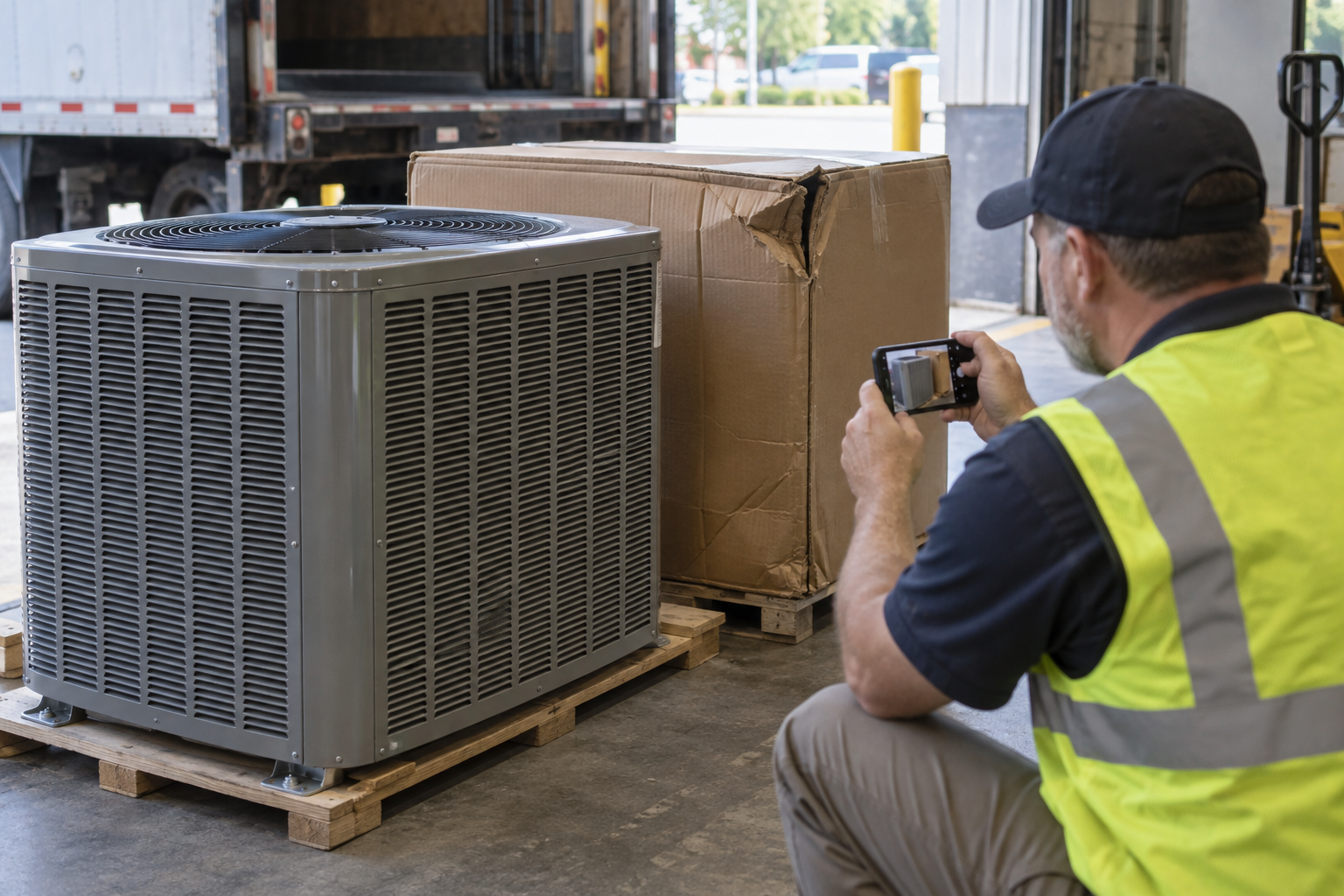
Arrival is a separate step from evaluating the disclosed blemish. Budget Heating instructs buyers to inspect the shipment, note visible freight damage on the carrier receipt and contact the company within 48 hours about incorrect, damaged or missing items. Photograph the damage and packaging for your records. Recording new transit damage matters because failing to note it can limit the company's ability to pursue a carrier claim. Keep the listing and delivery photos so the condition described at purchase can be distinguished from what arrived.
Make the closeout choice by component and terms
A scratch and dent HVAC closeout makes sense to evaluate by the affected component, not the category label. An identified panel-only blemish presents a different tradeoff from damage that changes airflow, reaches a refrigerant connection or compromises a protective cover. Choose an individual unit only when its stated condition, system compatibility and applicable purchase terms work for the installation; have a qualified installer assess any unresolved functional concern before operation.
 Cooling
 Heating
 Learning Center
 Product and Brands Insights
 State by State
 HVAC Systems