





 learning center

Why Homeowners Are Replacing Central Air with 3 Zone Systems
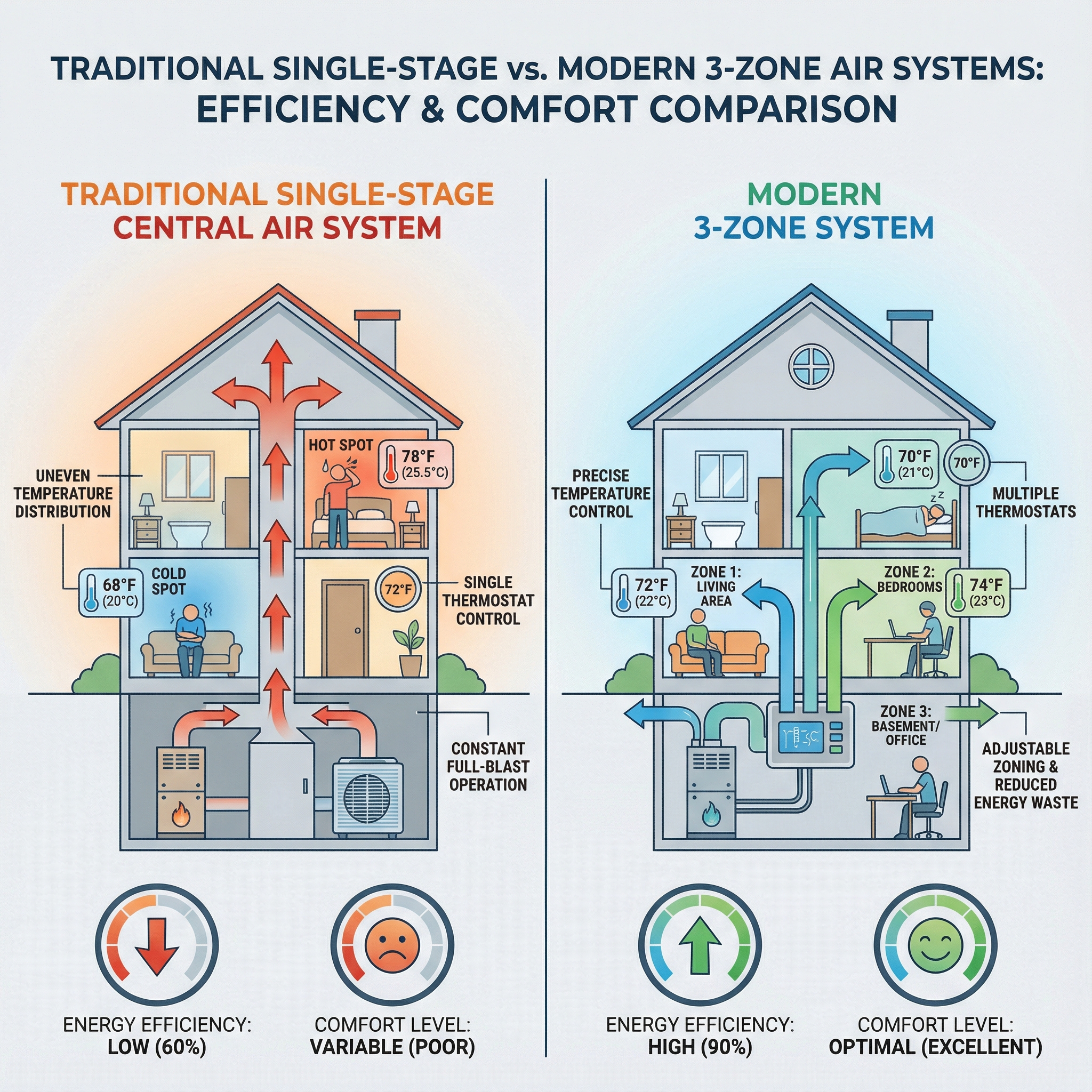
Single zone central air can feel like using one light switch for the whole house: some rooms glare, others stay dim. We routinely hear about hot and cold spots, rising energy bills, duct related dust circulating, and equipment short cycling during heat waves or cold snaps. The result is uneven comfort, higher wear on the system, and air that does not feel as clean.
That is why many households are moving to 3 zone setups, either ducted zoning or 3 zone ductless mini splits. Each zone gets its own thermostat and capacity, so you condition the rooms you occupy and stop paying to cool or heat empty spaces. By matching output to smaller areas, runtimes are steadier, short cycling is reduced, and dehumidification improves. Ductless zones also sidestep dusty ductwork, and ducted zones limit airflow to cleaner, shorter runs.
In our three decades of field and warehouse experience, the upgrade is most compelling when an aging central system struggles with add on rooms, upstairs heat, or mixed use spaces like offices and nurseries. A 3 zone design targets those trouble spots while cutting waste and noise.
What Is a 3 Zone HVAC System? How Zoning Actually Works
A 3 zone system divides a home into three independently controlled areas. Each zone has its own thermostat or indoor head. Two common setups: a single ducted air handler with motorized dampers, or a ductless mini split using three indoor heads on one outdoor unit.
In a ducted layout, a zone panel reads the thermostats, opens the right dampers, and commands the blower and compressor. Picture dampers as adjustable doors in the ducts that steer airflow to the calling rooms while limiting it elsewhere. Proper controls stage or modulate capacity so the system is not pushing full airflow against closed dampers.
In a ductless layout, the outdoor inverter serves three heads. Each head senses its room and modulates fan speed and refrigerant flow, so only occupied spaces get capacity.
In practice, we find three zones hit a useful sweet spot. Keep zones similar in airflow to avoid excess static pressure and the short cycling that shows up with many small zones.
Top Reasons Homeowners Make the Switch from Central Air
Comfort and cost sit at the top of the list. With zoning, you stop cooling the entire house just to keep one room pleasant. Targeted conditioning and smart scheduling reduce unnecessary runtime compared with running whole-house central air, often trimming utility costs when systems are properly designed.
Three independent zones let you set different temperatures in living, sleeping, and low-use areas so you only condition occupied spaces and eliminate chronic hot and cold spots. Daily life gets easier: keep the bedroom a steady 68 at night, let the empty guest room drift higher, and give the home office a cooler setting during work hours.
In our experience at Budget Heating (BudgetHeating.com), homeowners love the control. Think of it like dimmer switches for temperature instead of a single on-off light. You tune comfort where it matters, when it matters, without paying to treat rooms you are not using.
Comfort Improvements: Quieter, Smoother Operation and Year Round Heating
Inverter-driven compressors and variable-speed blowers act like a dimmer switch for comfort, matching output to the load instead of slamming on and off. That keeps rooms steady, trims temperature swings to a whisper, lowers fan noise, and wrings out extra humidity during long, low speed runs. Pair that with zone control to keep occupied spaces just right without overconditioning the rest. In our field installs, the softer ramp-up also means fewer rattles and drafts at registers. The gentler, modulating operation avoids constant hard starts, which helps reduce wear on compressors and fan motors and can support longer service life. For winter, many 3-zone heat pump mini-splits deliver efficient heat down to roughly -5 F, and cold-climate versions go lower, letting them replace or supplement older heat in many regions.
When a 3 Zone System Might Not Be the Best Fit (Limitations & Alternatives)
Three zones can solve real comfort issues, but it is not universal. A few cases where a 3 zone upgrade is a poor match, along with better paths:
- Right-sizing first: If the equipment is oversized, zoning does not cure short cycling or humidity swings. Proper load calculations and correct equipment capacity come before any zoning decision.
- Tiny zones in the mix: Very small zones drive static pressure and force fast cycling. If a small area must be independent, avoid micro zones or apply special strategies like correctly sized bypasses and differential controls. Done right, these controls behave differently and should not harm equipment.
- Expecting automatic savings: Zoning does not guarantee lower bills. Any benefit depends on balanced design, proper controls, and sensible thermostat schedules.
More zones is not automatically better. Many homes work best at around three, and some are better with two larger zones. Also, in a proper design, dampers default to open when the system is off, so air is not trapped and the system is not stressed.
Energy Savings & Efficiency: SEER2, Real World Gains, and Regional Rules
SEER2 is the HVAC industry's newer efficiency test and rating method. It uses a tougher procedure that better reflects real ducted operating conditions, so many legacy SEER labels changed. In practice the bar moved up, units were re-rated, and minimums rose. Early transition data showed manufacturers had to gain roughly 8 to 10 percent efficiency, and about 70 percent of products initially missed the mark until they were retested or redesigned. Think of it like grading a runner on a hilly road instead of a treadmill, the score is harder to ace but tells you more about real performance.
Real-world savings come from two places: the nameplate and the runtime. A step from roughly 14 to 16 SEER, or a similar SEER2 improvement, typically trims seasonal cooling electricity by about 5 to 10 percent. Multi-zone inverter heat pumps stack that benefit. Many rate in the mid to high teens SEER2, and premium lines clear 20, then zoning lets you cool only the rooms you use, so the system runs less to meet the load. In our experience at Budget Heating (BudgetHeating.com), that one-two punch beats chasing a single high rating alone.
Rules matter too. For 2023 and 2026, cooling minimums rose by region under SEER2, and heat pumps saw a nationwide increase. Those changes make multi-zone inverter systems especially attractive in many areas, since they check the regulatory boxes while delivering comfort, control, and lower bills.
Installation Process: What's Included, Typical Costs, and On Site Disruption
In our experience, a typical 3-zone ductless install is a clean, targeted project. Technicians mount three indoor heads, set a single outdoor unit, and route refrigerant line sets with basic electrical tie-in. Work stays confined to the chosen rooms and a path outside, so dust and noise are limited, closer to light remodeling than major construction.
- Outdoor condensing unit
- Three indoor air handlers
- Refrigerant line sets
- Basic electrical work
- Standard installation labor
Installed pricing for a 3-zone mini-split commonly ranges from about $5,500 to $9,500. That price typically includes the outdoor unit, three indoor heads, line sets, basic electrical work, and standard installation labor. It is broadly comparable to a full-size central air replacement, so the choice is more about comfort zoning and operating cost than sticker shock.
Maintenance, Filters, and Long Term Reliability: Owner Tasks and Pro Care
Keep a simple split: you handle air and access, a certified pro handles power and refrigerant. Well engineered zoned systems protect themselves with dampers that default open at rest, properly sized bypass or differential controls, and discharge air sensors that prevent freeze ups.
- Replace or clean filters every 1 to 3 months, like a dust mask.
- Keep supply and return vents clear and the outdoor unit free of leaves and grass.
- Review thermostat schedules seasonally.
- Shut off power before opening panels. Do not rewire thermostats or force dampers.
- Leave refrigerant work to EPA certified technicians and use CO detectors with any combustion equipment.
Licensed technicians should perform electrical service, refrigerant charging, combustion checks, and periodic diagnostics on coils, refrigerant levels, airflow, damper actuators, and control boards to preserve long term reliability.
Comparing 3 Zone Zoning, Central Air, and Ductless Mini Splits: Which Wins?
The right fit comes down to three things: your home's layout, the condition of existing ducts, and heating needs across rooms.
- Maintenance: Ductless mini splits avoid long duct runs, which cuts duct leakage and reduces the need for duct cleaning. Central air and 3 zone zoning keep ducts in play, so maintenance includes sealing and periodic cleaning.
- Air quality: Zoned ductless reduces reliance on leaky ducts, often improving indoor air quality versus aging central systems that circulate dust through ductwork.
- Use cases: If ducts are intact, a 3 zone setup is typically the most cost effective way to target rooms. If a retrofit would require full duct replacement, ductless is commonly the better choice.
Plain central air suits uniform loads but lacks room by room control available with 3 zone or ductless solutions.
Next Steps: Is a 3 Zone System Right for Your Home?
Many homeowners move from a single-zone central system to a 3 zone setup, ducted or ductless, for one core reason: control. With room-by-room setpoints you get steadier comfort, quieter operation, and better real-world efficiency. While the upfront cost often lands close to a full central replacement, targeted conditioning and inverter technology typically reduce runtime and utility bills. For most households, the day-to-day comfort gains plus potential energy savings make the 3 zone path a smart upgrade.
If you are weighing options, the right answer depends on your rooms, schedules, and noise goals. Our team can turn that into a practical design and clear pricing so you can decide with confidence. Ready to move from research to a plan? We can start with a quick assessment and outline your best route.
- Get a Custom Quote for a 3 zone design tailored to your home
- Talk to Our Team, real HVAC pros by phone for fast answers
- Shop Multi Zone Systems, ducted and ductless packages
 Cooling
 Heating
 Money Saving Tips
 Product and Brands Insights
 Buying Guides
 State by State
 HVAC Systems