




 product and brands insights
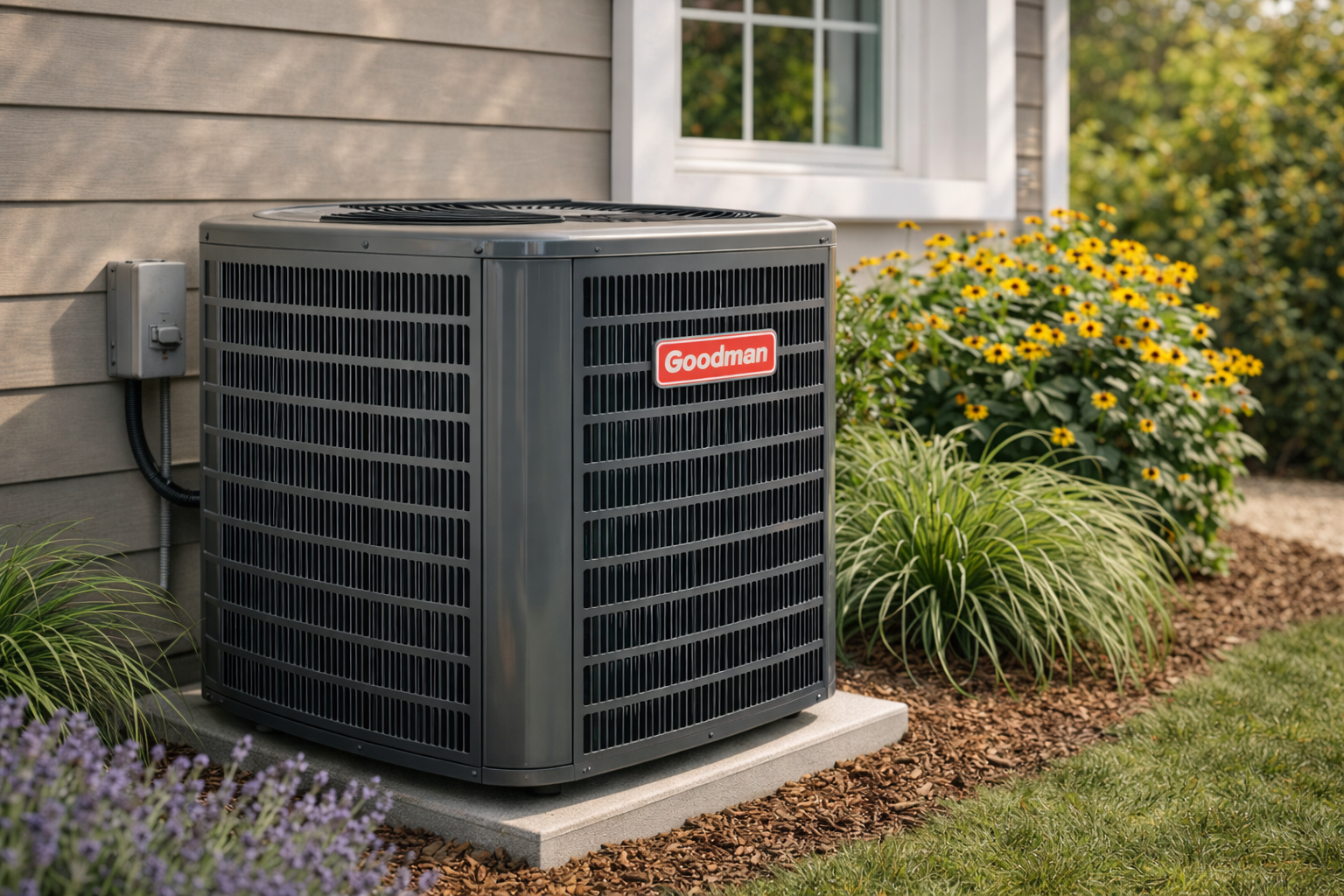
Why Goodman AC Units Are a Top Choice for Home Cooling Efficiency
Goodman is a value-focused pick that blends high-efficiency performance with features usually reserved for premium lines. In our experience, their compressors and coils provide steady, dependable cooling. Many models support variable-speed operation and pair with smart thermostats, so comfort and energy use stay balanced, like using a dimmer instead of an on-off switch. Strong warranties and accessible pricing round out the package.
We will map the efficiency tiers, explain which features matter in real homes, and help you weigh cost, comfort, noise, and long-term reliability to choose the right Goodman unit for your budget.
Understanding SEER2: What the New Efficiency Numbers Mean for Your Electric Bill
SEER and SEER2 measure seasonal cooling output per kWh. Higher ratings mean lower energy use, like better miles per gallon. In 2023 the DOE moved to SEER2, EER2 and HSPF2 with tests that mirror real conditions, so SEER2 values are typically lower than legacy SEER for the same unit. Regional rules apply to single phase split ACs up to 5 tons and minimums differ. In the Southeast: split under 45,000 Btu/h ≥ 14.3 SEER2, 45,000 and up ≥ 13.8, packaged ≥ 13.4. These minimums shape Goodman's baseline models.
- Hot climates: target ≥ 16 SEER2
- Moderate: 14-16 SEER2
- Mild: 13-14 SEER2, confirm local minimums
Bill impact scales by ratio. A 17 SEER2 uses about 84% of the energy of a 14.3 SEER2 unit, roughly 16% lower kWh, which helps compare Goodman options by expected use.
How Goodman's Compressors, Coils and Controls Boost Cooling Efficiency
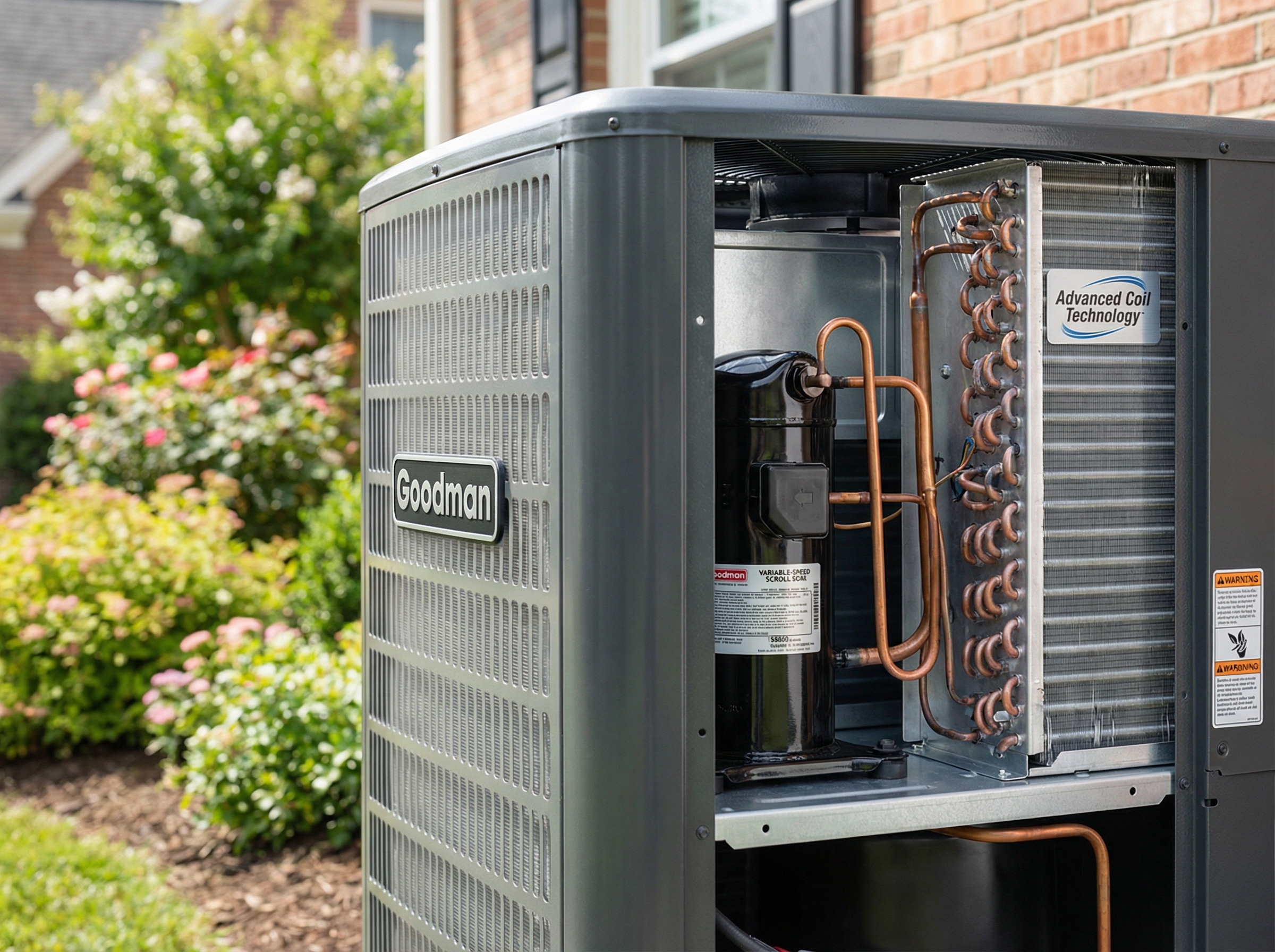
Goodman's higher efficiency setups pair variable-speed compressors with advanced airflow control and smart-ready controls to raise real-world performance. A variable-speed compressor works like a dimmer switch, modulating output so rooms avoid temperature swings and humidity spikes that single-stage units cause. That steady, lower-speed operation also trims on and off cycling, delivering savings beyond the raw SEER2 number by improving part-load operation. Smart thermostat integration adds another layer: scheduling, remote control and run-time optimization reduce wasted minutes and tighten comfort. In our experience at Budget Heating (BudgetHeating.com), when compressors, indoor coils and controls are tuned to work together, you feel quieter, more even cooling and see lower bills across the season.
Goodman vs. Competitors: Honest Tradeoffs, Myths and When Another Choice Is Better
From years of field installs and troubleshooting, we see Goodman as a strong value to performance pick: competitive efficiency at a lower upfront cost. Variable speed and multi stage options pair well with smart thermostats, which keeps sound down and temperatures steady. In hot humid areas, step up in SEER2 with variable speed for better moisture control. In the Southwest, check EER and EER2. Near the coast, confirm corrosion resistant coils or protective coatings. Installation quality and correct sizing ultimately decide comfort and bills.
- Myth: Only premium brands have advanced features. Reality: variable speed and smart thermostat compatibility are widely available at accessible prices.
- Myth: High efficiency is louder or swingy. Reality: variable speed runs quieter and smoother.
- Myth: SEER does not affect bills. Reality: higher SEER or SEER2 cuts energy use.
- Myth: Budget means weak durability or warranty. Reality: robust warranties and durable compressors and coils are common.
- Myth: Replacement demands new ductwork. Reality: standardized dimensions often simplify retrofits.
When another choice may be better: in very hot dry climates where peak EER is critical, pick a model tuned for top EER. In harsh coastal zones, select equipment with enhanced anti corrosion protection. If you need ultra quiet and tight humidity control and a fully variable system is not available in your exact size, look at a series that offers a true variable speed compressor in that tonnage.
Installation & Sizing: The Single Biggest Factor in Real World Efficiency
Real efficiency comes from sizing and setup, not just a brochure rating. Start by defining priorities and budget: lower bills, quieter operation, tighter humidity, or lowest upfront cost. Choose SEER2 or EER2 appropriate for your climate, then insist on correct sizing, proper matching, and quality installation with maintenance.
Require a Manual J load calculation for the home and use Manual S to select equipment. Square footage rules are only a preliminary check. Inspect the ducts: find and seal leaks, verify insulation, confirm sizing, and check static pressure so the system can deliver rated airflow.
Ensure proper system matching: the outdoor unit must be paired with the correct indoor coil or air handler per AHRI or manufacturer data to achieve the published SEER2 or EER2. Commission the system at startup: verify refrigerant charge, airflow, electrical, thermostat setup, clearances, and condensate drainage. Before purchase, document exact model numbers, capacity, SEER2 or EER2, compressor type, sound levels, and coil material. For replacements, Goodman's standardized dimensions and compatibility can simplify retrofit labor.
- Will you perform Manual J and Manual S
- Will you evaluate, seal, and balance ducts and check static pressure
- How will refrigerant charge and airflow be verified
- What local code items apply and how are warranties handled
- Will you provide the AHRI match and all model numbers in writing
Goodman Efficiency Tiers: Which Models and Features Deliver the Biggest Savings?
Goodman's lineup runs from entry models that meet the 2023+ DOE regional minimums to premium inverter systems advertised near 24 SEER. Newer models also move to lower GWP refrigerants. For maximum savings and comfort, look for inverter or variable-speed compressors with enhanced controls, essentially a dimmer switch instead of an on-off switch.
- Baseline: Minimum-compliant units that prioritize upfront price.
- Higher tier: Inverter or variable-speed packages with enhanced controls, the strongest bet for rebates and incentives when properly matched and installed.
In our experience at Budget Heating (BudgetHeating.com), selecting the right pairing across outdoor unit and indoor components is what unlocks both the top efficiency ratings and incentive eligibility.
Upfront Price vs. Long Term Energy Savings: How to Model Goodman's Value
When choosing a Goodman system, focus on operating costs first, not just the sticker price. Higher SEER units use less electricity than older or lower efficiency equipment, which can trim bills by hundreds of dollars per year depending on usage. Think of efficiency like miles per gallon: bigger SEER2 steps mean fewer kWh to cool the same home. Advanced features such as variable speed compressors and smart thermostats reduce cycling and runtime, adding savings beyond SEER2. As electricity use drops, you gain lower costs and reduced emissions, and Goodman's affordability and warranties strengthen long term value.
Data has limits: public sources do not pin down installed cost bands or guaranteed kWh numbers. Get 2 to 3 written quotes with itemized equipment, labor, and permits, and ask for estimated annual kWh savings to model payback. Check incentives: federal tax credits and utility rebates may apply to qualifying systems in 2025, for example split systems meeting SEER2 ≥ 17 and EER2 ≥ 12.
Warranty, Reliability and Expected Lifespan: What Goodman Owners Should Know
Goodman emphasizes reliability as value: durable compressors and coils that limit hot weather downtime, standardized unit dimensions that simplify retrofits, and robust warranty coverage on core components. Broad installer familiarity keeps service straightforward. Affordability combined with strong manufacturer warranties lowers ownership risk and supports long-term value. To maximize benefits, review the written parts and compressor terms, ask about labor or extended coverage, and register the equipment promptly.
Maintenance Checklist: Keep Your Goodman AC Efficient and Problem-Free
Use this quick routine to preserve efficiency, lower repair risk, and help keep warranty coverage intact.
- Air filter: replace or clean regularly to maintain airflow.
- Outdoor unit: keep the coil and top free of leaves, dirt, and grass clippings.
- Coastal homes: clean more frequently since salt deposits build up faster.
- Smart thermostat: enable features that minimize unnecessary runtime.
- Professional care: schedule annual maintenance, more often near the coast.
Bottom Line: Who Should Choose Goodman and Your Next Steps
Goodman delivers competitive SEER2 performance at accessible pricing, a value to performance sweet spot that can cut electricity use and lower bills versus older equipment. With the right SEER2 level, proper sizing, and quality installation and maintenance, you can expect efficient, quiet, consistent cooling plus long term savings and environmental benefits. We know choosing the right setup can feel like a lot, so let our team make it simple.
- Get a Custom Quote
- Talk to Our Team by phone for fast, no-pressure guidance
- Shop Goodman systems
 Cooling
 Heating
 Learning Center
 Money Saving Tips
 Buying Guides
 State by State
 HVAC Systems