




 learning center

Why Are HVAC Prices So Expensive? A Quick Overview
After decades in HVAC, we can tell you higher prices usually come from multiple moving parts, not one. Modern systems pack advanced compressors, variable speed motors, and smarter controls. Energy efficiency standards, refrigerant phase downs, and permitting add cost. Skilled installation takes licensed labor, precision tools, and time. Materials like copper and steel swing in price, and peak season demand pushes schedules and rates. Think of it like a kitchen remodel, the appliance is only part of the bill.
- Equipment: the unit itself, its capacity, efficiency rating, and included controls.
- Labor: site evaluation, proper sizing, duct or line set work, electrical, and startup.
- Regulation: code compliance, permits, inspections, and approved refrigerants.
- Overhead: warranty handling, logistics, fuel, insurance, and ongoing training.
Add these together and you get the real installed price, not just the box price. Knowing the components helps set expectations and makes it easier to compare proposals apples to apples.
Quick answer: What drives the high cost of HVAC systems and installs
We see HVAC costs are not just about the equipment. Timing and market conditions can swing totals by thousands. During heat waves or cold snaps, everyone calls at once, so installers book up and charge peak season rates. When a unit fails unexpectedly, the job becomes an emergency, which often adds an urgency premium from overtime labor, priority scheduling, and rush shipping. Local labor markets also matter, since wages, licensing rules, and crew availability shape installed prices. Planning a replacement in the shoulder season and allowing normal lead times typically avoids most of these add ons.
1) Equipment and technology: why brand, SEER2 ratings and features increase sticker price
Modern HVAC prices reflect tighter efficiency rules and smarter parts that cost more to build. SEER is the Seasonal Energy Efficiency Ratio, the cooling delivered per unit of electricity over a season. SEER2 is the updated test that uses tougher, more realistic conditions, so many units were re rated and sometimes redesigned, adding engineering, lab testing and certification cost.
In our experience at Budget Heating (BudgetHeating.com), the 2023 to 2026 efficiency updates pushed manufacturers to retest and re label product lines, and we have seen typical price increases of about $350 to $1,500 on many systems.
- Variable speed compressors modulate output to match the load, which requires more sophisticated electronics and tighter tolerances.
- ECM blower motors use onboard controls and permanent magnets, which cost more than basic PSC motors.
- Improved heat exchangers and newer refrigerants demand new tooling, quality control and safety validation.
These upgrades raise the sticker price, but they usually lower lifetime operating cost by cutting kilowatt hours each season, smoothing start up cycles and often improving comfort and humidity control. Think of it like moving from a simple light switch to a dimmer with a sensor, a little more upfront for smarter control and less wasted energy over time.
2) Proper sizing & load calculation: why 'cheap' installs fail and cost more later
Rule-of-thumb tonnage often oversizes a system. Oversizing leads to short cycling, higher energy use, poor dehumidification, and more repairs. Rooms feel cool yet clammy, equipment starts and stops constantly, and components wear out faster. Undersizing is not better, and if airflow or refrigerant charge is wrong, the problems multiply.
Proper design uses ACCA methods. We perform Manual J to calculate room-by-room heat loss and gain, Manual S to select equipment that actually matches those loads under real conditions, and Manual D to lay out ducts that deliver the required airflow. This process replaces guesswork with targets for capacity, airflow, and static pressure, which stabilizes run times and moisture removal.
That design work is a professional service, not a free checkbox. It takes measurements and modeling, like tailoring a suit to your exact fit. Skipping it can shave a little off the bid today and cost far more over the 15 to 20 year life of the system in energy, comfort complaints, and premature failures.
Tradeoffs & limits: when an expensive HVAC option isn't the best choice
High-end equipment is not a universal upgrade. We see plenty of cases where a lower-cost path delivers better comfort and value.
- Mild climates or low run-time homes: A premium variable-speed system may take many years to pay back if cooling hours are modest. Correct sizing, duct sealing, and basic envelope work often cut bills more affordably than jumping to the top tier.
- Very cold regions: In sustained subfreezing weather, a non cold-climate heat pump without a clear backup plan can underperform and may need costly electrical upgrades. A high-AFUE furnace, or a cold-climate heat pump paired with staged backup heat, is usually the better fit.
- Comfort problems from system faults: Hot and cold rooms are frequently caused by oversizing, closed vents, dirty coils, or leaky ducts. Address these first with maintenance and airflow fixes before replacing equipment.
DIY vs pro boundaries matter for safety and results. Homeowners can replace filters, keep outdoor units clear, clear accessible condensate drains, and keep vents open. Refrigerant work, high-voltage wiring, load calculations, and duct design belong to certified professionals. Local codes and climate requirements should guide choices, so align equipment type with regional rules and realistic winter or summer conditions.

4) Ductwork, modifications and structural work: hidden costs that surprise homeowners
Great equipment cannot overcome bad ducts. If static pressure is high or sizing is off, the system struggles. Think of a delivery truck stuck on a narrow alley: airflow slows, noise rises, efficiency drops. In our experience at Budget Heating (BudgetHeating.com), bringing a job up to spec often means more labor and materials than the equipment upgrade itself.
- Sealing leaky joints and insulating runs to stop losses.
- Resizing supplies and returns to lower static pressure.
- Replacing crushed or aged flex and adding new plenums and transitions.
- Redesigning duct paths to correct poor layout or bottlenecks.
- Access and structural work: rebuilding platforms, cutting new return openings, soffit or attic modifications so techs can reach tight chases.
These add ons are not fluff. They are what make the install perform correctly and protect your comfort and efficiency long term.

5) Refrigerant, environmental rules and disposal: a regulated and costly part of every job
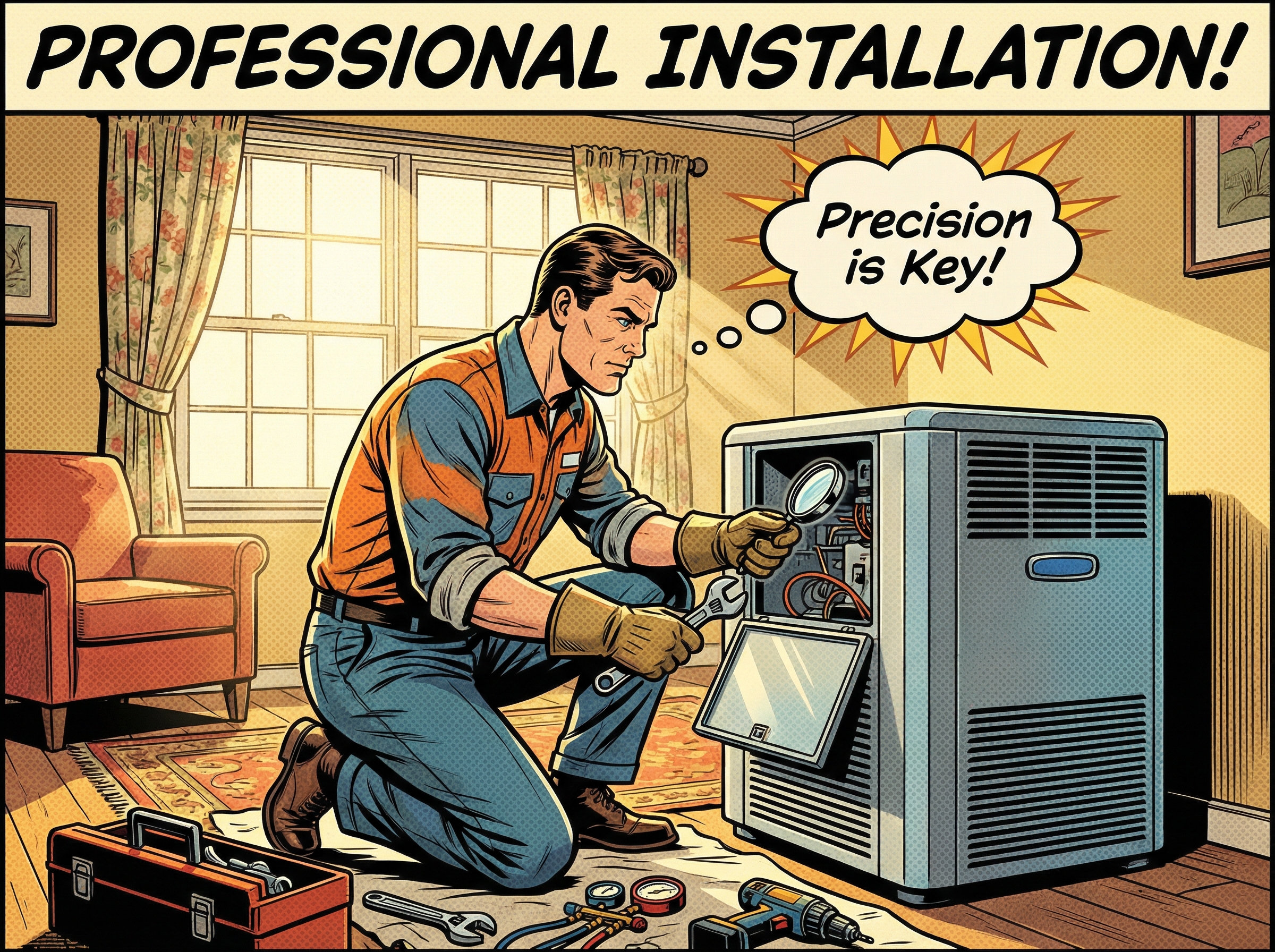
Refrigerant work is tightly regulated, and only trained technicians with EPA Section 608 certification can handle it. That certification, along with required leak testing, deep vacuum, and correct charging, adds labor, tools, and compliance steps to every install or repair. In practice, we pressure test with dry nitrogen, confirm the system is tight, pull a deep vacuum measured in microns to remove air and moisture, then weigh in the exact refrigerant charge and verify no leaks. Each step takes time and specialized instruments, not just a set of gauges.
Environmental rules also govern disposal. Moving, reclaiming, or disposing of refrigerant carries handling and processing costs. These controls protect the environment, and they are a real, built-in part of the overall job cost.
6) Permits, inspections and local code compliance: invisible but required expenses
Permits and inspections are required by most municipalities for HVAC replacements or new installs. Permit fees and the time to schedule and pass inspections add to the project. On real jobs we see inspectors verify electrical code, combustion venting, and safety testing such as combustion analysis. Code-driven corrections can mean extra materials and labor. Regulatory items like refrigerant laws require licensed, insured installers, and that overhead shows up in bids. These steps help prevent fire risks, flue gas hazards and fines. Allow for paperwork, review, and at least one site visit, since compliance adds days and dollars.
7) Supply chain, contractor markup, and how to make the price work for you
Equipment prices are shaped by more than the model on the box. Higher raw material and shipping costs, longer lead times, and manufacturer backlogs all push prices up. On the installation side, contractor pricing reflects real overhead: trained labor, trucks, tools, insurance, permits, and post install support. Itemized proposals make it easier to see what portion is equipment, accessories, and labor.
When choosing efficiency, weigh upfront cost against lifetime cost. Higher efficiency units, including higher SEER2 options, cost more at purchase but often return the premium through lower utility bills, quieter operation, and longer life. Think of it like a car that sips fuel: the pump savings accrue every day the system runs.
- Assess system age and condition before replacing.
- Require Manual J, S, and D for sizing, selection, and duct design.
- Tighten the building envelope first to reduce required capacity.
- Inspect and seal or replace leaky or undersized ducts.
- Verify refrigerant type to align with availability and serviceability.
- Request itemized bids to compare apples to apples.
- Vet licenses, insurance, and installation credentials.
- Understand parts and labor warranties, and what voids them.
- Time purchases for off peak seasons when practical.
- Pursue rebates and financing to smooth cash flow.
Bottom line: why HVAC costs more and how to get the best long term value
HVAC installs cost more because the price bundles advanced equipment, code compliance, and skilled, safety critical labor. In our 30+ years, correct design and commissioning turn higher upfront into lower ownership cost through energy savings and fewer breakdowns over 10 to 20 years.
Quotes vary by home and market, so use the checklist above and get local apples to apples proposals. Our factory authorized team will right size and quote options at wholesale pricing with full warranties. Sources: FieldEdge, DauriaHVAC, TheFurnaceOutlet, RealtyTimes.
- Get a Custom Quote
- Talk to Our Team by phone for fast, U.S.-based help
- Shop Heat Pumps, Ductless Mini Splits, or Gas Furnaces
- Fast shipping from PA and TX, plus Affirm financing available
 Cooling
 Heating
 Money Saving Tips
 Product and Brands Insights
 Buying Guides
 State by State
 HVAC Systems