





 learning center
What Size Mini Split Do You Need for 200-1,000 Sq Ft: A Quick Overview
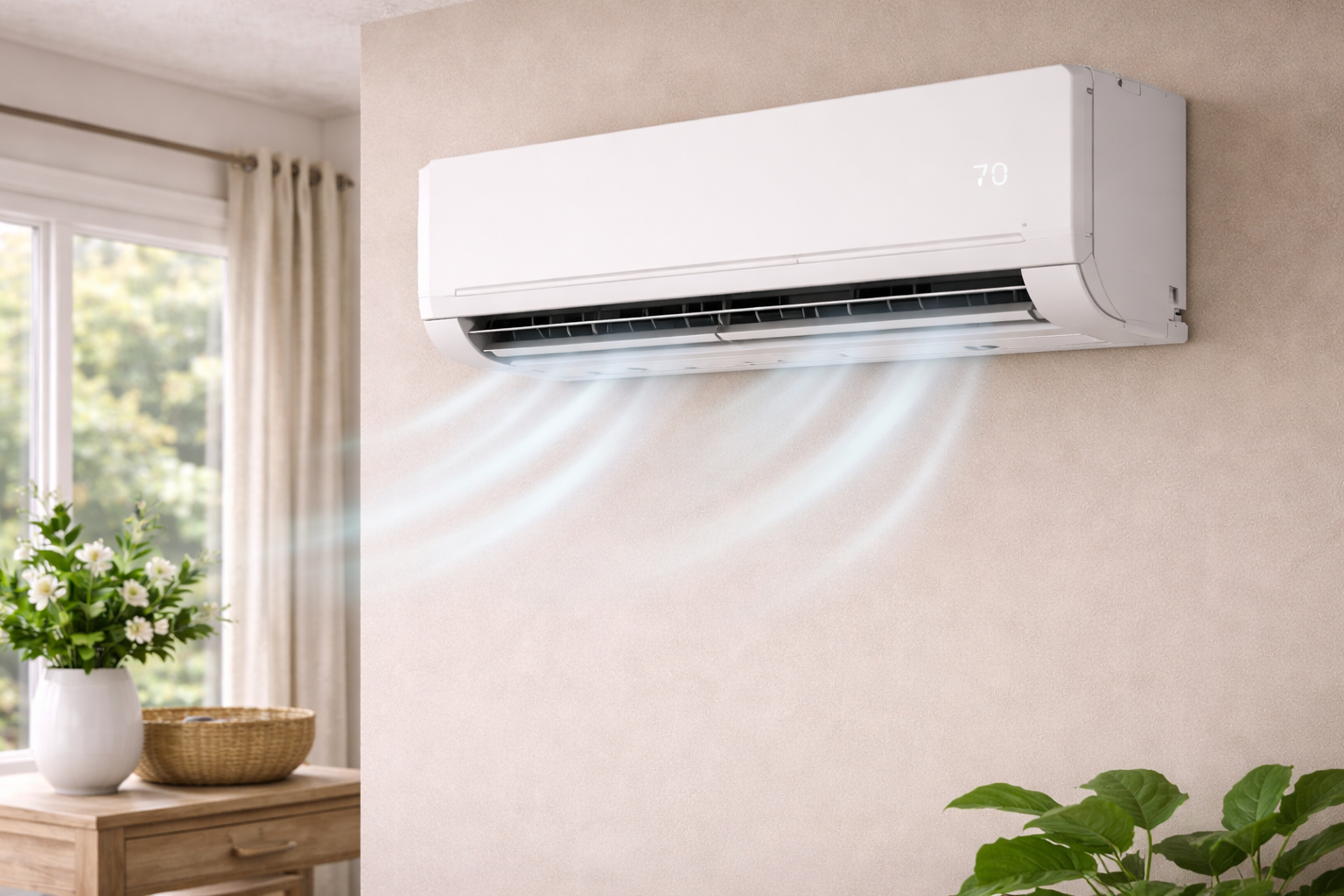
Choosing the right mini split for a small space starts with a tape measure. Measure each room's square footage, length times width, then use simple rules of thumb to match area to cooling and heating output. For spaces from about 200 to 1,000 square feet, ductless mini splits typically fall in the 6,000 to 24,000 BTU per hour range. In this overview we keep it practical and room size driven. We outline quick calculation steps you can do in minutes, give ballpark BTU ranges that make sense at a glance, and note the points where it pays to bring in a pro to verify sizing. This way you get a unit that is comfortable, efficient, and not overworked. Start with your room measurements, follow the quick checks and you will be in the right neighborhood before any detailed load analysis. That is the foundation for accurate selection and fewer surprises later.
Quick Mini Split Sizing Chart for 200-1,000 Sq Ft (At a Glance)
For 200 to 1,000 sq ft, most single-zone mini splits fall in a 6,000 to 24,000 BTU envelope. We use these broad bands as a quick starting point, then fine tune for climate, insulation, windows, and ceiling height.
- Up to ~350 sq ft: ~6,000 to 9,000 BTU
- 350-500 sq ft: ~9,000 to 12,000 BTU
- 500-750 sq ft: ~12,000 to 18,000 BTU
- 750-1,000 sq ft: ~18,000 to 21,000+ BTU
Treat this like a road map: pick the closest range, then adjust to your room's realities.
Simple Rule of Thumb: BTU per Square Foot Explained
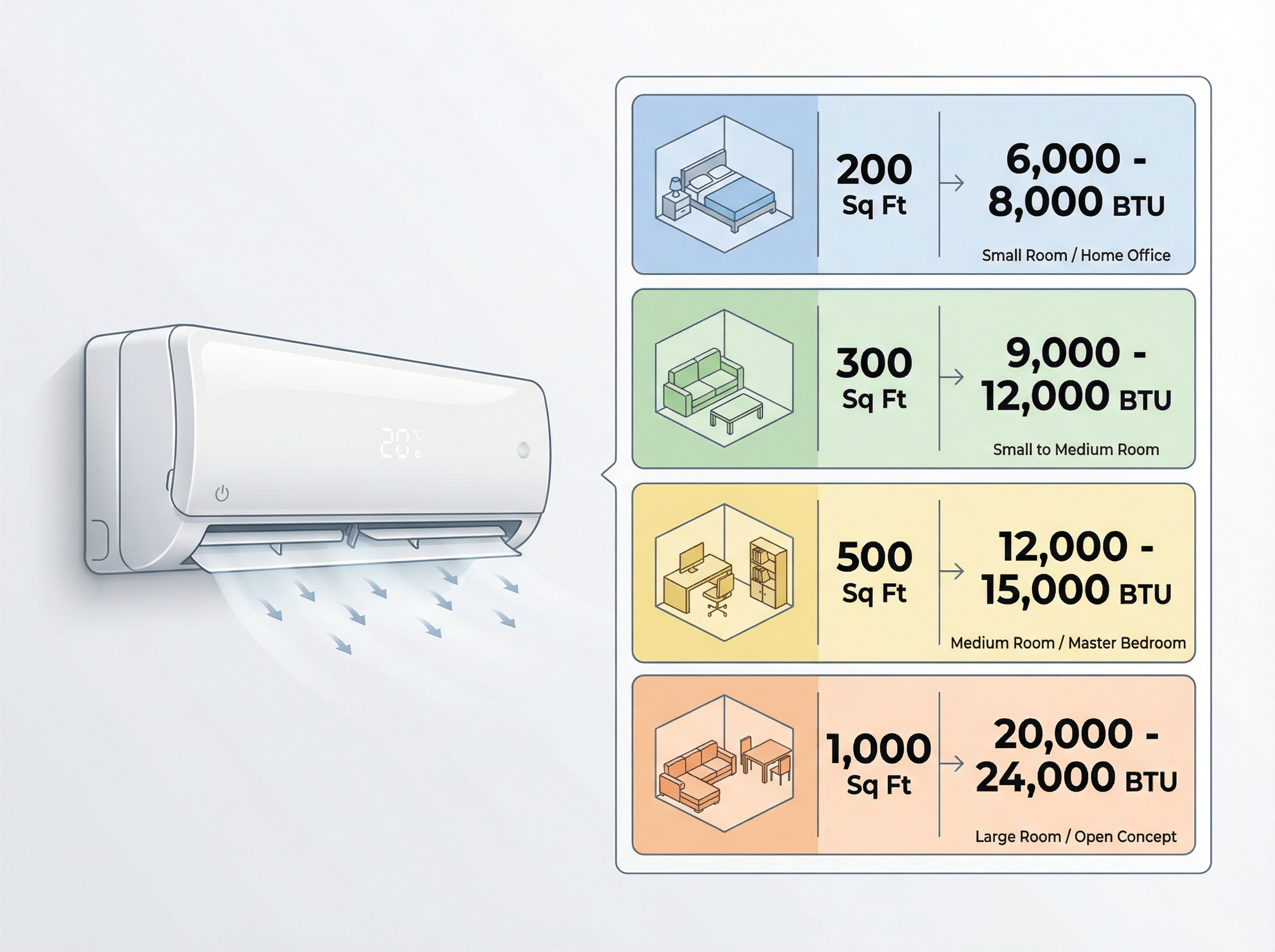
When you need a fast sizing baseline, use BTU per square foot. Think of BTUs as the horsepower of heating and cooling: more area needs more horsepower. In our field work, these one-to-one estimates get you in the ballpark:
- 200-300 sq ft: about 6,000 BTU
- 300-500 sq ft: about 9,000-12,000 BTU
- 500-700 sq ft: about 12,000-18,000 BTU
- 700-1,000 sq ft: about 18,000-24,000 BTU
Use this as a starting point, then fine tune for real conditions like insulation quality, sun exposure, ceiling height, occupants, and climate. The goal is simple: enough capacity to handle the load without oversizing. Oversized systems cycle too quickly, undersized units run constantly. Start here, then adjust to match the space.
Step by Step: Estimate Required BTUs (Quick Method + When to Use Manual J)
For a fast ballpark, we start with the quick method. Measure each room's length times width to get square footage. Pick a baseline BTU from the rule of thumb bands you plan to use. For multiple rooms, total the individual room BTUs to size a multi zone outdoor unit, then round up to the next standard size.
Manual J versus the quick method: the quick method is a shortcut for straightforward spaces. Manual J is a full load calculation, and Manual S is equipment selection based on that load. Use Manual J when precision matters: if you are near the lower or upper end of the 200 to 1,000 square foot range, have unusual ceilings or windows, or are designing a multi zone system.
- Document rooms and ceiling heights.
- Decide zones.
- Note windows and orientation.
- List desired indoor head locations.
- Verify electric panel capacity.
- Ask contractors about Manual J, commissioning steps, condensate routing, and labor warranties.
When a Mini Split May Not Be the Best Choice: Tradeoffs, Myths & Alternatives
In our experience, mini splits shine in many spaces, but they are not universal. In very cold climates, many standard units lose capacity as outdoor temperatures fall, and without a cold-climate model or backup heat, rooms can lag. In those areas, a gas furnace or a properly sized hybrid system often maintains comfort more reliably during deep freezes.
Whole-house distribution in homes with solid existing ductwork can also favor a single ducted heat pump or a full HVAC replacement instead of several wall-mounted heads. Likewise, chopped-up layouts that would need many small heads can end up less efficient and more cluttered than one ducted solution.
- Myth: Bigger is better. Oversized units short-cycle, cause temperature swings, miss humidity targets, and add wear.
- Myth: Square footage is all that matters. Ceiling height, insulation, window area and orientation, internal gains, and layout can shift BTU needs significantly.
Key Factors That Change Sizing: Climate, Insulation, Ceiling Height & Windows
Start with a baseline size, then tune it to the space. From decades of field sizing, the right capacity comes from real conditions, not just a chart.
- Climate: Hot or humid regions usually justify the high end of the BTU band, sometimes the next size up.
- Insulation and air tightness: Poor insulation or leaky construction drives load higher, tight and well insulated spaces can stay on the low end.
- Ceiling height: Vaulted or extra tall ceilings increase air volume, shift upward.
- Windows and orientation: Large south or west glass boosts afternoon solar gain, go higher. Shaded rooms can go lower.
- Room type and layout: Kitchens, sunrooms, heavily occupied or computer/server areas need extra capacity. Open plans may require a higher capacity or multiple heads for even distribution.
As a rule, move toward the high end when several load factors stack up, like packing more gear for a longer trip. Choose the low end only for well insulated, shaded, lightly loaded rooms.
Recommended Unit Sizes & Real Examples (200, 300, 500, 1,000 Sq Ft)
Here is a practical sizing guide with common spaces:
- 200 sq ft bedroom or office: 6,000 to 8,000 BTU.
- 300 sq ft den or guest room: 8,000 to 10,000 BTU.
- 500 sq ft living area: about 12,000 BTU.
- 750 sq ft studio or large loft: about 18,000 BTU.
- 1,000 sq ft open plan: 18,000 to 24,000 BTU, or two smaller heads.
In our experience at Budget Heating (BudgetHeating.com), these picks keep spaces comfortable without short cycling or lagging on hot days.
Homeowner tasks: pick a clear wall location, wash or replace filters monthly, keep the outdoor unit clear of leaves, verify the condensate drains. Licensed pro tasks: size and select equipment, install dedicated electrical and disconnects, make refrigerant connections, pressure test and evacuate, then commission and service periodically.
Single Zone vs Multi Zone: Which Is Right for Your Small Space?
For one enclosed room, such as a bedroom or small studio, a single zone mini split sized to that room's BTU load is usually the simplest and most efficient choice. If you have more than one room, use a multi zone approach. The sizing method is straightforward: determine each room's need, select indoor heads to match those needs, then pick an outdoor condenser whose total rated capacity meets or modestly exceeds the sum of the heads. Example: a 300 sq ft bedroom around 8,000 BTU plus a 400 sq ft office around 10,000 BTU totals roughly 18,000 BTU, so choose an 18,000 BTU outdoor unit and pair heads to each room. In our experience, this avoids comfort gaps and keeps each space balanced.
Efficiency, SEER2 Ratings, Refrigerant Rules & Operating Costs
SEER and SEER2 express seasonal cooling efficiency. Higher means less electricity for the same cooling. Think of SEER2 like miles per gallon for ACs, a higher rating stretches your energy dollars.
Moving from about SEER 15 to about SEER 25 can cut cooling use roughly 30 to 40 percent. A 9k to 12k unit running around 600 hours per year may save about 144 to 192 kWh, or roughly 17 to 38 dollars at 12 to 20 cents per kWh. Budget guidance: weigh higher upfront price against long term savings, especially in long cooling seasons or where power is costly. In our experience at Budget Heating (BudgetHeating.com), matching efficiency to your climate and bills beats chasing the highest label.
For splits under about 45,000 Btu per hour, Northern regions target about 13.4 SEER2, the Southeast and Southwest about 14.3. Split heat pumps generally carry a nationwide minimum near 14.3 SEER2, with HSPF2 minimums for heating. Confirm your model meets regional SEER2 or EER2 to qualify for rebates or meet code.
Refrigerants are shifting as high GWP R-410A is phased down. Many new mini splits use lower GWP A2L refrigerants like R-32. These are mildly flammable, so local code and installation rules apply.
Conclusion: Pick a Right-Sized, Efficient Mini Split and When to Call a Pro
Start with square footage to pick a BTU range, then adjust for climate, insulation, ceiling height, windows, and room use. Choose an inverter mini split for better modulation and comfort.
For multi-zone plans, complex layouts, or borderline sizes, get a Manual J and Manual S. Do the same if permits or refrigerant rules complicate the job.
We have 30+ years in HVAC and real phone support. Let us right-size your system at wholesale pricing with full warranties.
- Get a Custom Quote: fast sizing, equipment match, Affirm financing.
- Talk to Our Team: U.S.-based phone support, no pressure.
- Shop Mini Split Systems: inverter single and multi-zone.
 Cooling
 Heating
 Money Saving Tips
 Product and Brands Insights
 Buying Guides
 State by State
 HVAC Systems