




 learning center
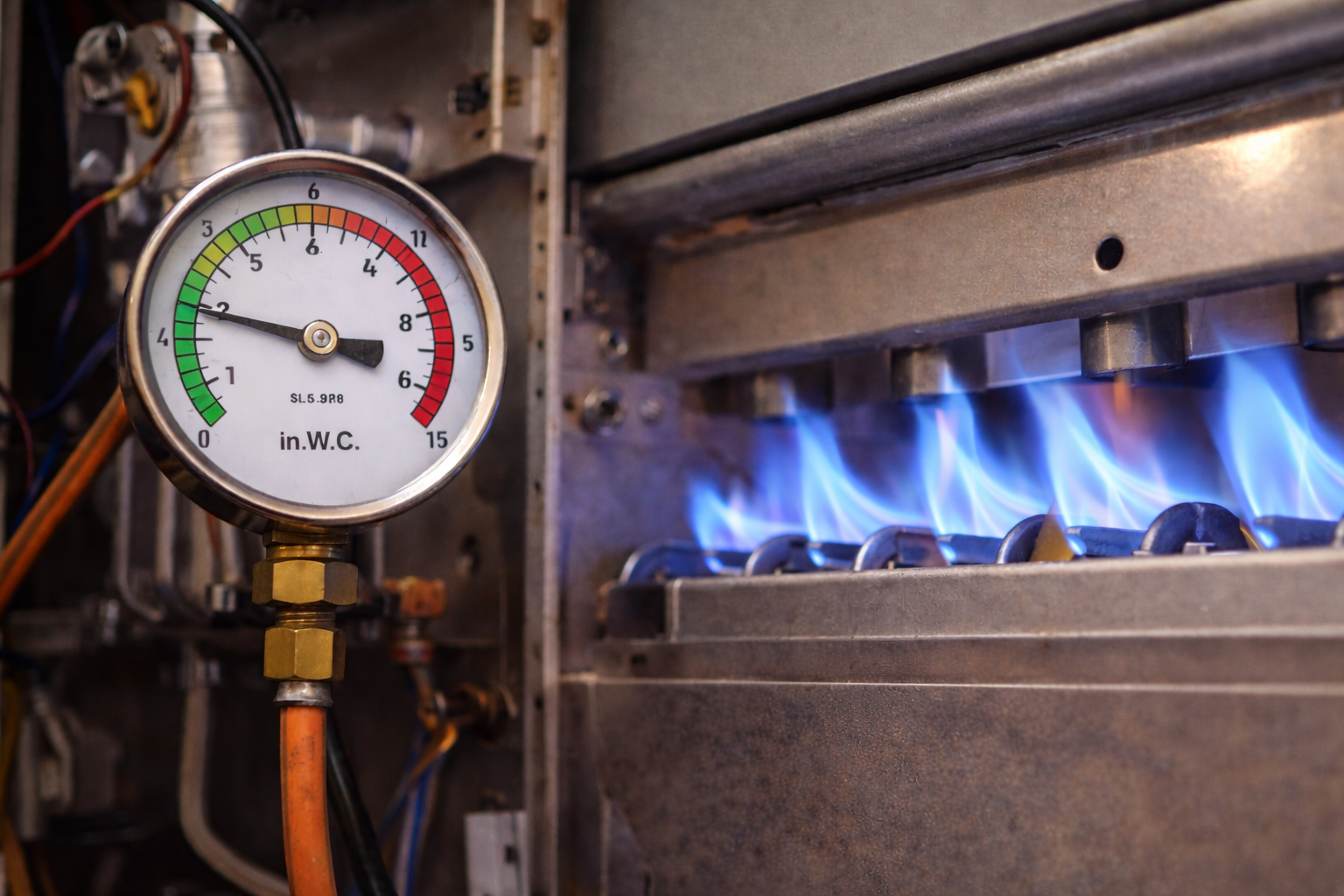
Why Gas Furnace Pressure Matters for Safety, Heat and Efficiency
Getting gas pressure right while a furnace is running is critical for safety, comfort, and efficiency. Live readings confirm the flame is stable, combustion is clean, and components are not stressed. We focus on what the burners see under actual load, not just at rest, because pressure can drop once the inducer and gas valve open.
Technicians focus on two primary pressures: supply or inlet pressure entering the furnace and manifold, also called burner, pressure leaving the gas valve. Think of it like water to a shower: inlet pressure is what the house plumbing delivers, manifold pressure is how the valve meters that flow to the shower head. Both must be right for steady, even heat.
If inlet pressure sags during operation, it points to an upstream constraint, such as limited capacity or a regulator issue, which can lead to weak flames and nuisance shutdowns. If manifold pressure is off, the burners will not get the correct fuel flow, which can cause noisy flames, sooting, or poor heat output. When both pressures are where they should be while firing, combustion stays efficient and the furnace runs safely and predictably.
Supply Pressure, Manifold Pressure and Draft: What Each One Actually Measures
Supply pressure is the incoming gas pressure to the appliance. Manifold pressure is the controlled pressure the burners see after the gas valve's regulator, which reduces the higher supply to a setpoint. Draft is the slight pressure difference that moves combustion air and flue gases through the vent. We measure all three in inches of water column (in. w.c.), not PSI. Mixing up test points or units can lead to dangerously wrong conclusions, for example reading PSI instead of in. w.c. or measuring the wrong side of the valve. Think of supply as the street main, manifold as the faucet setting, and draft as the chimney pull you feel when sipping through a straw. Keeping these distinct helps with accurate diagnostics and keeps combustion within the equipment's intended operating range.
Typical Running Pressures: What to Expect for Natural Gas and Propane (LP)
Treat these numbers like speed limits for your gas train. For natural gas, most homes see a regulated supply around 7 in. w.c. Under load, inlet pressure commonly reads 5 to 7 in. w.c., with manufacturers typically calling out a minimum running inlet near 4.5 to 5 in. w.c. and a maximum around 13 to 14 in. w.c. At the burners, manifold pressure is usually 3.2 to 3.8 in. w.c., and many residential furnaces target about 3.5 in. w.c. while firing. Rule of thumb for homeowners: house NG is about 7 in. w.c. supply and burners run near 3.5 in. w.c., but always confirm the rating plate.
Propane behaves differently. LP inlet pressure under load is usually 11 to 13 in. w.c., and manifold pressure typically lands around 10 to 11 in. w.c. These higher LP numbers are normal and are set by the tank regulator and the appliance regulator.
Two-stage or modulating furnaces will have stage-specific manifold pressures, listed on the unit's rating plate. Technicians should verify both inlet and manifold while the unit is firing in each stage, then dial in the appliance regulator to match the plate. In our experience at Budget Heating (BudgetHeating.com), confirming these targets under live load prevents nuisance lockouts and keeps combustion clean.
Bottom line: read the rating plate, measure under load, and set to spec for steady heat and safe operation.
How Professionals Safely Measure Furnace Gas Pressure (Tools & Steps)
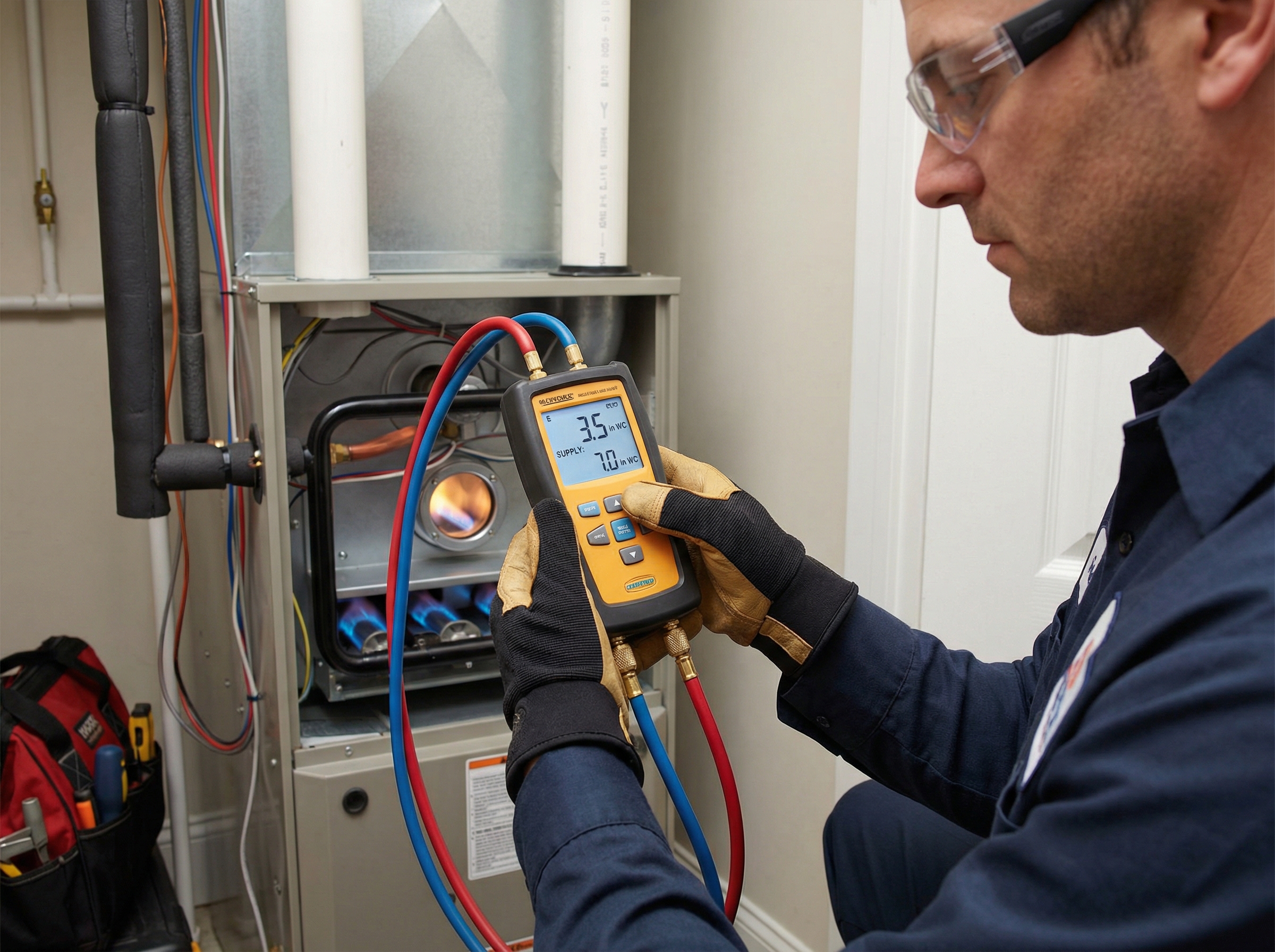
Pros use a manometer and test under load, with the furnace firing, to verify supply and manifold pressures and confirm safe combustion. All pressure measurements and any adjustments are made with a manometer while the unit is firing.
- Fire the furnace. If possible, run other gas appliances to create worst case load. Read inlet pressure and compare to the unit's allowed minimum and maximum.
- Measure manifold pressure at the gas valve test port with the burners lit. Adjust the internal regulator to the nameplate setpoint.
- On two stage or modulating units, verify manifold pressure and operation at each stage per the manufacturer.
- Confirm ignition, flame stability, and overall combustion quality during the test.
- Record inlet and manifold readings with date, stage, and conditions in the service log for future reference.
In our experience at Budget Heating (BudgetHeating.com), testing while firing shows how the system behaves under real demand. Because gas, fire, and CO hazards are involved, these checks and adjustments are for qualified HVAC or gas technicians only.
Common Causes of High or Low Gas Pressure and How They Affect Performance
Think of gas pressure like water pressure in a garden hose: too little and the stream sputters, too much and it blasts where it should not. When inlet and manifold pressures are within spec, a furnace delivers its rated BTU output and holds set temperature without excessive cycling. In our field work, we see most pressure problems trace back to a few repeatable culprits and they show up with clear symptoms.
- Low pressure: symptoms include lazy or yellow flames, poor or uneven heating, frequent cycling, and ignition failures or lockouts. Common contributors are faulty gas regulators, blocked vents, undersized supply piping, or neighborhood supply issues (a technician should inspect). Consequences include reduced efficiency, condensation and corrosion in the heat exchanger, poorer indoor air quality, and higher CO risk from incomplete combustion.
- High pressure: symptoms include harsh or noisy ignition, roaring flames, burner lift off, and higher flue temperatures. A faulty or misadjusted regulator, venting problems, or supply swings can drive pressure and combustion out of balance. Consequences include overheating and damage to internal components, inefficient combustion, higher gas consumption, and shortened equipment life.
Both under and over pressure create safety risks, including sooting, flame instability, and increased CO potential. Accurate diagnosis requires instruments and a qualified technician.
Tradeoffs and When Pressure Checks or DIY Fixes Aren't the Right Choice
Gas pressure work is safety critical, not a DIY chore. Low pressure is not harmless, it causes incomplete combustion, poor heat, condensation and corrosion. More pressure does not make more usable heat, it creates noise, inefficiency and damage. There is no universal setting, pressures are model specific. Licensed technicians use manometers and combustion testers and adjust gas valves per the nameplate and manual. Improper handling risks leaks, fire and carbon monoxide.
- Old 80% furnaces with high fuel use: a higher AFUE replacement often cuts fuel 15 to 20% versus an 80% unit.
- Very cold regions or comfort swings: choose a properly sized two stage or modulating system instead of repeated pressure tweaks.
- Intermittent lockouts, soot or CO alarms: stop DIY and prefer annual service with pressure and combustion checks, not ad hoc adjustments.
Related Measurements: Flue/Exhaust Temperature, Draft and Vent Static Pressure
Combustion checks go beyond gas pressure. In practice, we verify flame pattern, CO levels, temperature rise, and a correct draft signature. Flue or exhaust temperature, along with the temperature rise across the heat exchanger, confirms heat transfer and can reveal overfiring or poor combustion. Draft and vent static pressure are separate tests: values are small negative or slightly positive, reported in hundredths of in. w.c. These require their own test ports and instruments. Measured properly, vent static pressure shows the furnace is exhausting combustion products correctly and helps catch blockages or backdrafting. If gas pressure is the engine's throttle, draft is the gentle pull that carries the exhaust away.
Quick Homeowner Checks Before Calling a Technician
Start with safety. If you smell gas, evacuate immediately and call the gas utility or emergency services. Do not attempt checks first.
- Confirm the thermostat is calling for heat and set above room temperature. Replace batteries if used.
- Replace a dirty air filter to restore airflow.
- Open all supply and return vents, move furniture or rugs that block airflow.
- Locate the furnace rating plate or owner's manual and note the specified manifold pressure for your model. Do not adjust it at home.
Keep CO alarms working. Watch for yellow or flaky flames, soot, uneven heating, frequent cycling, or rising gas bills. Monitor unusual smells, poor heating, or frequent lockouts, and record when symptoms occur. Make pressure and combustion checks part of annual professional maintenance rather than ad hoc troubleshooting.
When to Call the Gas Utility or an HVAC Technician: Clear Thresholds
Shut the furnace down and call the gas utility or a licensed HVAC technician if you smell gas, see persistent yellow or sooty flames, the unit enters repeated lockout, or measured inlet or manifold pressures are outside the nameplate limits. Keep CO alarms on every level and near bedrooms; if an alarm sounds, evacuate and call emergency services before investigating the furnace.
During diagnosis, technicians verify rating plate data, AFUE labeling, local code compliance, and altitude suitability, adjusting orifices or settings for high elevation as needed.
Key Takeaways: Safe Targets, What to Check, and Next Steps
Use the furnace rating plate and installation manual as the final word on inlet and manifold pressures for your exact model. AFUE is your heater's miles per gallon, higher AFUE means less wasted fuel. Upgrading from about 80% to 90-98% typically saves roughly 15-20% in fuel for the same heat output. Correct gas pressure is what allows the furnace to hit its rated AFUE, off spec pressure wastes fuel. SEER and SEER2 apply to cooling, but proper combustion setup still drives real heating efficiency. If your under load manometer reading, draft, or flue temperature is outside spec, schedule a professional.
If you want a second set of eyes, our U.S.-based techs have 30+ years of HVAC experience and can verify settings, size replacements, and ship fast from PA and TX.
- Get a Custom Quote
- Talk to Our Team by phone for real technical support
- Shop Gas Furnaces, wholesale pricing with many items shipping free, financing with Affirm available
 Cooling
 Heating
 Money Saving Tips
 Product and Brands Insights
 Buying Guides
 State by State
 HVAC Systems