





 hvac systems
 learning center
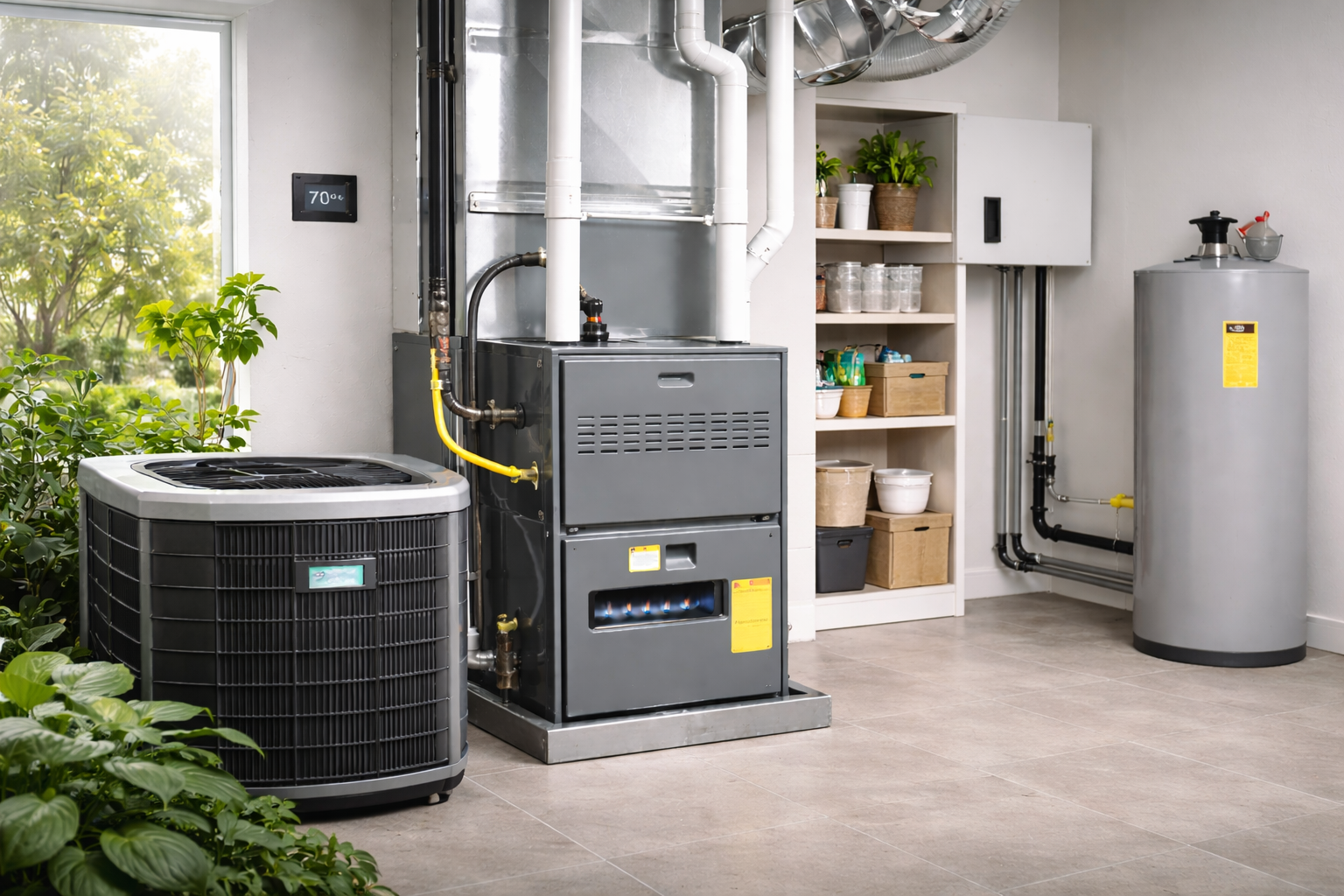
Choosing the Most Efficient Residential HVAC System: What Efficiency Really Means
Choosing the most efficient residential HVAC system goes beyond picking the highest SEER or HSPF. True efficiency means year round comfort, lower utility bills, healthy indoor air, and durable equipment that holds its performance over time.
Efficiency is seasonal and situational. The most efficient setup in a humid Gulf Coast summer may not match a dry mountain climate. There is no single universally most efficient system for every home. The right choice depends on climate, home size and layout, insulation and air sealing, existing ductwork, controls, and installation quality.
Ratings matter, but nameplate numbers do not guarantee savings. Lab scores assume ideal ducts, correct refrigerant charge, tight envelopes, and proper controls. From decades of hands on HVAC work, we have seen that if ducts leak 20 percent or the charge is off, real world performance can drop 10 to 30 percent. Variable speed equipment that is poorly set up can short cycle, raise humidity, and waste power.
In practice, efficiency is the blend of seasonal performance, comfort, operating cost, and lifecycle. Think of it like tuning a bicycle to the rider and terrain, not just picking the lightest frame.
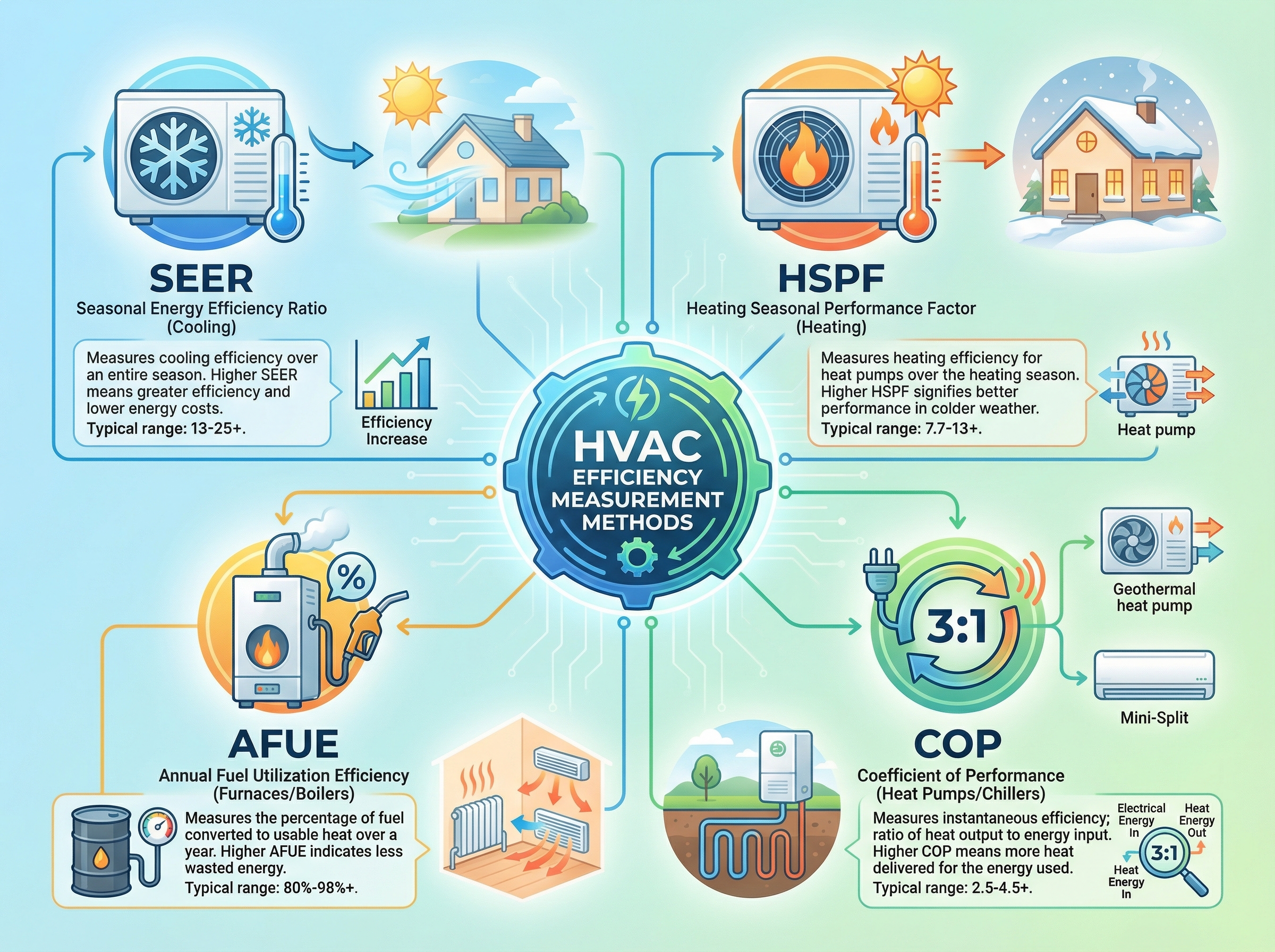
How HVAC Efficiency Is Measured: SEER, SEER2, HSPF, AFUE and COP
SEER and SEER2 rate seasonal cooling. HSPF and HSPF2 rate heat pump heating. AFUE measures furnace efficiency. COP is an instantaneous heat pump ratio. Since 2023 DOE uses SEER2, HSPF2, and EER2 with higher minimums: about 13.4 SEER2 in northern states, higher SEER2 and some EER2 thresholds in the Southeast and Southwest. ENERGY STAR and Most Efficient denote above code models. In our experience central AC tops out near SEER 20, premium mini splits reach the upper 20s. For value many homes land high teens to about SEER 20. Hot climates: prioritize SEER2. Mixed: balance SEER2 and HSPF2. Cold: choose high HSPF2 or cold climate heat pumps, or dual fuel.
Common Residential HVAC System Types: Geothermal, Heat Pumps, Ductless, and Furnaces
Heat pumps move heat rather than create it, similar to a refrigerator working in reverse. Main options:
- Geothermal: ground-source heat pump using buried loops for very high efficiency, best where lot space and budget allow.
- Air-source, ducted: works with existing ducts and provides reliable heating and cooling in one system.
- Ductless mini-split: wall or ceiling heads serve zones, ideal for homes without ducts or additions. In our experience at Budget Heating (BudgetHeating.com), they shine in retrofit work.
- High-efficiency furnace: gas heat, often paired with a central AC coil, fits very cold regions or where electricity is expensive.
Also seen: packaged all-in-one units, plus boilers and radiant systems for hydronic heat.
Air Source Heat Pumps and Cold Climate Models: The Practical High Efficiency Choice
Modern inverter driven, variable speed air source heat pumps are the workhorses we lean on in real homes. Instead of blasting on and off, the compressor and blower modulate like a dimmer switch, matching output to the load. That steady part load operation is where they run most of the year, which raises real world efficiency, tightens temperature swings, and improves humidity control. High SEER2 and HSPF2 ratings align with this performance.
In colder regions, cold climate models are engineered to maintain capacity and efficiency as outdoor temperatures fall. When full electrification is the goal in those DOE zones, they are the preferred choice because they are designed to deliver dependable heat in low ambient conditions.
For most existing homes and new builds, these systems provide the best balance of efficiency, comfort, and practicality among widely available options. Whether ducted or ductless, their precise modulation and part load strengths make them a practical, high efficiency path that fits a wide range of house layouts and climates.
When These Efficient Systems Aren't the Best Fit: Honest Tradeoffs and Misconceptions
- No land or budget for geothermal: choose a high-eff air-source heat pump or upgrade the central system.
- Very cold areas with costly electricity: use dual-fuel or a cold-climate heat pump with incentives.
- Damaged or inaccessible ducts: choose ductless mini-splits or replace ducts, not a high-SEER central.
Common myths we see in the field: bigger is better causes short cycling and poor humidity; highest SEER does not guarantee the lowest bills, install quality, ducts, and habits matter; adding refrigerant each year means a leak; closing vents raises pressure and leakage; single-stage trails variable-speed for comfort.
Geothermal (Ground Source) Heat Pumps: Peak Efficiency, Pros and Cons
Geothermal taps the earth's steady temperature with a buried ground loop that circulates fluid to absorb or reject heat. With that stable source, heating COP is about 3 to 5 (300 to 500% efficient) and cooling runs roughly equal to 15 to 25 SEER2. In our experience at Budget Heating (BudgetHeating.com), whole-home systems often cut annual HVAC energy use by about 30 to 60%. Indoor units commonly last 25+ years and the loop 50+ years, supporting strong long-term value.
Tradeoffs: higher upfront cost and the need for suitable land or drilling. It excels where a loop can be installed and the owner values long service life and deep operating savings. Think of it as keeping your system in mild spring conditions all year.
Ductless Mini Splits: Zoned Efficiency and When to Choose Them
Ductless mini splits deliver heating and cooling right in the room, so there are no duct runs to leak or waste energy. Refrigerant lines feed compact indoor units, and each zone gets its own thermostat. In our field experience, that zoned control, plus the absence of duct losses, is why mini splits often achieve the highest real world efficiency in homes that fit the profile. Top models reach SEER ratings in the upper 20s, and conditioning only the rooms you use is like task lighting for comfort, not lighting the whole house.
- Homes without usable ducts
- Additions or bonus rooms
- Garage conversions and workshops
- Rooms with distinct temperature needs
- Situations where installing or repairing ducts would be costly or inefficient
High Efficiency Furnaces and Hybrid (Dual Fuel) Systems: When Combustion Makes Sense
High efficiency furnaces and dual fuel hybrids make sense when conditions push beyond what all electric heat pumps handle most economically. In our installs, a 90-98% AFUE furnace shines where winters are severe, electricity is pricey, or the local grid is carbon heavy, delivering steady heat without runaway bills. Often paired with efficient central AC for summer, it remains a smart core in those regions. A hybrid pairs a heat pump for mild weather with a gas furnace that takes over in deep cold, like a hybrid car choosing the right power source for the hill. This setup preserves heat pump efficiency in shoulder seasons, cuts electric resistance backup use, and keeps supply air warmer during subfreezing snaps.
Ductwork, Sizing, and Installation: Why Proper Design Beats Shiny Labels
Nameplate ratings show potential, but real efficiency comes from design and commissioning. In our field work we start with the engineering playbook: Manual J, a room by room load calculation that tells you how much heating and cooling the house actually needs. Manual S, selecting equipment that matches that load so it is not oversized. Manual D, sizing and laying out ducts to deliver the right airflow at the right static pressure. Done together, they prevent short cycling, poor humidity control, and wasted energy.
Treat ducts like the system's highways: seal and insulate runs in attics or crawlspaces, fix or replace badly leaking sections, and tighten and insulate the building envelope before upsizing equipment.
- Commissioning checks should verify: refrigerant charge, airflow, static pressures, condensate drainage, line set sizing, equipment clearances, and sound.
When these steps are verified, systems hit their rated performance and comfort follows.
How to Choose and Maintain the Most Efficient System for Your Home: Next Steps
Big picture: geothermal is the efficiency leader, but for most homes a modern inverter heat pump, ducted or ductless, offers the best balance of comfort, cost, and practicality. In very cold regions or where electricity is costly or carbon intensive, a high efficiency furnace or a dual fuel setup can still be the smart choice.
Decision checklist: clarify comfort, budget, and electrification goals; confirm your climate zone; tighten the envelope first; choose system type; insist on Manual J/S/D; plan humidity and IAQ; request itemized proposals; compare installed cost against annual savings and lifespan; stack federal, state, utility, and ENERGY STAR incentives to reduce net cost and shorten payback; lock in a maintenance plan.
Maintenance and longevity: change or wash filters every 1 to 3 months and keep outdoor units clear. Schedule annual professional tune ups, twice per year for heat pumps used year round. Leave refrigerant, electrical, gas, combustion, and deep coil work to licensed pros. Well maintained systems often last 15 to 25 years, with geothermal loops longer.
Choosing is a big step, and you do not have to do it alone. With 30+ years in HVAC and 200,000+ orders fulfilled, our team can size, quote, and support your project end to end.
- Get a Custom Quote
- Talk to Our Team: U.S.-based phone support with real technicians
- Shop Heat Pumps, Ductless Mini Splits, and Furnaces: wholesale pricing, many items ship free, financing with Affirm
 Cooling
 Heating
 Money Saving Tips
 Product and Brands Insights
 Buying Guides
 State by State