





 learning center
Why Attic Ventilation Matters for a More Energy-Efficient Home
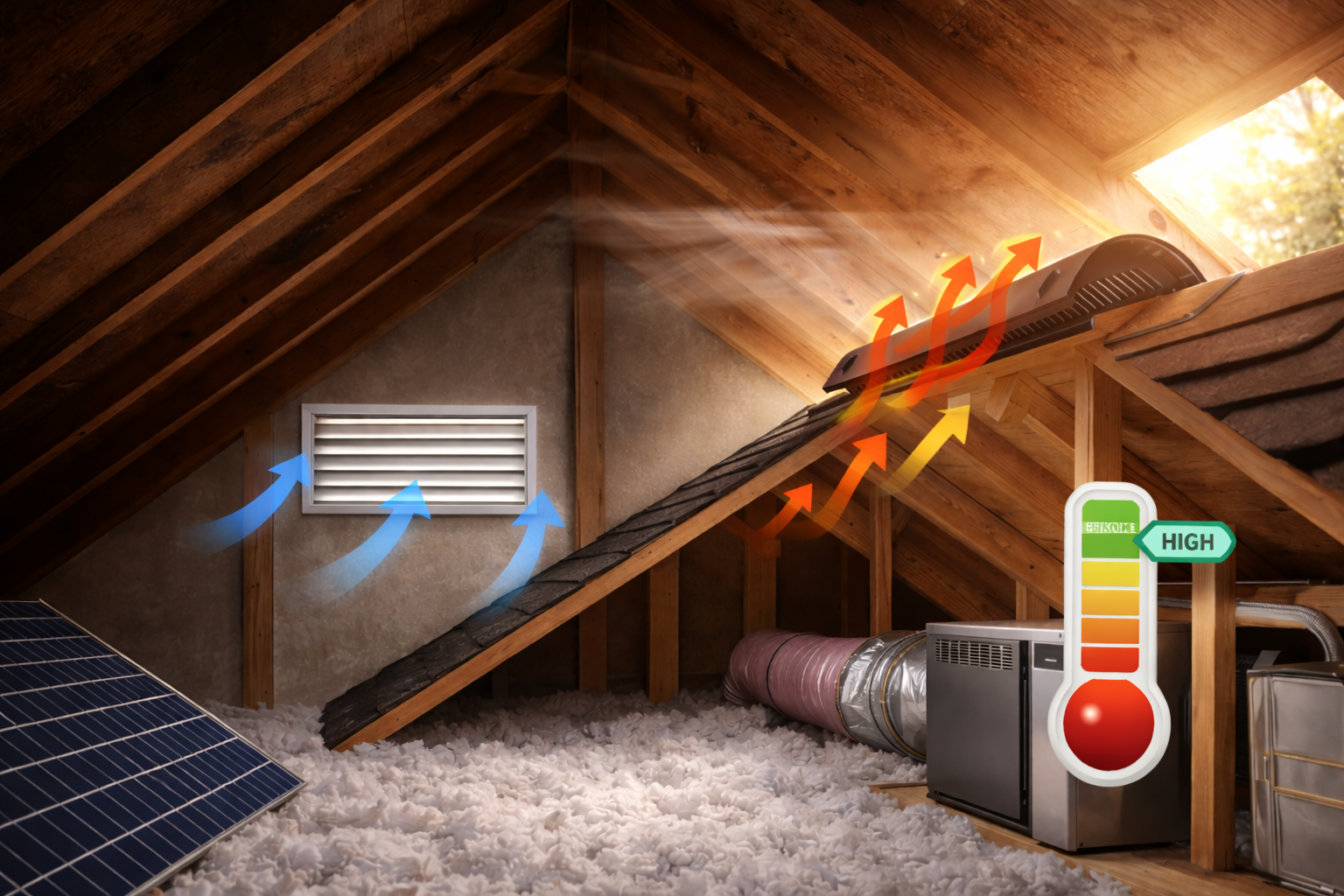
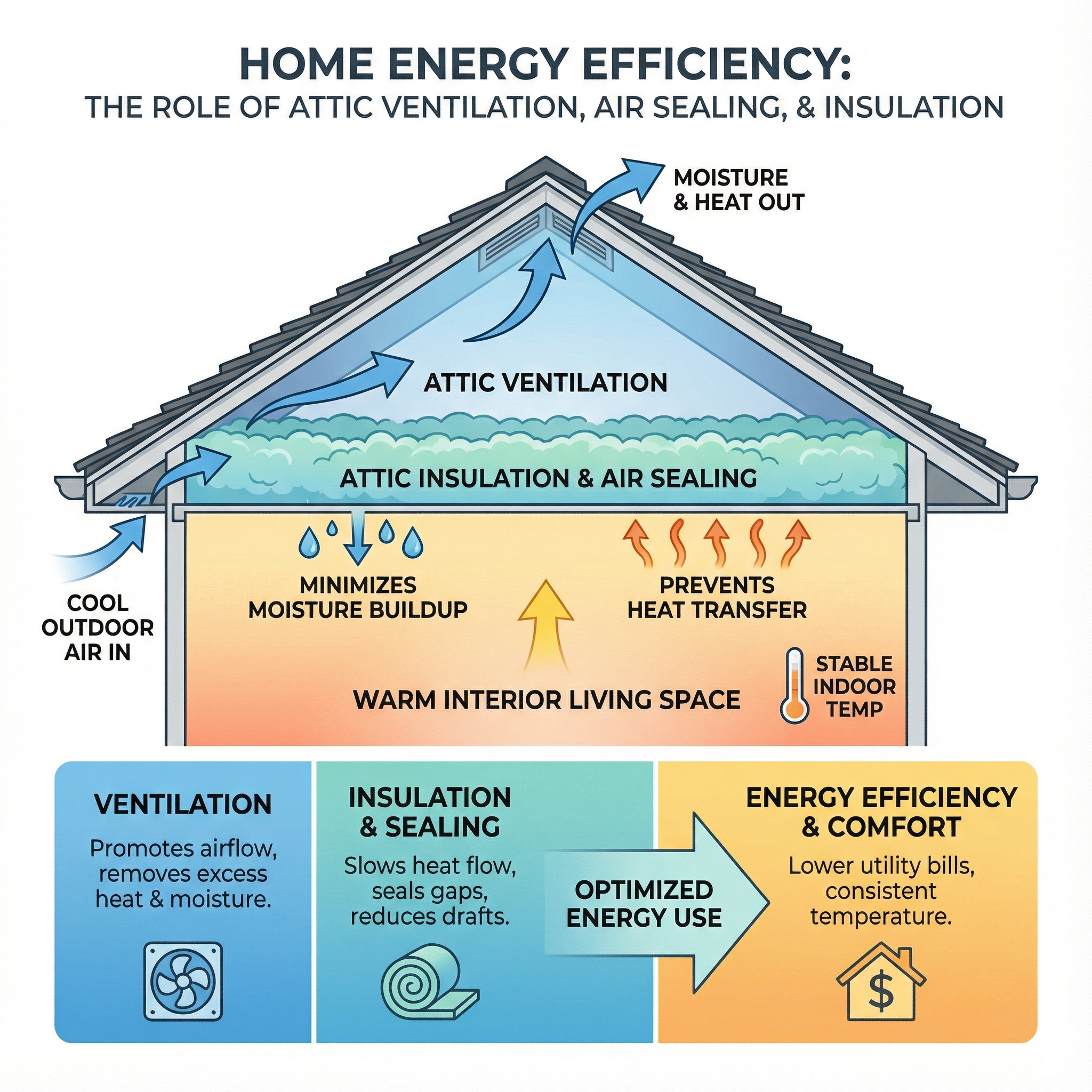
Attic ventilation is the intentional movement of outdoor air through the attic using balanced intake at the soffits and exhaust at the ridge or gable. The aim is not to blow cold air into the house, but to purge excess heat in summer and carry off moisture in winter so the attic stays dry and stable.
Air sealing and attic-floor insulation come first. Sealing wiring penetrations, top plates, and chases keeps conditioned air from leaking into the attic, then insulation slows heat flow. Ventilation complements these steps. When the ceiling plane is tight and insulated, steady intake and exhaust help limit peak attic temperatures, reduce the chance of ice dams, and keep materials like shingles, sheathing, and any attic ductwork from facing extreme swings.
Think of it like a lidded pot: air sealing and insulation make the lid tight, ventilation is the small vent that lets steam escape so pressure does not build. In this article you can expect a clear look at how attic ventilation works with the building envelope, what balanced means, the common vent types, and why the right setup supports energy efficiency without trying to replace core air sealing and insulation work.
How Attic Ventilation Affects Heating, Cooling and Home Durability
Attic ventilation sits at the intersection of energy and durability. When it is sized and balanced, and combined with proper air sealing and insulation, it moderates attic temperature swings and trims HVAC runtime.
How ventilation affects building loads: In summer, exhausting superheated attic air limits the heat that migrates through the ceiling and into any ducts or air handlers located up there. That keeps cooling loads modestly lower and reduces peak runtime during hot afternoons. In winter, keeping the attic closer to outdoor conditions limits upward heat flow, which helps the ceiling insulation perform as rated and curbs ice dam risk by preventing uneven roof melt.
Moisture management mechanism: Ventilation provides a reliable drying path, like a release valve for humidity. Water vapor that escapes from the living space can otherwise condense on cold sheathing, leading to mold, wood rot, and sagging or clumped insulation. By exchanging moist attic air with drier outdoor air when conditions allow, ventilation protects the roof deck and preserves insulation R-value.
The payoff is longevity. Lower peak temperatures and controlled moisture reduce thermal cycling and corrosion on roofing and any attic HVAC equipment, extending service life and keeping comfort more consistent season to season.
Passive vs. Active Ventilation: NFVA, Soffit, Ridge, Gable Vents and Code Basics
Start with code math. IRC R806 and related IECC provisions set net free ventilating area: typically 1/150 of attic floor area, or 1/300 when a qualifying vapor retarder and balanced vents are provided. Target a roughly 50 percent split between low intake at soffits and high exhaust at ridge or roof vents. NAIMA and regional guidance track these baselines.
Passive systems, soffit plus ridge, are the default for vented attics. Maintain clear air paths, install eave baffles wherever air permeable insulation is used, and count all components so intake and exhaust stay balanced, including any gable vents. In WUI zones, use listed ember resistant vents and required mesh while still meeting NFVA. Climate matters: cold and mixed regions often vent, hot humid areas may use unvented assemblies under IRC R806.5. Powered fans can be added, but they do not replace proper NFVA and distribution. Standards evolve and local adoption varies, so verify the applicable code edition and amendments.
Common Attic Fan Types: Electric, Solar, QuietCool and Industrial Options
Attic fans fall into four groups: electric, solar, smart QuietCool style, and industrial roof units. Electric models run on household power and a thermostat, offering predictable airflow and the best upfront value for most homes. Solar fans use a PV panel, so operating cost is near zero and wiring is simple, but airflow depends on sun exposure. Some accept an AC adapter to bridge cloudy periods. Smart or QuietCool style fans add variable speed, timers, humidity sensing, and app control to fine tune noise and energy use. Industrial roof fans step up to larger motors and housings for big attics, multifamily, or light commercial spaces, and are built for continuous duty. In our experience at Budget Heating (BudgetHeating.com), match type to power access, noise goals, and size.
Replacing an Attic Fan: Safety, When to Hire a Pro and Useful Accessories
Before replacing an attic fan, make sure the house is ready: seal ceiling penetrations and verify there is sufficient soffit or other intake. Homeowners can handle prep and light maintenance, but treat the actual replacement as electrical work. In our experience at Budget Heating (BudgetHeating.com), most callbacks trace to skipped air sealing or inadequate intake, not the fan itself.
- Homeowner-safe: visual inspection, light cleaning, measuring the opening, photographing the nameplate for sizing.
- Accessory tip: a magnetic attic-fan cover can isolate the opening in winter or during maintenance, but it is not a substitute for real air sealing.
- Pro-only: all electrical wiring and controls, any major mechanical or framing adjustments, and depressurization and combustion-safety testing to avoid shock, fire or backdraft risks.
Confirm the basics first, then have a licensed electrician perform the installation and testing.
Attic Fan Pros and Cons: Honest Tradeoffs and Better Alternatives
Powered attic fans can help trim peak attic temperature when intake area is ample and the ceiling plane is tight. The catch is pressure: a fan is an exhaust that creates negative pressure, which can pull conditioned air from the house through leaks, or even disturb combustion drafting, if soffits are blocked or intake is undersized. Think of it like a straw in a leaky cup, it pulls from the easiest hole. We see this depressurization often when intake is limited.
- Not ideal for leaky ceilings, blocked soffits, or homes with pressure sensitive combustion. Better options: address air sealing and insulation, then restore passive intake.
- Myths to avoid: more vents or a fan always lower cooling bills, covering soffits helps, or any roof vent layout guarantees balance.
- Active ventilation makes sense only after sealing the ceiling and confirming adequate intake, and when ducts or equipment in the attic warrant extra exhaust. Often better: plan a sealed or conditioned attic at reroof, or relocate ducts into conditioned space.
Cooling Down the Attic: Practical Steps, Inspection Checklist and Quick Wins
Think of attic airflow like sipping through a straw, it only works when both ends are clear. Use this simple walkthrough to spot problems and fix the easy ones first.
- Document vents: note soffit or eave intakes, ridge, gable and roof exhausts, and any powered fans. Map which bring air in and which push air out.
- Confirm exhaust ducts: bath, kitchen and laundry ducts must terminate outdoors, never into the attic.
- Improve airflow: install or extend rafter baffles in every eave bay. Pull insulation back from soffits to keep intake channels open.
- Moisture or damage clues: frost or condensation on nails, water stains, damp or compressed insulation, moldy odors, rusted fasteners, warped sheathing or heat discoloration.
- Quick checks: clear nests and debris from vents and screens, compare attic temperature to outdoors on a hot afternoon, note any history of ice dams or roof leaks.
- Safety: work in cool hours, wear gloves, eye and respiratory protection, step only on joists or decking, watch wiring and recessed lights, avoid disturbing unknown insulation.
Finishing an Attic or Crawl Space: Key Ventilation Considerations and Questions for Contractors
Finishing changes the building envelope. Decide early whether the attic will stay vented or become an unvented, conditioned assembly, then align insulation and air sealing to that choice. Climate and roof shape matter: hip, valley, cathedral, and flat sections may not suit simple ridge and soffit venting, and some projects work better with unvented roof insulation or alternate vent strategies. If ducts are in the attic, a sealed, conditioned approach can reduce losses in many climates.
- Provide NFVA calculations and the intake to exhaust split.
- Show baffle locations and how clear air channels will be maintained above insulation.
- Explain treatment of hips, valleys, cathedral sections, and low slopes.
- Detail air sealing at the roof plane or ceiling, including transitions at knee walls and chases.
- State whether a sealed, conditioned attic is recommended given ducts and climate.
Maintenance, Measuring Performance and How Attic Conditions Affect SEER/SEER2 Savings
SEER and SEER2 rate equipment, but in our field work hot attics and attic ducts erode savings; improving the attic or moving ducts into conditioned space recovers more. Seasonally clear soffit and ridge vents, check after storms, and confirm bath or dryer exhausts stay tight and vent outdoors. Measure attic temperature at midday in summer and winter, compare to outdoors to judge if ventilation or insulation and air sealing are needed. Log run time, temperature split, and utility use. Keep debris clear and change filters; do not open electrical or refrigerant parts. Savings are site specific.
Conclusion: Prioritizing Air Sealing, Insulation and Balanced Ventilation for Lasting Savings
Attic ventilation is a supporting but crucial measure. The best long term value comes from a tight ceiling plane, solid insulation, and correctly sized, unobstructed, balanced ventilation matched to your climate and code.
If you are weighing vent counts, fans, or baffles against budget, prioritize air sealing and insulation first, then tune ventilation so the system works as a whole and moisture has a clear, controlled path out.
With 30+ years in HVAC and over 200,000 orders fulfilled, our team can size the vents, select the right accessories, and coordinate with your HVAC for lasting comfort and savings.
- Get a Custom Quote for a climate tuned ventilation and IAQ package
- Talk to Our Team, U.S. based phone support and real technical guidance
- Shop Ventilation & IAQ, vents, fans, baffles and controls at wholesale pricing with full manufacturer warranties
- Many items ship free, financing available with Affirm
 Cooling
 Heating
 Money Saving Tips
 Product and Brands Insights
 Buying Guides
 State by State
 HVAC Systems