




Stay Cool and Comfy: The Rising Popularity of Mini Split AC Systems
Mini split, often called ductless, AC systems have moved from niche choice to neighborhood standard. In our 30 plus years working with HVAC equipment, the draw is simple: quiet operation and room by room control without tearing up walls for ductwork. Think of them like a dimmer for comfort rather than a single on off switch, you set each space to what it actually needs.
Homeowners value the efficiency and the cleaner indoor air that comes from skipping dusty ducts. Installed and maintained properly, these systems have a long service life, and because each indoor unit serves a defined zone, you avoid conditioning unused rooms. This article keeps things practical: what ductless comfort feels like day to day, when a mini split makes sense, basic upkeep that preserves longevity, and how to think about placement to keep noise low and comfort high. If you are considering ways to add cooling or fine tune comfort without a major renovation, this is a smart technology to understand.
What Is a Mini Split (Ductless) AC: The Basics in Plain Language
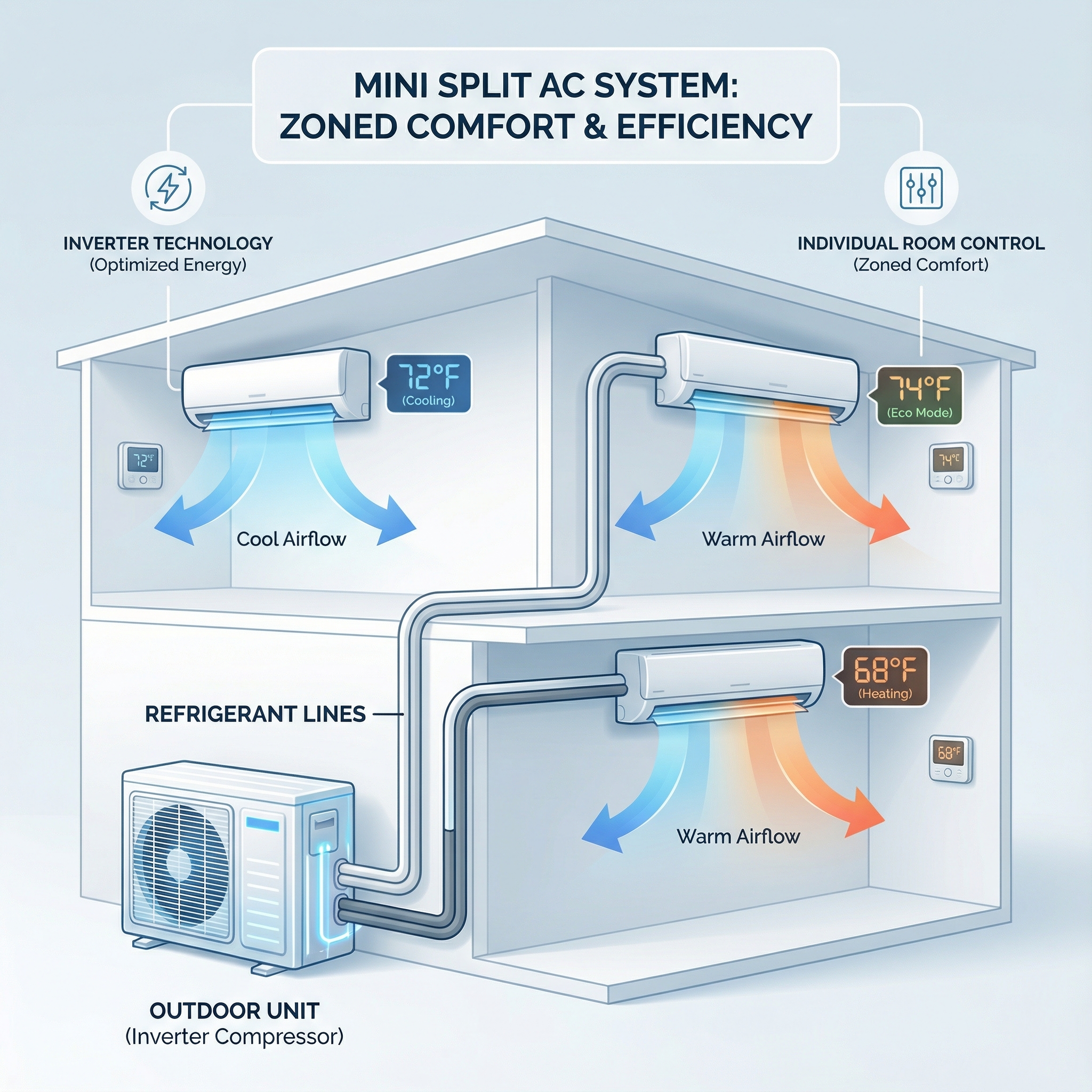
A mini split is a ductless heating and cooling system made of two main parts: an outdoor condenser/compressor and one or more indoor air-handling heads. The pieces are linked by a small conduit through a short wall opening that carries refrigerant lines, power, and a condensate drain. Think of it as a tidy bundle of lines, not a big duct. In practice, we mount the outdoor unit, set the indoor heads in the rooms that need conditioning, then connect them through that few-inch penetration, avoiding full-home ductwork.
Common indoor unit styles include:
- Wall-mounted
- Ceiling cassette
- Floor-mounted
Why Consumers Are Choosing Mini Splits: Key Benefits at a Glance
Mini splits let you put comfort exactly where you need it, without tearing into walls for ductwork. In our experience at Budget Heating (BudgetHeating.com), homeowners appreciate dialing in a home office or nursery without over-cooling the rest of the house.
- Zoned comfort: Each indoor air handler controls its own room or zone, so you set different temperatures and avoid conditioning unused spaces.
- Cleaner air: With no ducts moving built-up dust and allergens, there is less whole-house recirculation. Many systems include multi-stage or washable filters.
- Made for tricky spaces: Ideal for homes without ducts, room additions, sunrooms, finished attics or basements, garages or shops, ADUs, and any area where new ducts would be costly or disruptive.
Inverter Technology and Quiet Operation: Why Mini Splits Run Efficiently and Silently
Inverter-driven compressors modulate speed to match the exact heating or cooling load, instead of snapping fully on and off. In our field experience, that steady, right-sized output trims wasted energy and keeps room temperature from drifting. Think of it like a dimmer switch for comfort: the system ramps up or down as needed rather than toggling between extremes.
This same modulation is why these systems are notably quiet. By avoiding frequent starts and stops, the outdoor unit skips the typical startup noise and spends most of its time at lower, calmer speeds. Modern indoor units are engineered for low sound as well, so airflow feels gentle and even, with fewer audible swings as the compressor and fan settle into a smooth, continuous rhythm.
Common Concerns, Myths and When Mini Splits Aren't the Best Fit
We routinely see the same questions come up with ductless systems, and a few myths can steer projects off course. Here is the candid version, based on what we see in the field every day.
- Myth: Most mini splits are DIY friendly. Reality: Proper refrigerant handling, deep vacuuming, leak testing, and electrical work typically require a qualified pro for performance, safety, and warranty compliance.
- Myth: Operate them like on and off room units. Reality: Inverter systems are most efficient when they modulate at low speed, like cruise control on a highway, not by frequent full shutdowns and restarts.
- Myth: Only marginally more efficient than traditional systems. Reality: When sized and installed correctly, ductless often outperforms fixed-speed ducted setups by avoiding duct losses and using variable capacity.
- Common mistakes to avoid: Skipping load calculations leads to oversizing or undersizing, poor indoor head placement blocks airflow and hurts comfort, and neglecting filter, coil, and outdoor clearance maintenance erodes efficiency and longevity.
When mini splits are not the best fit:
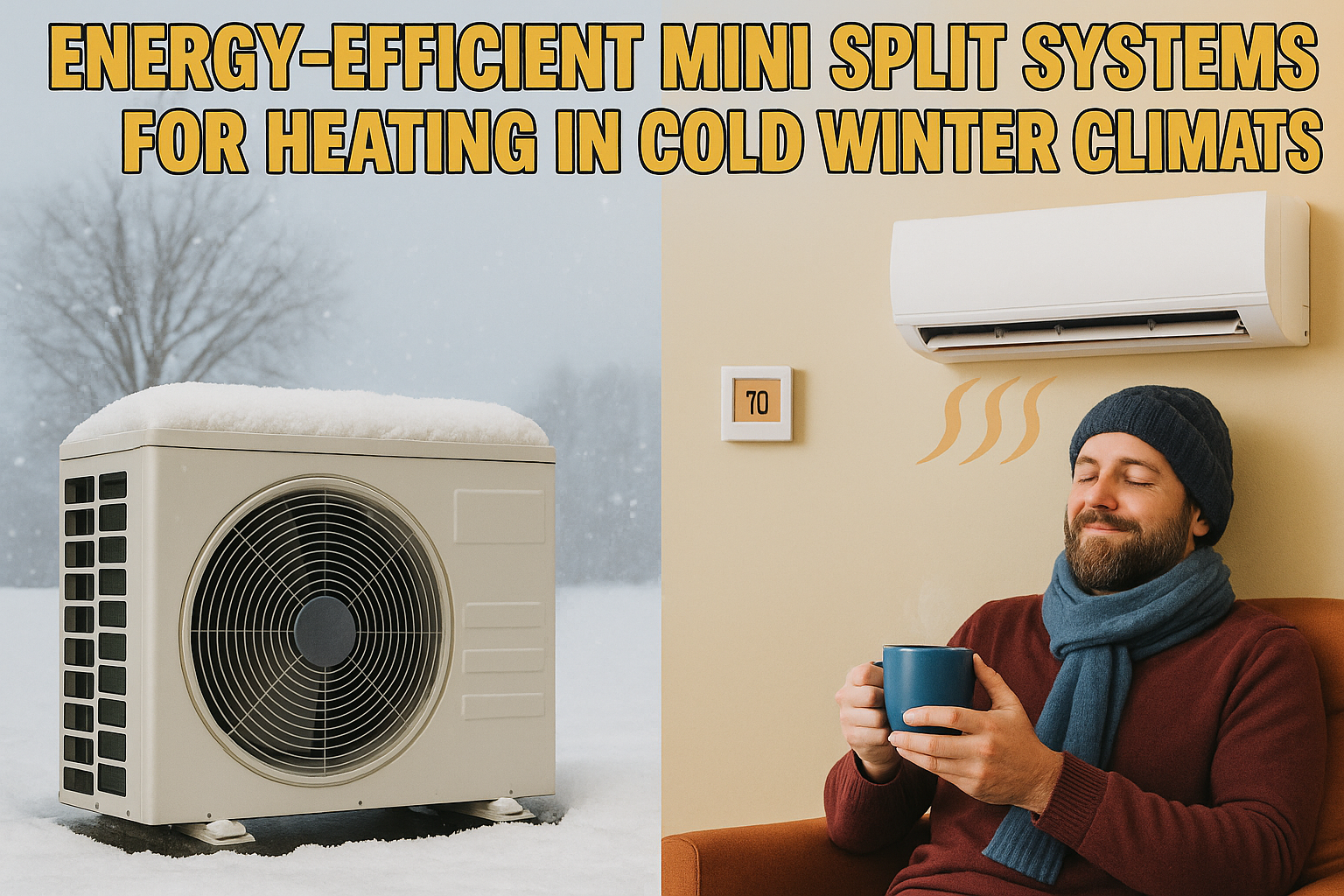
- Extreme cold climates: Capacity drops in very low temperatures, so consider cold-climate models with backup heat, or a gas furnace or robust central heating.
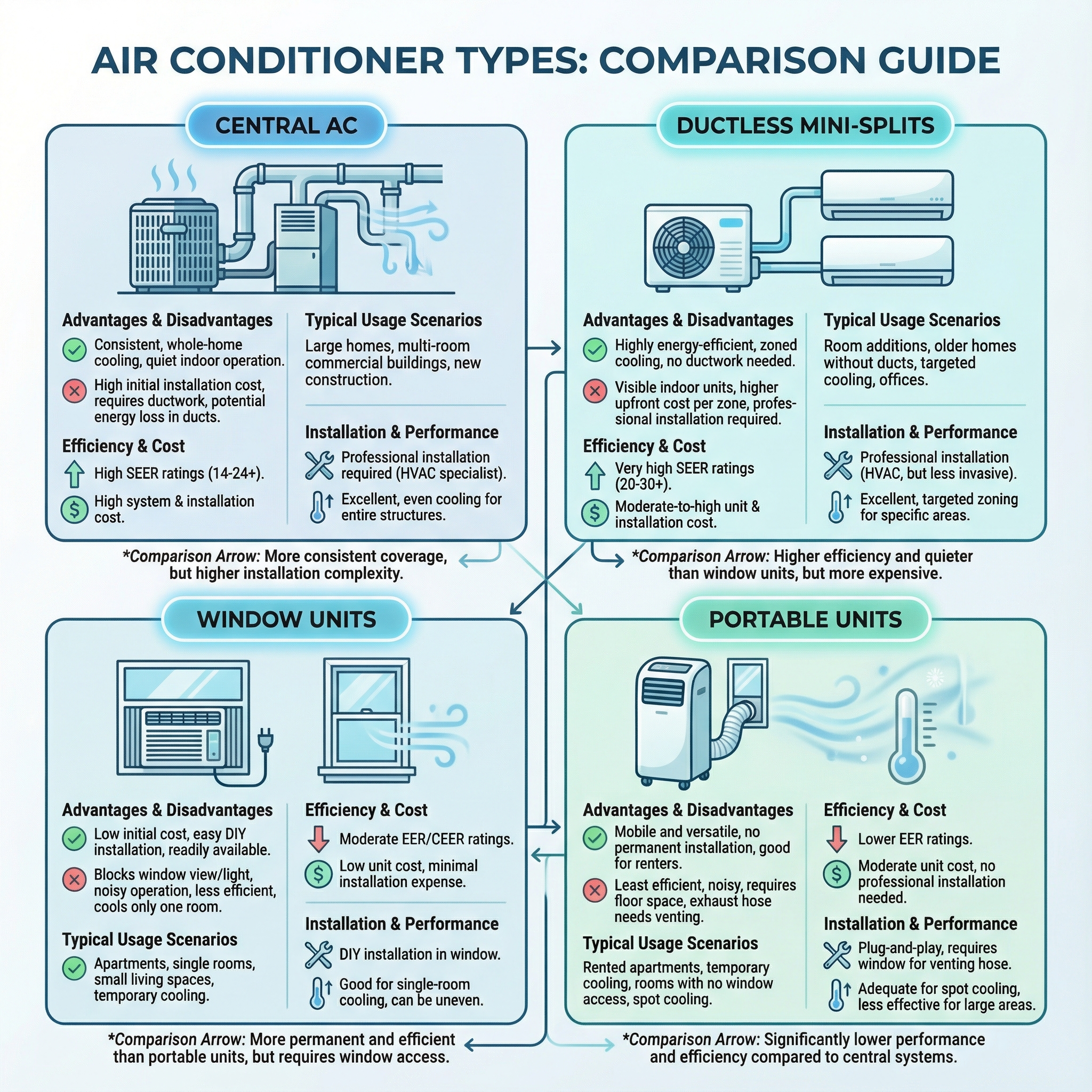
- Existing ducted homes: For whole-house coverage without remodeling, central HVAC can be simpler and more uniform.
- Temporary single rooms on tight budgets: A window or portable AC may offer the lowest upfront cost.
Energy Efficiency, SEER2 Rules and Savings: How Mini Splits Cut Costs
Mini splits typically carry a higher installed price than window units, and on a per ton basis they can be comparable to, or higher than, some ducted split systems. The tradeoff is lower energy use and smarter control of where you cool or heat.
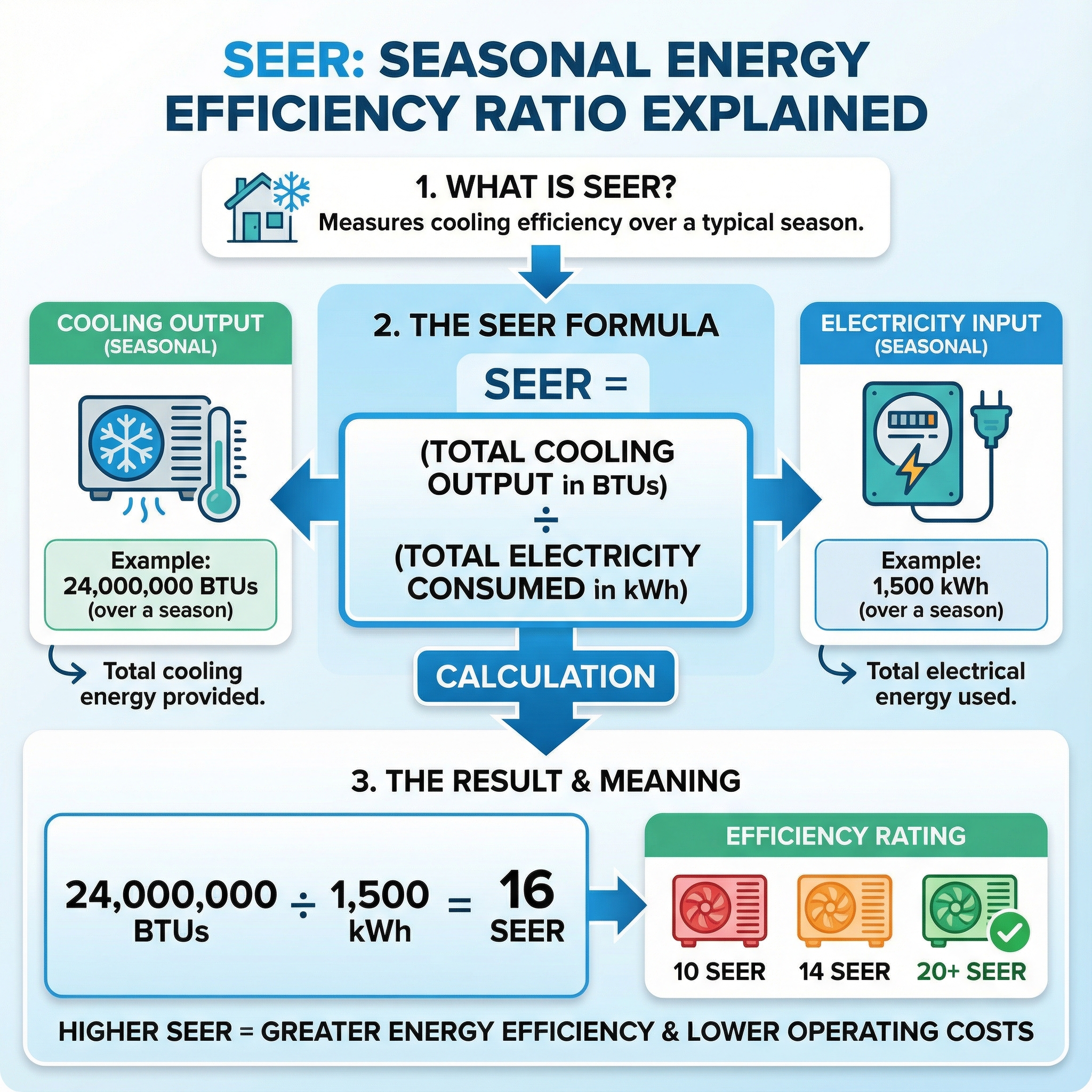
Efficiency is rated under the DOE's updated SEER2, EER2 and HSPF2 procedures. SEER2 numbers are lower than the old SEER scale, but reflect tougher testing and remain the regulatory yardstick. Regional minimums matter: split-system cooling in the North is roughly 13.4 SEER2, with higher minimums in the Southeast and Southwest for smaller capacities, while heat pumps have a nationwide higher baseline. Always confirm your local minimums. Think of SEER2 like mpg for HVAC, higher is better.
Most mainstream ductless mini splits land in the mid to high teens SEER. Premium models can exceed 30 SEER. In our experience at Budget Heating (BudgetHeating.com), stepping up from a baseline SEER 14 system, about SEER2 13.4, to SEER 20 can cut cooling electricity roughly 30 percent. If you spend about $600 per year on cooling, that shift can bring it to around $420. Routine maintenance, clean filters and coils, can trim another 15 percent compared to a neglected system.
- Choose higher efficiency where it pays back in your climate and usage.
- Use zoning to condition only the rooms you occupy, lowering run time.
- Leverage rebates or incentives when available to shorten payback.
Balance upfront cost against energy savings and incentives, and you can size a mini split plan that pays you back over its life.

Installation Basics: What to Expect, Wiring, and Typical Site Work
In a typical install, the indoor heads are mounted, the outdoor condenser is set on a pad or brackets, a small wall penetration is made for the line set, control cable, and drain, then power and drainage are connected. It is far less invasive than running new ductwork.
Before purchase, verify total capacity, indoor unit styles and placement, outdoor unit sizing and clearances, and that the configuration meets efficiency and local code requirements. We always favor indoor locations with clear airflow and service access. Outdoors, allow clearance for airflow, consider noise, and elevate to avoid snow or standing water.
- Line-set length and routing, keep runs tidy and protected, like guiding a garden hose along a planned path.
- Condensate plan, gravity drain when possible or a pump if needed.
- Electrical, dedicated circuit, panel capacity, proper disconnects and polarity.
- Vibration and noise mitigation, pads, isolators, secure fastening.
- Service access, room to remove panels and connect gauges.
- Final checks: clearances met, drains tested for leaks, line set pressure tested and evacuated, correct breaker size, secure wiring, quiet operation, and tidy sealant at wall penetration.

Sizing Your System: Choosing the Right BTU Capacity and Configuration
Think of sizing like choosing the right shoe size. Use this method to avoid the common mistakes that reduce comfort and efficiency.
- Define each zone or room and how it is used.
- Measure square footage and note ceiling height.
- Assess insulation quality, window area, and air leakage points.
- Consult manufacturer or dealer BTU charts rather than rules of thumb. In our experience at Budget Heating (BudgetHeating.com), charts paired with your home details are far more reliable than per square foot guesses.
- Adjust for climate: in hot or humid regions plan roughly 10 to 20 percent more cooling capacity. In cold regions increase capacity about 20 percent and select cold‑climate rated models to maintain heat output.
Before selecting equipment, confirm these factors:
- Single zone versus multi zone, and indoor unit placement.
- SEER2 and HSPF2 targets plus low ambient heating capability.
- Electrical requirements, breaker and wire size, and condensate management.
- Installer quality and written warranty coverage.
Maintenance, Lifespan and Troubleshooting: Keep Your Mini Split Running Well
Routine care keeps mini splits reliable and avoids duct sealing or cleaning. Do this: wash indoor filters, monthly in heavy use; keep the outdoor unit clear of leaves and snow; ensure indoor units are unblocked and the condensate drains freely. Schedule pro maintenance once or twice per year to verify refrigerant charge, clean coils and blowers, inspect electrical, and test controls and defrost. Safety first: leave installation, refrigerant, and electrical work to qualified pros. If comfort drops or icing appears, check filters and airflow first.
Is a Mini Split Right for Your Home? Final Takeaways and Next Steps
Mini-split ductless heat pumps deliver high efficiency, zoned comfort, quiet operation, and simpler installs compared with adding ductwork. They are ideal for retrofits, additions, and ductless homes. Upfront costs can be higher, but with proper sizing, pro installation, and routine care, long-term savings and targeted comfort often justify the spend. Tradeoffs include visible indoor units and the need for skilled installers. Smart next steps are a load calculation, choosing cold-climate models where needed, and weighing lifecycle costs with available incentives.
Every home and budget is different, so a clear design plan matters. Our team brings 30+ years of hands-on HVAC experience and U.S.-based phone support to make the choice straightforward. Factory-authorized brands, start with confidence.
- Get a Custom Quote: Right-size your zones and match equipment.
- Talk to Our Team: Phone support to compare models and incentives.
- Shop Mini Splits: Single or multi-zone at wholesale pricing, free shipping on most orders, Affirm financing.