




 hvac systems
 learning center
Milwaukee HVAC Thefts: Why This Guide Matters Now
In Milwaukee, theft of outdoor HVAC equipment is climbing, and it hits where comfort and budgets intersect. Thieves target condensers and heat pumps that are easy to reach and poorly protected, then strip copper and other parts. The result is predictable: major replacement costs, possible code-compliance hurdles, and uncomfortable downtime during peak heating or cooling seasons. At the same time, Milwaukee homeowners face stringent efficiency and safety expectations shaped by the local climate, so a quick swap is rarely simple.
This guide, Milwaukee HVAC Thefts: How to Secure Your System, sets the stage by explaining how this problem shows up on real properties, what makes a unit a soft target, and how to think about protection in practical terms. We treat the outdoor unit like a bicycle on the porch: if it is visible, reachable, and unsecured, it invites attention. We outline what to watch for around your site and the steps that reduce risk before trouble starts, then frame realistic next moves if a theft occurs, so you can restore comfort and meet requirements without surprises.

Why Outdoor HVAC Units Are Being Targeted in Milwaukee
We see outdoor condensers and heat pumps hit because they are quick money: copper tubing, coils, and aluminum have scrap value, and some thieves resell whole units or fan motors and control boards. In Milwaukee, risk climbs where equipment sits out of sight, behind buildings, in alleys, unfenced side yards, or in dim lighting near easy vehicle access. Vacant or lightly occupied properties, small multifamily buildings, and churches or schools are frequent targets, and theft can repeat if replacement equipment goes back in without security upgrades. If your unit is tucked away and hard to watch, assume it is on a thief's shortlist.
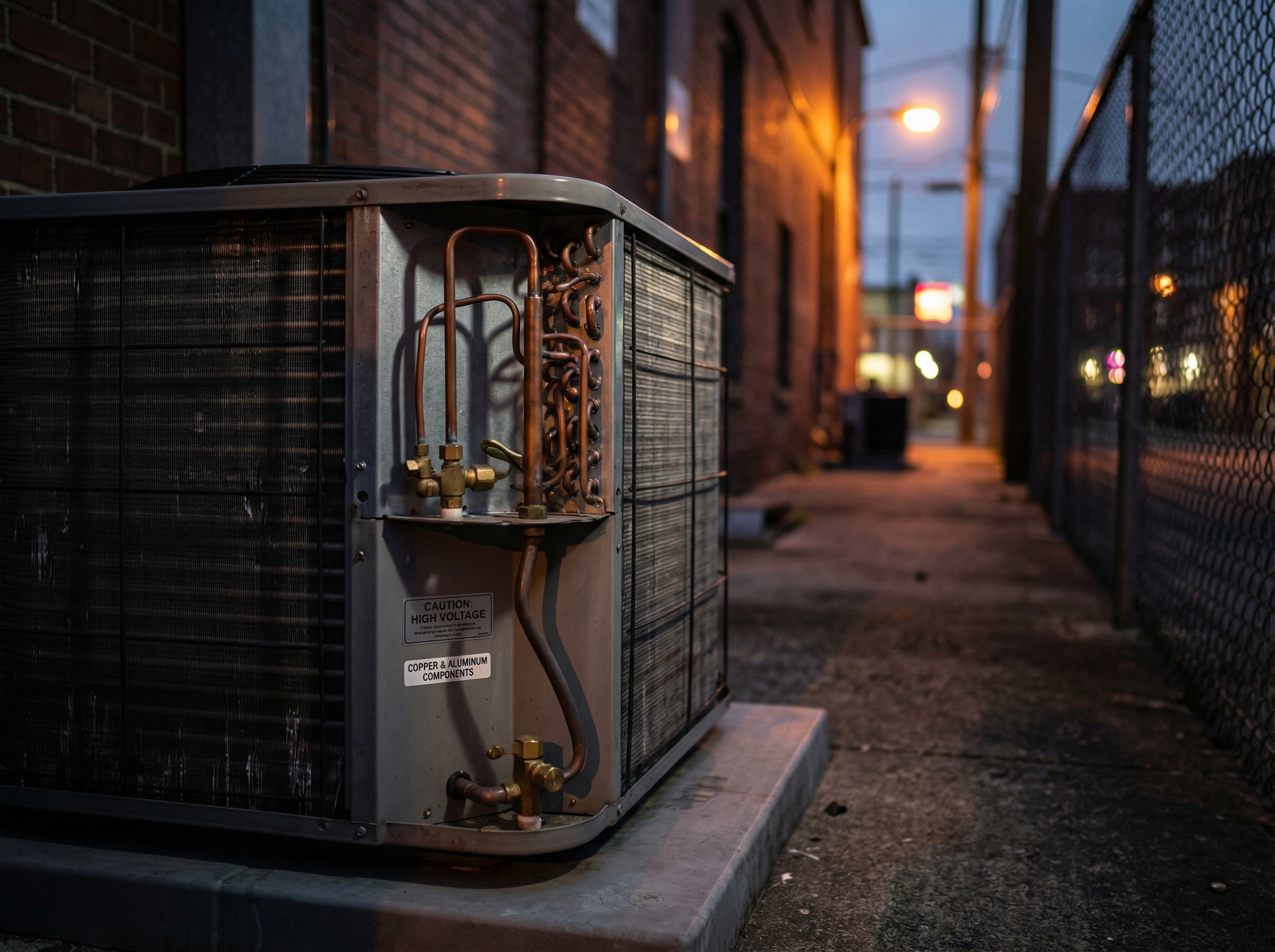
How Thieves Remove Outdoor HVAC Units: Methods & Common Tools
From years on job sites we see thieves plan for speed. In dark or hidden spots, an unsecured condenser can be stripped and gone in minutes if it is not properly secured. The routine is simple: cut refrigerant lines and electrical connections, then unbolt or pry the cabinet free from the pad. If anchors put up a fight, a battery grinder handles them. Panels come off with basic hand tools, and the shell is slid to a hand truck or lifted into a waiting pickup. Tool kits are small but effective: bolt cutters, portable grinders, pry bars, nut drivers and wrenches. Some crews back a truck in to pull the unit outright. Visualize the weak points, exposed lines, loose anchors, and easy vehicle access, because these are exactly what speed thefts exploit.
Immediate Steps After a Theft: Reporting, Insurance & Safety Checks
Treat it like a car accident: document everything. In the first 24 to 72 hours, we follow this checklist to speed recovery and avoid hazards.
- Call the police promptly and file a report. Share serial numbers, model numbers, and photos of the missing unit and site damage. Keep the case number for your records.
- Notify your homeowner or property insurer to open a theft claim. Review whether your policy covers HVAC theft and, for rentals or commercial properties, related business interruption.
- Preserve and organize documentation. Store photos and records of model and serial numbers offsite or in the cloud. Provide those serials and photos to law enforcement and your insurer.
- Alert local scrap yards and metal recyclers so they can flag suspicious equipment or unusual copper sales. Include serials, brand, capacity, and any distinguishing marks.
- Keep the system off until inspected. Have a qualified HVAC professional check refrigerant lines, electrical wiring, and any adjacent gas piping or venting to verify no leaks, grounding issues, or code violations.
- When practical, etch or stencil identifying information on remaining components to aid recovery and future proofing.
Maintain a dated log of calls, names, and case numbers to keep the claim and investigation on track.
Professional Upgrades: Concrete Pads, Bolted Bases, and What to Do When Replacing a Unit
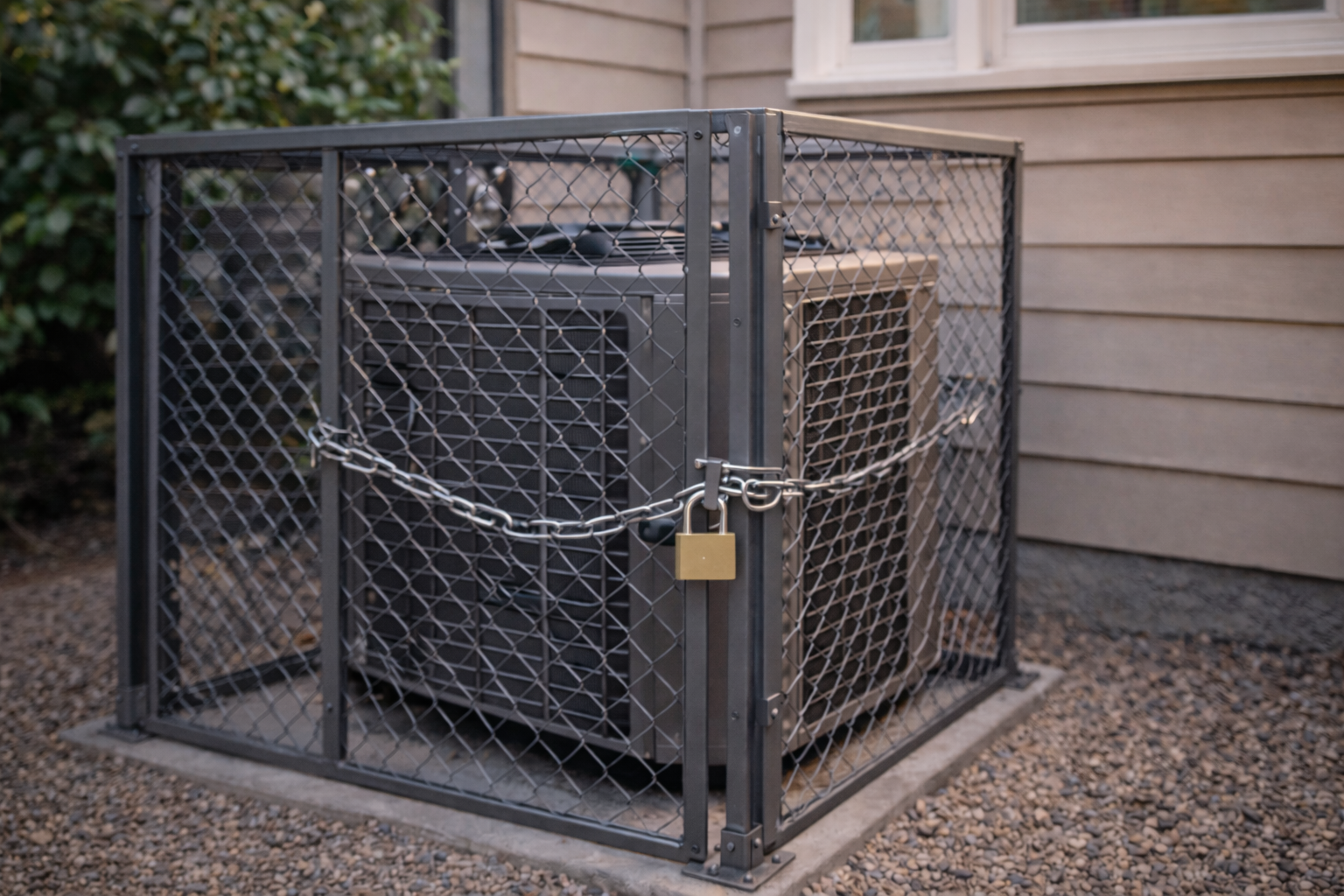
Replacement is the right moment to harden the site and equipment. In high-risk areas, set the new condenser on a poured concrete pad and bolt it with tamper resistant anchors. Bolting also keeps the unit stable in storms and discourages prying tools. Add a locked steel cage, and where vehicles can approach, use bollards. Pair the hardware with cameras or an alarm input, and record serial numbers.
Use the swap to verify efficiency and compliance. For Milwaukee and Wisconsin, treat 14 SEER as the minimum, and consider 16 plus for lower operating cost. SEER2 labels are common. SEER is the older seasonal efficiency score, SEER2 uses updated test conditions that better reflect real ductwork, so the numbers run lower for the same unit. Ask for the exact model and both ratings in writing. In our experience at Budget Heating (BudgetHeating.com), that simple step prevents mismatches. Have your contractor explain the ratings in plain terms.
Spotlight: Magnetic Jumper Wires and Other Theft Tricks to Watch For
In our field experience, a quiet favorite of thieves is the magnetic jumper wire, a small lead that sticks to metal terminals. By bridging control points it bypasses safeties, lets them test a compressor or fan, and then remove the part quickly. The magnet speeds placement, and no screw turning means less noise and fewer traces.
Red flags: stray short jumper leads inside a cabinet, fresh scrape marks on terminal screws, or odd factory wires moved aside. Thieves also remove or loosen disconnects and covers to gain faster access. Choose tamper resistant disconnects and screw hardware, and during walk-arounds check that every cover screw is present, the disconnect handle is intact, and there are no pry marks or misaligned panels.
Quick Homeowner Fixes: Low-cost Ways to Make Your Condenser Less Attractive
Low-cost steps can deter opportunistic thieves. From our field work, treat these as speed bumps, not roadblocks.
- Etch or mark the unit so it is identifiable, even if parts are removed.
- Post visible signage that the equipment is marked and monitored.
- Install motion-activated lighting that covers the service side and approach path.
- Replace standard screws with tamper-proof fasteners on access panels and line set covers.
- Clear or thin vegetation to improve sightlines from the house or street.
Common mistakes we see: assuming theft will not happen, relying solely on cameras or lighting without any physical barrier, reinstalling a replacement without security upgrades, and ignoring efficiency or regulatory requirements when a stolen unit is replaced.
For repeat targets, very isolated properties, or units hidden from public view, low-cost steps are seldom enough. In those cases, stronger hardware works better: anchored cages, lockable service covers, and simple alarmed cut or disconnect sensors.
Hardware Solutions: Locks, Cages, Anchors and Conduit Protection
If you truly want to stop grab-and-go theft, step up to physical hardening. Think of it like adding a deadbolt, a door bar, and a security grate to the same door, each layer adds minutes and noise a thief cannot afford. In our experience at Budget Heating (BudgetHeating.com), the setups that hold up are layered and built from steel, not plastic.
- Anchor units firmly to a concrete pad with tamper-resistant bolts or anchors. Consider bolted bases or a locked base pan to prevent quick removal.
- Enclose the condenser or heat pump in a welded or bolted steel security cage. Use heavy-gauge panels, weather-resistant locks, and keyed service access.
- Protect refrigerant circuits. Weld or lock service ports and valves so refrigerant cannot be recovered quickly.
- Harden electrical access. Run wiring in metal conduit, install a guarded disconnect, and use tamper-proof fasteners.
Choose galvanized or powder-coated steel and stainless hardware so it lasts outdoors, or corrosion becomes the weak link.
Monitoring & Maintenance: Cameras, Motion Sensors, and Routine Diagnostics
Visible CCTV, clear signage, motion or tilt alarms, and good area lighting make thieves think twice. Monitored alarm packages or cameras with remote alerts raise the odds of recovery and provide a prompt warning. Think of visible gear as a spotlight on a stage, trouble is less likely to walk into it. Position signage and lighting so the outdoor unit is plainly seen.
Pair monitoring with routine maintenance to catch issues early. Schedule professional inspections at least annually and after any theft or attempted theft. During service visits, basic compressor testing and system checks can reveal worn or tampered parts and limit how long equipment sits vulnerable. Keep outdoor units clear of vegetation, make sure disconnect boxes and junctions are weather tight and tamper resistant, and test smoke and CO detectors regularly.
Cost vs. Risk: How to Budget for HVAC Security and Next Steps
No single measure stops HVAC theft, a layered plan raises the work for thieves and lowers your risk. Start with low cost steps like marking, signage, tamper bolts and lighting, then scale to cages, concrete anchoring and monitored cameras where risk is high. Combine complementary measures to reduce theft probability and improve recovery. Add operational controls: place units near staffed or secured areas, schedule work to limit exposure, and require secure transport and disposal.
If you have been hit in Milwaukee, or want a site walk, contact a local HVAC or security contractor for a prioritized security quote and replacement plan. With 30+ years in HVAC and 200,000+ orders, our team can supply the right gear and help you budget smart.
- Get a Custom Quote
- Talk to Our Team by phone for fast guidance
- Shop HVAC Security Cages and Accessories
 Cooling
 Heating
 Money Saving Tips
 Product and Brands Insights
 Buying Guides
 State by State